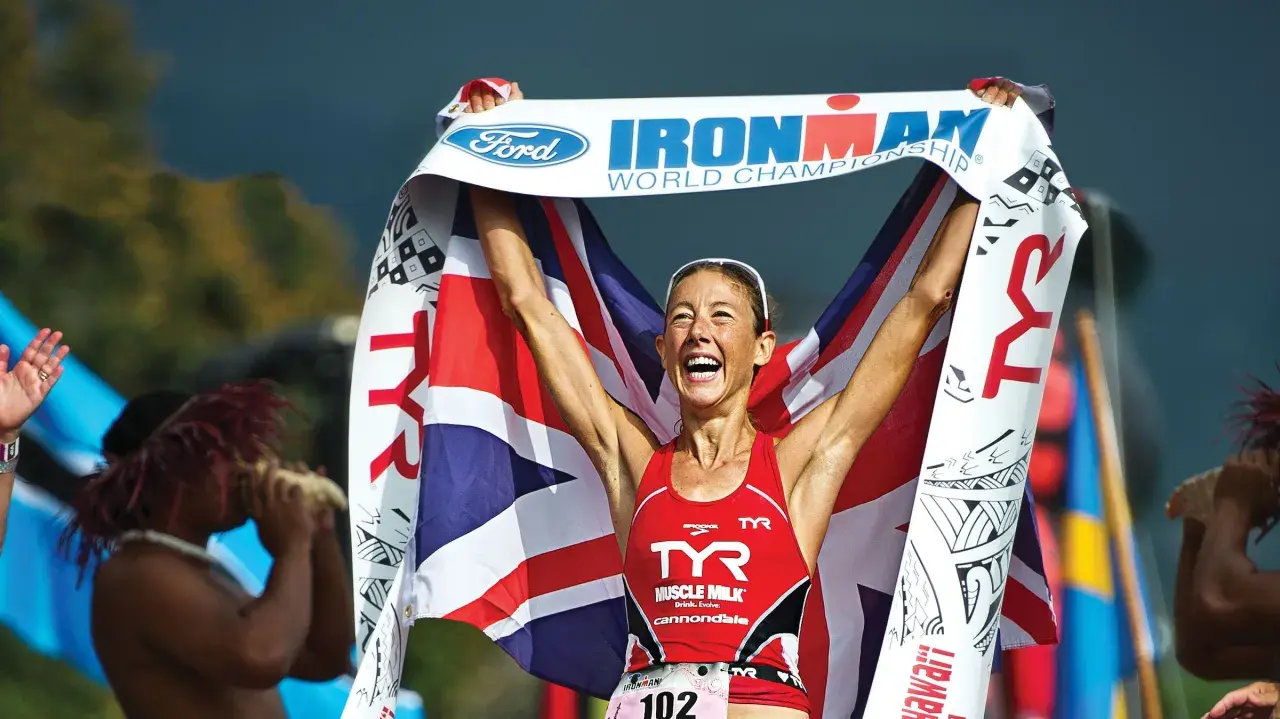
Chrissie Wellington’s story is one of the clearest examples of how patience, race intelligence, and resilience can turn a late start into real dominance. In this article, I break down who she is, what made her so hard to beat in long-course triathlon, and what swimmers and triathletes can actually learn from her approach instead of just admiring the results from a distance.
The essentials that explain why she still matters
- Four-time IRONMAN World Champion and one of the most influential women in the sport.
- First British athlete, male or female, to win Kona, which made her 2007 debut a landmark moment.
- Record setter under pressure, with a Kona course record in 2009 and an overall IRONMAN world record in 2011.
- Hall of Fame recognition followed in 2017, underscoring how durable her legacy became.
- More than a racer, she later used her platform to support participation, health, and women’s sport.
- Useful for age-group triathletes because her career is really a lesson in pacing, durability, and smart execution.
Why her name still matters in triathlon
What makes Wellington memorable is not just the wins, but the way she won them. She arrived in elite long-course racing and immediately changed the conversation around what a first-year professional could do, which is why her name still comes up whenever people talk about Kona history, breakthrough performances, or the mental side of endurance racing.
I read her career as a reminder that triathlon rewards the athlete who can stay composed when the race gets messy. In the first year, the gear may be borrowed, the experience may be limited, and the field may be deeper than expected, but none of that matters if the pacing is disciplined and the execution is calm. That is a far more useful lesson than the usual highlight reel of finish-line photos.

The races that defined her legacy
Her reputation was built on a handful of performances that still hold up because they were not just wins, they were statements. The pattern is easy to see: first, she proved she could win; then she proved she could repeat; then she proved she could break records; and finally she proved she could do it under pressure and pain.
| Year | Race | Result | Why it mattered |
|---|---|---|---|
| 2007 | IRONMAN World Championship, Kona | Won in 9:08:45 | A debut victory that immediately made her the first British athlete to win the title. |
| 2008 | IRONMAN World Championship, Kona | Won in 9:06:23 | Confirmed that the first win was not a one-off performance. |
| 2009 | IRONMAN World Championship, Kona | Won in 8:54:02 | Set a new course record and pushed the race under nine hours. |
| 2011 | IRONMAN South Africa | Won in 8:33:56 | Established an overall world record that became a benchmark for the sport. |
| 2011 | IRONMAN World Championship, Kona | Won after a serious bike crash two weeks earlier | Showed the kind of toughness that separates an elite athlete from a legend. |
That sequence matters because it shows how a career becomes iconic. One great race can be luck or timing. A repeat win is evidence. A record is authority. Winning again after a crash is the part people remember for years. In triathlon, especially at the Ironman distance, durability is often the real separator, and Wellington had that in abundance.
What triathletes can learn from her approach
The biggest mistake amateurs make is copying the wrong part of a champion’s story. They chase the headline result, when they should be studying the habits that made the result possible. Wellington’s example is useful because it rewards patience, not bravado.
- Start under control. A long-course race is not won by burning matches in the first mile or the first 500 meters of the swim.
- Protect your energy. Good pacing is an asset, not a defensive move. It lets you stay dangerous late in the race.
- Respect the details. Comfort, setup, nutrition, and mechanical reliability matter more than most athletes admit.
- Train for resilience, not perfection. A rough week, a bad session, or a disrupted block does not have to ruin the season.
- Think in systems. Swimming, biking, running, recovery, and mindset all interact. If one piece is sloppy, the whole day feels harder.
The point is not to romanticize suffering. It is to build a race model that holds up when conditions change. That is why her career still feels relevant to today’s triathletes, from first-timers to age-group veterans.
How her story connects to swimming and long-course pacing
On a swimming-focused site, the most practical lesson is simple: the swim leg should create options, not debt. Wellington’s long-course success reinforces a principle I repeat often: the best open-water swim is usually the one that leaves you calm, efficient, and ready to race the bike. That means clean breathing, steady body position, smart sighting, and enough restraint to avoid turning the first few minutes into a red-line effort.
For triathletes who come from a swimming background, this is easy to overlook. A strong swimmer sometimes assumes the race begins with a statement. In reality, it begins with positioning. If you waste energy fighting the water, you pay for it later on the bike and even more on the run. Her career is a reminder that the swim is a setup leg, and setup legs reward economy more than ego.
- Open-water skills matter. Sighting, drafting, and staying relaxed in traffic can save more energy than forcing a faster stroke rate.
- Technique beats tension. A smooth catch and controlled exhale usually help more than trying to muscle through rough water.
- The exit matters. How you leave the swim shapes the first minutes of the bike, where people often lose time without realizing it.
That is why her example is so useful for swimmers crossing into triathlon: you are not just trying to swim well, you are trying to arrive at T1 ready to keep performing.
Why her impact extends beyond the podium
Wellington’s significance is bigger than results on a scoreboard. After her racing career, she used her profile to support broader participation in sport and to encourage more women and girls to get involved. That matters because endurance sport does not grow only through faster times; it grows when more people feel that they belong on the start line.
She also fits a rarer category of athlete: someone whose competitive career was brilliant but relatively short, yet whose influence kept expanding afterward. In my view, that is often the mark of the most important sports figures. They do not just win races. They change what people believe is possible, and then they use that credibility to make the sport more accessible.
What I would borrow from her before a race
If I were turning her career into a race-day checklist, I would keep it surprisingly simple. I would prepare enough to remove avoidable problems, I would pace the swim so it supports the rest of the day, and I would save my hardest work for the part of the race where I can make the biggest difference. That is the part of her legacy that age-group athletes can use immediately.
So if you remember only one thing, make it this: the best endurance performances are usually built on calm execution, not drama. Wellington proved that you can win big races with discipline, technical efficiency, and a refusal to panic when conditions get ugly, and that is a lesson worth carrying into your next pool session, open-water swim, or full race build.
