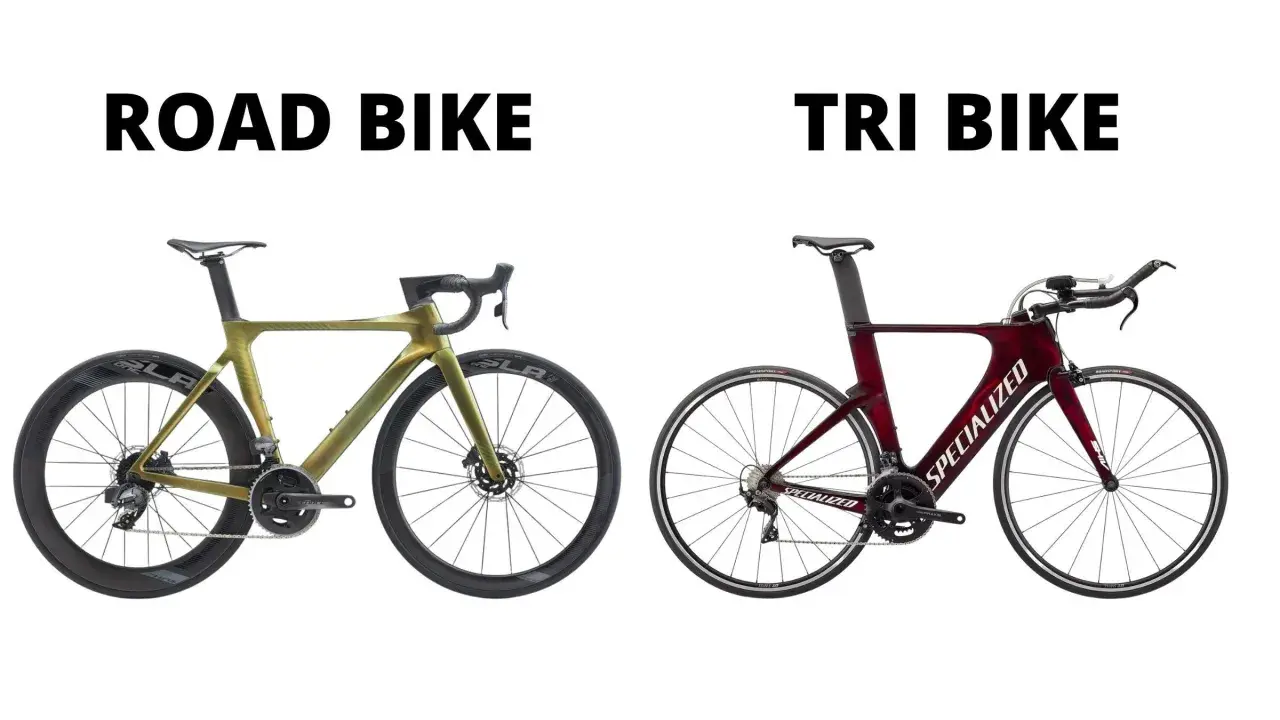
A triathlon bike and a road bike can both be fast, but they solve different problems. The triathlon bike vs road bike decision is really about how long you can stay in aero, how technical your courses are, and whether the bike also has to serve training, group rides, and the occasional long climb. I break down the differences that matter most so you can choose with a clear head, not just because one frame looks more aggressive.
The best choice is the one that matches your race goals and how you actually ride
- Triathlon bikes are built around a steeper, more forward position, usually with aerobars and race-day storage.
- Road bikes are more versatile, handle better in groups, and usually cost less to buy and fit.
- A road bike with clip-on aerobars is often the smartest first step if you are still testing triathlon.
- Tri bikes pay off most on longer, non-draft races where you can stay aero for long stretches.
- Fit matters more than branding; a poorly fit tri bike can be slower than a well-set road bike.

Where the two bikes really diverge on race day
| Factor | Triathlon bike | Road bike | What it means for you |
|---|---|---|---|
| Riding position | Steeper effective seat tube angle, often about 75-78 degrees | Usually around 73-75 degrees on many road bikes | The tri position is easier to hold low and steady for long stretches. |
| Cockpit | Aerobars, arm pads, and extensions | Drop bars with multiple hand positions | A tri bike is built for one main racing posture; a road bike is built for variety. |
| Handling | Stable in a straight line, less nimble in tight packs | Better for corners, climbing, and group riding | Road bikes are more forgiving when the course gets busy or technical. |
| Storage | Often designed with integrated hydration and nutrition storage | Usually relies on bottles, pockets, and add-ons | Tri bikes make on-bike fueling cleaner on long races. |
| Price | About $5,499.99 to $14,499.99 on current U.S. brand pages | About $1,199.99 to $3,799.99 for many current examples | The more specialized bike usually costs several thousand dollars more. |
Those price bands come from current U.S. brand pages from Trek and Specialized, so they are useful reference points rather than universal minimums. The hidden variable is the position itself. Effective seat tube angle is the way we describe how far forward you sit relative to the bottom bracket; on a tri bike that forward bias usually makes the aero posture feel more natural and can spare your legs for the run. Once you understand that, the rest of the trade-offs make a lot more sense.
That geometry difference is what makes the choice feel so different once you move beyond a parking-lot test ride.
When I would choose a triathlon bike
I reach for a tri bike when the course and the race format reward a committed aero position. If you are racing non-draft events, especially 70.3 and Ironman-distance races, the hours spent low and still matter more than they do in a short bike leg. On a flat or rolling course, the gains build up quietly, because you can stay in the same efficient posture instead of constantly shifting around the bars.
- You race mostly non-draft triathlons.
- You spend long stretches alone on the bike.
- You are comfortable learning and holding an aggressive fit.
- You want integrated storage for gels, tools, and hydration.
I also like tri bikes for athletes who already know they will keep triathlon as a real part of their season. That is where the specialization stops feeling expensive and starts feeling logical. The caveat is simple: if you cannot stay comfortable in the aero position, the bike is not doing its job, no matter how fast it looks on paper. That is why fit and practice matter as much as the frame itself.
That ideal tri-specific use case is clear enough; the road bike makes more sense when the bike has to do more than one job.
When a road bike is the better decision
I prefer a road bike when one bike has to cover training, racing, and real-world riding. If you ride with friends, face hilly or technical courses, or still want a bike that feels calm in traffic and group rides, the road platform is easier to live with. It is also the safer call for draft-legal events, where pack handling and rules matter more than absolute aero speed.
- You want one bike for triathlon, solo training, and group rides.
- Your races include climbs, frequent turns, or rough pavement.
- You are still building confidence on the bike.
- You want to keep budget available for fit, tires, helmet, and race entries.
There is another practical reason I lean road bike for many age-group athletes: modern integrated cockpits can be awkward or impossible to pair with clip-on aerobars. If you want a future tri setup, I would check cockpit compatibility before you buy. A conventional road bike with a friendly bar and stem gives you far more room to adapt later.
The other side of the coin is equally important: the road bike stays useful long after the finish line, which is where many athletes quietly win.
How to make a road bike work for triathlon
If the road bike is your smarter base, I would not try to copy a tri bike all the way. I prefer a clean conversion: clip-on aerobars on compatible handlebars, a real fit session, and a front end that lets you stay low without wrecking the run. That approach works especially well if you are testing the sport, racing a few times a year, or building toward longer events without committing to a specialty frame yet.
- Check that your handlebars and stem can safely accept clip-on aerobars.
- Revisit saddle height, saddle fore-aft, pad stack, and reach instead of just bolting on extensions.
- Spend time in the aero position during training, starting with short blocks and building gradually.
- Use fast-rolling tires and sensible pressures so the bike feels quick on real roads, not just on a trainer.
- Set up hydration and nutrition so you can reach it without sitting up every few minutes.
The biggest mistake I see is trying to make a road bike look like a tri bike without changing the fit logic. If the setup is too cramped, too tall, or too unstable, you end up wasting energy on the bike and paying for it on the run. I would rather see a sustainable 85 percent aero setup than a twitchy position you cannot hold for an hour.
Once the setup is right, the decision becomes a lot less emotional and a lot more about budget, race calendar, and how much specialization you actually need.
Spend on fit before you chase frame upgrades
If I had to rank the first dollars in a triathlon build, fit would come first, then tires, then cockpit, then the frame itself. A good position is worth more than a nicer paint job or a marginal aero claim, especially for age-group athletes who are still learning how long they can truly hold the bars.
- Buy the frame that matches your main use case.
- Pay for a fit session before you buy deep wheels.
- Choose the bike that lets you ride comfortably on Tuesday and race efficiently on Sunday.
If you race triathlon a few times a year and still want a bike that feels right on group rides, I would start with a road bike and spend the saved money on fit, tires, and a good aero helmet. If triathlon is the main event and you know you will live in the aero position for long stretches, the tri bike earns its place quickly. The winning choice is the one you can ride confidently, powerfully, and consistently from the swim exit to the finish line.
