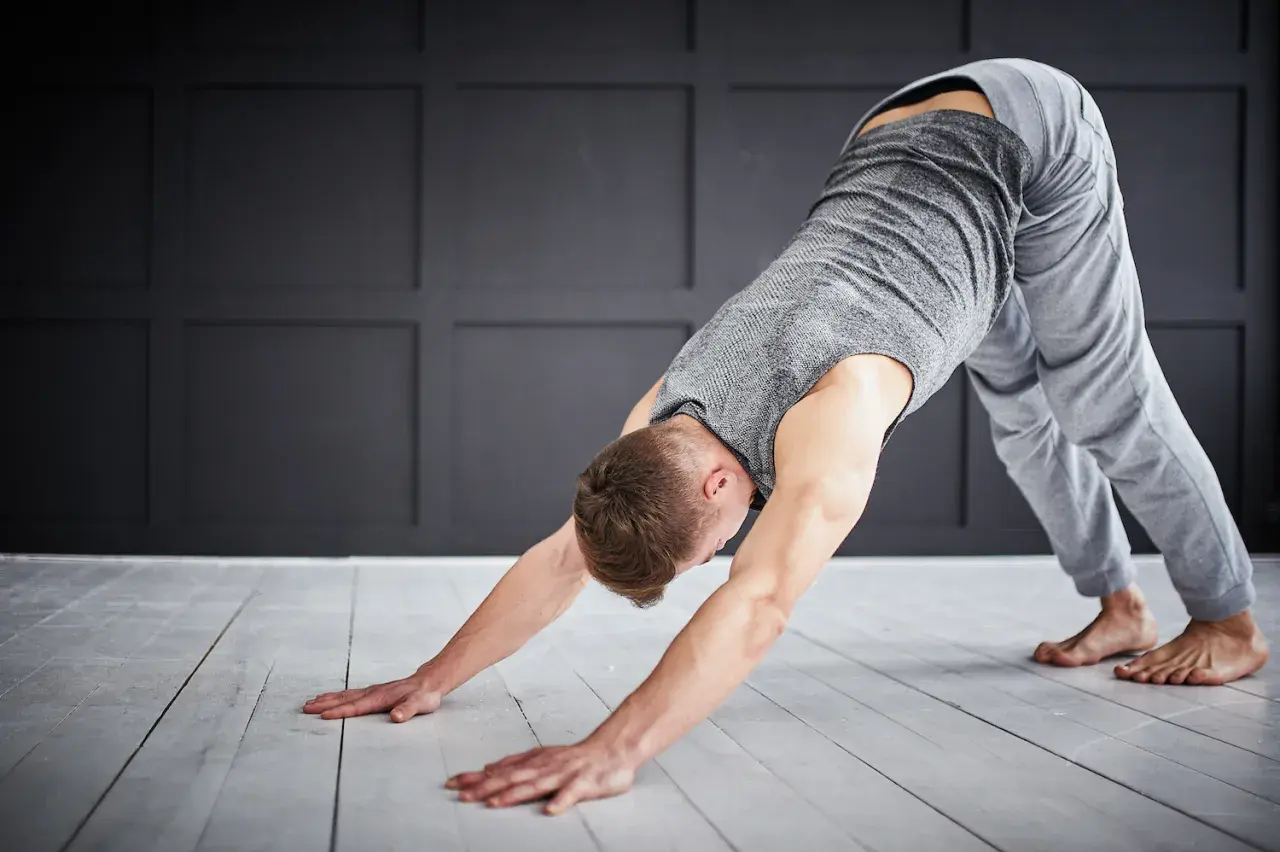
What triathletes need from yoga is mobility, control, and recovery, not extreme flexibility
- Use yoga to restore range of motion in the shoulders, hips, calves, and thoracic spine.
- Choose gentle styles for recovery days and short, targeted flows after training.
- Prioritise poses that help swim rotation, bike comfort, and running mechanics.
- In heavy blocks, 10 to 20 minutes is often enough to make a difference.
- Avoid forcing deep stretches when you are already fatigued or irritated.
Why this practice helps triathlon training beyond simple stretching
Triathlon repeats the same shapes over and over. In the pool, you rotate through the thoracic spine, the middle section of the back that helps you turn and extend. On the bike, you sit in hip flexion for long stretches. On the run, calves, hamstrings, glutes, and feet absorb impact thousands of times. Yoga gives you a controlled way to offset some of that load without adding another hard workout.
The real win is not a dramatic stretch. It is better control of position under fatigue. I also value the breathing side. Slower nasal breathing and longer exhales help shift the body towards the parasympathetic nervous system, the “rest and digest” branch that makes recovery easier after demanding sessions. It helps, but it is not a replacement for strength work, interval training, or proper rehab when something is actually wrong.
Once that is clear, the next question is which style gives you the right dose.
Which yoga styles fit different training phases
Not every class suits a triathlon block. I usually think about the training phase first, then choose the style that matches the stress you are already carrying.
| Style | Best use | Why it works | What to watch |
|---|---|---|---|
| Restorative yoga | Recovery days, travel days, race week | Very low load, supported positions, strong downshift for the nervous system | Too passive if you need an actual mobility stimulus |
| Yin yoga | Easy days, off-season, longer recovery sessions | Longer holds can help hips, ankles, shoulders, and the thoracic spine settle | Avoid forcing range if tissue feels irritated |
| Hatha yoga | Base and build phases | Steady pace, good alignment work, easy to learn and repeat | Can feel too slow if you are looking for a warm-up |
| Slow-flow or mobility flow | After easy swims, rides, or runs | Links movement and breath without turning the session into a workout | Keep it gentle in heavy training blocks |
| Power vinyasa | Off-season, general conditioning, athletes who already tolerate load well | Builds heat and some strength | Can compete with key sessions if it becomes another hard effort |
I rarely send an athlete to a hard power class in the middle of a build block. The work you want here is specific, repeatable, and easy to recover from. The style sets the tone, but the real payoff comes from choosing poses that match each discipline.

The poses that matter most across swim, bike, and run
I care less about fancy sequences than about a small set of reliable shapes. The best poses are the ones that address the exact restrictions triathletes build over time.
| Discipline | What usually tightens | Poses I like | What they solve |
|---|---|---|---|
| Swim | Lats, chest, neck, upper back, shoulders | Thread the needle, puppy pose, reclined twist, dolphin | Cleaner rotation, easier breathing, less shoulder pinch |
| Bike | Hip flexors, quads, lower back, thoracic spine | Low lunge, couch stretch, sphinx, bridge | Better aero comfort, less lumbar compression, more glute support |
| Run | Calves, hamstrings, glutes, ankles | Downward dog, half split, pigeon or figure-four, squat | Smoother stride, better ankle dorsiflexion, less post-run tightness |
| Recovery | Whole body, especially stress and breathing patterns | Legs up the wall, child’s pose, supine twist, slow breathing | Downshifts the system after hard sessions or travel |
If time is short, I would pick one pose from each row and hold it for 30 to 45 seconds per side. For swimmers, I would start with shoulder opening and thoracic rotation before chasing deep hamstring work. For cyclists, I would spend more time on the front of the hips than on the backs of the legs. For runners, calves and glutes usually deserve the first block.
The final piece is timing, because even the right poses can be unhelpful if you place them badly in the week.
How to place yoga inside a triathlon week
Yoga should support the training plan, not compete with it. In a normal build week, I prefer short sessions after easy training or on recovery days. In the UK, that is often the most realistic approach anyway, especially when dark mornings, cold starts, or indoor turbo sessions make muscles feel tighter than usual.
| Training phase | Yoga dose | Good format | What it should feel like |
|---|---|---|---|
| Base phase | 2 to 3 sessions a week, 20 to 30 minutes | Hatha, slow flow, one longer yin session | Open, steady, and unhurried |
| Build phase | 2 sessions a week, 10 to 20 minutes | Short post-workout mobility flows | Restored, not tired |
| Peak or race week | 1 to 2 sessions a week, 8 to 12 minutes | Gentle mobility and breathing work | Calmer, looser, and fully fresh for key sessions |
| Recovery week | 2 to 4 sessions a week, 15 to 30 minutes | Restorative or yin | Settled and recovered, not stretched to the limit |
A useful rule is simple: if yoga makes tomorrow’s key session worse, it was too much. Before intervals, I would keep it to brief activation and breathing. After an easy swim or ride, a short mobility flow usually works well. That timing matters because the next mistake is usually not lack of effort, but too much of the wrong kind.
The mistakes that make yoga less useful for triathletes
- Turning yoga into another sweat session instead of a recovery tool.
- Forcing deep stretches when a muscle or joint already feels irritated.
- Holding aggressive hip openers for too long after hard runs or long rides.
- Ignoring the shoulders and upper back if swimming volume is high.
- Using a generic class that never touches your real weak links.
- Treating pain, pinching, or numbness as normal feedback.
The rule I use is straightforward: you should finish feeling more open and calmer, not wiped out. If a pose causes sharp pain, front-of-shoulder pinching, or lingering discomfort, back off immediately and get the issue checked by a sports physio if needed. Once those errors are out of the way, a short routine becomes much easier to repeat.
A 15-minute routine I would actually give a busy triathlete
This is the kind of sequence I would hand to an age-group athlete with a full workday and a serious training plan. It is short enough to repeat three times a week, and specific enough to matter.
- Cat-cow for 60 seconds to warm the spine.
- Thread the needle for 45 seconds per side to open the upper back and shoulders.
- Low lunge for 45 seconds per side to release the front of the hips.
- Half split for 30 to 45 seconds per side to ease the hamstrings without forcing them.
- Puppy pose or child’s pose with side reach for 45 seconds to lengthen the lats and chest.
- Downward dog for 45 seconds to work calves, shoulders, and the back chain together.
- Pigeon pose or figure-four stretch for 45 seconds per side to settle the glutes and hips.
- Bridge pose for 8 slow repetitions to wake up the glutes and support the lower back.
- Supine twist for 30 to 45 seconds per side, then finish with 60 to 90 seconds of slow breathing.
If shoulders are the limiter, I would swap one of the hip stretches for dolphin or a supported chest opener. If calves are the bigger issue, I would keep downward dog and add a direct calf stretch. The best routine is the one you can repeat without thinking about it, especially when training stress is high. If you keep the practice simple and season-appropriate, it stays useful from base phase to race week.
What I would keep repeating through a full triathlon season
The version that lasts is rarely the fanciest one. I would rather see two short, boring sessions every week than one heroic hour that leaves you too sore for intervals. In a normal build block, I would keep the focus on shoulders, thoracic spine, hips, calves, and controlled breathing.
My practical baseline is this: 20 to 30 minutes in base phase, 10 to 20 minutes in build phase, and 8 to 12 minutes during race week. That is enough for most athletes to feel the difference without compromising the work that actually drives race performance. Used well, yoga becomes the glue that helps the rest of training stick together, not the centrepiece of the programme.
