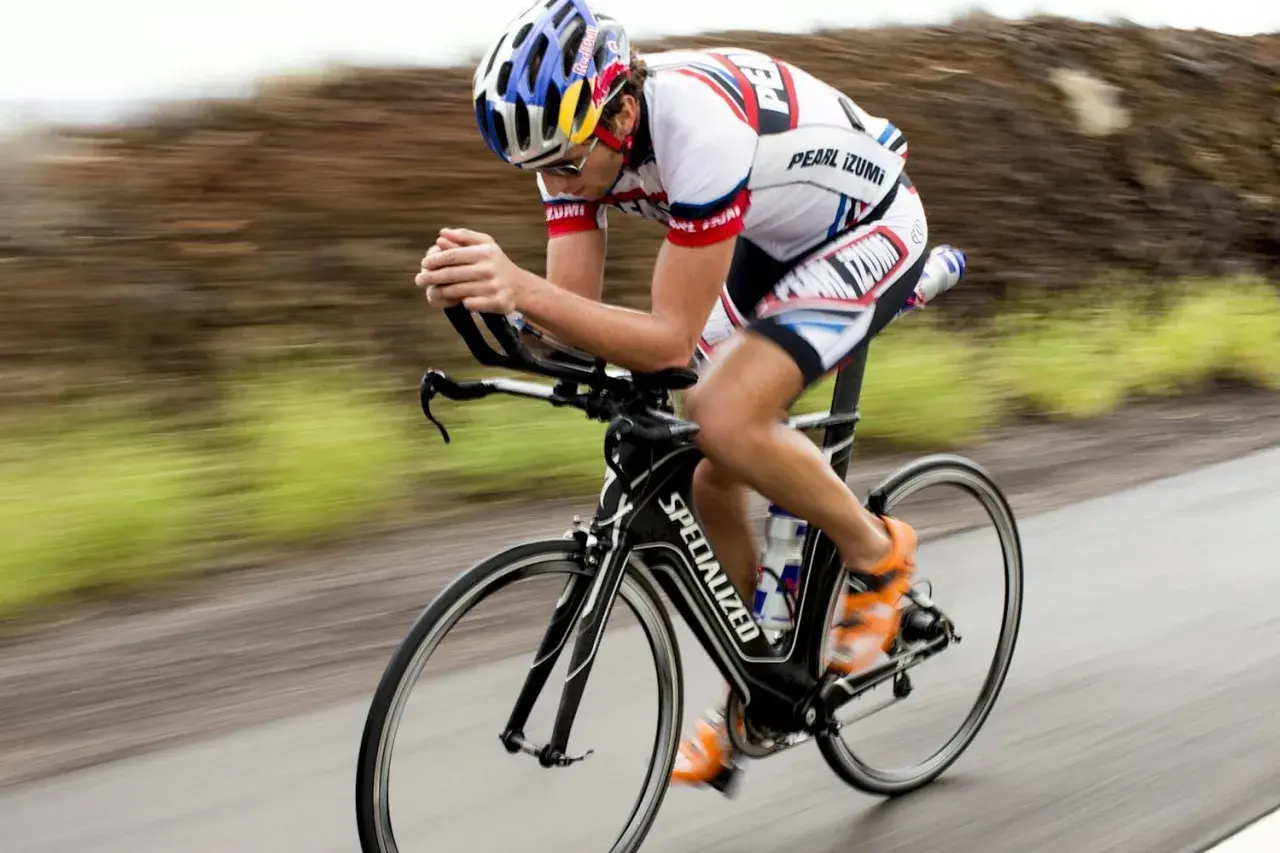
Jesse Thomas is one of those triathletes whose career makes immediate sense once you look past the result sheet. He came from elite running, learned the swim and bike the hard way, and turned that mix into one of the sport’s most memorable long-course stories. I find that useful because it is not a glossy success story; it is a practical one built on coaching, discipline, and a lot of awkward work in the pool.
The main takeaways on Jesse Thomas and his triathlon career
- He is best known for six consecutive Wildflower long-course wins, which made him a defining athlete at one of triathlon’s toughest races.
- He came into triathlon from running, so his swim progress was earned rather than inherited.
- His most useful training ideas are simple: coach-led swim work, mixed sets, open-water practice in the pool, and consistent fuelling.
- He publicly retired from professional triathlon in 2025, but in 2026 he is still part of the sport’s story as Wildflower’s guest of honour.
- For UK age-group athletes, his career is a reminder that durability beats drama when training has to fit around work, family, and recovery.

Why Jesse Thomas still matters to triathletes
What I like about Jesse Thomas is that he represents a type of triathlete many people actually recognise: talented, stubborn, and never fully in love with swimming. He was not a childhood pool specialist who floated through the sport on natural technique. He came from Stanford running, then learned how to build a triathlon career without pretending the transition was easy.
That matters because a lot of age-group athletes, especially in the UK, are working from the same reality. They have decent fitness, limited time, and one discipline that still feels awkward. Thomas shows that you can still become dangerous if you identify the weak link, train it honestly, and stop expecting the process to be comfortable. The next question is how that actually showed up in races.
The race record that made his name
His breakthrough came at Wildflower in 2011, when he arrived as an unknown and won the long-course race. That single result was impressive, but the real story was the streak that followed: six consecutive Wildflower victories. On a course as demanding as that one, repeated wins mean more than form on one good day. They mean pacing, resilience, and the ability to turn a brutal venue into familiar territory.
| Milestone | Why it matters | What it shows |
|---|---|---|
| 2011 Wildflower debut win | He went from unknown to headline winner in one race. | Big leaps can come from steady preparation, not just hype. |
| Six straight Wildflower wins | Very few athletes dominate one course that consistently. | Course knowledge and patience can matter as much as raw speed. |
| Challenge Roth, 7:54:38 | One of his last major elite benchmarks before retirement. | He remained competitive at the full-distance level even late in his career. |
| Official retirement in 2025 | He closed the professional chapter after years away from racing. | Good careers end when the body stops matching the ambition. |
| Guest of honour at Wildflower in 2026 | His name still carries weight at the race that defined him. | Legacy in triathlon is built by repeated performance, not one viral moment. |
That record is why people still talk about him in the same breath as the event itself. But if you only remember the trophies, you miss the part most useful to everyday athletes: the way he attacked the swim, where he had the least natural advantage.
What his swim story teaches athletes who were not born in a pool
Thomas has been unusually blunt about the fact that swimming was hard for him. In an early profile, he said he “swam like a dead fish” and spent a winter swimming 25,000 to 45,000 yards a week just to make up ground. That is not a casual add-on to a training plan; it is a sign that he treated the pool as a project, not a punishment.
His own swim advice is still practical in 2026. The best version of it is simple enough to apply immediately:
- Swim with a good coach on deck so form, pacing, and set design are corrected before bad habits harden.
- Use a group when you can, because harder swims feel less dull and more race-specific when other people are pushing the lane pace.
- Mix paces and distances instead of grinding endless straight sets that do little for triathlon racing.
- Practice open-water skills in the pool, especially sighting, exits, and controlled contact with other swimmers.
- Use tools intelligently such as pull buoys, fins, snorkels, bands, paddles, or a wetsuit when they serve a clear purpose.
I would copy the structure before I copied the volume. A well-designed 3,000-metre session with a clear purpose is more valuable than a heroic slog that leaves you tired and unchanged. That same logic carries straight into how you fuel the work itself.
Fueling and recovery were part of his performance, not a side note
Thomas has also been refreshingly unromantic about nutrition. In Triathlete, he described aiming for 200 to 400 calories per hour during workouts, mostly from carbohydrate, and another 200 to 400 calories of protein and carbohydrate right after exercise. That is a simple rule, but it captures something many athletes still miss: you cannot keep asking the body for race-level output if you keep under-fuelling the sessions that build it.
He also used a “B+” approach to daily eating rather than chasing perfection. I think that is one of the most mature ideas in endurance sport. A rigid diet often collapses under travel, family life, and heavy training weeks; a sustainable pattern survives them. For him, that meant regular meals, enough carbohydrate around training, and enough recovery food to avoid bonking and back-to-back fatigue.
- During training, fuel enough to keep quality high.
- After training, get protein and carbohydrate in early instead of waiting until hunger becomes a problem.
- Across the week, aim for consistency rather than perfection.
That approach matters even more when your schedule is split between work, commuting, and family commitments, which is where his later career becomes especially relevant.
What retirement changes and what it does not
In a 2025 Triathlete column, Thomas said he was officially retiring from professional triathlon after not racing for almost two years. The reason was not a dramatic loss of motivation; it was accumulated injury and the reality that his body had stopped matching his ambition. I respect that decision because it is the kind of honesty many athletes need but do not say out loud.
Retirement changes the scoreboard, not the lessons. He had already spent years speaking openly about recovery, warm-ups, and the need to do less when life outside sport gets busier. Back in 2011, he was already pointing out that if you have family, travel, or a full-time job, the right answer is often to train less and recover better, not to force more volume into the week. That is the part that makes his story useful for amateur athletes, especially those trying to fit triathlon into real life rather than build their life around triathlon.
In 2026, Wildflower brought him back as guest of honour, which feels appropriate. He is no longer racing the course, but he still represents what the course asks of you: patience, toughness, and the ability to keep showing up with a plan. The final step is turning that into something you can actually use in your own training block.
What I would copy from his playbook in a British training block
- One coached swim each week is better than three unfocused swims.
- One race-specific pool set should include sighting, turns, and short changes of pace.
- One fuel target for every key session keeps quality from drifting.
- One honest recovery day is often the difference between adaptation and accumulated fatigue.
- One clear race focus helps you build course knowledge instead of chasing every event.
If I reduce Jesse Thomas’ career to one practical lesson, it is this: he made the hard parts of triathlon less expensive by training them deliberately. That is a better model than chasing perfection, and it works just as well for a UK age-grouper trying to improve the swim as it did for a pro trying to hold form across years of racing.
