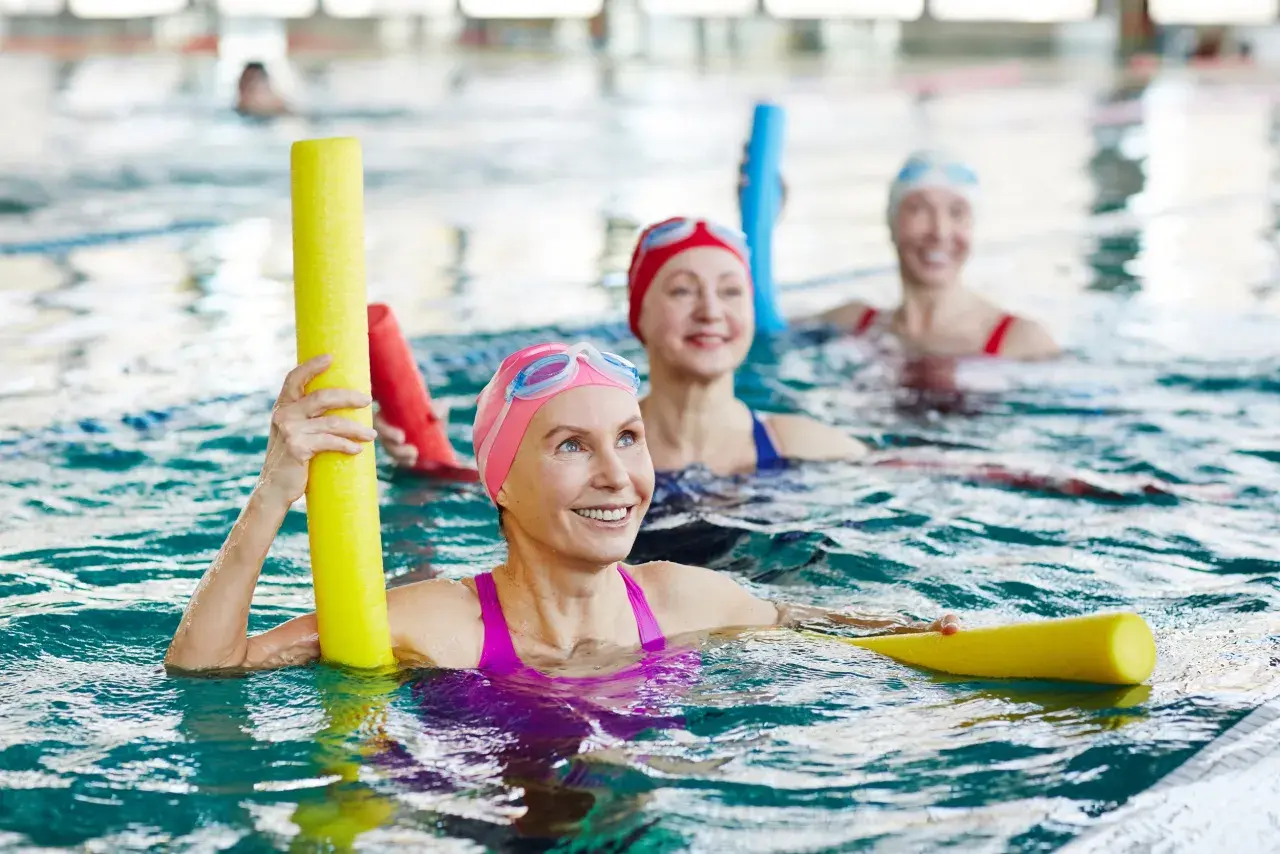
Swimming is one of the few workouts that can build cardiovascular fitness, muscular endurance, and joint-friendly movement at the same time. For fitness swimmers, the goal is not to chase exhaustion; it is to build a pool routine you can repeat week after week. This article breaks down how to train, what to focus on in the water, which gear actually helps, and how to avoid the mistakes that make progress stall.
The fastest gains come from a balanced mix of intervals, technique, and recovery
- Start with 2 to 4 swims per week, because consistency beats occasional huge sessions.
- Use a simple split of easy swimming, drills, a main set, and a short cool-down.
- Keep your breathing, body position, and stroke efficiency clean before you chase speed.
- Add two strength sessions each week so your shoulders, core, hips, and back can support your swimming.
- Use tools selectively, not constantly. Good goggles, fins, a snorkel, or a pull buoy can help when they serve a clear purpose.
- Progress with small changes, not dramatic jumps, so your technique stays intact.
What a fitness swim should actually do for your body
When I design pool work for adults who swim mainly for health, I look for three outcomes: better aerobic capacity, cleaner movement, and enough fatigue resistance to repeat the session next week. Swimming is useful because water supports the joints while still asking the shoulders, trunk, hips, and legs to work in a meaningful way. It also tends to feel easier to stick with than higher-impact cardio, especially for people who want exercise without pounding.
- Cardiovascular fitness improves when you can hold a steady pace without losing your breathing rhythm.
- Muscular endurance grows when the same stroke pattern stays controlled across multiple repeats.
- Movement quality improves when you learn to stay long, balanced, and relaxed in the water.
- Consistency matters because a moderate session you repeat for months beats a hard workout you dread.
That mix is why swimming works so well for general health. It can build conditioning without beating up the body, but it still needs structure if you want more than random laps. Once the goal is clear, the weekly schedule becomes much easier to build.
How to build a weekly schedule that fits real life
The adult activity guideline is 150 minutes of moderate work each week, or 75 minutes of vigorous work, plus 2 strength sessions. I use that as a practical baseline, not a rigid contest score. For most adults, three swims per week is the sweet spot: enough frequency to improve, not so much volume that recovery turns into a second job.
| Weekly frequency | Best for | What the week usually looks like |
|---|---|---|
| 2 swims | Maintenance, busy weeks, or a gentle restart | 1 technique-focused session and 1 longer aerobic session, about 30 to 45 minutes each |
| 3 swims | The best balance for most adults | 1 technique day, 1 aerobic day, and 1 interval day, usually 35 to 60 minutes each |
| 4 swims | Faster progress if recovery is good | 2 easier swims, 1 interval session, and 1 longer swim, usually 40 to 70 minutes each |
If you are returning after a long break, begin with 20 to 30 minutes and add 5 minutes every week or two. I also like to see swimmers keep one session intentionally easy, because that is usually the one that protects consistency. U.S. Masters Swimming's workout library is useful when you want ready-made sessions instead of inventing every set from scratch.
Once that is in place, the actual set becomes easier to repeat.

The session structure I recommend most
Most productive swims follow the same shape. Warm the body, isolate one technical cue, then spend the bulk of the session at a pace you can control. A send-off time is the total time allowed for each repeat, while a rest interval is the pause between repeats. Knowing the difference keeps you from drifting through the workout without a real target.
| Part | Time | Purpose | Example |
|---|---|---|---|
| Warm-up | 8 to 10 minutes | Raise body temperature, settle breathing, and wake up the shoulders | 200 easy swim, then 4 x 25 build |
| Drill set | 5 to 10 minutes | Fix one stroke issue at a time | 4 x 50 catch-up, side-kick, or single-arm freestyle |
| Main set | 15 to 25 minutes | Build aerobic fitness or controlled intensity | 6 x 100 steady on short rest, or 8 x 50 at moderate effort |
| Cool-down | 5 to 10 minutes | Lower heart rate and leave the pool feeling better, not trashed | 100 to 200 easy swim |
A simple 25-yard-pool workout might look like this: 200 easy, 4 x 50 drill and swim by 25, 6 x 100 steady with 15 to 20 seconds of rest, 4 x 25 smooth-fast, then 100 easy. That is enough work to improve fitness without letting technique collapse under fatigue. Once the structure is predictable, technique work becomes much less frustrating.
Technique cues that save energy fast
The fastest way to waste energy is to fight the water. Small mechanics mistakes add up quickly, which is why I keep returning to the same handful of cues with adults. If those are clean, the whole stroke usually gets better without forcing it.
- Keep the head neutral. Your eyes should point down and slightly forward so the hips do not sink.
- Exhale underwater. If you hold your breath, the inhale gets rushed and the stroke gets tense.
- Enter quietly and stay narrow. Crossing over the center line or slapping the water wastes force.
- Feel the catch early. The catch is the moment your forearm and hand start holding water, not the moment you yank backward.
- Use the kick for balance. For many adults, a steady two-beat or four-beat kick is more useful than an aggressive flutter kick.
- Check stroke count occasionally. Stroke count is the number of strokes needed to cover one length, and it is a simple efficiency check when your pace starts drifting.
Drills matter because they isolate one part of the stroke instead of asking you to fix everything at once. That is why I prefer short, focused technical work over endless full-speed laps. The next question is which tools genuinely help and which ones are just pool clutter.
Gear that helps and what is optional
I try to keep gear simple because most adults need feedback more than gadgets. The right equipment should improve body position, breathing, or stroke feel. If a tool only makes you feel busy, it probably is not helping enough.
| Gear | Best use | Why it helps | Watch out for |
|---|---|---|---|
| Goggles | Every session | Clear vision and a relaxed head position | Leaks and fogging ruin pacing and comfort |
| Pull buoy | Technique and upper-body focus | Removes the kick so you can feel body line and pull | Do not use it to avoid kicking work forever |
| Fins | Drills, body position, and ankle mobility | Help lift the hips and make movement feel smoother | They can hide weak mechanics if you overuse them |
| Snorkel | Drill sets and head-position work | Lets you focus on alignment without turning every breath into a scramble | Choose the tool that supports your goal, not just the one that looks advanced |
| Paddles | Short strength-oriented sets | Add load to the catch and pull | They can stress the shoulders if your technique is sloppy |
If you own nothing else, buy goggles that fit, a suit that lets you move well, and one training aid you know how to use properly. Everything beyond that should earn its place in your bag. The right tools can sharpen a session, but progress still depends on how well you recover from it.
Recovery, strength work, and pool safety
Swimming sessions feel better when the rest of the week does its job. I do not think of dryland work as an optional extra, because a stronger trunk and shoulder girdle usually make every stroke more efficient. That matters even more when you swim several times a week.
Dryland work that transfers to the pool
- Squat or split squat work for leg strength and balance.
- Hip hinge work, which is the movement pattern behind deadlifts and Romanian deadlifts, for the back side of the body.
- Rows or band pull-aparts to support posture and pulling strength.
- Planks or dead bugs. A dead bug is a core drill that teaches the trunk to stay stable while the arms and legs move.
- External rotation with a band to balance shoulder work.
Read Also: Water Aerobics Before and After - Real Results & Timeline
Simple safety habits that are easy to overlook
- Shower for at least 1 minute before entering the pool.
- Stay out of the water if you have diarrhea.
- Do not swallow pool water.
- Dry your ears thoroughly after swimming.
- If shoulder pain changes the way you stroke, back off and reassess instead of pushing through it.
Swimming is low impact, but it is not zero stress. The point is to keep small issues from turning into long layoffs. The people who improve longest are usually the ones who avoid the traps that break rhythm.
Common mistakes that stall progress
Most plateaus are boring, which is why they repeat. I see the same problems over and over in adults who train on their own, and most of them have a simple fix once you notice them.
- Swimming hard every session. If every day is a test, fatigue starts masking technique and recovery.
- Skipping the warm-up. The first 10 minutes should prepare you for work, not waste time shaking out stiffness.
- Adding distance before control. More yardage does not help if your stroke falls apart halfway through the set.
- Using tools to hide weak mechanics. Paddles, pull buoys, or kickboards can support training, but they should not become a cover-up.
- Ignoring pain. Normal effort feels different from joint pain or a change in stroke pattern. Treat them differently.
- Never changing the workout. If the same set feels easy forever, the body has stopped needing to adapt.
That leaves the simple part: progression that stays sustainable.
How to keep improving without turning every swim into a test
The next step is not more suffering. It is smarter progression. My rule is simple: change one variable at a time so you know what actually worked. If you increase distance, keep pace and rest steady. If you reduce rest, keep the total distance the same. If you push pace, do it in one controlled set, not across the entire workout.
- Keep the same workout shape for 2 or 3 weeks so your body can adapt.
- Add 5 to 10 percent more distance, or trim a little rest, only after the current workload feels controlled.
- Every fourth week, cut volume by about 20 to 30 percent so you recover and absorb the work.
- Use one benchmark set, such as a 400-yard continuous swim or 8 x 50 on fixed rest, to check whether your efficiency is improving.
- When you want more challenge, make one part of the session harder, not the whole swim.
That is the version of training I trust: simple, repeatable, and easy to recover from. Build the habit first, then layer in speed, distance, and more specialized sets only when the basic routine feels boring in a good way.