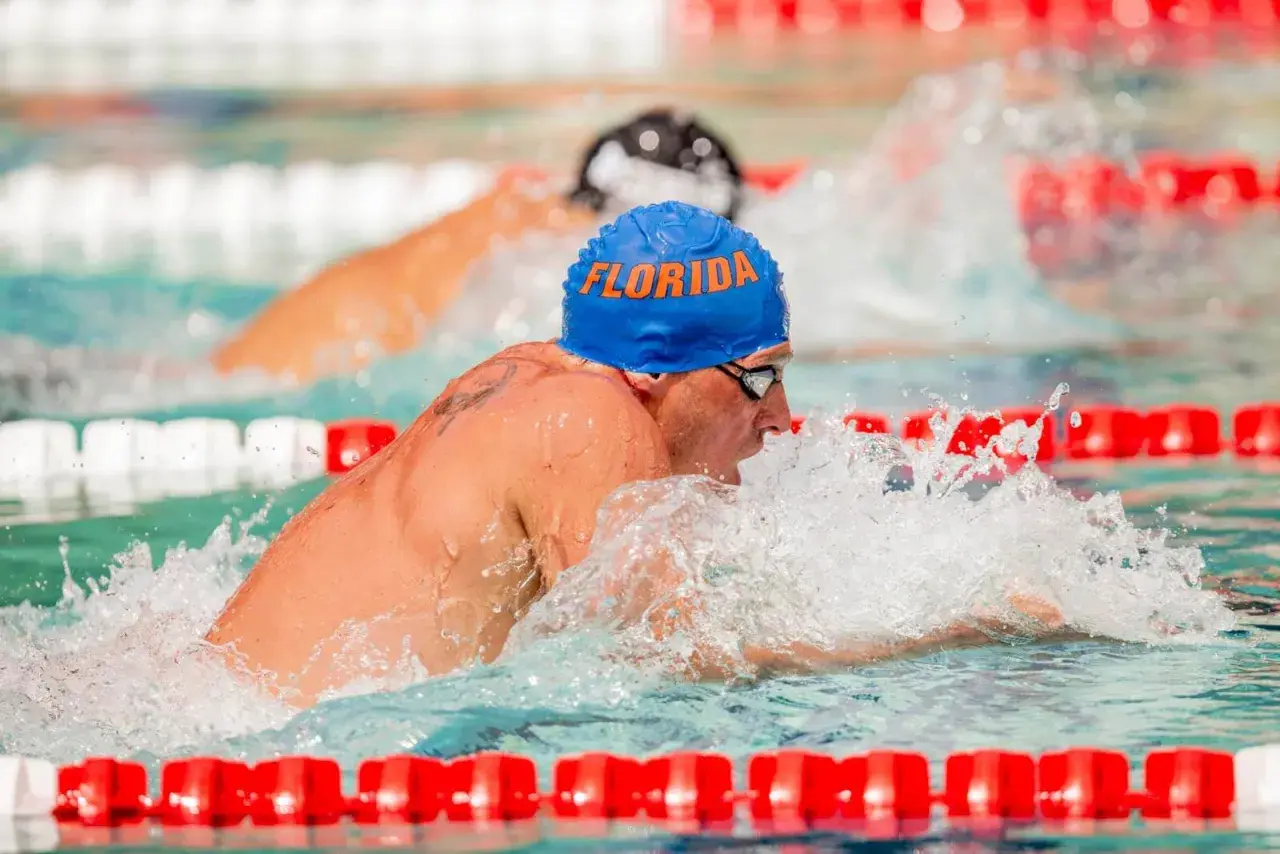
Ryan Lochte workouts are best understood as a system, not a single hard session. His best swimming came from a mix of pool volume, race-specific work, and dryland power, which is exactly why this topic matters if you want faster 100s and 200s without wasting energy on the wrong kind of training. I want to break down what his routine actually had in common, what the dryland work was doing, and how to adapt the idea to a realistic swim programme.
The main thing to know about Lochte's training
- Lochte did not build his career on endless mileage alone. His training shifted by phase, event, and goal.
- Publicly documented sessions show variety, not monotony. Power days, leg emphasis days, and speed work all had different jobs.
- The unusual dryland work had a purpose. It was meant to turn force into cleaner swimming, not to chase bodybuilder size.
- Most swimmers should copy the structure, not the exact load. The right dose is usually much smaller than an elite's.
- Recovery is part of the model. Without it, the training just becomes fatigue with a famous name attached.
What Ryan Lochte workouts really had in common
I think the biggest misunderstanding is that Lochte won because he simply trained more than everyone else every day. In high school, he was reported to train only six sessions a week and rarely go over 6,000 yards, which is about 5,500 metres, so the early picture is already more nuanced than most people expect. Later, the work became much more specific: Swimming World published a championship block that used power days around 3,500 to 5,200 metres, with coach Gregg Troy saying the idea was to spend five to seven days at about 80% of max volume while keeping stress low.
That tells me the model was built on sequencing, not just volume. A tough week for Lochte usually had three jobs:
- Build the aerobic system so he could hold pace when the races got long.
- Sharpen race speed so the water did not feel foreign when the effort got violent.
- Keep the IM details alive because his best events depended on transitions, turns, and discipline under fatigue.
One published pre-Trials block also showed what that looked like in practice: 8 x 100 IM, 6 x 75 with swim-kick changes, 150 kick for time, 25s sprint work, and tubing in the water once the main power tower work had been dropped. I read that as a clear message, not a random set of numbers, because the session was designed to train the middle of the IM, the breakouts, and the ability to change gears without losing shape. Once you see the pattern, the next question is how the dryland work helped him make those swims count.

The dryland work that built his power
Lochte became known for dryland sessions that looked unusual from the outside: buckets, tyres, chains, jump rope, and other strongman-style tools. I would not copy the circus version of that work, but I would absolutely copy the intent. The point was to build force production, trunk stability, and shoulder durability so he could keep pressure on the water when fatigue started to change his stroke.
For swimmers, that kind of training usually makes sense when it is built around movement quality rather than ego. The most useful pieces are:
- Tyre flips and loaded carries to train hips, legs, and full-body tension.
- Medicine-ball throws and cable pulls to train power transfer without grinding the joints.
- Jump rope or pogo-style work to improve rhythm, elasticity, and foot speed.
- Anti-rotation core drills because swimmers lose time when the torso leaks force.
- Band work and shoulder prep to keep the scapula and rotator cuff happy under load.
What I would not copy is the bodybuilding mistake that many swimmers still make: too much heavy pressing, too much arm isolation, and too little movement control. A swimmer does not need a gym session that makes the lats, chest, and shoulders so tight that the catch gets shorter. If the dryland work makes your stroke feel heavy, the session has crossed the line. The useful question now is how to turn that elite logic into something a club swimmer in the UK can actually use.
How to adapt the template for a UK swim programme
If I were writing this for a county swimmer, a university athlete, or a masters competitor, I would strip the idea down to three weekly priorities: one aerobic session, one race-pace session, and one dryland session. The exact yardage matters much less than the shape of the week. Most swimmers do not need Lochte's volume; they need the same principles at a dose the body can absorb and repeat.
| Training element | Lochte-style intent | Realistic UK adaptation | Why it works |
|---|---|---|---|
| Aerobic base | Longer blocks that support the season | 1 session of 3,000-5,000m steady work, plus 1 shorter aerobic warm-up day | Builds the engine without flattening speed |
| Race pace | IM and stroke-specific speed | 12-24 x 25m or 8-12 x 50m at target pace with full control | Teaches the body what fast actually feels like |
| Dryland | Explosive force, not size | 20-40 minutes, 1-3 times weekly: med-ball, pulls, jumps, bands, core | Transfers power without wrecking technique |
| Recovery | Absorb the work | At least 1 low-load day each week, 8-9 hours sleep when possible | Prevents the "always tired, never faster" trap |
A simple weekly shape might look like this: Monday, an aerobic swim with technical work; Wednesday, a threshold or IM-focused set with controlled race-pace 25s; Friday, speed and turn work with enough rest to keep the stroke clean; Saturday, a 30-minute dryland block plus an easy recovery swim. For a sprint swimmer, I would keep the same structure but trim the aerobic volume slightly. For a 400 IM swimmer, I would keep a little more aerobic support. The right answer depends on the event, but the logic stays the same: quality first, then recover enough to repeat it. The next issue is where most people get this wrong.
The mistakes that make elite-style training backfire
Most swimmers do not fail because they are lazy; they fail because they copy the wrong variable. The usual mistakes are predictable, and I see them a lot:
- Copying volume before technique. If body position breaks down, the set just rehearses bad habits.
- Turning the gym into a fatigue contest. The goal is power and control, not soreness for its own sake.
- Skipping shoulder and hip maintenance. Swimming punishes weak links very quickly.
- Doing race-pace work when already broken. Speed only helps if the movement stays sharp.
- Removing easy days entirely. Without recovery, hard training stops being productive.
The warning signs are usually obvious: stroke count rises while pace falls, the shoulders feel flat for more than 48 hours, and kick quality drops long before the main set is finished. When that happens, the problem is not discipline, it is dosage. If you keep the load sensible, the final lesson becomes much more useful and much less dramatic.
What to keep from Lochte's approach in 2026
The real value of Lochte's model is not nostalgia for a famous training story. It is the structure: build an engine, sharpen race pace, and use dryland to make the water work feel easier. That is still one of the most honest ways to improve swim fitness, especially if your goal is faster 100 and 200 racing rather than just surviving a long session.
- Keep the base, but scale the volume to your level.
- Keep the power, but make it swimmer-specific and technically clean.
- Keep the speed, but rest enough between reps for it to stay meaningful.
- Keep one easy day, so the hard days stay hard.
If you want a practical starting point, use one extra race-pace set, one focused dryland block, and one recovery decision you usually ignore, such as earlier sleep or a lighter pull set. That is often enough to make the week more effective without pretending you can copy an Olympic champion's entire workload.
