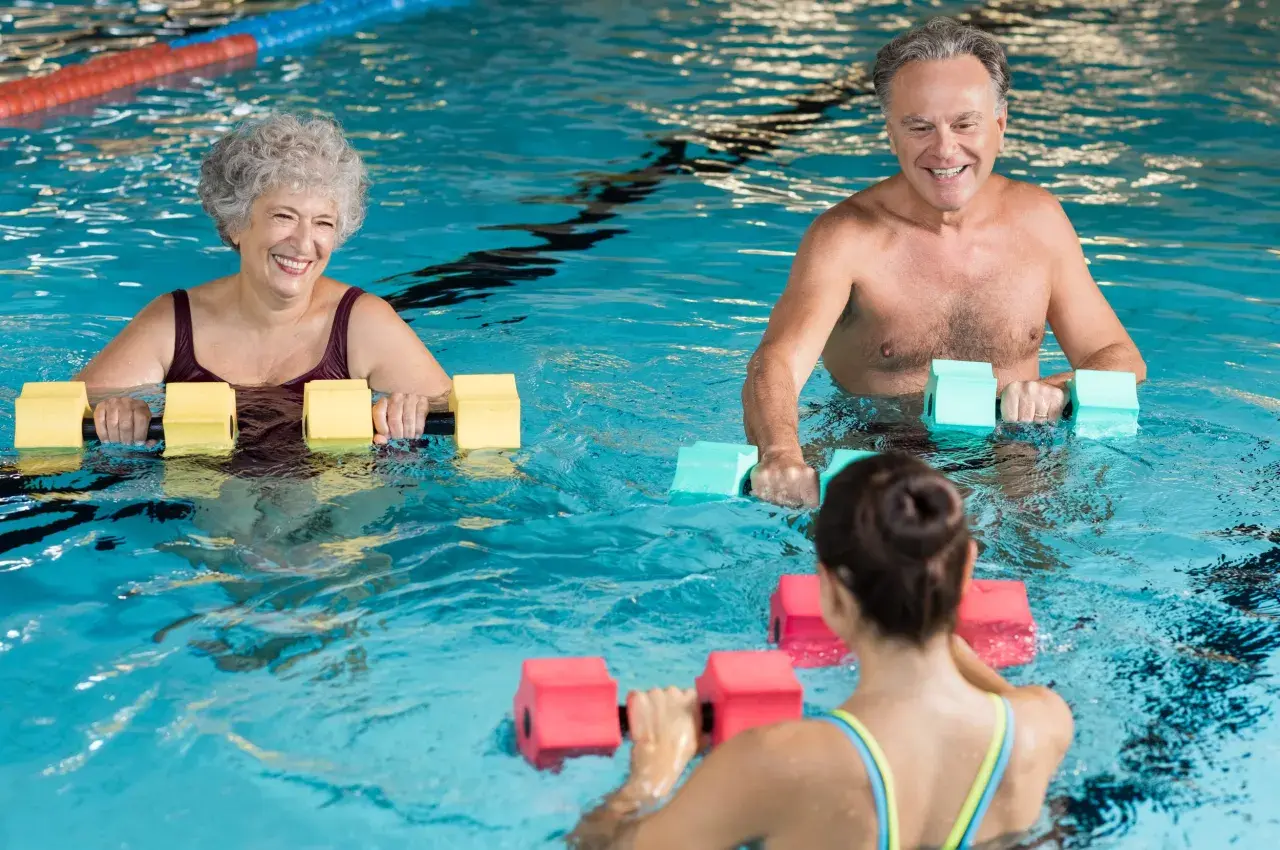
Pool-based training changes more than body composition. In a good class, you often notice better mobility, less joint irritation, and a steadier cardio workout long before the mirror shows anything dramatic. This guide breaks down water aerobics before and after changes, what usually improves first, how long results take, and how to set up a routine that fits real life in the UK.
The biggest gains are usually stamina, joint comfort, and a gradual change in shape
- Most people feel the first change as less joint stress and better movement confidence, not immediate weight loss.
- A realistic target is 2 to 3 pool sessions a week, usually 30 to 45 minutes each.
- Visible body changes are more likely after 10 to 12 weeks than after a handful of classes.
- The NHS still recommends 150 minutes of moderate activity a week, plus strength work on 2 days.
- Water aerobics helps most when you use it for cardio, recovery, and consistency, not just for a gentle splash around.
What changes first when you start
I usually see the earliest changes in tolerance rather than appearance. People finish class less wiped out than they expected, recover faster the next day, and move with less fear of knee, hip, or back pain. That matters because a routine only works if it feels repeatable, and water makes repeatable movement far easier for many bodies than land exercise does.The first wins are usually practical:
- Lower impact on joints, which can make movement feel safer if walking, running, or gym work has been uncomfortable.
- Smoother breathing control, because even easy water work pushes the heart and lungs a little harder than people expect.
- Better coordination, since you are managing balance, tempo, and resistance at the same time.
- Less post-session soreness than many land workouts, although that can also hide how hard you actually worked.
That early stage is encouraging, but it is not the whole story. What most readers really want next is a realistic timeline for visible change, not just a list of benefits, so that is where I would look next.

A realistic 12-week timeline
The cleanest way to think about pool results is in phases. A BMJ Open review found that water aerobics for 10 or more weeks was linked with average losses of nearly 3 kg and about 3 cm from the waist in adults with overweight or obesity, with stronger effects in women and people over 45. That is useful because it sets expectations: the change can be real, but it is usually gradual and modest rather than dramatic.| Timeframe | What you may notice | What I would not expect yet |
|---|---|---|
| 1 to 2 weeks | Less stiffness, better comfort in the water, and a clearer sense of how hard the class really is | Major visual changes or a large shift on the scale |
| 3 to 4 weeks | Improved stamina, smoother movement, and less panic when the pace picks up | Big body-composition changes if food intake has not changed |
| 6 to 8 weeks | Better posture, more tone in the shoulders and legs, and easier recovery after class | A complete transformation |
| 10 to 12 weeks | Measurable waist or weight change becomes realistic if sessions are consistent | The same result for every body type and every training pattern |
I think this is where a lot of people misread the process. They expect the first two sessions to show up in photos, when the more reliable signs are usually in breathing, energy, and the way clothes fit after a couple of months. That leads naturally into the question swimmers ask most often: what does this do for training, not just for appearance?
Why swimmers use it as cross-training
For swimmers, aqua aerobics is not a replacement for stroke work. It is a smart add-on. I like it most as cross-training because it lets you keep building aerobic fitness and muscular endurance without the pounding you get from running or hard gym circuits.It is especially useful when you want one or more of these outcomes:
- Extra cardio volume without adding impact to the ankles, knees, or hips.
- Shoulder and trunk endurance, especially if your stroke volume is limited on some days.
- Recovery between harder swim sessions, because water can keep you moving while still feeling gentler than land work.
- Confidence after time away from training, which matters more than people admit.
How to build a routine that actually changes your body
The NHS still recommends 150 minutes of moderate-intensity activity a week, plus strength work on 2 days. For most people, that means water aerobics works best as part of a wider plan, not as a one-off feel-good session. If you can talk but not sing while moving, you are probably in the right intensity zone; if you are only ever breezing through the class, the body change will usually be slow.
- Start with 2 sessions a week of about 30 to 40 minutes if you are new or returning.
- Build to 3 sessions if recovery is good and you want more visible change.
- Use intervals instead of only steady movement, for example 45 seconds hard and 30 seconds easy for several rounds.
- Add resistance tools such as aqua dumbbells, gloves, or a buoyancy belt when the class starts to feel too easy. They add drag, which is the point.
- Keep separate strength work on land if your goal is firmer muscles, better posture, or better bone support.
- Match food to the goal. If fat loss is the aim, the pool helps, but it will not cancel out a calorie surplus.
I also tell people not to ignore the warm-up and cool-down. Five to 10 minutes at the start and end makes the class feel cleaner, reduces abrupt effort spikes, and helps you recover better. Once the routine is structured, the next threat is not lack of effort; it is the small mistakes that quietly flatten progress.
The mistakes that hide progress
Most disappointing results are not caused by the exercise itself. They come from how the exercise is used. If the class is too easy, too infrequent, or paired with unrealistic expectations, the “before” and “after” pictures will look almost identical.
- Going once a week and expecting a fast transformation. That is enough to help, but not enough to drive much visible change for most people.
- Staying in the comfort zone every time. Water hides effort, so many people work at a level that feels pleasant but does not challenge the body enough.
- Judging progress by sweat. Pools disguise heat and sweat, so lack of dripping does not mean the workout was easy.
- Expecting spot reduction. You cannot pick one area, like the stomach or thighs, and force fat loss from only there.
- Skipping food control. This is the most common reason the scale barely moves even when the classes are regular.
- Never progressing the session. If the same routine feels identical after six weeks, your body has probably adapted to it.
Once those traps are out of the way, you need a better way to judge whether the routine is working than just checking a mirror every few days. That is the part I would track carefully from the start.
The markers that tell me the routine is working
If I were following this plan myself, I would not rely on one photo or one weigh-in. I would track a small set of repeatable markers over 8 to 12 weeks, because they tell a much cleaner story.
- Waist measurement every 2 weeks, taken at the same point and time of day.
- Breathing recovery, meaning how quickly you settle after a hard block of work.
- Class output, such as how many intervals or lengths you can complete at the same effort.
- Joint comfort the next day, especially in the knees, hips, shoulders, or lower back.
- Sleep and mood, because exercise often improves both before it changes body shape much.
- Confidence in the water, which is easy to overlook but very real.
If you want a genuine before-and-after picture, give the routine 10 to 12 weeks, keep the sessions steady, and measure the same things each time. That way you are judging the actual effect of the training, not a one-off good day, a bloated day, or a random jump on the scale.