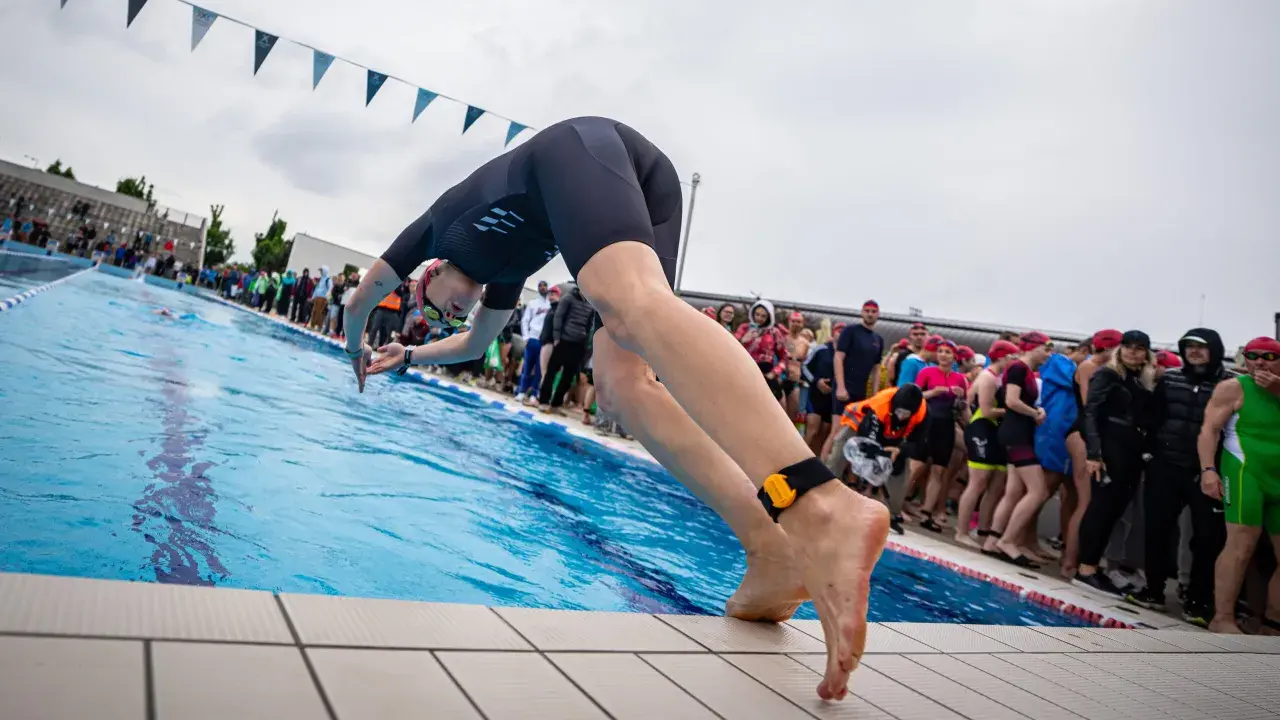
Swimmer motivation is rarely built on hype; it comes from a clear target, repeatable habits, and enough recovery to keep the body willing to work. In this guide, I focus on the practical side of staying committed: how to set goals that pull you forward, how to survive low-energy days, and how to avoid the kind of fatigue that quietly turns good athletes into inconsistent ones. The ideas are simple, but when they are applied well, they change the whole season.
The fastest way to keep swimmers committed is to make progress visible
- Use process goals for daily control, not just outcome goals for the scoreboard.
- Keep a short pre-pool routine so every session starts the same way.
- Let one coach cue and one teammate check-in carry the accountability load.
- Refresh training with structure, not random changes that break rhythm.
- Watch for burnout signals early; motivation usually drops after fatigue has already built up.
Why swimmer motivation fades in the first place
I see the same pattern over and over: a swimmer does not suddenly become lazy, they usually stop getting useful feedback from the process. When every session feels identical, the clock becomes the only thing that matters, and the clock is a brutal teacher because it only rewards the final result. Add school, work, injuries, or family pressure, and even a talented athlete can start feeling detached from the pool.
The most common causes are usually predictable. Boredom creeps in when practices are repetitive. Stress rises when the program feels too controlling. Commitment slips when pain, sleep loss, or poor recovery make the body feel heavy before the workout even starts. And if the environment becomes tense, swimmers often stop asking, “How do I improve?” and start asking, “How do I get through this?” That shift matters.
- Too much focus on times and rankings.
- Training that feels repetitive without a clear purpose.
- Fatigue, soreness, or lingering injury.
- Weak feedback from coach or teammates.
- Competing priorities outside the pool.
Once you understand what is draining the drive, the next step is not more intensity; it is better goal design.
Set goals you can control in the pool
In swimming, I prefer goals that a swimmer can actually influence today. Outcome goals are useful for direction, but they are a poor daily fuel source because too many things sit outside your control. Process goals work better when the real problem is consistency. A process goal might be holding the same breakout count every wall, finishing every length with a long stroke, or hitting a pace range across the main set.
My rule is simple: keep one season goal, one monthly focus, and one session cue. That is usually enough. More than that, and the brain starts treating the whole list like background noise.
| Goal type | Example | Why it helps | Risk if used alone |
|---|---|---|---|
| Outcome goal | Qualify for a championship meet | Gives direction and meaning | Depends on variables you cannot fully control |
| Process goal | Hold a clean stroke count on every aerobic repeat | Creates daily focus and immediate feedback | Can feel too small unless tied to a bigger aim |
| Consistency goal | Hit five quality sessions per week for four weeks | Builds the habit that keeps progress moving | Can become mechanical if you ignore technique |
| Recovery goal | Protect sleep and refuel after hard sessions | Keeps training sustainable | Often neglected because it feels less urgent |
For most swimmers, the biggest win is to tie one controllable behavior to each practice block. That keeps effort visible, and visible effort is easier to repeat. Once the goal is clear, the next challenge is making the first 10 minutes of practice feel automatic.

Turn practice into a repeatable routine
A short routine removes decision fatigue. I like routines that take five minutes or less because anything longer starts to feel negotiable. The point is not to create a ritual for its own sake; the point is to tell your brain, “This is what we do before work starts.”
- Choose one cue before you even get to the pool, such as “smooth breakout” or “fast hands.”
- Use the same warm-up pattern, even if the details change slightly from day to day.
- Preview the first main set so you know what the session is trying to train.
- Keep one recovery habit fixed, like drinking water and eating something within an hour after practice.
- Write one note after training: what improved, what slipped, and what to fix next time.
I also like simple if-then planning. If the day is chaotic, then the swimmer still follows the same first five minutes. If the energy is low, then the first task becomes technical quality rather than proving toughness. That kind of structure helps because it reduces the number of internal negotiations. From there, accountability becomes much easier to use well.
Use people, not pressure, to stay accountable
The best accountability in swimming is calm and specific. Pressure alone can create short bursts of effort, but it rarely sustains commitment. A strong coach relationship, one reliable training partner, and a clear weekly check-in do more than a loud pep talk ever will.
I prefer accountability that answers three questions: What am I trying to improve, who knows it, and when do I review it? If those three pieces are in place, the swimmer is far less likely to drift.
- Ask your coach for one technical focus and one success metric each week.
- Pick one teammate who will notice when your effort drops.
- Send a short weekly update if you train independently: what worked, what felt flat, what changes next week.
- Keep comparisons useful, not emotional. Another swimmer can be a reference point, not a verdict.
Support matters because swimming is repetitive by design. The more isolated the training feels, the faster enthusiasm fades. Once accountability is working, the next question is how to keep the work interesting without turning every session into something new.
Keep training interesting without chasing novelty
There is a difference between useful variety and random novelty. Useful variety keeps the body and mind engaged while still serving the plan. Random novelty usually looks exciting for a week and then creates confusion, especially if the swimmer never knows what the session is supposed to develop.
I would rather rotate the constraint than reinvent the whole program. For example, one week may emphasize turns, another may sharpen race tempo, and another may focus on long aerobic repeats with cleaner stroke efficiency. The program stays coherent, but the swimmer still feels progress in more than one dimension.
| Helpful variety | Unhelpful novelty |
|---|---|
| Drill blocks that improve feel for the water | Changing the whole workout style every session |
| Race-pace sets tied to a clear goal | Hard sets with no explanation |
| Occasional dryland work that supports the stroke | Constantly adding random extras |
| Small technical challenges within the same training block | Testing a new concept before the old one is learned |
That balance keeps motivation alive because the swimmer can feel both stability and progress. Still, even the best plan runs into fatigue, and that is where many athletes mistake burnout for a character flaw.
Catch burnout early and recover before it costs momentum
Burnout usually announces itself before it becomes obvious. The swimmer starts dreading practice for more than a few days. Warm-ups feel strangely heavy. Small aches last longer than they should. Times stop mattering. Sleep quality slips. At that point, I do not ask for more grit first; I ask what needs to be reduced.
When the warning signs show up, I usually recommend a short reset rather than a total stop. Reduce volume by roughly 10 to 20 percent for a week, keep intensity only in the key sessions, and simplify the main focus. If the swimmer is carrying pain, poor sleep, or a persistent mood drop, I would rather involve a coach, athletic trainer, or sports medicine professional early than wait for the problem to deepen.
- Dread that lasts longer than 7 to 14 days.
- Performance dropping despite normal effort.
- Irritability, flat mood, or poor sleep.
- Physical soreness that never quite clears.
- Loss of interest in the sport, not just the meet.
Recovery is not a reward for finishing the season; it is part of what keeps the season possible. Once that is accepted, motivation becomes less fragile. From there, a short reset plan can rebuild momentum without drama.
The 30-day reset I use when a swimmer feels stuck
When drive is low, I like to simplify the month instead of trying to solve everything at once. Four weeks is long enough to create traction and short enough to stay focused.
- Week 1: Cut the goal list down to one technical target, one conditioning target, and one recovery habit.
- Week 2: Lock in the pre-pool routine and keep it unchanged for every session.
- Week 3: Add one accountability touchpoint with a coach or teammate.
- Week 4: Review what improved, what still feels heavy, and what should stay in the plan next month.
If I had to reduce swimmer commitment to one idea, it would be this: make the right action easy to repeat. The swimmers who stay in the sport for years are usually not the ones who feel inspired every day; they are the ones who build a system that still works when energy is low. That is the most reliable way to protect progress, enjoyment, and long-term commitment in the pool.
