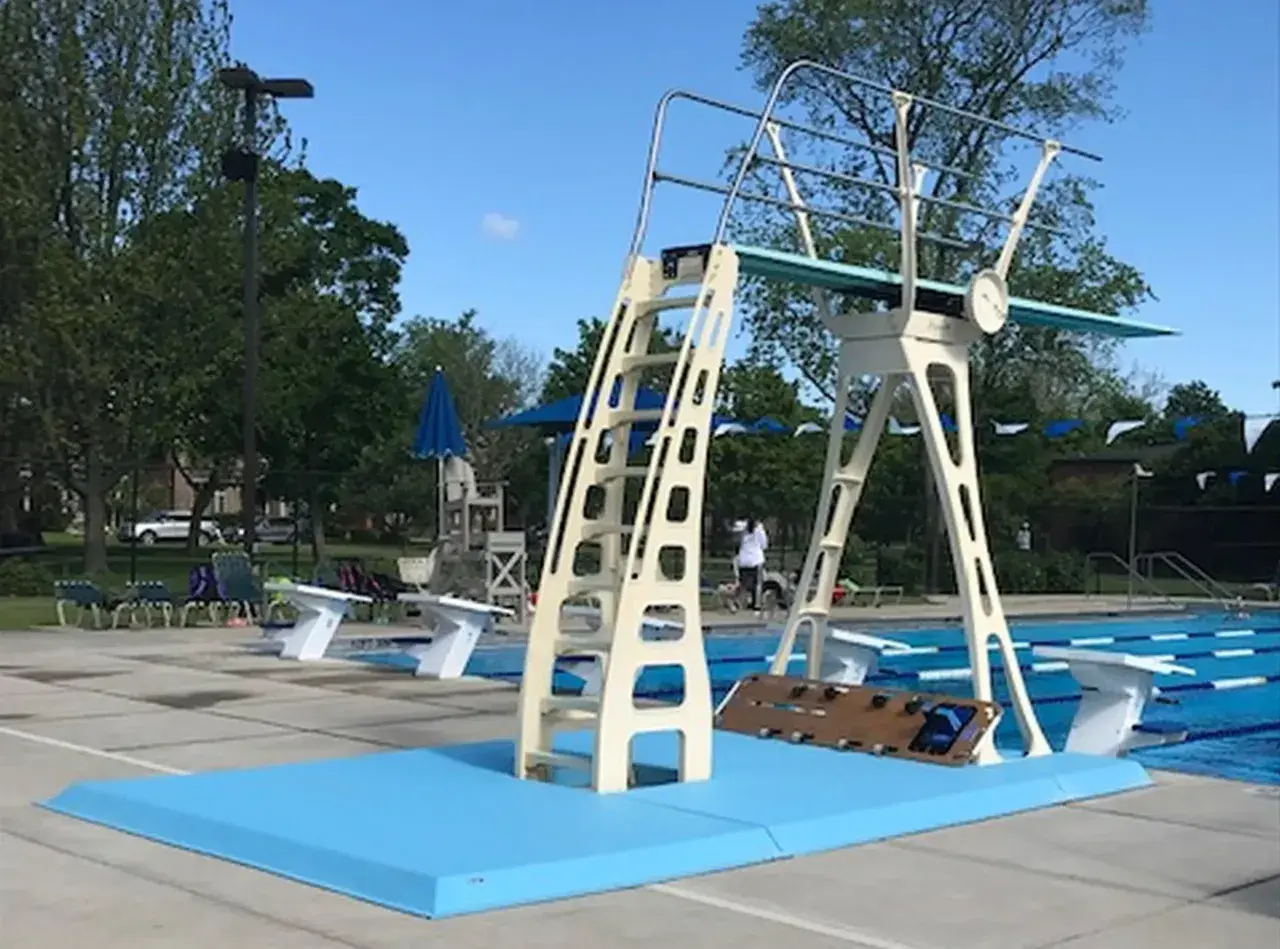
A high diving board is only useful when the whole setup behind it is right: water depth, clearance, surface visibility, and supervision. In pool settings, the term often gets used loosely, so I want to separate the everyday springboard from a true platform and from the much higher towers used in elite high diving. That distinction matters whether you are planning a facility, coaching beginners, or trying to understand what is actually safe in a shared aquatics space.
For American swimmers, divers, and coaches, the practical question is not just how high it is. It is what kind of entry it is built for, who should use it, and whether the pool supports it without creating avoidable risk. I am going to keep the focus on those decisions, because that is where most of the real value is.
The safest setup starts with depth, supervision, and the right board height
- Most pool users mean a springboard or platform, not a true high-diving tower.
- Height alone does not make a setup safe; depth and clearance matter more.
- Springboard diving, platform diving, and high diving are different use cases.
- Shared pools need clear zoning, especially when water polo is also part of the schedule.
- Purpose-built venues are the right place for advanced or elite-height entries.
What people really mean by a tall diving setup
In a pool context, the phrase usually points to one of three things. A springboard is the familiar flexible board used for technique work and competition, most commonly at 1 meter and 3 meters. A platform is fixed and rigid, with common competition levels at 5 meters, 7.5 meters, and 10 meters. A true high-diving venue is a different category again, with much larger heights and a completely different risk profile.That distinction is not semantic hair-splitting. It changes how the athlete takes off, how much time they have in the air, how deep the water has to be, and how much the facility has to do to keep the landing zone safe. In practical terms, a casual pool board, a club springboard, and an elite tower are built for very different jobs.
In the U.S., most community pools never need anything beyond a modest springboard, and many never need that. When people talk about the highest competitive setups, they are usually talking about platform work rather than a flexible board. Once that distinction is clear, the real question becomes how much water and deck space the setup demands.

The depth and clearance rules that actually matter
The number printed in a brochure is not enough. What I care about first is the water envelope under the takeoff point, the space in front of the board, and the room to the sides. The CDC's Model Aquatic Health Code sets starting platforms at 4 feet of water in existing pools and 6 feet in new construction, but I treat that as a minimum starting point, not a universal diving target.
- Depth is only the first filter. A pool that is too shallow for the apparatus should not be improvised into service.
- Clearance matters as much as depth. The diver needs a clean landing corridor, not just a deep spot under the tip.
- The deck surface should stay predictable. Slippery tread, standing water, or loose hardware raise risk fast.
- Visibility is part of safety. If the water surface is hard to read, takeoffs and entries get less precise.
- Manufacturer specs still matter. Board geometry, overhang, and mounting details can change the usable zone.
For a certified diving pool, World Aquatics lists 1.8m as the floor at any point in the diving area, but that is an absolute minimum inside a certified system, not a casual invitation to treat any deep-ish pool as a diving venue. For serious platform or high-diving work, the venue has to be designed around the landing envelope, not around a single depth number. Once depth is understood correctly, the next question is how the athlete actually uses the board.
How to use the board without turning form into a liability
I am usually skeptical of anyone who treats height like the main goal. Good diving starts with body control, not with chasing a bigger bounce. The safest pattern is simple: warm up, check the surface, take a controlled approach, and leave the board with a clean line rather than a frantic push.
- Warm up shoulders, hips, ankles, and core before the first entry.
- Check the board surface for slipperiness, wear, or loose fittings.
- Approach with control instead of sprinting onto an unfamiliar board.
- Keep the body line tight on takeoff so the dive travels straight.
- Enter only within the range you can repeat cleanly, not the one that looks dramatic.
The most common mistakes are easy to spot. People rush the approach, over-bounce in search of height, look down too early, or move to a harder dive before their line is stable. Those errors are annoying on a 1-meter springboard and genuinely dangerous on a higher platform. That is why I prefer to think of diving as a precision skill, not a jump contest. That control matters even more when a pool is shared with other sports.
Why shared pools and water polo pools need different layouts
Diving and water polo can live in the same aquatic facility, but they do not want the same space at the same time. Water polo needs open lanes, clear sightlines, and fast transitions across the pool. A board or platform that hangs over that space can interfere with movement, block visibility, and create unnecessary collision risk during drills or matches.- Separate the functions. A dedicated diving well is cleaner than trying to force both sports into the same lane structure.
- Protect sightlines. Coaches and lifeguards need to see the water without visual clutter from deck equipment.
- Control scheduling. If the pool is in water polo mode, diving hardware should be closed off or out of service.
- Keep deck traffic simple. Players, divers, and equipment moving at the same time create avoidable friction.
World Aquatics also requires surface agitation under diving facilities and high light levels in certified competition pools, because the diver has to read the surface quickly and consistently. That is a useful reminder for ordinary facilities too: good lighting and a readable water surface are not luxury extras, they are part of safe use. In other words, a diving area works only when the environment is built around the athlete, not when the athlete has to adapt to a crowded pool.
How to choose the right setup for the athlete or facility
If I am choosing for a community pool, I start with the least ambitious setup that still serves the users well. For a club environment, I want the board height to match the coaching staff, the depth, and the skill level of the athletes. For elite use, the venue should already be designed for the job before anyone starts talking about bigger heights.
| Setup | Common height | Best for | Main limitation |
|---|---|---|---|
| Springboard | 1m or 3m | Technique work, club diving, and standard springboard events | Requires good board control and a properly designed diving area |
| Platform | 5m, 7.5m, 10m | Platform training and competition | Fixed height with a larger landing envelope and stricter facility demands |
| High-diving tower | 20m for women, 27m for men | Specialist high-diving events | Purpose-built venue only, with very narrow tolerance for shortcuts |
That table is the practical version of the decision. A 1-meter springboard is enough for a lot of learning and a lot of club work. A 3-meter board raises the technical bar without leaving the world of standard diving. A 10-meter platform already pushes the facility into advanced territory. For the heights used in true high diving, World Aquatics treats the discipline as its own pool-certification category, and that is exactly the right level of caution.
For most families, teams, and rec centers, the correct answer is not to build higher. It is to build smarter, with the right depth, the right staff, and the right use schedule. Before anyone climbs up, I would still run one last checklist.
The checklist I would use before anyone climbs up
Before I let a diver use any elevated setup, I want the basics verified in writing or in a clear pre-session inspection. It saves trouble later, and it prevents the kind of assumptions that lead to bad entries.
- Confirm the actual water depth against the board or platform being used.
- Check the board surface for slip, flex, cracks, corrosion, or loose fittings.
- Make sure the landing zone is clear of lane swimmers, water polo players, and equipment.
- Verify that supervision is present and that nobody is testing a new height alone.
- Stop the session if visibility, fatigue, or crowding starts to break the routine.
If one of those boxes is empty, I would lower the use level, close the board, or move the session to a better venue. If I had to reduce the whole topic to one rule, it would be this: the right high diving board setup is the one that stays safe before it ever feels impressive.