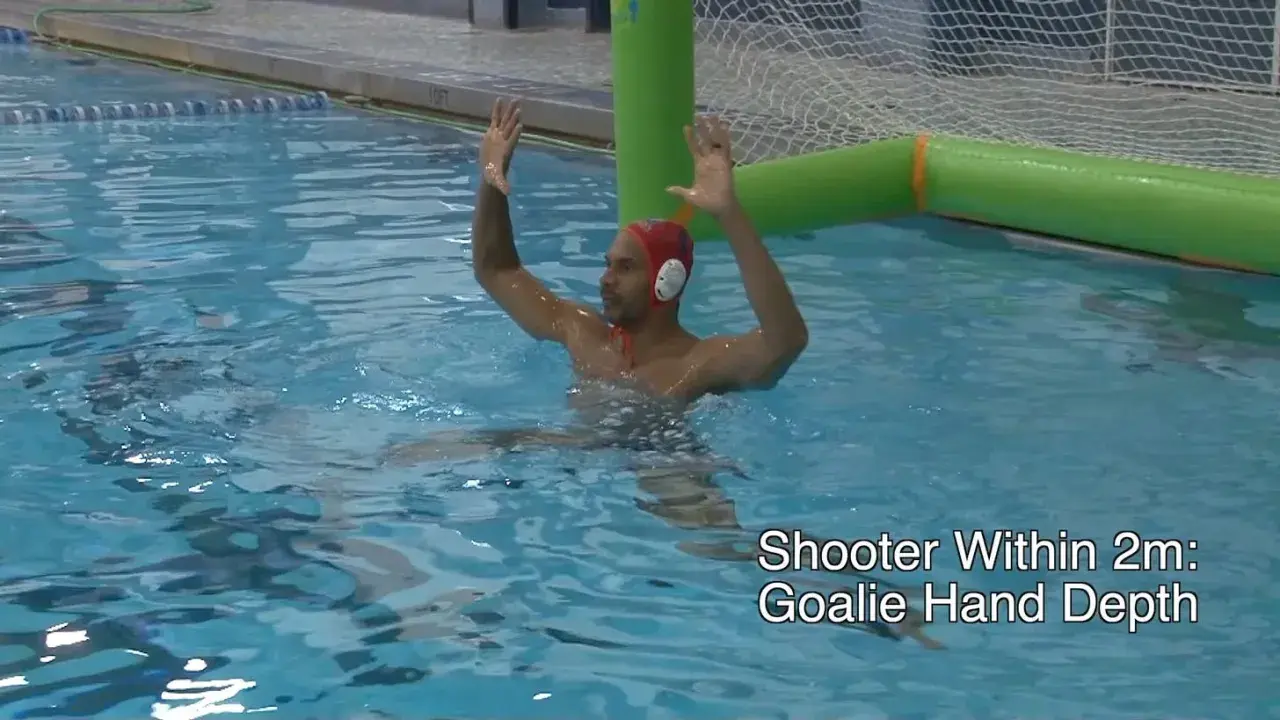
A water polo goalie is the last line of defense, but the job is much bigger than blocking a shot. The keeper has to read shooters, organize the defense, control the cage angle, and turn saves into fast counterattacks. At elite level, when shots can reach around 100 km/h, the difference between a clean stop and a goal is often made before the ball even leaves the hand.
The main things to know about the keeper role
- The position blends shot-stopping, communication, and quick distribution.
- Good saves come from angle control, stable legs, and a compact block.
- Water polo diving is explosive and controlled, not theatrical.
- Training should build leg power, reaction speed, and fast recovery.
- Simple gear choices matter: a snug red cap, ear guards, and a secure mouthguard.
What the keeper really does in the pool
I think of the role as three jobs happening at once: stop the ball, direct the defense, and restart the offense. A strong keeper does not just react to shots. They shape the shot, call out weak-side help, point defenders into passing lanes, and keep the team organized when the pace jumps.
That is why the position rewards athletes who are calm, vocal, and willing to make quick decisions. The best keepers are not always the biggest or the flashiest; they are the ones who make the cage feel smaller to the shooter and the defense feel clearer to everyone else.
- They track the center-forward and the outside shooter at the same time.
- They decide when to stay home and when to challenge the angle.
- They help start counters with accurate outlet passes.
- They keep the team mentally steady after a bad goal or a tough call.
Once you see the job as a blend of decision-making and shot blocking, the next question is how the actual save works when the keeper has to dive.

How a save becomes a dive and not a guess
Water polo diving is not springboard diving. The keeper is usually driving sideways or slightly forward with the hips, keeping enough height to block the angle and enough balance to recover after the shot. I care far more about a clean, timed movement than about a dramatic leap.Set before the shot
The save starts with body position. Stay high on the eggbeater kick, square enough to see the shooter, and ready to move either way without sinking. The eggbeater kick is the alternating circular leg action that keeps the body upright and stable without a full flutter kick.Dive from the hips, not the shoulders
A lot of young keepers throw the upper body first and lose their base. That is how you open the near post and arrive late on the second shot. A better save begins with a strong leg push, a stable core, and one decisive extension to the side that matters.
Read Also: Diving Scores Explained - Master How Judges Score & Read Results
Recover faster than the shooter expects
The dive is only half the job. The other half is getting back into position before the rebound or the next pass. If I see a keeper stay flat in the water after a block, I know the next shot is probably more dangerous than the first one.
That is also why the best training sessions focus on repeatable movement, not just big stops. The next section is where that work becomes useful.
Training the skills that matter most
I would build goalie training around a few core abilities instead of trying to work on everything at once. A focused 10 to 15 minute block, repeated two or three times a week, is usually more useful than a long session full of random shots.
| Skill | What it builds | Simple drill | Practical target |
|---|---|---|---|
| Eggbeater endurance | Height, balance, and late-game stability | 6 x 30-second high holds with active hands | Stay tall without collapsing after the third rep |
| First-reaction speed | Quicker reads on corners and quick-release shots | Partner shoots to alternating corners on command | React cleanly before overthinking the shot |
| Angle control | Near-post protection and better cage coverage | Shuffle on a cue and block from center, left, and right | Hold the line without drifting too deep |
| Outlet passing | Fast transition after a save | Block, recover, and hit a target on the first pass | Make 8 clean outlets in a row under pressure |
| Reset discipline | Better response after a goal or rebound | Save, speak once, reset, and face the next ball immediately | Recover mentally within a few seconds |
In my experience, the keepers who improve fastest are the ones who treat training like a precision task. They do not chase volume for its own sake. They chase clean reps, better angles, and faster recovery between shots. That mindset also influences the gear they choose, because loose equipment and poor fit break concentration faster than most people expect.
Gear and pool setup that actually help
USA Water Polo notes that keepers wear red caps with ear guards, and that detail is practical, not cosmetic. The cap makes the position easy to identify, protects the ears during contact, and gives the athlete a secure feel when the game gets physical.
- Cap: snug fit, firm ear guards, and a number that stays readable.
- Suit: tight enough to stay in place during grabs, turns, and lunges.
- Mouthguard: non-negotiable if you want to stay protected and breathe normally.
- Warm-up gear: a dry layer for between quarters so the body does not cool too quickly.
- Practice setup: enough ball repetition to see different shot angles, not just the same drill every time.
I care more about fit than brand. If the cap slips, the suit rides up, or the mouthguard feels distracting, the keeper loses a little bit of attention on every possession. Small annoyances add up fast in a position where concentration is already under pressure.
Once the gear is sorted, the next thing to clean up is the list of mistakes that quietly give away easy goals.
The mistakes that give away easy goals
Most goals against a keeper do not come from one dramatic failure. They come from a series of small decisions that stack up. I usually see the same handful of problems again and again.
| Mistake | What it causes | Better habit |
|---|---|---|
| Diving too early | The shooter sees the opening before release | Wait for the hand to release, then commit |
| Sinking too deep | A smaller blocking surface and slower reaction | Stay high with active legs and hands |
| Chasing the ball with both hands | Near-post space opens up | Lead with the body line and keep one side controlled |
| Freezing after a goal | The next attack starts before the defense resets | Talk once, breathe, and get back into the frame |
| Ignoring communication | Defenders miss the help call and leave a lane open | Call weak-side help early and clearly |
If I had to choose the single worst habit, it would be overcommitting to the first fake. A smart shooter wants the keeper to move before the ball is truly live. The fix is simple in theory and hard in practice: stay balanced long enough to read the release, not just the wind-up.
Building calm when the shot comes fast
The mental side of the position matters as much as the physical one. Top keepers are usually the ones who can handle a bad goal, a loud pool, and a late-game penalty without letting their posture fall apart. I like goalies who treat every shot as a short problem to solve, then move on immediately.
- Pick one cue before each shot, such as “high hands” or “near post first.”
- Watch the shooter’s shoulder and elbow, not just the ball.
- Use the first save as a rhythm setter, even if the game starts slowly.
- After a goal, speak once and reset instead of arguing the moment away.
- Study penalty shooters separately, because their habits are often more predictable than open-play shots.
That calm is not passive. It is active control. The keeper who can slow the moment down for a second usually sees the shot more clearly and recovers better after contact.
The habits I would build first in a young keeper
If I were coaching a developing goalie in 2026, I would start with the habits that hold up in every level of play, from youth tournaments to serious club water polo.
- Learn the angle before trying to make highlight saves.
- Build leg endurance with eggbeater work and active hands.
- Practice one clear communication pattern on every possession.
- Recover immediately after every stop, goal, or rebound.
- Train outlet passing so a save can become a counterattack.
A reliable keeper is not the one who makes the wildest stop. It is the one who gives the team a repeatable chance to win the possession, then does it again on the next shot.