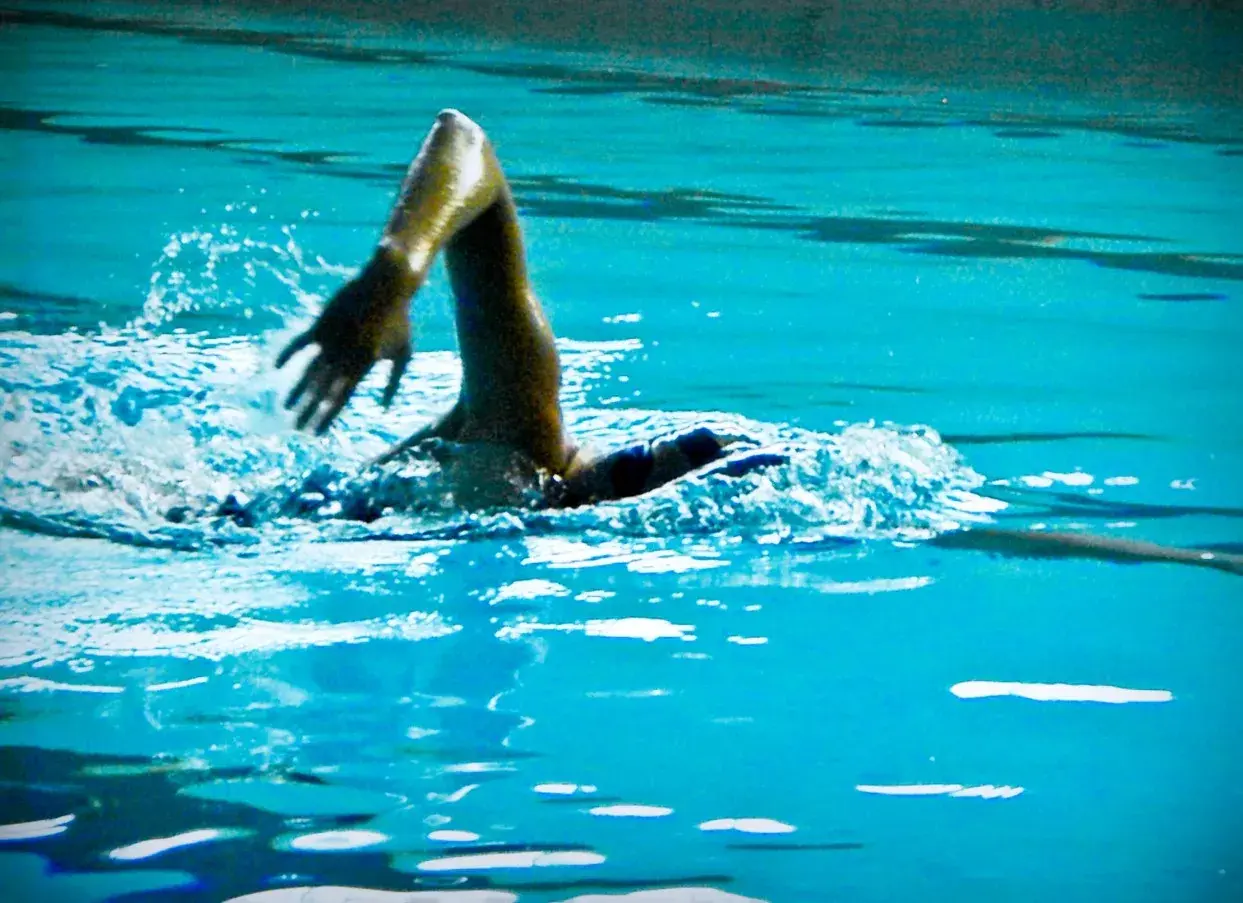
The high elbow catch is one of the most useful freestyle skills I work on with swimmers who want more speed without thrashing harder. It helps the forearm join the hand as a pulling surface, so you press against more water and waste less effort. In this article I’ll break down what the movement actually is, how to set it up, which drills make it easier to feel, and when it is better to soften the cue rather than force it.
Key points to take away before you change your pull
- The goal is to hold water with the forearm and hand early, not to make a dramatic shape above the water.
- Good body rotation and a stable head make it easier to keep the elbow from collapsing.
- Sculling, fist work, and single-arm drills teach the feel faster than trying to muscle the stroke.
- If the movement creates shoulder strain, the issue is usually setup, mobility, or load, not effort.
- The best version is the one that fits your body and race distance, not a copy of someone else’s stroke.
What the catch actually is in front crawl
In practical terms, the catch begins after the hand has entered and the arm has reached forward. The swimmer then tips the fingertips slightly down, keeps the elbow higher than the wrist, and uses the forearm as part of the propulsive surface. I treat that moment as the point where the arm stops being a reaching tool and starts becoming a lever against the water.
What it is not: it is not a sharp downward press, and it is not a dramatic elbow pose above the surface. You are trying to line up the hand, wrist, and forearm so they can push water backwards, not down. If the shoulder, wrist, or head position makes that impossible, the stroke usually falls apart before the pull phase even starts.
That is why I think of the catch as a timing skill as much as a strength skill. You can have plenty of pull power and still lose it if the arm is set up badly. Once that idea clicks, the rest of the technique becomes much easier to coach and easier to repeat under pressure.
How to set the arm up so the forearm can work
The cleanest setup starts before the catch itself. I want the swimmer to enter just outside the shoulder line, extend forward without crossing over, then begin the hold with a small fingertip pitch rather than a violent snatch. That sequence gives the elbow room to stay organised while the body rotates around it.
| Cue | What it should do | Common mistake |
|---|---|---|
| Enter just outside the shoulder line | Sets up a straight, repeatable path | Crossing over the centre line and wobbling the pull |
| Reach first, then tip the fingers down | Lets the arm load the water before the pull starts | Snatching straight into the pull too early |
| Keep the elbow above the wrist | Lets the forearm join the hand as a paddle | Dropping the elbow and pressing down instead of back |
| Rotate the body without over-rolling | Creates space for the catch without collapsing the line | Rolling so far that the elbow sinks and the shoulder takes over |
A useful test is simple: if you feel pressure mostly in the palm, the catch is probably late; if you feel it spreading across the forearm, you are closer to the right shape. From there, the body needs a way to learn it in motion, which is where drills earn their place.
Drills that teach the movement without forcing it
Drills work best when they simplify the stroke, not when they turn it into a rigid exercise. I usually start with the most basic feel for the water and then add timing and body roll once the swimmer can keep pressure on the forearm.
- Front scull. Hold the arms in front, keep the head still, and make small side-to-side sculling movements. The point is to feel the water on the palms and forearms, not to rush forward. If the swimmer cannot feel pressure here, the full stroke will usually be messy too.
- Fist drill. Swim front crawl with closed fists so the forearms have to do more of the work. This is a blunt but effective way to teach that the hand is not the only surface that matters. It also exposes elbow drop very quickly.
- Single-arm freestyle or dog paddle. Swim one arm at a time while the other stays forward or relaxed. This slows everything down just enough to make the catch obvious. It is especially useful for swimmers who rush the front end of the stroke or lose shape as soon as they breathe.
Common mistakes that flatten the pull
Most weak catches are not caused by laziness. They usually come from a setup problem, too much effort, or a body position that makes a good catch physically awkward. When I see a stroke that looks busy but goes nowhere, one of these faults is usually hiding underneath it.
| Fault | What it does | Better cue |
|---|---|---|
| Pressing straight down | Lifts the body instead of moving it forward | Tip the fingers down, then press back through the forearm |
| Dropping the elbow early | Turns the forearm into dead weight and loads the shoulder | Keep the elbow organised while the hand and forearm hold the water |
| Crossing the midline | Scrambles body alignment and weakens the pull path | Enter and extend in line with the shoulder |
| Lifting the head to breathe | Sends the hips down and makes the catch harder to hold | Let the head rotate with the body instead of leading the movement |
| Forcing a shape that hurts | Creates tension, not speed | Reduce the cue and rebuild the movement from easier swimming |
The easiest correction is often to slow the arm down for a few lengths and keep the hand pressure steady. When swimmers rush the catch, they usually sacrifice the very water they are trying to hold. That leads to the harder question: should every swimmer chase the same elbow shape?
When the shape helps and when it does not
This is where I become careful, because the cue is useful but not universal. Arm length, shoulder mobility, body rotation, and event distance all influence the best version for a swimmer. Some athletes get a cleaner front-end catch with a very obvious elbow bend; others stay faster and healthier with a slightly more open shape that still lets the forearm load the water.
The real target is effective pressure on the water without losing line, rhythm, or shoulder comfort. If the stroke stays smooth, the hand stays connected, and the elbow does not collapse under fatigue, the cue is doing its job. If it creates pinching, over-thinking, or a shortened stroke, I would reduce the emphasis and work back from the setup.
That balance matters even more once you start adding speed, because the catch has to survive real swimming, not just drill pace. A position that looks neat for one repeat is not automatically a good position for a full set.
A simple pool set to make it stick
When I want swimmers to make the movement durable, I prefer a short set that keeps the focus narrow. The aim is not to exhaust them; the aim is to let the body repeat the same signal enough times that it starts to feel normal.
- 4 x 25 metres front scull with easy rest, keeping the head quiet and the elbows stable.
- 4 x 25 metres fist drill with the same rest, paying attention to forearm pressure.
- 4 x 25 metres single-arm freestyle, changing arms each length and keeping the non-working arm long.
- 4 x 50 metres normal front crawl, using the first 25 metres to lock in the catch and the second 25 metres to hold it at steady pace.
If breathing keeps breaking the position, use a front snorkel for the drill block so you can judge the arm path without head movement getting in the way. Small paddles can help later, but only once the shape is already stable; oversized paddles usually hide errors before they fix them.
What usually changes first when the catch gets better
When the movement improves, swimmers usually notice three things before they see a dramatic time drop: the stroke feels quieter, the shoulders work less frantically, and the pull starts to feel more connected to the back rather than just the hand. That is the real payoff. The stroke becomes easier to repeat under fatigue, which is where technique matters most in a 25-metre pool or over longer race swims.
If I had to leave you with one practical rule, it would be this: keep the cue simple, keep the head calm, and stop chasing the shape the moment it starts to hurt. A better catch should feel stronger and more controlled, not more forced. Once that balance is there, the speed usually follows.