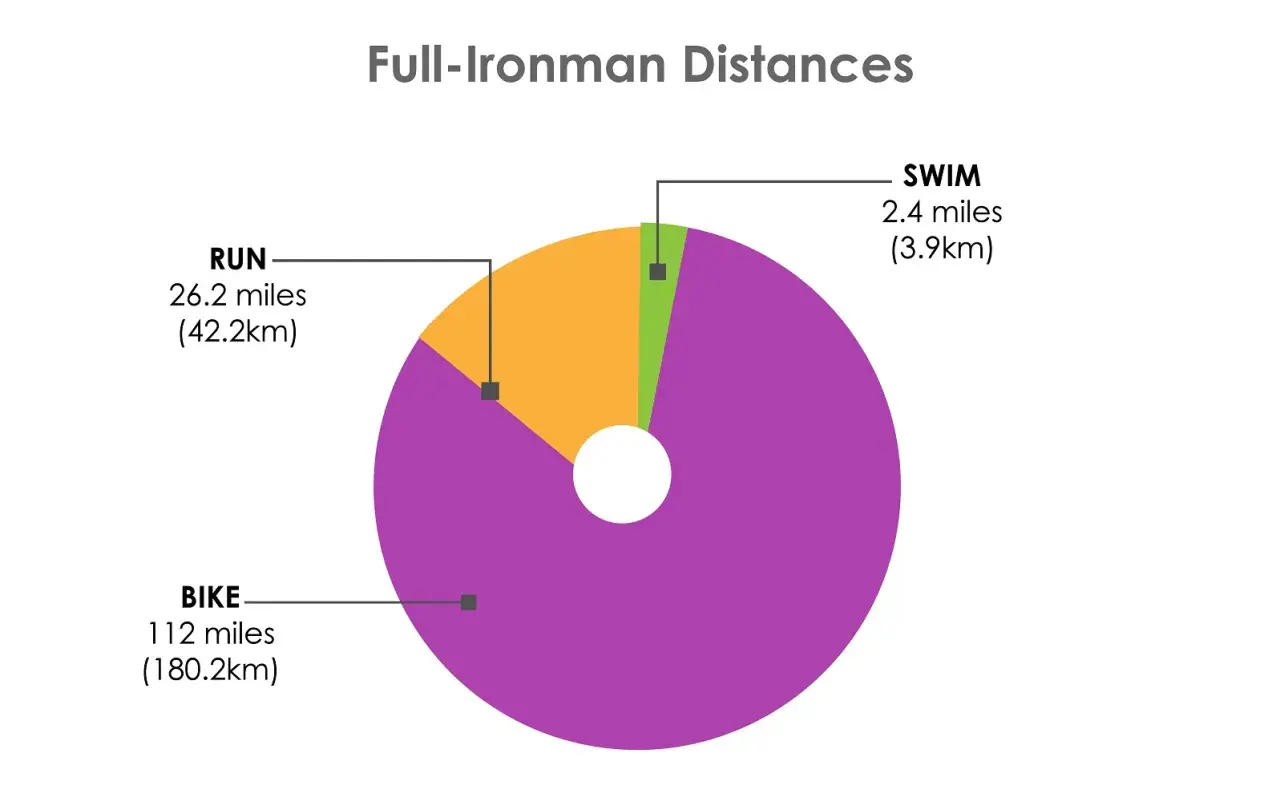
An Ironman race is a full-distance triathlon built around one simple but punishing structure: swim 2.4 miles, bike 112 miles, then run a marathon. To answer the core question, what is an Ironman race? It is a test of endurance, pacing, and discipline that usually takes the better part of a day. In this guide, I explain how the event works, how it compares with shorter triathlons, and what you should know if you are thinking about taking it on.
Key facts at a glance
- A full Ironman is 140.6 miles total: 3.8 km swim, 180 km bike, 42.2 km run.
- It is a solo endurance event for most athletes, usually raced by age-group competitors rather than professionals.
- According to IRONMAN, athletes have up to 17 hours to finish many full-distance races.
- The race is won by pacing and fueling, not by going hard early.
- A 70.3 is the most common stepping stone before the full distance.
What an Ironman race actually is
An Ironman is the standard full-distance triathlon: one continuous event made up of a swim, a bike ride, and a marathon run. The modern format dates back to 1978 in Hawaii, which is part of why the race still carries so much myth around it. Over time, it became a global series, but the core idea never changed: cover the distance, manage your effort, and keep moving when your body wants to negotiate.
Most people racing are age-group athletes, meaning non-professionals grouped by age rather than ability. That matters because an Ironman is not just for elite endurance athletes; it is for ordinary people willing to train consistently for months. I think that is one of the reasons the event has such a strong pull. It looks extreme from the outside, yet the people finishing it are usually the ones who respected the process long before race day. That process is easier to understand once you see how the day unfolds.

How the race unfolds from the water to the finish
The day starts with an open-water swim, which may be in a lake, river, or ocean depending on the course. The swim is 2.4 miles, or 3.8 km, and the water can be calm, choppy, cold, warm, or all of the above in the same race. After that comes T1, the first transition, where you move from swim gear to bike gear. Then comes the 112-mile bike leg, followed by T2, the second transition, and finally the 26.2-mile run.
Those transition zones are not side notes; they are part of the race, and they can make the day feel smoother or messier. A rushed T1 can leave you forgetting nutrition or wasting energy. A sloppy T2 can turn the run into a disaster before it starts. According to IRONMAN, athletes have up to 17 hours to complete many full-distance races, although local race rules can vary. That time limit tells you everything you need to know: this is not a sprint between checkpoints, it is a long exercise in restraint. Once that sequence makes sense, the next question is how the full distance compares with shorter triathlons.
Why the full distance feels so different from shorter triathlons
The numbers alone do not explain the gap between a beginner-friendly race and a full Ironman. The real difference is how long you must stay mentally and physically controlled. A sprint triathlon lets you attack the day. An Ironman asks you to budget energy like a careful accountant.
| Race type | Swim | Bike | Run | What it usually feels like |
|---|---|---|---|---|
| Sprint triathlon | About 750 m / 0.5 mi | About 20 km / 12.4 mi | About 5 km / 3.1 mi | Fast, sharp, and much more about speed than survival |
| Olympic triathlon | 1.5 km / 0.93 mi | 40 km / 24.8 mi | 10 km / 6.2 mi | A serious challenge, but still short enough to race aggressively |
| IRONMAN 70.3 | 1.9 km / 1.2 mi | 90 km / 56 mi | 21.1 km / 13.1 mi | Long-course racing with less punishment than the full distance |
| Full Ironman | 3.8 km / 2.4 mi | 180 km / 112 mi | 42.2 km / 26.2 mi | A full-day endurance event where pacing and fueling decide the result |
The jump from Olympic to 70.3 is already meaningful, but the leap from 70.3 to full distance changes the whole strategy. At the full distance, a too-fast swim or an overcooked bike leg does not just cost a few minutes; it can ruin the marathon. That is why I treat the full Ironman as a different sport from the shorter formats, even though the disciplines are the same. The size of the race changes the meaning of every decision, which is why preparation matters so much.
What I would prioritize before attempting one
If I were advising a first-time athlete, I would not start with volume. I would start with the skills and habits that protect energy across the whole day. The swim, bike, and run all matter, but the race usually rewards efficiency more than raw talent.
- Open-water swimming - Practice sighting, relaxed breathing, and staying calm in contact. In a crowded start, panic wastes more energy than poor fitness does.
- Bike fit and comfort - On 112 miles, a small fit problem becomes a big one. Numb hands, tight hips, and an awkward position can drain the run before it starts.
- Fueling practice - Eat and drink in training the way you plan to race. The mistake I see most often is waiting until hunger or fatigue appears.
- Brick workouts - A brick workout is a bike-to-run session that teaches your legs to change gears quickly. That transition is worth rehearsing.
- Simple, tested gear - Use goggles, shoes, nutrition, and clothing you have already proven in long sessions. Race day is not the time to discover a blister or a leak.
For swimmers in particular, the goal is not just speed. It is composure, breathing rhythm, and the ability to settle into effort without spiking your heart rate. Once those pieces are in place, the most common mistakes become easier to spot and avoid.
Common mistakes that make the day harder
I think most first-timers do not fail because they lack fitness. They get into trouble because they misread where the race is actually won and lost. The biggest errors are usually predictable.
- Starting the swim too hard and paying for it later on the bike.
- Treating the bike like a workout instead of half the race.
- Underestimating hills, wind, heat, or humidity on the course.
- Trying new shoes, socks, goggles, or nutrition on race day.
- Ignoring recovery between long training sessions and arriving tired before the start.
The pattern behind all of those mistakes is the same: athletes focus on the visible challenge and overlook the hidden one. An Ironman punishes poor planning more than average speed. If you respect that early, the event becomes much more manageable.
What to know before you commit to the full distance
A full Ironman is a serious goal, not a casual weekend race. The smartest path, in my view, is to build a base of consistency first, then step up through shorter events before committing to the full distance. Many athletes use a sprint or Olympic triathlon as a confidence builder, then move to a 70.3 before they even think about 140.6 miles.
If your swimming is still fragile, the first win is better technique and more open-water comfort, not just more laps. If your fueling strategy is untested, that usually matters more than another hard run workout. The athletes who handle the day well are rarely the ones who attack it hardest. They are the ones who respect the distance early, train with patience, and arrive on race morning already familiar with the rhythm they need to hold.