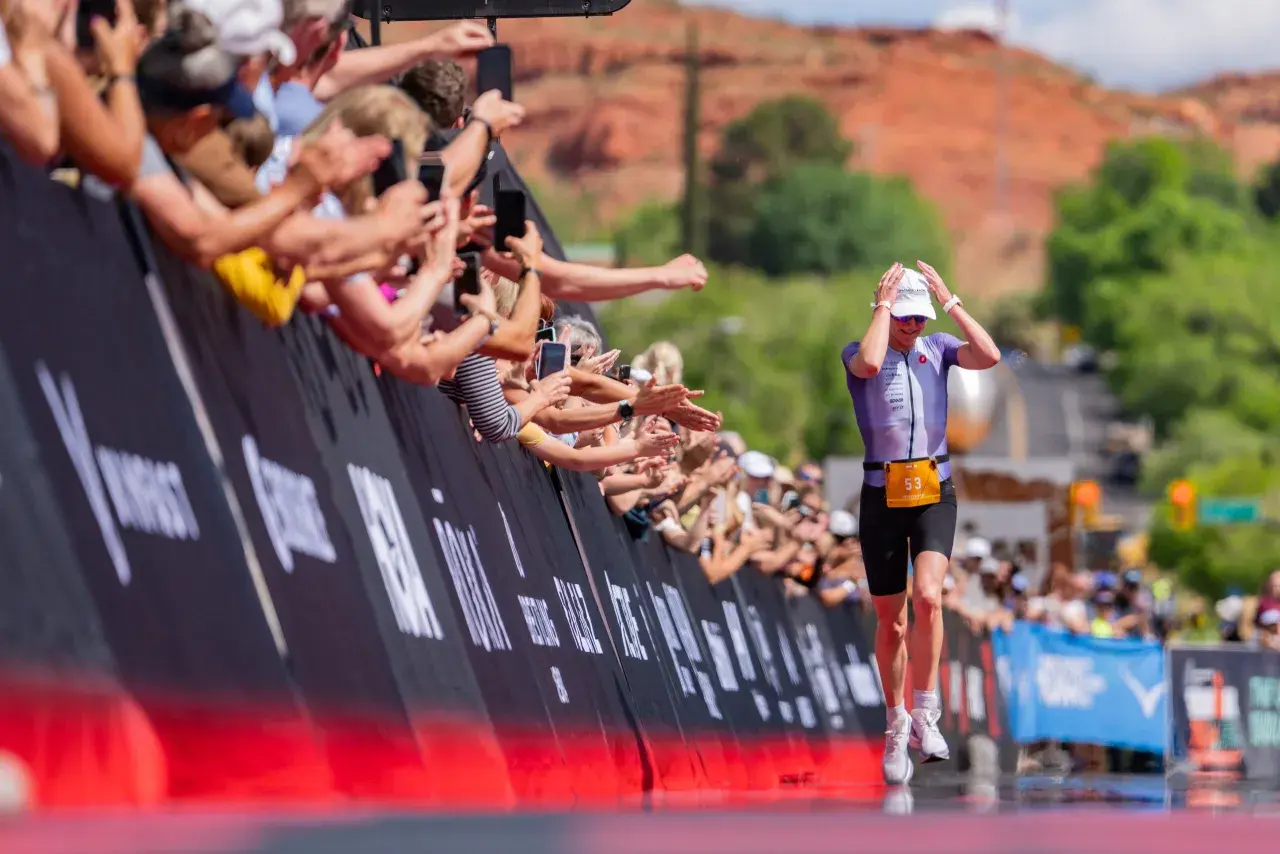
IRONMAN 70.3 St. George was never a race about easy speed. It rewarded athletes who could stay calm in cold water, ride patiently through rolling desert climbs, and keep running when the sun and the hills started to bite. This article breaks down what made the event unique, why it earned its fearsome reputation, and how I would train for a course with the same demands in 2026.
Key takeaways from the St. George half-distance race
- The race was defined by a cold swim, a climbing bike leg, and a hot, hilly run.
- The final edition took place on May 10, 2025, and it does not appear on IRONMAN’s 2026 North American calendar.
- According to IRONMAN, the venue spent 15 years building its reputation as one of the toughest championship courses in the sport.
- Course success came from pacing, cooling, and fueling discipline more than raw fitness alone.
- The best preparation combined open-water swimming, sustained climbing on the bike, and heat-ready run sessions.
- Gear choices mattered, especially wetsuit fit, bike gearing, and a stable run setup.
Why this race became a benchmark in North American triathlon
What made St. George special was not just the scenery. It was the way the course exposed every weakness in a triathlete’s pacing, temperature management, and decision-making. The race built a reputation over years as a North American Championship venue, and IRONMAN’s farewell note confirmed what many athletes already felt: this was a place where fitness alone never guaranteed a good day.
That matters because the event was more than a destination race. It was a proving ground. Athletes came for the red-rock backdrop, but they remembered the course because it asked for patience from the first mile of the swim to the final stretch into downtown. In practical terms, that means St. George was the kind of race that rewarded a smart execution plan far more than a reckless attack.
As of 2026, this is also important context for anyone looking for entry information: the final edition happened on May 10, 2025, and the race is not listed on IRONMAN’s 2026 North American schedule. So if you are reading about the event now, you are dealing with a legacy course, not a current registration option. That shift changes the conversation from “how do I sign up?” to “what can I learn from this course for my next half-Ironman?”

What the course really asked of you
The course looked beautiful on paper, but the details were uncompromising once the gun went off. According to IRONMAN’s course preview, the swim began at Sand Hollow State Park, the bike rolled through Hurricane and Snow Canyon, and the run brought athletes back into downtown St. George under desert heat and exposed climbs.
| Segment | What it felt like | What mattered most |
|---|---|---|
| Swim | 1.2 miles in cold, clear water, usually around 59-61°F, with a wetsuit required. | Efficient body position, calm breathing, and early sighting into the sun. |
| Bike | 56 miles with rolling terrain, a major climb, and a fast descent back toward town. | Controlled power on the first hour, strong climbing rhythm, and discipline before the final downhill. |
| Run | 13.1 miles over two laps, with early uphill sections and persistent heat exposure. | Cooling at aid stations, conservative opening pace, and enough reserve to stay composed late. |
The numbers explain why so many athletes respected the venue. The bike included roughly 3,244 feet of elevation gain, and the first 10 miles already carried a net climb. That is not the kind of profile where you should chase speed in the opening half. It is the kind of profile where you protect your legs, keep your cadence under control, and accept that the race may not feel fast until very late.
I also like how the course preview framed the bike and run in practical terms rather than romantic ones. The fast descents could tempt strong riders into overspending, but the real race happened after the big climb and into the run. Once you understand that, the whole venue makes more sense: St. George was less about power spikes and more about holding form when the course tried to break it.
How to train for the desert version of a half-Ironman
If I were preparing an athlete for a race like this, I would build the plan around three things: cold-water confidence, climbing durability, and heat tolerance. Those are not glamorous fitness qualities, but they decide results on a course like St. George.
| Discipline | Training priority | Example session |
|---|---|---|
| Swim | Get comfortable breathing and sighting in less-than-ideal conditions. | Open-water starts, 6-10 x 200m at steady pace, and practice swimming straight when visibility is poor. |
| Bike | Hold power on long climbs without spiking effort. | 2-3 x 20 minutes at threshold or upper tempo on rolling terrain, then a 20-30 minute brick run. |
| Run | Stay relaxed on hills and under heat stress. | Hill repeats, then an easy long run with the final 20 minutes at race effort in warm conditions. |
| Heat prep | Reduce the shock of racing in dry, hot air. | Short, controlled runs in warm conditions and careful heat acclimation over 7-14 days. |
For fueling, I would not improvise. A course like this usually rewards 60-90 grams of carbohydrate per hour on the bike, plus enough fluid to match sweat loss, which for many athletes lands around 500-750 ml per hour in moderate conditions and more in the heat. On the run, 30-60 grams per hour is often enough if the gut has been trained for it. Sodium targets vary more than most people admit, so I would treat them as personal rather than universal and test them in training, not on race day.
That is the real pattern here: the athlete who practices pacing and fueling under stress usually beats the athlete who simply logs more miles. Once that clicks, the gear choices become much easier to judge.
Gear and race-day choices that actually mattered
This is the sort of race where equipment is not just a comfort issue. It directly affects how much energy you waste before the final run. The wrong setup does not doom you, but it will make an already hard course feel unnecessarily expensive.
- Wetsuit fit mattered more than most athletes think. In cold water, a suit that restricts the shoulders can waste energy before the bike even starts. I would prioritize fit and exit speed over brand hype.
- Goggles needed to handle glare and cold. The swim started into the sun, so a light tint with solid anti-fog performance made more sense than an overly dark lens.
- Bike gearing was a real decision, not an afterthought. IRONMAN’s preview suggested a 54-56 chainring with an 11-28 or 11-30 cassette for stronger riders, which tells you how much the course rewarded efficient climbing and controlled cadence.
- Run shoes should have been stable, not flashy. On a hilly, hot run, I would rather have secure footing and predictable cushioning than the lightest race shoe available.
- Cooling tools were worth carrying. A hat, visor, sunscreen, and a clear cooling plan at aid stations could preserve more time than an aggressive first kilometer ever saved.
I would also be conservative with bike fit and position. A course with long climbs and fast descents can tempt people into an overly aggressive aero setup, but if that position closes your hips or makes climbing sloppy, the run will punish you. In a race like St. George, comfort that preserves form is often faster than a marginal aerodynamic gain that you cannot sustain for five hours.
Who this course suited best and who needed to be cautious
St. George was a superb race for athletes who liked solving problems. If you can swim efficiently in cold water, hold steady power on rolling terrain, and run well when the temperature climbs, this was the kind of course that rewarded your habits. It also suited athletes who were willing to race patiently instead of chasing an early split.
It was less friendly to athletes who rely on flat terrain to settle into rhythm. First-time 70.3 racers could absolutely handle a course like this, but only if they trained specifically for hills, practiced open-water starts, and respected the heat. Without that preparation, the race can feel chaotic fast.Here is the blunt version I would give any athlete choosing between venues: if you want a fast, forgiving day, pick a flatter course. If you want a memorable benchmark that exposes your weaknesses and rewards discipline, a St. George-style course is far more revealing. That is not a flaw. It is the point.
What the last St. George edition still teaches athletes in 2026
Even though the final edition is behind us, the lessons are still current. A course like this strips triathlon back to the fundamentals: swim straight, bike with restraint, run with patience, and keep your body cool enough to keep thinking. Those skills transfer to almost every hard half-Ironman on the calendar.
If I were translating the St. George playbook into a practical checklist, it would look like this:
- Practice open-water starts and sighting until they feel routine.
- Spend time climbing on the bike, not just riding steady on flat roads.
- Build at least one weekly brick session so your legs remember how to transition under load.
- Train in warm conditions before a hot race instead of assuming fitness will cover the gap.
- Choose equipment that protects form, especially in the second half of the bike and the first miles of the run.
That is why the St. George race mattered beyond its finish line. It showed, year after year, that the smartest athletes were not always the most aggressive ones. They were the ones who knew when to hold back, when to stay smooth, and when to let the course come to them. If you carry that mindset into your next half-Ironman, you will be training the right problem, not just collecting training volume.