The essentials before you line up
- Most newcomers should start with a sprint or standard-distance event, not a long-course race.
- The bike leg often decides whether you reach the run with control or with your legs already flooded.
- On paved roads, tyre choice, cornering, and smooth pacing matter more than flashy upgrades.
- Drafting rules vary, so the race briefing matters more than assumptions.
- Good transition habits can save more time than a slightly lighter bike.
What a road-based triathlon really is
I usually separate this format from off-road racing by one simple idea: the bike and run are built around paved surfaces, so speed, handling, and consistency matter more than mud clearance or trail skill. The swim may happen in a pool, lake, river, or the sea, but once you exit the water, the rest of the day is about moving efficiently on roads that may be closed, partially controlled, or shared with carefully managed traffic.
That changes the feel of the event. Corners arrive faster, braking points matter, and you need to be alert to paint lines, drain covers, potholes, and the occasional gust of wind across an exposed stretch. I think that is why many athletes are surprised by how technical the day can feel even when the course looks simple on paper. Once that is clear, the next question is which distance suits your current fitness and ambition.
Distances and course types you will see in the UK
In the UK, the most common road-based races are sprint and standard distance, with middle-distance and full-distance events sitting further up the ladder. The right choice depends on how much time you have to train, how confident you are in open water, and how well you can hold your effort steady for the bike leg.
| Format | Swim | Bike | Run | Best for |
|---|---|---|---|---|
| Super sprint | 400 m | 10 km | 2.5 km | First-timers, juniors, or athletes who want the shortest practical entry point |
| Sprint | 750 m | 20 km | 5 km | Newer triathletes, fast racing, and people who want a tough but manageable challenge |
| Standard or Olympic | 1.5 km | 40 km | 10 km | A balanced test of speed, endurance, and race control |
| Middle distance | 1.9 km | 90 km | 21.1 km | Athletes ready for longer pacing and nutrition planning |
| Full distance | 3.8 km | 180 km | 42.2 km | Experienced athletes with a serious endurance base |
Some races are draft-legal, which means you can ride in another athlete’s slipstream, while many age-group events are non-drafting and require space between riders. That single rule changes how you ride, how you pass, and even how you choose your position on the course. If you know the format in advance, you can pace more intelligently and avoid a lot of avoidable penalties.
Once the distance is clear, the bike leg becomes the section most likely to shape the outcome, which is where I would focus next.

Why the bike leg shapes the whole race
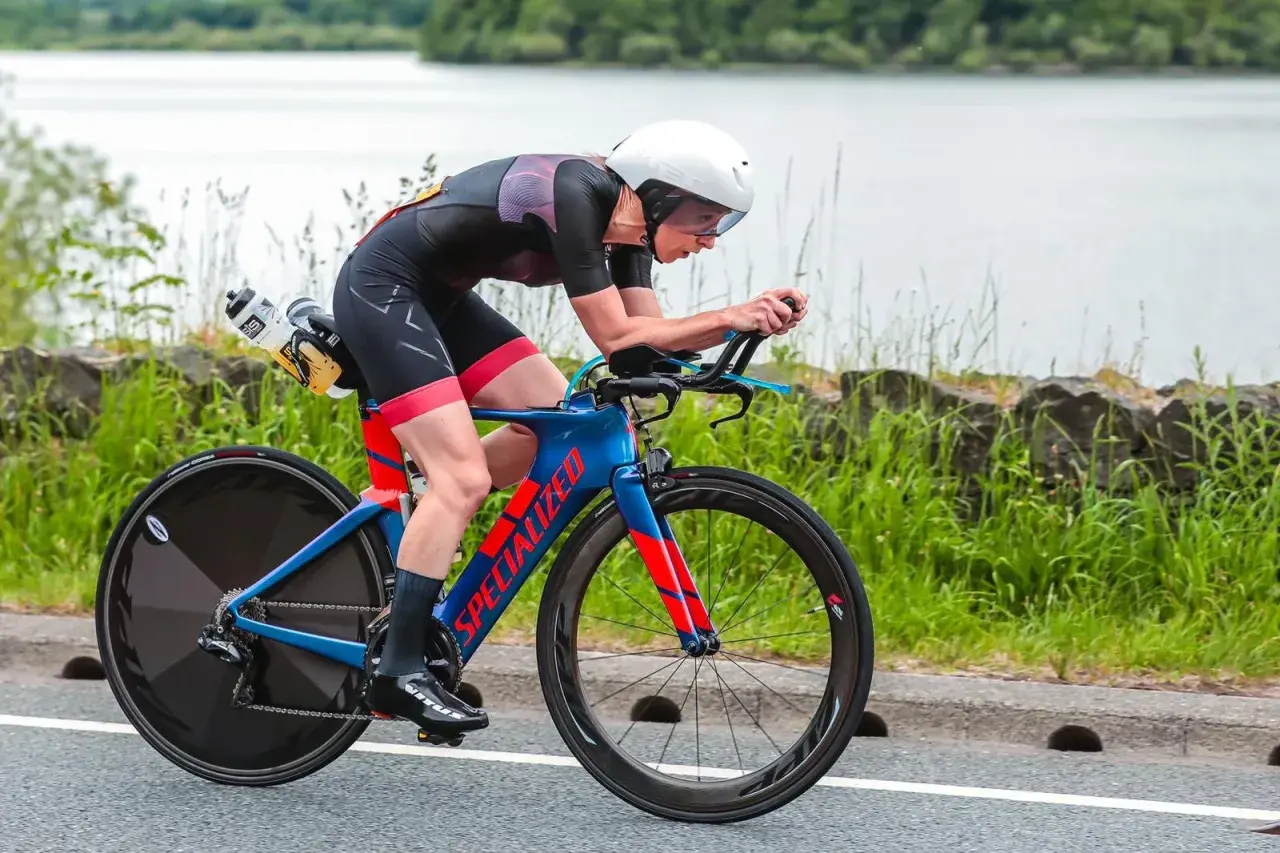
The bike is where a lot of athletes either stay in control or quietly blow up. On paved roads, speed is tempting, especially when the legs feel fresh after the swim, but the real skill is holding an effort you can repeat for the whole ride and still run well afterwards. I would rather see a rider come off the bike with a slight reserve than arrive at T2 already cooked.
Road surfaces also change the equation. Smooth tarmac rewards steady power and a clean aerodynamic position, but rougher sections, tight corners, and exposed descents demand better handling. My rule of thumb is simple: brake before the turn, not through it; accelerate out smoothly; and avoid the “sawtooth” pattern of hard surges followed by panic braking. That is especially important on UK courses, where weather, wind, and road texture can all change in a few kilometres.
- Cornering matters more than many beginners expect, especially on courses with repeated bends or roundabouts.
- Tyres and pressure matter on rough roads; slightly less pressure is often more sensible than maximum inflation.
- Hydration on the bike is easier to forget than to fix, so practice drinking without losing rhythm.
- Aero position only helps if you can hold it comfortably and safely for the whole ride.
That bike discipline only works if your training has prepared you for the combined stress of swim, ride, and run, which is the real edge most athletes are chasing.
How to train for the swim, bike and run together
When I build a first-race plan, I like to keep it simple enough that it can actually be followed. For many newcomers, two swims, two rides, and two runs per week is enough to make clear progress, especially if one of those sessions is longer and one is more specific. As a rough guide, I would budget 12 to 16 weeks for a sprint build and 16 to 20 weeks for a standard-distance build if you are coming from general fitness rather than from a strong endurance background.Swim
The swim is often where confidence is won or lost, particularly if open water is new to you. I focus on efficient breathing, relaxed starts, and sighting every few strokes so the athlete does not drift off course and burn extra energy. If you can practise with other swimmers around you, even better, because crowded starts feel very different from lane swimming.
Bike
For the bike, I prefer a mix of steady endurance and short race-pace efforts. A longer ride teaches you how to hold position and drink while moving; a shorter interval session teaches you how to surge without panic. I also like one brick session a week, which simply means riding and then running straight afterwards, because it exposes how the legs behave when they are not fresh.
Run
The run is where pacing mistakes are exposed. Many athletes think they need to “save” the run by going conservatively everywhere else, but what usually works better is controlled effort on the bike and a run that starts with restraint and builds. I would rather see a negative split, or at least a steady second half, than a heroic first kilometre followed by survival jogging.
Transitions
Transitions are free speed if you rehearse them. Five to ten minutes of practice can remove a surprising amount of race-day chaos: helmet on first, bike out cleanly, shoes placed in the right order, and a simple system for your race belt, glasses, and nutrition. That kind of repetition feels dull in training, but it pays off when your heart rate is high and your brain is noisy.
Training becomes much easier to execute when your equipment and setup are not working against you, which is why I spend real time on kit choices rather than treating them as an afterthought.
Kit that actually helps on paved roads
Good equipment does not need to be expensive, but it does need to be reliable, comfortable, and legal for the race format. I tend to think in terms of function first: the best kit is the kit you trust when your heart rate is high and your decision-making is less precise than usual.
| Item | Why it matters | What I look for |
|---|---|---|
| Bike | Handles the road leg and affects your run legs | A well-fitted road bike for most beginners; a tri bike only if the course and rules suit it |
| Helmet | Mandatory safety equipment | Comfort, proper fit, and a buckle you can fasten quickly in transition |
| Tyres and tubes | Reduce puncture risk on rough roads | Fresh tyres, sensible pressure, and a backup plan for repairs |
| Shoes | Affects speed and comfort in both transition and the run | Broken-in pair you have already run in, not a brand-new pair |
| Race belt and glasses | Saves time and protects the eyes | Something simple that works with wet hands and tired fingers |
| Nutrition and fluids | Prevents a late-race energy crash | Fuel you have already tested, usually in small, repeatable amounts |
On the bike, I like riders to carry at least one spare tube and the tools they need on training rides, even if race-day setup is stripped down. For longer events, I would also test carbohydrate intake in training rather than guessing on the day; taking some fuel every 20 to 30 minutes is a far better habit than waiting until you feel empty. That practical approach saves more time than obsessing over minor aero upgrades ever will.
Even with the right kit, race day can still go wrong if you make the same predictable mistakes I see again and again.
Race-day mistakes I see most often
The biggest mistakes are rarely dramatic. They are usually small, repeated choices that compound over the day. The good news is that almost all of them are fixable before race morning.
- Starting the swim too hard and spending the bike leg trying to recover from that early red line.
- Ignoring the briefing, especially when the course has draft rules, mount lines, or traffic-management instructions.
- Over-biking the first half because the legs feel amazing after the swim and adrenaline hides the cost.
- Leaving transition messy, which usually means wasted seconds and avoidable stress.
- Trying new nutrition or new kit on race day, when the margin for error is smallest.
- Forgetting the road itself, which means missing potholes, white lines, wind exposure, or a technical section that needs patience.
If I had to reduce that list to one principle, it would be this: race the course, not your ego. The athletes who stay calm, obey the rules, and keep their effort under control usually beat stronger athletes who ride emotionally and pay for it later on the run. That mindset also helps when you are deciding which event to book in the first place.
How I would choose a first race in Britain
When I help someone choose their first road triathlon, I look for a course that is short enough to finish with confidence, but honest enough to teach good habits. In practice, that means a clear route map, sensible road management, a distance that matches current fitness, and a transition area that will not overwhelm you before the race has even started.
- Choose sprint distance if you want a first experience that is challenging but not overlong.
- Choose standard distance if you already have a decent base and want a more rounded test.
- Check whether the bike course is flat, rolling, or full of tight turns, because that affects pacing.
- Read the rules on drafting, helmet use, and mount or dismount lines before race day.
- Look for a course you can preview, even briefly, so the roads feel familiar when the pressure rises.
If the course is clear, the distances are realistic, and the rules make sense to you, the rest becomes much easier to manage. That is usually the point where a road-based event stops feeling like a mystery and starts feeling like a race you can actually execute well.