A short-format triathlon is the cleanest entry point into multisport because it keeps the original swim-bike-run structure without demanding Ironman-level volume. I usually describe a mini triathalon as a confidence-building race: long enough to feel real, short enough to fit into a normal training week, and flexible enough for beginners who want a first finish rather than a heroic sufferfest. In this guide, I focus on the distances you will actually see, the training mix that works, the gear worth buying first, and the race-day habits that save time without adding stress.
The main things to know before you line up for a short triathlon
- In the United States, the standard beginner-friendly format is usually the sprint triathlon: 750m swim, 20km bike, 5km run.
- Even shorter super-sprint races are common, often around 400m swim, 10km bike, and 2.5km run.
- For most first-timers, 8 to 12 weeks of training is enough if the goal is to finish comfortably, not race aggressively.
- Transitions matter more than most beginners expect, especially in a short race where seconds add up fast.
- The best first purchases are simple: goggles, a helmet, well-fitting running shoes, and a bike that fits properly.
What a short triathlon actually is and who it suits
I think of a short triathlon as a structured endurance test with a low barrier to entry, not a watered-down race. The swim still asks for calm breathing, the bike still rewards steady pacing, and the run exposes anyone who spent too much energy early. That is exactly why it works so well for beginners: the distance is manageable, but the sport still teaches discipline.
In practical terms, most people in the U.S. are talking about a sprint triathlon when they say “mini” or “short.” Some local events use even smaller community formats, but the idea stays the same: you are combining three sports in one effort, usually with enough intensity to make pacing and transitions matter. If you can already swim continuously, ride safely, and jog for 20 to 30 minutes without feeling broken, you are probably in the right zone to start planning a first race.
I also tell newer athletes not to wait until they feel “triathlon-ready” in some perfect sense. That feeling rarely arrives. What matters more is whether you can handle each leg at an easy, controlled pace and recover well enough to train again the next day. Once that is clear, the distance chart becomes the next thing worth understanding.
The distances you will actually see on race day
There is no single universal “mini” distance, which is why race guides matter more than labels. USA Triathlon and World Triathlon both use sprint distance as the standard short-format benchmark, but local organizers sometimes create shorter community events for youth, newcomers, or charity races. I always check the course map before I check the race name.
| Format | Swim | Bike | Run | Best for |
|---|---|---|---|---|
| Super sprint | 400m / 0.25 mi | 10km / 6.2 mi | 2.5km / 1.6 mi | Very new athletes, youth races, time-crunched training plans |
| Sprint | 750m / 0.47 mi | 20km / 12.4 mi | 5km / 3.1 mi | Most first-time triathletes and standard beginner programs |
| Local mini format | Varies | Varies | Varies | Community races with custom distances, often pool-based or beginner-focused |
The key difference is not just distance, but how the race feels. A super sprint is fast and simple, which can be a great confidence builder. A sprint triathlon is still beginner-friendly, but it demands a little more patience with fueling, pacing, and open-water control. If you are choosing between them, I usually recommend the longer format only if you already have a decent swim base and can ride and run without needing to stop every few minutes. That choice naturally leads to the bigger question: how do you train without turning the build-up into a second job?
How to train for it without overcomplicating the plan
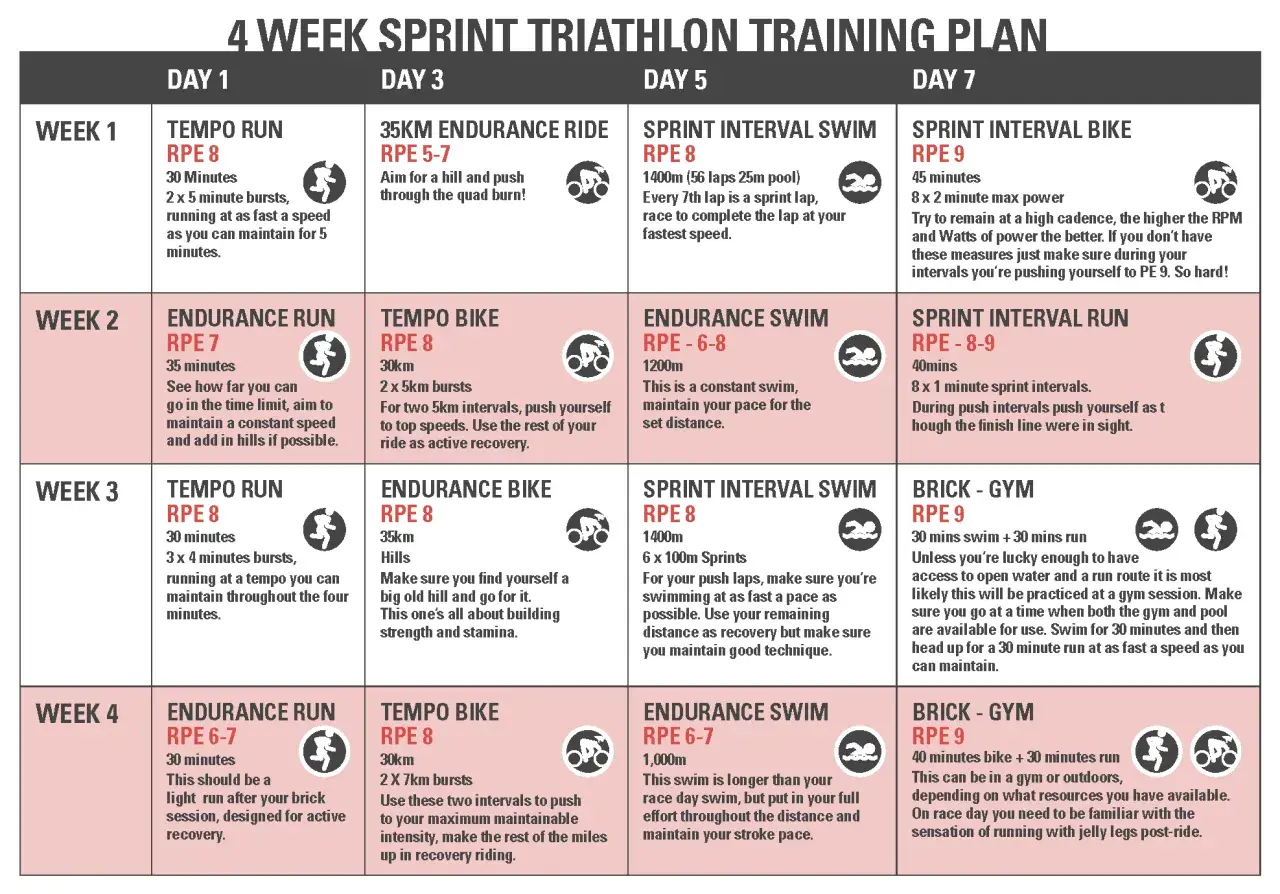
The cleanest beginner plan is boring in the best possible way. I prefer two swims, two bike sessions, and two runs per week, with one rest day and one brick workout. A brick is simply a bike ride followed immediately by a run, and it exists for one reason: to teach your legs how to switch sports without panicking.
Swim with control, not heroics
For many first-timers, the swim is the least familiar part of the race, which is why technique matters more than raw fitness. Two sessions a week is usually enough if one focuses on drill work and relaxed breathing while the other builds continuous swimming. I want athletes to be comfortable exhaling underwater, sighting occasionally, and starting the race without turning the first 100 meters into a sprint.
Bike often enough to feel smooth
The bike leg is where beginners lose the most time by going too hard, too early. A good weekly setup usually includes one easy endurance ride and one session with cadence or hills. If you can ride for 45 to 60 minutes at a steady effort and still get off the bike feeling in control, you are building the right kind of fitness. Fancy equipment will not rescue a rider who starts at redline.
Run off the bike at least once a week
The run is often shorter than people expect, but it feels strange after the bike, especially in the first mile. That is why I like one brick session every week, even if it is only a 20-minute ride plus a 10-minute easy run. You are not trying to set a personal best in training. You are teaching the body that the run begins on tired legs, not fresh ones.
Read Also: First Triathlon Distances - Choose Your Perfect Race
Give yourself enough weeks to adapt
Most beginners can prepare well in 8 to 12 weeks if they already have some base fitness. If you are starting from very little, add a few weeks of pool technique, easy rides, and short jogs before you begin the formal build. I would rather see someone arrive slightly undertrained than overly ambitious and injured. That caution tends to pay off in the race itself.
Gear that matters most when you are starting out

There is a lot of gear noise around triathlon, and most of it is unnecessary for a first race. I would focus on comfort, safety, and simplicity. A beginner does not need a tri bike, aero wheels, or a bag full of gadgets to finish well. What matters is whether the equipment helps you move smoothly from one discipline to the next.
| Category | Start with | Hold off on |
|---|---|---|
| Swim | Goggles, swimsuit or tri suit, optional wetsuit if the race allows it | Specialty open-water gear you have never tested |
| Bike | A reliable road bike or hybrid, a properly fitted helmet, a water bottle | Aero bars, deep-section wheels, race-day upgrades |
| Run | Well-fitting running shoes, socks if you like them, breathable clothing | Carbon shoes or anything that changes your stride too much |
| Transition | Small towel, race belt, elastic laces if you want them | Overpacked bags and elaborate setup systems |
If I had to rank the smartest first investment, I would put bike fit near the top. A comfortable bike that is mechanically sound will do far more for your day than an expensive frame that leaves your back, neck, or hands aching by mile ten. For the swim, good goggles matter more than nearly anything else because a leaky pair can ruin your calm before the race even starts. Once the kit is sorted, the real work shifts to race-day execution.
Race-day tactics and transitions that save easy time
Short races reward organization. The actual racing is only part of the day; the rest is setup, decisions, and transitions. T1 is the move from swim to bike, and T2 is the move from bike to run. Those two moments can feel tiny, but in a sprint-format race they can change your finish more than a few extra watts on the bike.
My basic rule is simple: arrive early, lay out your gear in race order, and rehearse the path from one station to the next. Put your helmet on before you touch the bike. Put your running shoes where your feet will find them quickly. Know where the mount line is and where the bike exit is. If the course is open water, take a minute to check the buoy line, the current, and the sighting points before the start.
For the swim, I prefer a controlled start over an aggressive one. Most beginners do better when they spend the first minute settling their breathing rather than fighting for position. On the bike, the mistake is usually the opposite: people ride too hard in the first half and pay for it on the run. I want a steady effort that leaves enough reserve for the last leg. On the run, the win is simple pacing, not drama. The first kilometer should feel almost too easy.
USA Triathlon’s transition guidance is full of the same theme: practice, simplify, remove clutter, and do the easy things well. That advice sounds obvious until race morning arrives and nerves make everything feel urgent. Once you know the rhythm, the next thing to protect is your race from beginner mistakes that are easy to avoid.
The mistakes that cost beginners the most time
I see the same errors over and over, and most of them are not fitness problems. They are decision problems. The athlete is capable enough, but the execution is messy. The good news is that the fixes are straightforward once you know what to look for.
- Going too hard in the bike leg and then walking part of the run.
- Skipping open-water practice and discovering race-day nerves in the first 100 meters.
- Testing new gear on race day, especially goggles, shoes, nutrition, or clothing.
- Ignoring transitions and losing free time through confusion, clutter, or indecision.
- Underestimating heat and humidity, which matters a lot in many U.S. races.
The most expensive mistake is usually the most subtle one: chasing speed too early. In a short race, it is easy to believe that aggressive pacing everywhere will add up to a better result. In reality, it usually creates a slower run and a rougher finish. I would rather see a beginner exit the bike with enough control to run steadily than post a flashy split and limp through the last mile. That perspective is useful when you choose the race itself, because not every first event is equally beginner-friendly.
What I would choose for a first race and why
If I were choosing a first triathlon for someone with limited experience, I would look for a course that removes unnecessary friction. A pool swim is often easier than open water because it eliminates sighting stress and cold-water shock. A non-draft bike leg is simpler for beginners because the riding rules are easier to understand. A flatter course is also kinder than one with repeated climbs, especially if the athlete is still learning pacing.
I would also read the race guide before I read the marketing page. Cut-off times, entry rules, wetsuit permissions, and transition access matter more than a medal photo or a scenic description. If the event says the swim is 400m and the bike is 10km, that may sound easy on paper, but the real question is whether the course matches your current skill level. A first race should stretch you, not bury you.
After the finish, I would not rush to buy more gear or jump immediately to a much longer distance. I would look at the splits, ask where the day felt messy, and fix that one thing before the next start. That approach builds durable confidence, and it is usually how a beginner turns one good finish into a real relationship with the sport. If your first goal is simply to complete the distance with control, the right race and a calm plan are already enough.
When I strip the sport down to its essentials, that is the whole formula: learn the swim enough to stay relaxed, ride the bike without wasting energy, run with restraint, and keep transitions clean. Do that well and the short format stops feeling mysterious. It becomes a very manageable test of pacing, technique, and patience, which is exactly why so many athletes use it as their first real step into triathlon.