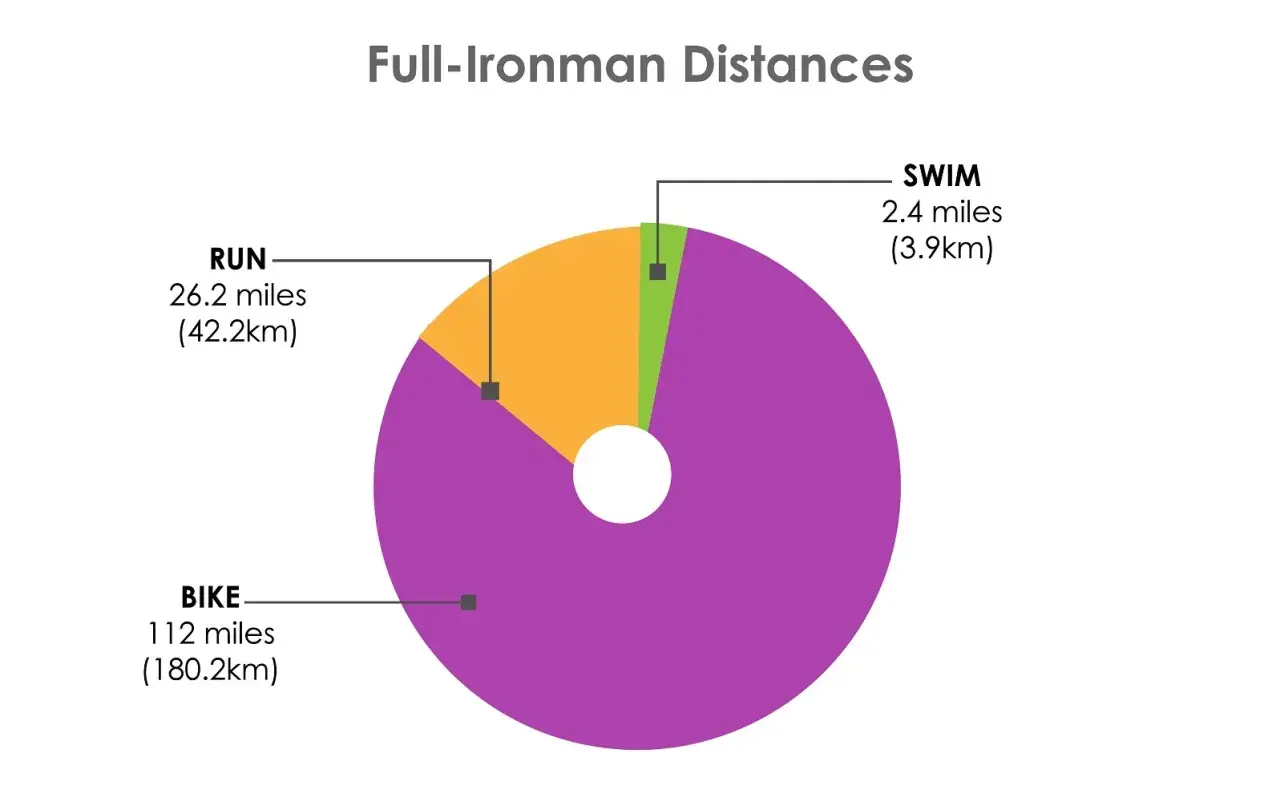
The final leg of a full-distance Ironman is a marathon: 26.2 miles, or 42.2 kilometres. On paper that sounds simple, but after the swim and bike it becomes a very different test of pacing, nutrition, and patience. In this article I break down the distance itself, how it compares with other triathlon formats, and what actually helps you stay strong through the last 10 km.
The Ironman run is a marathon, but race-day fatigue changes the equation
- The full-distance run is 26.2 miles, which equals 42.2 km.
- It comes after a 2.4-mile swim and a 112-mile bike, so the legs are already loaded.
- Most athletes need to pace the first half more conservatively than a standalone marathon.
- Fuel, fluids, and sodium matter almost as much as fitness on race day.
- For UK athletes, it helps to think in both miles and kilometres because race info often uses both.
What the official distance actually is
IRONMAN lists the full-distance triathlon as 140.6 miles, or 226 km, and the run is the familiar marathon distance of 26.2 miles. That is the clean answer to the question, but the practical answer is more useful: this is a marathon done after hours of swimming and cycling, not a fresh standalone effort.
I like to explain it this way. The number does not change, but the cost of each mile does, because your body reaches T2 with depleted glycogen, some muscle damage, and more fatigue than it would ever carry into a road marathon. Once you see it that way, the rest of the race starts to make sense.
| Triathlon format | Swim | Bike | Run | What it means in practice |
|---|---|---|---|---|
| Full IRONMAN | 2.4 miles / 3.8 km | 112 miles / 180 km | 26.2 miles / 42.2 km | A full marathon after a long day |
| IRONMAN 70.3 | 1.2 miles / 1.9 km | 56 miles / 90 km | 13.1 miles / 21.1 km | A half-marathon after a shorter build-up |
| Olympic distance | 1.5 km | 40 km | 10 km | Fast enough to race aggressively from the start |
That table matters because many athletes accidentally train for the run as if it were the whole event. It is not. The marathon only works when the swim and bike have been managed well enough to leave you something to run on.
Why the marathon feels harder after the bike
The late-race collapse that so many athletes fear is rarely caused by one single mistake. It is usually the result of several small problems stacking up: bike pacing that was a touch too ambitious, hydration that lagged behind sweat loss, and running form that breaks down once the hip flexors and calves start to complain.
Three things usually show up first when the run is going wrong:
- The stride gets shorter and choppier.
- The heart rate rises faster than the actual pace suggests.
- The stomach stops tolerating fuel as well as it did earlier in the day.
That is why I never treat T2 as a simple shoe change. T2, the second transition, is where the race either resets calmly or starts to unravel. If you can exit it with control, the marathon becomes manageable; if you surge out of it, the distance starts collecting interest immediately.
Once you accept that the run is a consequence of everything before it, pacing becomes the next real decision.
How I would pace the run from the first mile to the finish
My default advice is simple: start embarrassingly easy. The opening 3 to 5 km should feel almost restrained, because the runner who tries to “bank time” early usually pays for it later. In practice, many age-group athletes end up somewhere around 30 to 90 seconds per mile slower than their open-marathon pace, but that range shifts a lot with heat, hills, wind, and bike effort.
A race-day pacing plan usually works best in three parts:
- Early run - settle breathing, shorten the stride, and keep the effort controlled.
- Middle miles - lock into rhythm and focus on repeatable form rather than chasing pace.
- Final 10 km - run by effort, not ego, and accept that small walk breaks at aid stations can protect your overall split.
I am much more interested in how an athlete looks at kilometre 24 than how fast they ran kilometre 3. If the posture is stable, the cadence is still decent, and the stomach is under control, they usually have a good race left in them. That is a much better sign than a flashy start.
With pacing under control, the next limiter is almost always fuel.
Fueling and hydration that keep the legs usable
On the run, the goal is not to eat like a cyclist. The gut is working harder, the bounce is higher, and digestion becomes less forgiving. A realistic starting point for many athletes is 40 to 50 grams of carbohydrate per hour on the run, with fluids and sodium adjusted to sweat rate and weather rather than copied blindly from someone else’s plan.
The practical version looks like this:
- Start fueling early, before you feel flat.
- Take small amounts often instead of waiting for a big correction.
- Use gels, drink mix, or cola only if your stomach has already accepted them in training.
- Match fluid intake to conditions, because a cool morning and a hot exposed course are not the same problem.
I also tell athletes to treat sodium as a performance tool, not a superstition. Some need more, some need less, and the answer depends on sweat rate, climate, and personal tolerance. The reliable approach is to rehearse the plan in long sessions, then keep the race-day version boring and predictable.
That training piece matters more than most people expect, which is why the build-up deserves its own focus.
Training the run without wrecking the rest of your build
For a full-distance race, the run should be trained in a way that builds durability without sabotaging the swim and bike sessions around it. I prefer a mix of controlled long runs, brick sessions, and a lot of disciplined easy volume rather than one heroic session that leaves the athlete flattened for three days.
A simple and effective pattern usually includes:
- One weekly brick, with 20 to 40 minutes of running after the bike.
- One longer run that stays mostly easy instead of becoming a hidden race effort.
- Short race-pace segments only when the athlete is recovering well.
- Regular practice in race shoes, socks, and fuel setup so nothing feels new on the day.
This is especially relevant for swimmers moving into triathlon, because strong aerobic fitness in the water does not automatically protect the legs from impact. Running is its own skill, and the body needs repeated exposure to absorb that impact after cycling fatigue. I care more about consistency here than about chasing big training headlines.
Once the training is right, the local details start to matter, especially for athletes racing in the UK.
What UK athletes should keep in mind
In the UK, race information often flips between miles and kilometres, so I always advise athletes to keep both in their head. That matters more than it sounds, because a marathon split that looks fine in miles can feel very different when you are checking kilometre markers in the heat of the race.
There is also a practical course factor. Weather can change quickly, even at home, and wind or cool temperatures can tempt you into the wrong pace judgement. In England, IRONMAN Leeds is the country’s only full-distance event, and it still uses the same 26.2-mile run, but the course demands a more careful read of conditions than a flat indoor track mindset ever could.
My rule for UK athletes is straightforward: plan by effort first, then use pace as a checkpoint. On a breezy, rolling course, effort stays honest when the mile splits lie to you. That idea leads directly to the one habit that usually decides whether the final kilometres stay runnable.
The detail that decides the last 10 km
The biggest mistake I see is not poor fitness. It is poor sequencing. Athletes often try to “save” the run by under-eating, over-cautious pacing on the bike, or by exiting T2 with a surge that feels confident but quietly empties the tank. The result is predictable: the first half of the marathon looks tidy, then the last 10 km turn into damage control.
If you want the run to hold together, I would prioritise three things above everything else: ride the bike with discipline, fuel early and consistently, and keep the first half of the marathon almost boring. Those are not glamorous race-day ideas, but they are the ones that most often produce a strong finish.
For anyone asking about the Ironman marathon distance in the most practical sense, the answer is simple: it is a full marathon, but it only rewards athletes who treat it like the last part of a much larger puzzle.