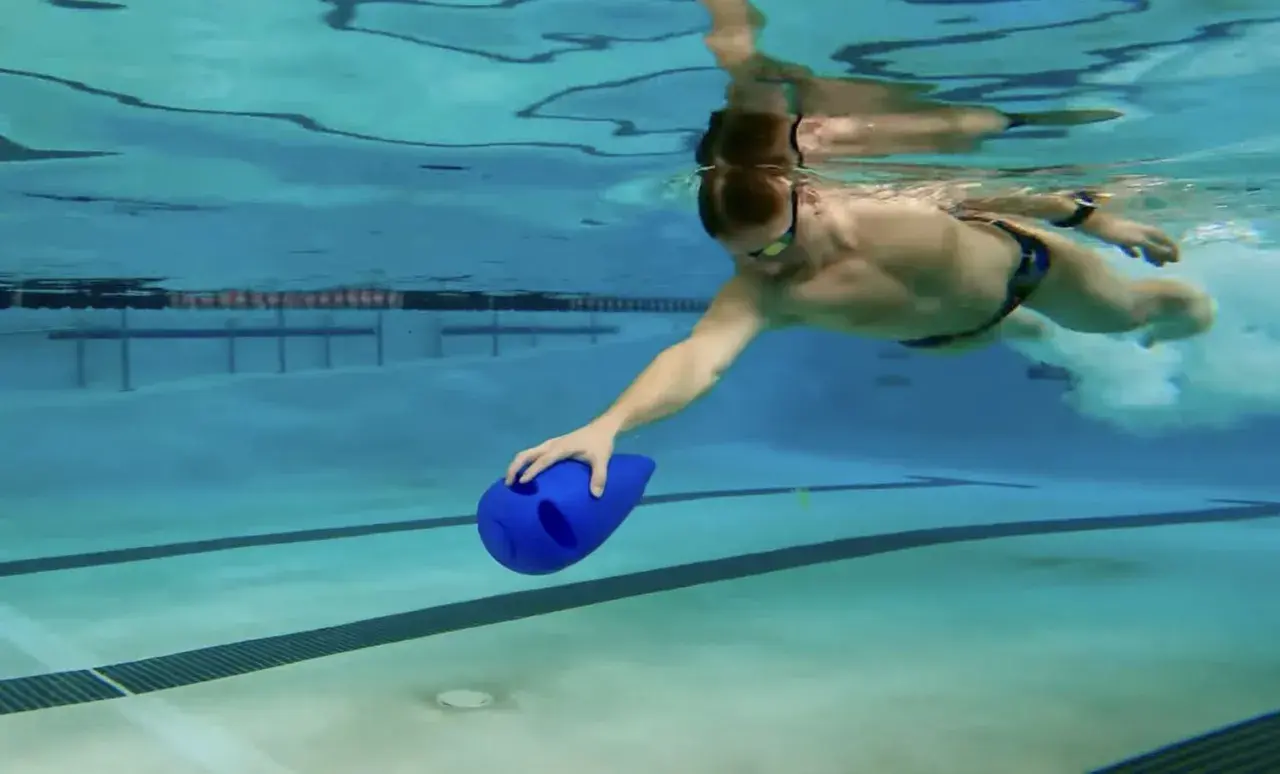
A well-structured kickboard swim session can do more than give your arms a break: it can sharpen body position, build leg endurance, and expose exactly where your kick is leaking power. In this article, I break down the techniques that make board work useful, the drills that transfer to real swimming, how to dose it for fitness, and the mistakes that quietly waste a set. The goal is simple: leave the pool faster, not just more tired.
What matters most when you train with a kickboard
- Use the board to improve line, rhythm, and leg endurance, not to hide poor form.
- Keep the head calm and the hips high; a lifted chin usually makes the whole set feel harder.
- Short, repeatable sets beat long, sloppy kicking blocks for both technique and fitness.
- Match the drill to the stroke: flutter kick, breaststroke kick, back kick, and side balance each need a different feel.
- If your shoulders, neck, or lower back tighten, shorten the set and reset your position before you add more load.
What kickboard work actually trains
I treat board work as a diagnostic tool. It shows me whether a swimmer’s problem is the kick itself, the body line, or simply the fact that the head is too busy fighting the water.
Used well, it trains three things at once: leg-specific endurance, a quieter body position, and the rhythm needed to keep the kick effective under fatigue. That is why Swim England still uses kickboards mainly as a leg-kick aid in learn-to-swim work: the board supports the body, but the swimmer still has to create the motion and keep the line horizontal.
The catch is that the board removes the arm stroke, so any error in balance gets louder. If your hips drop or your kick gets too wide, you feel it immediately. That is exactly why the tool is useful, and it is also why technique matters more than volume here. Once that purpose is clear, the next step is learning how to hold the board without turning the drill into a fight.
How to hold the board without making the drill harder
The best board position is boring in the right way. Hands stay relaxed, elbows remain long, and the board sits near the surface instead of being pressed deep into the water. I want the neck long, eyes down, and the chest just enough below the surface to let the hips ride high.
| Cue | What I want to see | Common mistake |
|---|---|---|
| Head | Neutral, with the gaze down rather than forward | Looking straight ahead and bending the neck back |
| Hands | Light grip, no white-knuckle tension | Squeezing the board and locking the shoulders |
| Chest and hips | Long body line, hips near the surface | Pushing the board down until the chest sinks |
| Kick | Small, quick motion from the hips and ankles | Big knee bend that turns into a bicycle motion |
For back kicking, I usually prefer a light support that keeps the body flat rather than a death grip on the board itself. If the board is doing so much work that you can barely feel your legs, the drill is probably too easy to teach anything useful. That balance point is what separates a warm pool toy from an actual training tool, and it leads directly into the drills I use most often.

Drills that turn board time into better swimming
The most useful drills are the ones that make the kick more honest, not just more exhausting. In practice, I reach for a small group of repeatable patterns and keep the reps short enough that form does not collapse halfway through the set.
| Drill | What it teaches | How I coach it | Typical dose |
|---|---|---|---|
| Front flutter kick | Basic leg endurance and a stable body line | Press the chest slightly down, keep the kick narrow, and let the ankles stay loose | 6-10 x 25m or 4-6 x 50m |
| Side kick with board support | Balance, rotation, and a quieter lead arm | Rotate onto one side, keep one arm long in front, and switch sides with control | 4 x 25m each side |
| Back kick | Hip stability and a flatter torso position | Keep the face up, ribs quiet, and the kick compact instead of splashy | 4-8 x 25m |
| Breaststroke kick with board | Timing and recovery shape | Recover heels toward the hips, then snap the feet back together with a short glide | 4-6 x 25m |
| Kick build | Speed without losing mechanics | Start controlled, then increase rate over the last third of the length | 4 x 25m |
For dolphin kick, I usually skip the board and go to streamline instead, because the board can interrupt the body wave that makes that kick work. A simple Swimming.org endurance session uses two lengths of kicking with about 30 seconds rest, which is a decent reminder that kick work should stay measurable. That logic matters when you start building actual training sets rather than isolated drills.
How to build a set for fitness and race prep
If the goal is fitness, I want the session to have a clear purpose and a clear end point. Kickboard sets work best when they are brief enough to keep quality high and structured enough that you can repeat them next week with the same or better form. For most adult swimmers, one or two kick-focused blocks a week is plenty.
- For general conditioning, I like 8 x 25m flutter kick with 15-20 seconds rest, then 4 x 25m slightly faster.
- For strength-endurance, 6 x 50m with 20-30 seconds rest is usually enough to create fatigue without turning the set into survival mode.
- For technique days, I prefer mixed reps such as 4 x 25m front kick, 4 x 25m side kick, and 4 x 25m back kick, all at controlled effort.
- For race prep, keep board work after the main swim or use it as a finish, so the drill supports the session instead of stealing freshness from the parts that matter most.
The point is not to accumulate metres for the sake of it. The point is to let the legs work hard enough that technique has to hold under pressure. Once you start using the board that way, the next question is usually why some sessions still feel awful even when the distance is modest.
Common mistakes that waste the session
Most bad kickboard sets fail for the same handful of reasons. The frustrating part is that swimmers often think they need more effort, when what they really need is less tension and better shape.
- Looking forward forces the neck to crane and the hips to drop.
- Pressing the board too deep creates drag and makes the chest sink.
- Kicking from the knees turns the legs into bicycle pedals and tires the quads too fast.
- Holding the breath makes the body rigid and pushes the heart rate up for the wrong reason.
- Overusing the board can leave you strong in isolation but clumsy when you return to full-stroke swimming.
My rule is simple: if the last two reps are much uglier than the first two, the set is too long or the rest is too short. Fixing that usually gives you more benefit than forcing extra length. The same applies to equipment choice, because the wrong board can make good mechanics harder to feel.
Which board and extras make the biggest difference
I do not think board choice needs to be complicated, but it does matter. A stable, comfortable board helps beginners learn the shape of the drill, while a smaller or less buoyant board can give stronger swimmers a more honest body-line challenge.
| Option | Best for | Trade-off |
|---|---|---|
| Standard board with hand grips | Beginners and general pool sessions | Easiest to hold, but some swimmers press too hard on the front |
| Smaller board | Swimmers who already hold a decent line | Less support, so the body position has to be cleaner |
| Board with a smooth front edge | Longer sessions and adults who want a more comfortable hold | Usually costs a bit more, but it tends to feel kinder on the hands |
| Short fins with a board | Technique sessions where you want more ankle speed | Useful for feel, but they can hide a weak kick if you rely on them too often |
| Front snorkel | Head-still drills and body-line work | Excellent for keeping the neck quiet, though it does not replace breathing practice |
In a typical UK pool, a standard board is enough for most swimmers. I only reach for extra kit when it solves a specific problem, not when I want the set to feel more technical on paper. That keeps the focus where it belongs: on whether the drill is helping or merely disguising fatigue.
When to back off or skip the board
There are moments when I would rather stop the board set than polish it. If the shoulders pinch, the lower back tightens, or the hips cramp so much that the kick becomes a grim grind, the session has crossed from productive into sloppy.
- Stop or shorten the set if your neck starts to ache from looking forward.
- Back off if the lower back is doing more work than the legs.
- Switch to full-stroke swimming if you need timing, breathing, or rotation rather than isolated leg work.
- Use kickboard sets as support, not as the main event, when your goal is overall swim fitness.
That is the part many swimmers miss: a good kick session should leave you better organised, not just more cooked. Once you can judge that honestly, you are ready for a set that is simple enough to repeat and strong enough to matter.
The simplest kick set that still moves your swimming forward
If I had to choose one repeatable set for most adult swimmers, I would keep it plain and measurable.
- 4 x 25m easy flutter kick with the board, resting 20 seconds and keeping the head quiet.
- 4 x 25m side kick, 15-20 seconds rest, with one arm extended and the body rolled onto the side.
- 4 x 25m back kick or breaststroke kick, depending on the stroke you need most, with 20 seconds rest.
- 4 x 25m build, finishing faster but still clean, with the last length feeling controlled rather than frantic.
If you finish that sequence with steadier hips, calmer breathing, and less tension in the shoulders, the session has done its job. From there, I would not chase more board work for its own sake; I would return to it just often enough to keep the kick honest and the body line sharp.
