Mastering different swim strokes is less about memorising names and more about understanding how each pattern changes balance, breathing, and speed. I break down the four main strokes, what each one is good for, and the skills that make them feel easier in the water. If you want cleaner lap swimming, better fitness sessions, or a more technical approach in the pool, this is the useful stuff.
The stroke choice matters less than the skill underneath it
- Front crawl is usually the fastest and most efficient stroke for steady lap swimming and open water.
- Backstroke rewards a long bodyline and quiet head position more than raw power.
- Breaststroke is the most timing-sensitive stroke, so small mistakes in the kick or glide slow it down quickly.
- Butterfly demands rhythm, core control, and shoulder stamina, which makes technique more important than forcing speed.
- The biggest gains usually come from body position, breathing, and kick timing before you add harder training.
The four main strokes and where each one fits
Each stroke solves a different problem in the water. Front crawl is the workhorse, backstroke gives you a strong line with the face up, breaststroke offers a natural breathing pattern, and butterfly is the power stroke that exposes every weakness in timing. In races, freestyle usually means front crawl, but I still separate the event name from the actual stroke because that distinction matters.
| Stroke | Body position | Main strength | Common limitation | Best use |
|---|---|---|---|---|
| Front crawl | Face down with steady body rotation | Fastest sustainable pace | Lifting the head too much to breathe | Lap swimming, open water, triathlon |
| Backstroke | Face up with hips close to the surface | Good line and relaxed breathing | Dropping the hips or swimming crooked | Technique work, recovery swimming, medley training |
| Breaststroke | Symmetrical, wave-like motion on the front | Rhythm and controlled breathing | Too much glide or a rushed kick | Coordinated training, beginners, shorter controlled sets |
| Butterfly | Undulating motion with both arms recovering together | Power and whole-body timing | Fatigue and poor coordination | Short technical work, race preparation, strength development |
I usually tell swimmers that the best stroke is the one that matches the job. If you need efficiency, front crawl wins. If you need comfort on the back and a cleaner breathing pattern, backstroke is useful. If you want to learn control, breaststroke teaches patience. If you want to test timing and power, butterfly shows you instantly what needs work. That becomes much clearer once you look at the body mechanics stroke by stroke.
What each stroke asks of your body
Front crawl
Front crawl works best when the body stays long and narrow in the water. I want to see a gentle roll through the shoulders and hips, not a flat, stiff shape fighting the water. The arms alternate, the kick stays light and continuous, and the breath is quick enough that the stroke rhythm barely changes. The most common mistake is lifting the head forward instead of turning to the side, which drops the hips and adds drag immediately.
Backstroke
Backstroke looks easy from a distance, but efficient backstroke is surprisingly precise. The head should stay still, the chest stays open, and the hips stay high enough to keep the legs from sinking. A strong backstroke is built on shoulder rotation and a clean catch, not on spinning the arms faster. If the swimmer starts weaving across the lane, the stroke is usually losing its line before it loses its speed.
Breaststroke
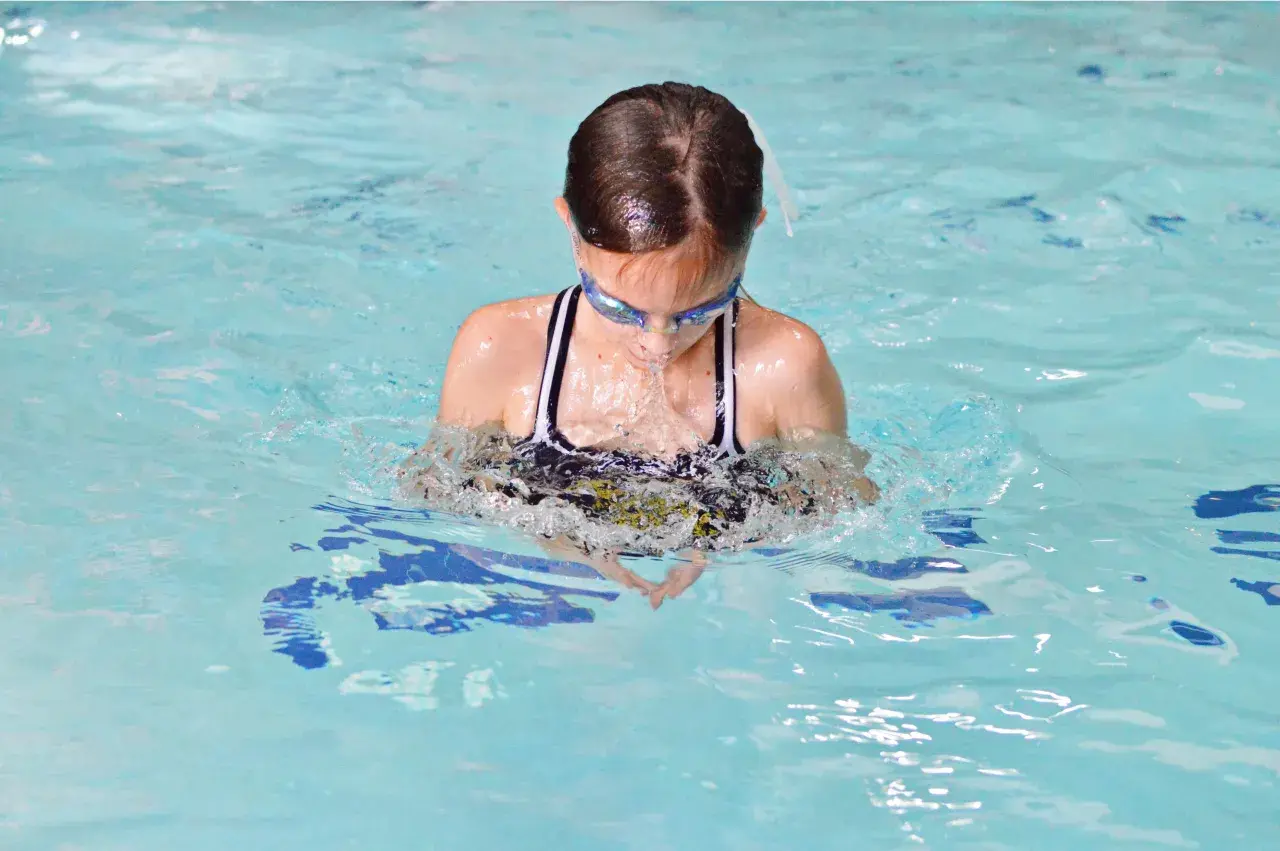
Breaststroke is the most rhythm-sensitive stroke of the four. The pull, breath, kick, and glide have to fit together or the stroke stalls. I prefer a compact glide rather than a long pause, because an overdone glide kills momentum and makes the next pull feel heavier. The kick should finish cleanly with the feet together, and the body should return to a streamlined shape before the next cycle begins.
Read Also: How to Swim Laps Better - Your Guide to Efficient Training
Butterfly
Butterfly is the one stroke where swimmers often try to force speed before they have timing. That usually backfires. The movement should rise from the chest, travel through the hips, and finish with the legs, not the other way around. When butterfly is working, it looks smooth and expensive rather than frantic. When it is not, the swimmer is trying to muscle every cycle and spending a lot of energy for very little return.
Once the body shapes are clear, the next step is working on the skills that transfer across every stroke instead of chasing speed too early.
The skills that matter more than arm power
If I had to reduce swimming technique to a few core skills, I would start with line, breathing, timing, and turns. Those four things decide whether a swimmer feels controlled or messy, regardless of stroke.- Body position keeps the legs from dragging and reduces wasted effort. A high hip line matters in front crawl and backstroke, while a compact, balanced line matters in breaststroke and butterfly.
- Breathing rhythm stops the swimmer from panicking and lifting out of the water. The simplest rule is to exhale underwater and take a short, calm inhale when the body allows it.
- Kick timing is especially important in breaststroke and butterfly, where the stroke falls apart if the legs and arms fight each other. In front crawl and backstroke, the kick supports the line rather than carrying the whole stroke.
- Rotation matters most in front crawl and backstroke. A controlled roll helps the shoulders recover smoothly and makes the catch feel stronger without adding strain.
- Turn quality can save more time than people expect. A clean push-off and a tidy breakout often make a bigger difference than trying to sprint the middle of the length.
For drill work, I like simple tools rather than complicated gadgets. A pull buoy can help you feel body position in front crawl and backstroke, while fins can make timing and rhythm easier to notice. Neither one fixes technique by itself, but both make the right movement easier to sense. That is why short, deliberate practice usually beats endless laps.
These basics also explain why a small technical flaw can show up across an entire session, so I turn next to the drills that actually sharpen each stroke.
How to train the strokes without wasting pool time
Most British leisure pools are 25 metres, so I write sets around short repeats and honest rest. That gives you enough time to feel the stroke without drifting into sloppy, automatic swimming. If you are in a 50-metre pool, keep the same structure and lengthen the rest slightly.
| Stroke | Simple drill set | What it improves |
|---|---|---|
| Front crawl | 6 x 25m catch-up drill, then 4 x 50m breathing every 3 strokes | Body line, hand entry, relaxed breathing |
| Backstroke | 6 x 25m single-arm backstroke, then 4 x 50m with a steady kick count | Rotation, shoulder control, straight swimming |
| Breaststroke | 8 x 25m with one clean glide count after each kick | Timing, kick finish, reduced over-gliding |
| Butterfly | 6 x 15m dolphin kick in streamline, then 4 x 25m three-kick rhythm work | Wave motion, core connection, shoulder endurance |
My rule for technique sets is simple: stop the repetition before the form collapses. A swimmer who practises poor movement for 20 lengths will just rehearse poor movement 20 times. A swimmer who does eight focused lengths with clean rest usually improves faster. That is why I would rather see a neat 25m repeat than a tired 400m of guesswork.
Once the sessions are structured, the remaining obstacle is usually not fitness but a handful of repeat mistakes that quietly slow every length.
The mistakes that quietly cost you speed
- Front crawl: lifting the head to breathe, crossing the hands over the centre line, and kicking from the knees. The fix is a quiet side breath, a shoulder-width hand entry, and a kick that starts from the hips.
- Backstroke: dropping the hips, looking around too much, and losing the body line. The fix is a steady head, an open chest, and a kick that stays active without becoming frantic.
- Breaststroke: over-gliding, rushing the kick, and making the pull too wide. The fix is a tighter recovery, a cleaner kick finish, and a shorter pause between cycles.
- Butterfly: trying to arm-pull the whole stroke, breathing too late, and separating the kick from the arm rhythm. The fix is to let the chest lead the wave and keep the kick continuous rather than chopped up.
The pattern behind all of those errors is the same: the body loses shape before the arms lose strength. When swimmers feel tired, they usually try to work harder, but the better answer is often to move smaller, cleaner, and with less resistance. That idea matters when choosing which stroke to spend most time on.
How to choose the stroke that suits your goal
I do not think every swimmer needs to chase all four strokes equally. The better approach is to match the stroke to the purpose of the session.
- For steady fitness and distance: front crawl is the best default because it is the easiest stroke to sustain for long sets.
- For breathing comfort and recovery: backstroke helps swimmers stay moving without the same front-facing breathing demand.
- For coordination and control: breaststroke is valuable because it exposes timing problems quickly and rewards patience.
- For power and race preparation: butterfly belongs in short doses, where technique quality stays high and fatigue does not take over.
- For open water: front crawl is the obvious choice, with sighting skills layered on top of the stroke itself.
- For lifesaving or recovery work: sidestroke and elementary backstroke still have a place, even though they sit outside the main racing group.
My view is that the stroke that feels glamorous is not always the stroke that gives the best training return. A swimmer who builds a strong front crawl, a stable backstroke, and a usable breaststroke will usually progress faster than someone who spends all their time on butterfly. That leads into the last point I would prioritise if I wanted better swimming in the shortest realistic time.
