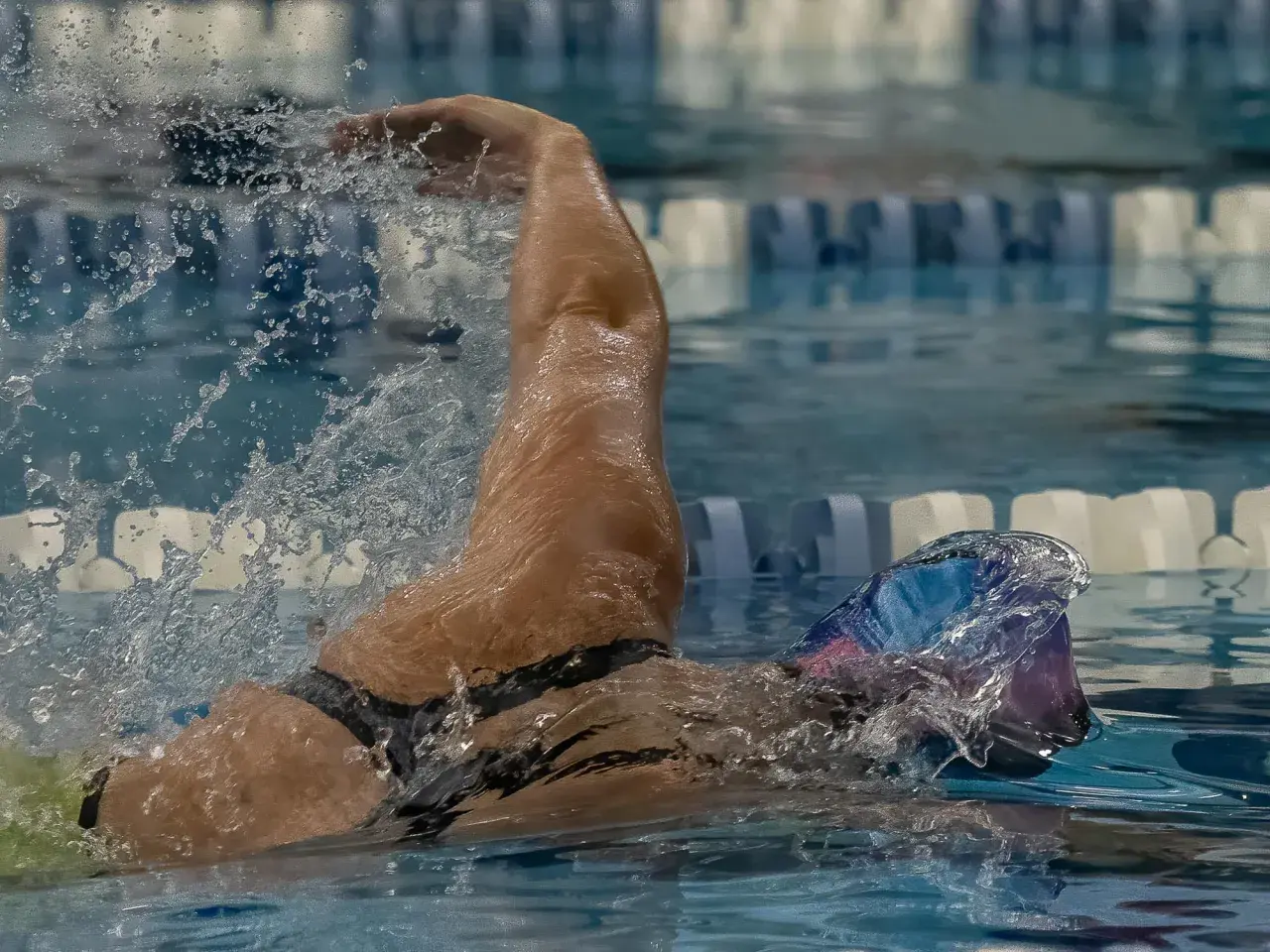
Learning how to swim laps efficiently is less about forcing distance and more about building a repeatable rhythm. The best lap swimmers keep the body long, breathe without panic, and break the session into manageable efforts instead of chasing one heroic swim. In this guide, I focus on the technique, pacing, lane habits, and simple training choices that make pool lengths feel smoother and more useful.
The quickest route to better pool lengths is cleaner technique, smarter pacing, and the right lane
- Front crawl is usually the best starting stroke for sustained lap swimming, while breaststroke and backstroke can be useful for recovery.
- Exhaling underwater matters more than trying to “push through” with extra effort.
- Short interval sets are usually better than one long grind, especially if your form falls apart early.
- In a UK pool, lane choice matters: match your pace to the lane and let faster swimmers pass cleanly at the wall.
- Simple gear helps, but you do not need a bag full of kit to build a solid swim routine.
Start with a stroke you can repeat
For most adults, front crawl is the most practical stroke for lap swimming because it is efficient, scalable, and easy to turn into a workout. That does not mean you must swim only one stroke; it means you should choose the one that lets you keep moving with decent shape after the first few lengths, not just the first one.
| Stroke | Best use | Strengths | Watch-outs |
|---|---|---|---|
| Front crawl | Main training stroke for most lap swimmers | Fast, efficient, easy to build into intervals | Breathe too late and the stroke quickly becomes frantic |
| Backstroke | Recovery between harder sets | Lets you breathe freely and reset body position | Harder to control direction if you are not comfortable on your back |
| Breaststroke | Easy aerobic work and recovery swimming | Natural breathing rhythm and a useful break from crawl | Head-lifting and a rushed kick can make it much less efficient |
| Butterfly | Short technical work for experienced swimmers | Good strength and timing drill | Too demanding to be the main choice for most lap sessions |

Build body position and breathing before chasing speed
Good lap swimming usually comes down to four moving parts: body position, leg action, arm action, and breathing. I put body position and breathing first because most beginners do not actually get tired from the distance at the start; they get tired from carrying drag, holding their breath, and breathing in a way that disrupts the whole stroke.
- Keep the head neutral. Look down and slightly forward, not ahead of you. If you keep checking the end of the pool, your hips usually sink.
- Exhale in the water. Blow out steadily, or in a calm trickle, before you turn to breathe. Holding your breath is one of the fastest ways to feel panicked.
- Turn, don’t lift. Let the head follow the body roll to the side. One goggle staying in the water is often a good sign that the breath is compact enough.
- Kick small and relaxed. Use a narrow kick from the hips. Big, splashing kicks waste energy and usually make the stroke feel heavier than it needs to be.
- Use drills to simplify the stroke. A pull buoy can remove the kick from the picture for a set or two, which helps you notice whether the breath or arm path is the real problem.
Once the stroke feels less chaotic, pacing becomes the part that decides whether the session is training or just survival.
Swim in short sets, not all-out marathons
The NHS recommends that adults aim for 150 minutes of moderate-intensity activity a week, or 75 minutes vigorous. Lap swimming fits that model well, but only if you pace it so the effort is repeatable. In the pool, I would rather see a swimmer complete eight controlled lengths than attempt one heroic blast and spend the next five minutes gasping at the wall.
- Easy aerobic set. Try 8 x 25m or 4 x 50m with 20-30 seconds rest. This is the best starting point if your technique collapses quickly.
- Technique set. Swim 6 x 25m and give each length one focus: quiet kick, steady exhale, long body line, or smooth turn to breathe.
- Endurance set. Use 4 x 100m or 6 x 50m at a pace you can repeat without sprinting the first length. If you are hanging on the wall every length, the interval is too ambitious.
A simple intensity check helps here: at moderate effort, you should still be able to speak in short sentences between lengths; at vigorous effort, only a few words. That is a more useful guide than trying to guess whether the swim “felt hard enough”.
When pacing starts to make sense, the question becomes how to build a routine that lasts more than one good session.
Build a simple four-week routine
I prefer a slow ramp. In the first month, the goal is not mileage for its own sake; it is consistency, confidence, and a stroke you can repeat when you are slightly tired. If you can already swim a few lengths, use this as a sample structure rather than a strict prescription.
- Week 1. Do 2 sessions and keep each one short: 6 to 8 x 25m with generous rest. Finish feeling fresh enough to notice your technique.
- Week 2. Keep 2 sessions, but add a little more total work: 8 x 25m or 4 x 50m. If the stroke feels ragged, repeat Week 1 instead of forcing progress.
- Week 3. Move to 6 x 50m, or mix 25m and 50m lengths. At this stage, the main challenge is keeping the breathing pattern calm once fatigue appears.
- Week 4. Try 4 x 100m or 8 x 50m, depending on the pool and your comfort level. The aim is steady repeatability, not a maximal effort.
If a jump feels too large, reduce the rest first before adding more distance. That is usually the cleaner move because it builds fitness without turning the session into a mess. Once you have a workable routine, the pool itself needs to cooperate too.
Choose the right lane and follow pool etiquette
Lane swimming is smoother when the lane suits your pace. In many UK pools, lanes are marked slow, medium, and fast, and the most sensible move is to watch one length before getting in. That tiny pause can save you from spending the whole session dodging people who are swimming at a very different rhythm.
- Join the lane that most closely matches your pace, not the lane that strokes your ego.
- Swim single file or circle swim if the lane is set up that way.
- Let faster swimmers pass at the wall rather than fighting them mid-length.
- If you keep getting overtaken, move up a lane rather than pretending it is not happening.
- If you need to rest, stay clear of the turn space so other swimmers can finish their lengths cleanly.
Swim England’s pool-etiquette advice is sensible for a reason: it keeps the lane moving and reduces avoidable collisions. If the pool is busy, I would also choose shorter repeats over long continuous swims, because shorter intervals are easier to slot into shared lanes.
Once the lane is sorted, a few pieces of gear can make the work feel more manageable without turning the swim into a shopping list.
Use gear that helps, not gear that distracts
For lap swimming, I keep the kit list deliberately short. Good goggles solve more problems than most people expect, and a comfortable suit matters because a poor fit creates a low-level distraction that never quite goes away. Beyond that, a few simple training aids can be useful if you know why you are using them.
| Gear | What it helps with | When I would use it |
|---|---|---|
| Goggles | Clear vision, less squinting, less tension in the face | First purchase for almost everyone |
| Swim cap | Keeps hair out of the way and can slightly reduce drag | Useful for longer sessions or if hair gets in your eyes |
| Pull buoy | Helps body position and lets you focus on the arms and breathing | Technique sets and stroke-isolation work |
| Fins | Lifts the body and helps rhythm | Short drills, not every length of every session |
| Kickboard | Isolates the legs | Occasional kick work, but not a substitute for good body line |
My ordering is simple: goggles first, cap if you need it, and training aids only when you know the drill they are supposed to support. If the kit starts to run the session, it has stopped being useful.
What I would fix first when laps still feel hard
The quickest answer to how to swim laps is usually boring in the best way: start easier than you think, breathe earlier than you think, and let consistency do the work. If the swim still feels heavy, I would fix three things before anything else: shorten the kick, exhale continuously, and stop each repeat while the stroke is still neat.- Do not sprint the first length and then try to survive the rest.
- Do not lift the head to breathe if a small turn will do the job.
- Do not chase distance before you can repeat the stroke cleanly.
- Do not ignore lane speed, because the wrong lane can make an easy session feel hard.
Once those habits are in place, lap swimming stops feeling like a test and starts working like training. That is the real target: enough control to get quality lengths in, enough breathing room to repeat them, and enough patience to let fitness build week by week.