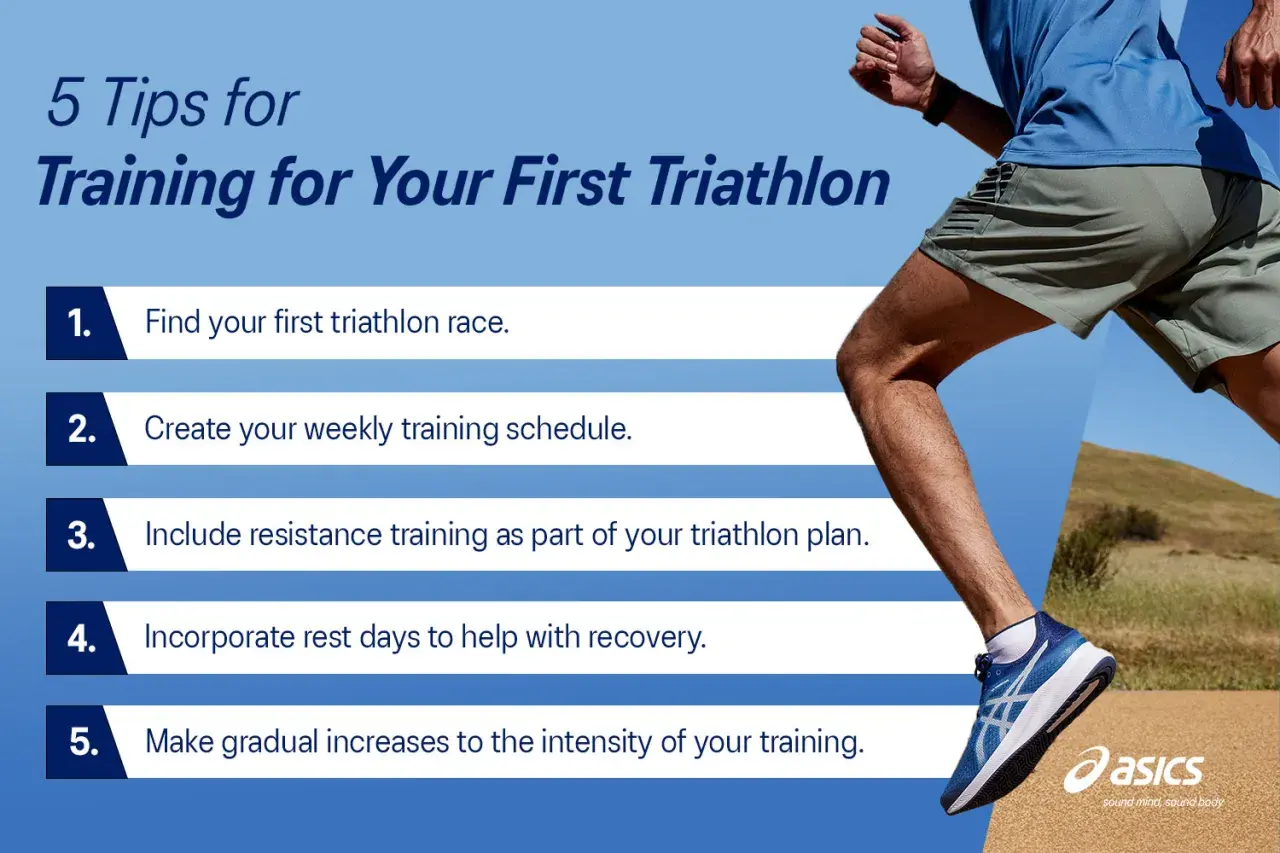
A tri training programme works best when it is built around the race you actually want to finish, your current swim-bike-run base, and the time you can train each week. In this guide I break down how I structure the season, how to balance each discipline, and where beginners usually waste effort. The goal is simple: give you a plan that feels realistic on Monday and still works on race day.
What matters most when you build a triathlon plan
- Match the plan to the distance first, because a sprint and a 70.3 demand very different weekly loads.
- Most beginners do better with 2-3 swims a week, plus 2 bikes, 2 runs, one short strength session, and at least one real rest day.
- Use phases: base, build, peak, and taper. Random hard sessions usually create fatigue before they create fitness.
- Brick workouts matter because triathlon is a transition sport, not three separate sports glued together.
- The swim should be frequent and technical, the bike should build most of the endurance, and the run should stay controlled.
What a triathlon plan actually has to solve
When I write a triathlon plan, I am not trying to make every session hard. I am trying to solve three problems at once: build aerobic fitness, keep the athlete healthy, and make the transitions feel normal instead of chaotic. That is why a good plan always has structure, recovery, and a clear purpose for each workout.
For most beginners, the biggest mistake is treating triathlon like an endurance free-for-all. You do not need to swim, bike, and run hard every week to improve. In fact, that usually backfires. Beginners often do well with two to three swims per week, and that is a good reminder that frequency matters as much as hero sessions. I would rather see someone repeat clean, manageable work than chase one giant workout and spend three days recovering from it.
The plan also has to respect the fact that each sport stresses the body differently. Swimming is technical and shoulder-heavy, cycling is the safest place to build volume, and running is the discipline that punishes poor pacing fastest. Once you accept that, the rest of the plan becomes easier to design. Next, I would choose the race distance before I choose the workload.
Pick the race distance before you pick the workload
The right plan depends on the event. A sprint triathlon and a full-distance race both count as triathlon, but they ask very different things from your week. If you are training in the U.S., the most common first targets are sprint and Olympic distance because they are easier to fit around work, family, and recovery.
| Race distance | Typical race distance | Usual weekly training time | Main training focus |
|---|---|---|---|
| Sprint | 750 m swim, 20 km bike, 5 km run | 4-6 hours | Technique, pacing, short bricks, confidence |
| Olympic | 1.5 km swim, 40 km bike, 10 km run | 6-10 hours | Aerobic durability, open-water comfort, steady pacing |
| 70.3 | 1.9 km swim, 90 km bike, 21.1 km run | 8-12 hours | Fueling, long-bike strength, run discipline off the bike |
| Full distance | 3.8 km swim, 180 km bike, 42.2 km run | 12-18+ hours | Volume management, nutrition, recovery, durability |
Those ranges are practical planning numbers, not universal rules. A fast experienced athlete may need less time, while a newer athlete may need more. My rule is simple: start with the race you can train for consistently, not the one that looks most impressive on paper. Once that choice is clear, the season can be broken into phases that keep stress rising in a controlled way.
Organize the season into phases that change the stress
A structured plan should feel different as race day approaches. Early on, I want routine and technique. Later, I want specificity. That is why I prefer a simple four-phase model instead of a collection of random workouts that all try to do the same job.
| Phase | Typical length | Primary goal | What to keep in check |
|---|---|---|---|
| Base | 3-6 weeks | Build consistency, swim mechanics, and easy aerobic volume | Do not turn every session into a test |
| Build | 3-6 weeks | Add race-pace efforts, longer bike and run work, and short bricks | Keep intensity controlled so fatigue does not pile up |
| Peak | 1-2 weeks | Rehearse pacing, transitions, and race-specific effort | Avoid adding new volume here |
| Taper | 7-14 days | Arrive fresh while keeping the legs awake | Do not chase lost fitness at the last minute |
If you are building for a sprint, the whole block can be short and sharp. If you are preparing for an Olympic race or longer, the same logic still works, only the blocks stretch out. The key is that each phase should have a different purpose. That is what keeps training from becoming noise. Next I will show how I turn those phases into an ordinary week that busy people can actually repeat.
Build a weekly structure you can repeat without burning out
The best weekly plan is the one you can live with for several weeks in a row. I usually like to see one rest day, two swims, two bikes, two runs, and one short strength session in a beginner-friendly sprint block. For many athletes, that is enough to make steady progress without turning training into a second job.
| Day | Session | Why it is there |
|---|---|---|
| Monday | Rest or mobility work | Absorb the previous week and lower injury risk |
| Tuesday | Swim technique session | Improve body position, breathing, and stroke repeatability |
| Wednesday | Bike workout | Build aerobic engine with low impact on the legs |
| Thursday | Run session | Keep running durable without forcing too much volume |
| Friday | Swim endurance or pace set | Reinforce stroke efficiency when mildly tired |
| Saturday | Brick workout | Practice the bike-to-run transition |
| Sunday | Long bike or easy recovery swim | Finish the week with aerobic work that matches the race distance |
If your calendar is tight, keep the swim frequency first and cut the extras around it. I have seen too many athletes drop swim sessions because they feel less dramatic than the bike, then wonder why race morning feels stressful. A clean week, repeated well, is worth more than a heroic week that cannot be sustained. That idea matters even more once the focus shifts to swim technique.
Make the swim the technical anchor
Swimming is where triathlon training often gets most misunderstood. It is not just about building fitness in the water; it is about making your stroke economical enough that the swim does not drain the rest of the race. I like to treat the swim as the technical anchor of the whole plan, because a better stroke gives you more return per minute than almost any other training change.For a newer athlete, two or three swims per week is usually enough to keep the skill moving forward. One session should be technique-first, one should be steady endurance, and one can include race-pace work or open-water skills. I pay attention to three details in particular: relaxed exhalation, a stable body line, and sighting that does not wreck the rhythm of the stroke.
Pool work is where you clean up mechanics. Short repeats, drill sets, and controlled intervals help you hold form when the heart rate rises. Open-water work is where you learn to stay calm, breathe on schedule, and swim straight when the water is messy. If you only get open water occasionally, use the pool to rehearse sighting, pace changes, and the feeling of starting hard before settling into rhythm. That way race day does not surprise you.
The gear list for the swim should stay simple too: goggles that fit, a suit or tri suit that stays comfortable, and a wetsuit only if the race rules and water temperature make it appropriate. Fancy kit does not replace practice. It just makes practice easier to repeat. From there, the next step is making the rest of the training support the swim instead of competing with it.
Use bricks, recovery weeks, and strength work to hold the gains
Brick workouts are one of the most useful tools in triathlon because they teach your body how to move from one discipline to the next. In practice, a brick is usually a bike-to-run session, though swim-to-bike bricks can also be useful in some plans. The point is not to suffer for the sake of it; the point is to make the transition feel less foreign. One short brick a week during the build phase is enough for many age-group athletes.
Recovery weeks matter just as much. I usually reduce volume by roughly a quarter to a third every three or four weeks, especially when the athlete is stacking work, family, and training. The athletes who respect recovery usually keep improving, while the ones who chase fatigue usually stall.
Strength training has a role too, but it should support the three sports rather than compete with them. A good rule of thumb is light to moderate resistance work two or three times a week, with roughly six to 10 exercises, 10 to 20 reps, and two to three sets. I think of that as durability work. It helps with posture, stability, and injury resistance, which matter a lot once the mileage rises.When brick work, recovery, and strength all fit together, the plan starts to feel smoother instead of harder. The next question is what gear and nutrition choices actually help, and which ones mostly add cost.
Keep the gear list lean and the fuel plan practiced
Most triathletes do not need a warehouse of equipment to train well. They need a bike that fits, a helmet that is comfortable and safe, shoes they can run in without thinking about them, goggles that stay sealed, and a race outfit that does not need constant adjustment. Everything else is secondary until the basics are solid.
- Buy fit first. A well-positioned bike and comfortable running shoes usually pay off faster than aero accessories.
- Use swim gear that removes friction. Good goggles and, when appropriate, a wetsuit matter more than gadgets.
- Keep transition simple. Less gear in transition means fewer mistakes on race day.
- Practice fueling in training. Longer rides and bricks are the right place to test carbs, fluids, and electrolytes.
- Essential now: bike, helmet, shoes, goggles, swimsuit or tri suit.
- Helpful later: wetsuit, pull buoy, race belt, hydration bottles, simple storage for fuel.
- Not urgent: aero wheels, expensive race kit, power meter, second bike, and other upgrades that do not fix the basics.
The same logic applies to nutrition. Do not wait until race day to discover what your stomach tolerates. On longer sessions, I want athletes to rehearse the same drink, gel, or food pattern they expect to use in the race. That is especially important in the U.S., where hot conditions and long travel to events can make nutrition more fragile than athletes expect. Once the kit and fuel are under control, the final step is deciding what to keep simple all the way to the start line.
What I would keep if the plan had to stay simple
If I had to strip the whole process down to the minimum effective version, I would keep three things: frequent swimming, one disciplined brick each week, and enough recovery to let the work stick. That combination is boring in the best possible way. It builds confidence without constantly asking you to prove fitness.
For a first sprint or Olympic race, I would also keep the final two weeks clean. Reduce volume, keep a little intensity, sleep more, and avoid new gear, new shoes, and new nutrition experiments. You are not trying to get fit in the final stretch; you are trying to arrive fresh enough to express the fitness you already built.
- Hold the swim frequency steady, even if the sessions are short.
- Keep the bike mostly aerobic, with brief race-pace touches instead of endless hard efforts.
- Run with restraint so your legs stay usable for the last block of the race.
- Use the taper to sharpen, not to squeeze in missed training.
That is the version I trust most often: simple enough to repeat, specific enough to matter, and flexible enough to fit real life. If the plan keeps those three qualities intact, it will do its job on race day.