Triathalon distances usually means the swim-bike-run lengths that define each race format, from short beginner-friendly events to full-distance endurance tests. I am going to break down the standard categories, show the numbers in both kilometers and miles, and explain what those distances actually mean for pacing, training, and race-day decisions. If you want the practical version rather than a dry label list, this will give you a clear starting point.
The standard triathlon race lengths are easy to compare once you see the swim, bike, and run side by side
- Most races fall into a few main formats: super sprint, sprint, Olympic/standard, middle or half-distance, long, and full-distance.
- World Triathlon lists standard distance as 1500m swim, 40km bike, and 10km run.
- In the U.S., the most common labels are sprint, Olympic, 70.3, and Ironman.
- The swim is always the shortest leg on paper, but it often feels like the most technical part of the day.
- Course details matter as much as the distance label, especially in open water.

The main race distances at a glance
Triathlon naming can be messy because official federation labels and branded event names do not always match. I find it easier to look at the actual swim, bike, and run distances first, then map those numbers to the race name people use in conversation.
| Format | Swim | Bike | Run | Approx. total | What it usually means |
|---|---|---|---|---|---|
| Super sprint | 400m | 10km | 2.5km | About 8.0 miles | Very short, beginner-friendly, and fast |
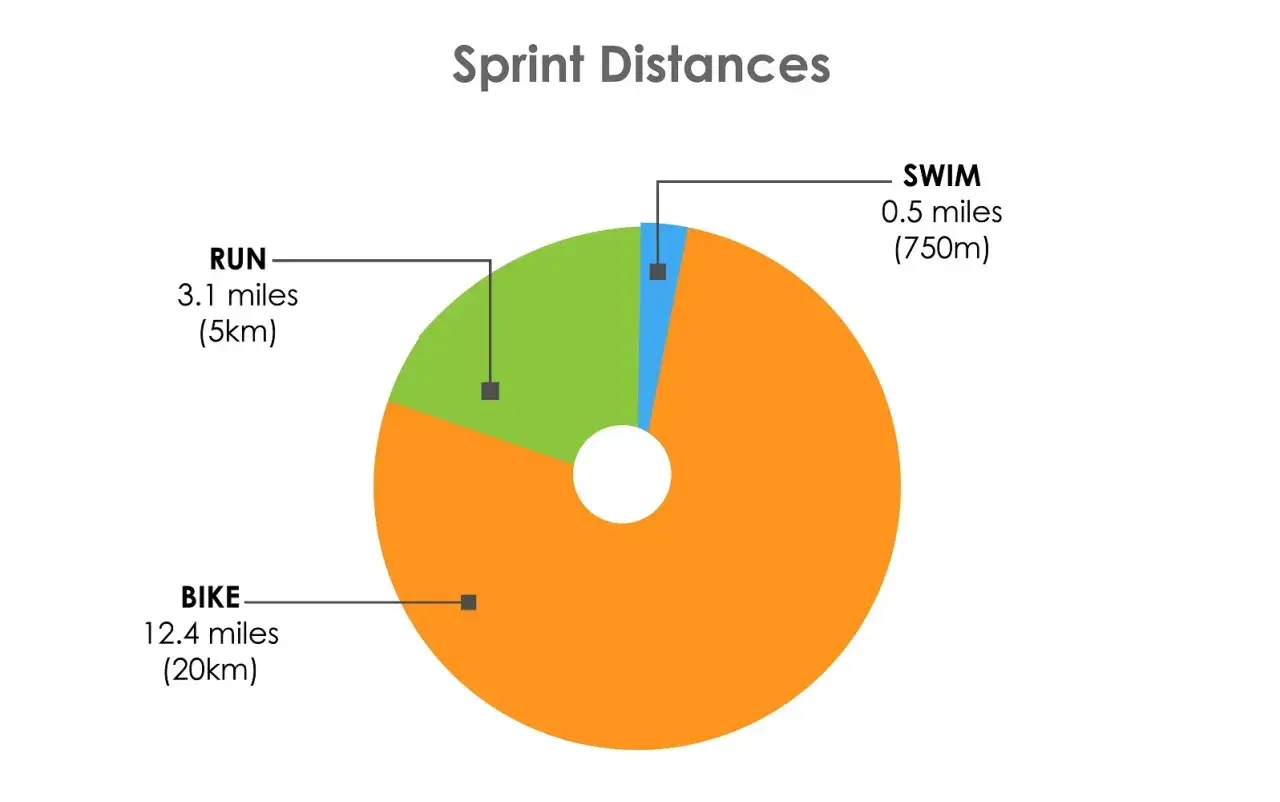
| Sprint | 750m | 20km | 5km | About 16.0 miles | The most common entry point for new triathletes |
| Olympic or standard | 1500m | 40km | 10km | About 32.0 miles | Long enough to demand real pacing, but still accessible |
| Middle or half-distance | 1.9km to 2.5km | 80km to 90km | 18km to 21.1km | About 70.3 miles or more | Serious endurance work with a big fueling component |
| Long or full-distance | 3.8km to 4km | 180km to 120km | 42.2km to 30km | About 95.7 to 140.6 miles | For athletes who want a major endurance challenge |
The most useful takeaway is simple: distance alone does not tell you how hard the race will feel. A flat sprint in calm water can be easier than a much shorter race with chop, heat, hills, and bad pacing. Once the numbers are clear, the next question is how each distance changes the swim leg.
Why the swim leg changes the feel of every distance
On paper, the swim looks small compared with the bike and run. In practice, it often sets the tone for the entire day. That is especially true in open water, where breathing rhythm, contact at the start, sighting, and wetsuit use all change how the effort feels.
Short races reward control more than brute force
In a sprint or super sprint, I care less about all-out speed and more about staying calm. A 400m or 750m swim can spike heart rate quickly, and if you go out too hard, the bike starts with a red-lining feeling that lingers longer than it should. The best short-course swims usually look smooth, not frantic.
Read Also: Youth Triathlon Guide - First Race Success & Fun
Longer races punish sloppy pacing
In an Olympic race and beyond, the swim is no longer just about surviving the opening minutes. It becomes the first part of an energy budget. If you thrash through the water, stand up dizzy, and then overbike, the run pays for it later. I would rather see a controlled, efficient swim than a flashy one that burns matches early.
That is why I treat swim preparation as more than yardage. Open-water practice, turning skills, and relaxed exhalation matter just as much as raw fitness, and that leads directly to the question of which race length makes sense for a first start.
How I would choose the right race length
If I were coaching a first-time triathlete, I would not start with the biggest label on the calendar. I would start with the distance that matches current swim confidence, bike durability, and run tolerance after the bike. The right choice is usually the race that stretches you without forcing your training to become your full-time job.
| Distance | Rough weekly training time | Best fit |
|---|---|---|
| Super sprint | 3 to 5 hours | First-time racers, returners, or athletes who want a low-pressure start |
| Sprint | 4 to 7 hours | Beginners who can already swim continuously and want a realistic first goal |
| Olympic or standard | 5 to 9 hours | Athletes with a stable base who want a longer endurance test |
| 70.3 or middle-distance | 7 to 12 hours | Committed age-group athletes who can handle longer bricks and fueling practice |
| Full-distance | 10 to 15+ hours | Experienced athletes with the time and patience for a long build |
These are practical ranges, not rules. I have seen athletes train a little less and still finish well, and I have seen athletes train a lot more but struggle because the pacing or nutrition strategy was weak. Once the distance matches the athlete, the next problem is usually not fitness but avoidable mistakes.
The mistakes that make race distances feel harder than they are
Most people do not fail because the race is labeled badly. They fail because they misread what the label means in real life. In triathlon, the number on paper is only the first part of the equation.
- Treating the swim like a warm-up - even a short swim can spike effort if you start too hard.
- Training only in the pool - pool fitness helps, but open water adds sighting, anxiety, and current or chop.
- Ignoring transitions - in a sprint race, a slow T1 or T2 can matter more than people expect.
- Choosing a distance based on bike strength alone - a strong cyclist can still get exposed on the run if the pacing is off.
- Underfueling longer races - once you move into 70.3 or full-distance racing, carbs and fluids stop being optional.
- Assuming every course of the same label feels identical - heat, hills, wind, and water conditions can change the real difficulty a lot.
I have learned that the best race-day decisions are rarely about bravado. They come from understanding where the distance ends and the course-specific reality begins, which is why I like to translate race lengths into something swimmers can picture easily.
How the pool view translates to race day
For swimmers, the fastest way to understand triathlon distance is to think in pool lengths. That is where the numbers become real. A race that sounds short in kilometers can suddenly feel like a lot of repeats when you count the lengths one by one.
| Swim leg | Approx. lengths in a 25m pool | Approx. lengths in a 25yd pool | What it feels like in training |
|---|---|---|---|
| 400m | 16 lengths | About 18 lengths | A short, punchy effort where control matters |
| 750m | 30 lengths | About 33 lengths | Long enough to need rhythm, but still very manageable |
| 1500m | 60 lengths | About 66 lengths | A true steady-state swim that rewards efficiency |
| 1.9km | 76 lengths | About 83 lengths | Enough volume to expose weak pacing and poor breathing habits |
| 3.8km | 152 lengths | About 166 lengths | A long swim where calm technique matters more than force |
That conversion is one reason I tell swimmers to take triathlon seriously even when the swim looks modest. The line between a smooth race and a stressful one is often technique, not raw speed. A clean body position, a steady exhale, and a swim cap and goggles setup that actually fits are worth more than people think.
The details that matter once the distance is chosen
When two races share the same name, the details often decide which one is the better choice. I check a few things before I commit, because they can change the feel of the event more than the swim-bike-run label does.
- Water type - lake, river, or ocean changes sighting, confidence, and pacing.
- Wetsuit rules - legal wetsuit swims can feel very different from non-wetsuit swims.
- Bike profile - a flat 40km course is not the same as a rolling one, even if the distance matches.
- Run conditions - heat and humidity matter more as the race gets longer.
- Draft-legal status - some sprint and Olympic races allow closer bike riding, which changes tactics.
- Cutoff times - especially important for newer athletes and longer events.
If I had to reduce all of this to one rule, it would be this: pick the distance that fits your current engine, then study the course as carefully as the label. The numbers tell you the size of the challenge, but the course tells you how that challenge will actually feel on the day.