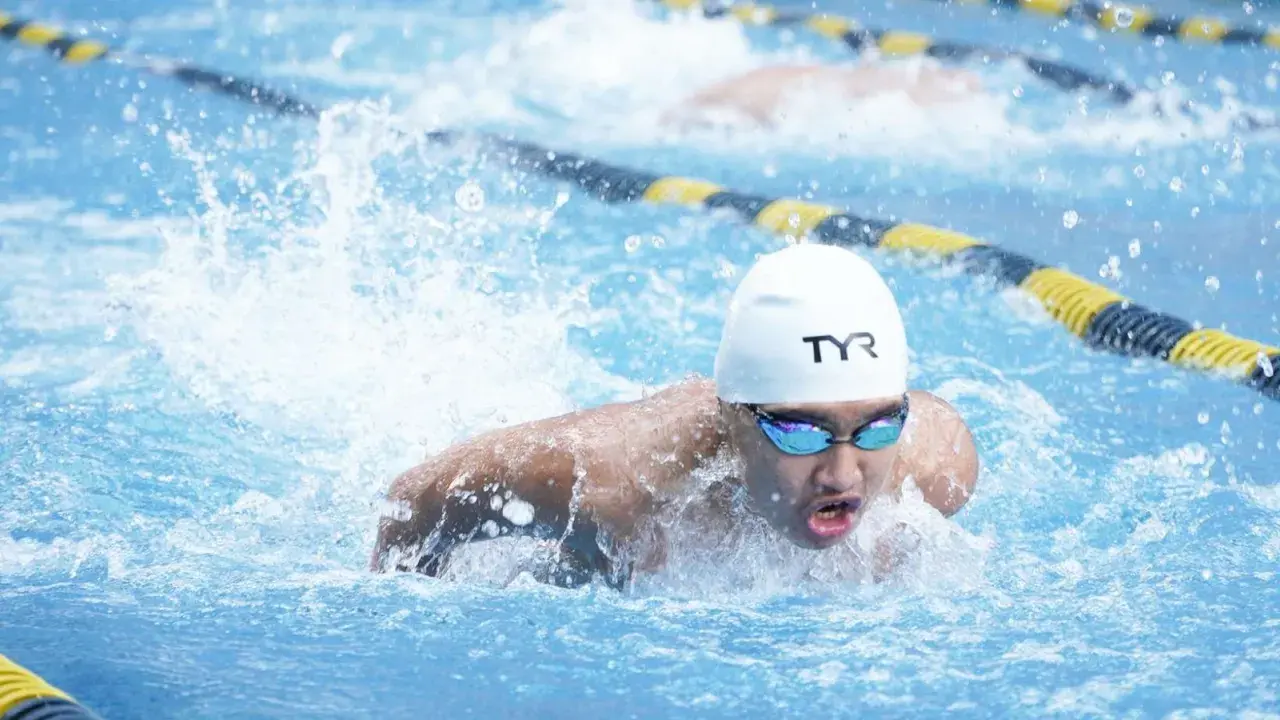
Getting faster in the pool is usually less about working harder and more about removing the little leaks that steal speed: drag, poor timing, weak walls, and sloppy race-pace habits. The real answer to how to swim faster is to make each stroke cleaner, each turn sharper, and each fast set more specific. In this article, I break down what actually moves the needle, what to fix first, and how to train speed without turning every session into a grind.
The fastest gains come from cleaner lines and smarter training
- Body position comes first because a flatter, calmer line cuts drag before you ever add more effort.
- Stroke rate and stroke length must work together; going faster is not the same as thrashing harder.
- Starts, turns, and underwater work are the cheapest speed you can earn in a pool.
- Short, specific speed sets usually work better than endless hard swimming.
- Dryland should support the stroke with core stability, pulling strength, and shoulder control.
What actually makes a swimmer faster
I think of swim speed as a simple hierarchy. First, you stop wasting energy on drag. Then you learn to hold a stronger line through the catch, the turn, and the breakout. Only after that does harder conditioning pay off fully. If you try to build speed on top of a messy stroke, you usually just become a faster version of the same problem.
| Priority | Why it matters | What usually goes wrong | What to do instead |
|---|---|---|---|
| Body position | It reduces drag on every stroke and every breath | Hips sink, head lifts, legs split wide | Keep the head neutral, the core firm, and the line long |
| Stroke mechanics | It turns effort into forward motion instead of splashing | The catch slips and the elbow drops too early | Build a stable catch and feel water pressure on the forearm |
| Walls and underwater | They are the fastest part of a race when done well | Loose streamline, weak push-off, early breakout | Push hard, lock the body in line, and surface before speed fades |
| Race-specific fitness | It helps you keep technique when the set gets painful | Big first 25, collapse on the back half | Train at target pace with enough rest to stay technically sharp |
That order matters. I almost never start with more volume. I start with fewer leaks. Once swimmers feel what efficient speed is supposed to feel like, their conditioning work finally has something useful to support. From there, the next step is usually body position, because that is where the most obvious drag lives.
Fix body position before you chase more power
In freestyle, backstroke, butterfly, and even breaststroke, a poor line costs speed before the hands ever start pulling. I want the body long, balanced, and calm in the water. That means the head is not bobbing up, the hips are not dragging behind, and the kick is there to support balance instead of rescuing a broken posture.
- Keep the head neutral. In freestyle, that usually means eyes down and a long neck. If you look forward to breathe, the hips often drop.
- Exhale underwater. Holding your breath makes the body tense and usually leads to a worse body line on the next stroke.
- Let the kick stabilize, not overwork. A frantic kick can hide poor alignment for a few meters, but it rarely fixes anything.
- Use the breath to rotate, not lift. I want the torso to roll together, not the head to break the line.
Two drills usually help me clean this up quickly: side kicking with one arm extended and short streamline push-offs with a long glide only until the speed starts to fall. The point is not to hang in the water forever; the point is to feel what a better line actually feels like. Once that line improves, stroke mechanics become easier to build on.
That is why I usually tell swimmers to sort out balance before they worry about extra power. When the body rides higher, every catch and every turn gets cheaper. From there, the real question becomes how to turn your stroke into speed without wasting it.
Make your stroke faster without making it sloppier
Swim speed is a mix of stroke rate and stroke length. Stroke rate is how quickly you cycle your arms. Stroke length is how far you travel with each stroke. I do not care about either one in isolation. A swimmer can look smooth and still be slow, or spin their arms like crazy and go nowhere. The goal is the best balance for the race distance.
In practice, I watch for one thing above all: are you still holding water when the tempo rises? If the answer is no, the stroke is too rushed. If the answer is yes but the count is absurdly high and the stroke gets clunky, you probably need a little more tempo. That balance changes by event, but the principle does not.
- Count strokes on repeat reps. If your time improves but your stroke count jumps a lot, you may be buying speed with inefficiency.
- Use race-pace repeats. Fast swimming should feel repeatable, not random.
- Keep the catch firm. Early vertical forearm, or EVF, is a technical term for getting the forearm into a strong pulling position early in the stroke.
- Match tempo to distance. A 50 usually tolerates more aggression than a 400, but even sprint swimming still needs control.
I like to test this with short repeats such as 8 x 25 or 6 x 50, because the shorter work exposes technical drift fast. If the first rep looks great and the rest fall apart, the swimmer is not yet ready for that pace. If the speed holds and the stroke stays clean, I know the engine is improving in a useful way. The next place to earn time is the wall.
Use starts, turns, and underwater work to bank free speed
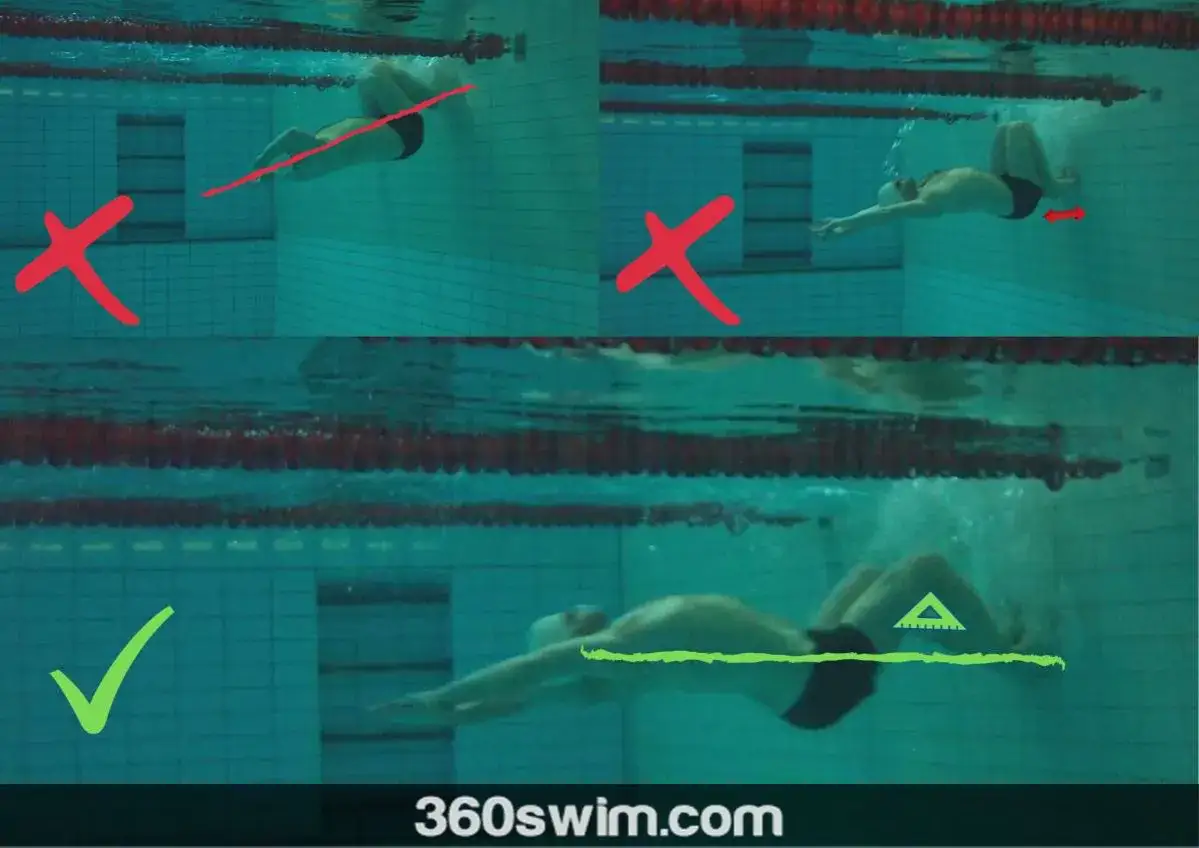
Starts and turns are the easiest place to buy time because the water is quiet and your body is briefly in a far more streamlined position than during normal swimming. In U.S. pool racing, freestyle, backstroke, and butterfly allow underwater travel only up to 15 meters after the start and each turn, so I coach swimmers to make that underwater space count instead of trying to stretch it forever. Breaststroke has its own pullout rules, which is why I keep race legality in mind when I teach speed off the wall.
What matters here is not just distance underwater. It is how much speed you carry through the wall, the streamline, and the breakout. A strong push-off with a loose line is wasted speed. A tight line with a timid push-off is also wasted speed. You want both.
- Push off with intent. If the wall is weak, the rest of the turn rarely saves it.
- Lock into streamline immediately. Hands stacked, arms tight, head tucked, and core braced.
- Use underwater kicks only while the line stays clean. I would rather surface a little early than break shape for extra meters.
- Surface right before the speed drops. That is the useful point, not the legal maximum.
This is where short-course yards can flatter a swimmer. More turns mean more opportunities to use walls as a speed source, which is one reason a swimmer may look faster in a 25-yard pool than in a 50-meter pool. In training, I still practice the same discipline: clean push-off, tight line, controlled breakout. That sets up the next piece, which is speed-specific training rather than just more swimming.
Train speed with sets that teach race pace
If you want to get faster, some of your pool time has to be unmistakably fast. Not every lap, not every day, but enough that your body learns what race pace feels like and how to hold it under pressure. I usually prefer fewer, better speed sessions over a lot of random hard swimming. For many age-group and fitness swimmers, two focused speed sessions per week is a sensible starting point, as long as the rest of the week supports recovery and technique.
Here is how I usually organize it:
- Pure speed work. Short reps like 12 x 25 or 8 x 25 with generous rest to keep form sharp.
- Race-pace work. Repeats such as 6 x 50 or 8 x 50 where you target a specific pace and try to hold it.
- Broken endurance. Sets like 3 x 100 or 4 x 100 broken into smaller chunks when you need pace under fatigue.
- Kick and swim combinations. These are useful when the legs need more involvement without wrecking the stroke.
I want enough rest that the swimmer can actually swim fast, not just survive the set. That usually means 10 to 30 seconds for shorter repeat work, and more on pure sprint sets if the goal is true top-end speed. I also watch breathing closely. Exhaling underwater and using a planned breathing pattern keeps the body calmer than gasping and guessing. If you cannot repeat the pace with decent form, the set is too ambitious for that day. That does not mean the work was pointless; it means the pace has told you something useful.
Gear can help here, but only when it supports the task. Fins are useful for sprinting and underwater speed because they let swimmers feel a faster line without turning every kick into a battle. Paddles, on the other hand, are only helpful when the catch is already stable. If the stroke is loose, paddles just amplify the mistake.
Add dryland work that actually carries over
Dryland training should make you faster in the pool, not just tired on land. I care most about four things: core stability, pulling strength, shoulder health, and enough lower-body power to support starts and turns. You do not need a bodybuilding program to improve swim speed. You need a program that respects how swimmers move.
- Core stability: dead bugs, hollow holds, Pallof presses, and front planks with control.
- Pulling strength: rows, pull-ups, and lat pulldowns with clean mechanics.
- Shoulder control: external rotations, serratus work, and scapular stability drills.
- Lower-body support: split squats, step-ups, and jumps if your joints tolerate them well.
For most swimmers, 20 to 40 minutes of dryland work, two to three times a week, is enough to matter without beating up the shoulders or stealing energy from the water. I am also cautious about chasing maximum load too early. If a swimmer cannot keep their chest open, ribs stacked, and shoulders stable, more weight is not the answer. Better control is. Once that base is in place, the common mistakes become much easier to spot and fix.
The mistakes that quietly steal seconds
Most swimmers do not lose speed because of one dramatic flaw. They lose it through a stack of small habits that add up. These are the mistakes I see most often when someone wants to get faster but keeps stalling.
- Training hard without a technical target. Fast yardage does not automatically create fast swimming.
- Lifting the head to breathe. It drops the hips and punishes the line.
- Overkicking. A frantic kick can hide drag, but it rarely replaces good body position.
- Ignoring turns because they feel like rest. Bad walls can erase the work of a good stroke.
- Using too much gear too soon. Paddles and fins are tools, not substitutes for skill.
- Going fast every day. Speed needs recovery if you want it to stay fast instead of just tired.
I usually tell swimmers to fix the most expensive mistake first. If the head position is bad, start there. If the turn is sloppy, clean that up. If the swimmer can never repeat race pace, the issue may be programming rather than effort. Once those leaks are sealed, the final gains come from making the whole plan simpler and more deliberate.
What I would keep if I had to simplify the whole plan
If I had only one month to make a swimmer measurably quicker, I would keep the plan brutally simple: one technical cue for body position, one speed set each week, and one wall-focused session where every push-off matters. I would also track stroke count and times on a few repeat distances, because what gets measured gets cleaned up fast.
- Protect the line. Swim long, flat, and balanced before you try to swim hard.
- Respect the walls. A good start or turn can save more time than an extra hard lap.
- Race specific pace. Fast swimming has to be practiced at the speed you want to race.
That is the practical answer to how to swim faster: reduce drag, sharpen your walls, and give your body enough race-pace exposure to hold form when it starts to burn. If you build from that order, the speed gains are usually more stable, and they tend to show up where it matters most: in cleaner strokes, faster turns, and better closing speed on the clock.