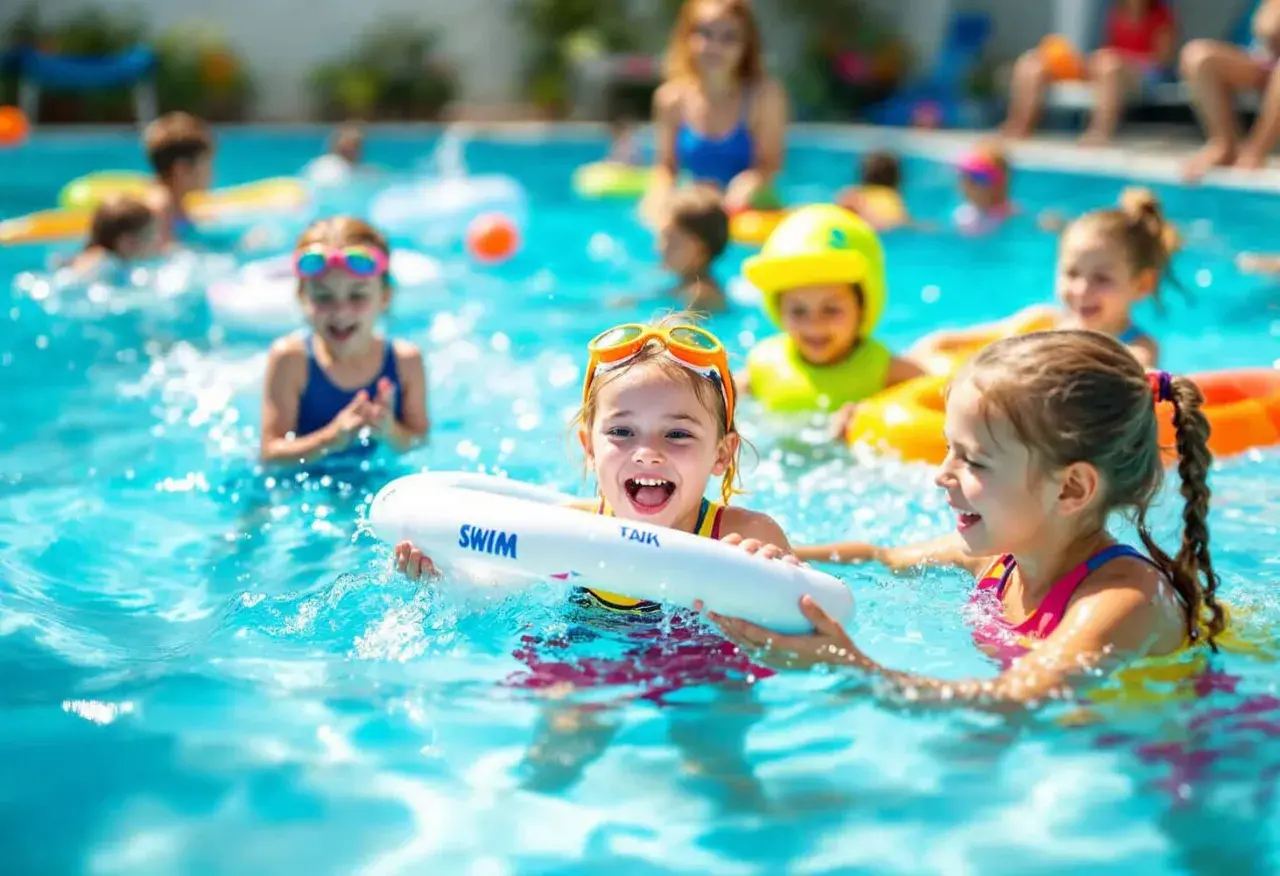
Pool-based play works best when it has a purpose. For swimmers and coaches, swim games can do more than fill time; they can sharpen kick timing, body position, turn quality, and race-day confidence when they are set up properly. In this article I’ll show which game styles help with fitness, how to match them to age and ability, and how to keep the session controlled enough to still feel like training.
What matters most before you start
- Pick the outcome first. Speed, endurance, sculling, streamline work, and confidence all need different game formats.
- Keep efforts short and clear. Once technique falls apart, the game stops supporting training.
- Use the right level of pressure. A little competition helps; chaos usually makes swimmers sloppy.
- Build sessions in blocks. Warm-up, technique, game set, and cool-down work better than random play.
- Prioritise safety. Lane control, supervision, and simple rules matter more than making the activity flashy.
How swim games improve training and fitness
I like this approach because it makes swimmers repeat good movement patterns without the mental drag that can flatten a normal set. When the task is framed as a chase, relay, or target game, swimmers usually push harder, turn cleaner, and stay engaged for longer than they would in a plain distance set.
The fitness benefit comes from repeated efforts with a clear purpose. The technique benefit comes from the fact that a game still exposes weak body position, weak kick timing, or poor streamlining immediately. If the outcome depends on a tight breakout or a smooth scull, there is nowhere to hide.
- Aerobic work improves when swimmers repeat short efforts with controlled rest.
- Speed improves when the game rewards fast reactions and strong underwater work.
- Stroke feel improves when the task forces attention on balance, pressure, and rhythm.
- Motivation rises because swimmers are chasing a result instead of counting metres.
Swim England’s Learn to Swim resources follow this same logic: simple activities are used to build sculling, buoyancy, and push-and-glide skill, rather than treating play as a break from learning. Once you understand that principle, the next step is choosing the right type of game for the training effect you actually want.

Which game style matches each training goal
Not every pool activity does the same job. A chase game that wakes up a sprint squad is not the same thing as a sculling drill that helps a beginner feel stable in the water. I usually separate them by training goal first, then by age or ability.
| Training goal | Best game style | What it develops | Practical example |
|---|---|---|---|
| Streamline and push-off quality | Push-and-glide races | Body line, underwater confidence, clean breakout | Push from the wall and glide as far as possible before any stroke |
| Water feel and balance | Sculling relays | Hand catch, buoyancy, control in a supported position | Linked sculling down the lane, then a short return swim |
| Speed and reaction time | Chase or reaction games | Starts, acceleration, quick decisions | One swimmer goes on a signal while another starts a second later |
| Underwater comfort | Treasure hunts | Breath control, diving confidence, object recovery | Pick up sinkers or rings from a marked zone |
| Team fitness | Relay-based points games | Pacing, effort under mild pressure, squad energy | Teams score points for clean turns and consistent times |
The rule I trust is simple: if the game rewards the wrong behaviour, swimmers will learn the wrong habit quickly. A sloppy race can be fun, but a sloppy race with no coaching point attached is just noise. When the structure is right, the game becomes a training tool instead of a distraction.
A session structure that keeps the training effect
For a 45 to 60 minute club session in a 25-metre pool, I prefer a structure that looks like training from the start and feels playful only where it needs to. That usually means a short warm-up, one focused skill block, one game block, and a controlled finish.
- Warm-up for 6 to 8 minutes. Easy swim, kick, and a few lengths of breathing control to settle the group.
- Technique block for 8 to 10 minutes. One clear focus only, such as streamline, scull, or turns.
- Game block for 10 to 15 minutes. Use 2 to 4 short rounds rather than one long free-for-all.
- Finish block for 8 to 12 minutes. A relay, pace challenge, or quality sprint where form still matters.
- Cool-down for 3 to 5 minutes. Easy swimming to bring breathing and heart rate back down.
For younger swimmers or mixed-ability groups, I keep effort bursts in the 15 to 25 second range with 30 to 60 seconds of rest. For older or fitter squads, 30 to 45 second efforts with 45 to 90 seconds of rest usually preserve quality better than nonstop racing. If the swimmer cannot recover enough to repeat the movement well, the set has become conditioning only, and the technique value drops fast.
I also keep rules short. The moment I need a long explanation, the game is probably too complicated for the time available. A good pool activity should be understood in one sentence and coached in one or two cues.
Safety and control matter more in busy lanes
The best pool sessions are the ones where the coach can still see every swimmer clearly. That sounds obvious, but it is exactly where many games drift off course. In a crowded lane, safety depends on spacing, predictable turns, and a rule set that stops swimmers from colliding or grabbing for an advantage.
- Keep start and finish points fixed. Swimmers should know exactly where each round begins and ends.
- Avoid breath-hold contests. They can turn into risk rather than training very quickly.
- Match the game to the depth. Underwater work and object recovery need more control than shallow-end play.
- Separate abilities when needed. The fastest swimmer should not always dictate the pace for the whole lane.
- Use equipment with a clear purpose. Kickboards, noodles, sinkers, and markers help when they support the task, not when they clutter it.
In the UK, I see the same principle used well in club and learn-to-swim environments: keep the activity simple enough that the skill remains visible. When that happens, the game becomes safer and more useful at the same time. With the basics under control, the real challenge is avoiding the habits that make a session look busy but produce very little.
Common mistakes that make pool play less effective
The fastest way to waste a good idea is to let it turn into unstructured noise. I see the same mistakes again and again, and they are easy to avoid once you know what to watch for.
- Making every round an all-out sprint. That feels exciting, but it usually destroys technique after the first few repeats.
- Choosing games with too many rules. If the swimmer spends more energy remembering the instructions than swimming well, the format is wrong.
- Letting stronger swimmers dominate every round. The quieter benefit of games is group confidence, not just winning.
- Using play instead of coaching. A game should reinforce a point, not replace feedback.
- Skipping rest. Quality drops sharply when swimmers are still gasping from the previous round.
If I had to name the biggest error, it would be this: coaches sometimes measure success by how loud the pool feels. I measure it by how clearly the movement improves from the first round to the last. If the swimmers are laughing but not moving better, the session is entertainment only.
What I keep on the deck for a better session
You do not need much kit to run effective pool games. In fact, too much equipment often makes the activity feel overplanned. The useful kit is the kit that supports one clear task.- Kickboards for chase and kick-focused work.
- Noodles for supported balance games and younger swimmers.
- Small sinkers or rings for treasure-hunt tasks.
- Simple markers or cones for start points and turn points.
- A stopwatch and whistle for timing, spacing, and clean starts.
If I were building one reliable session for a club squad, I would keep one drill for body position, one game for speed, and one finish that rewards clean technique under pressure. That mix gives swimmers variety without losing the training effect. Used that way, pool play is not a distraction from fitness work; it is one of the cleaner ways to build it while keeping swimmers willing to come back for the next session.