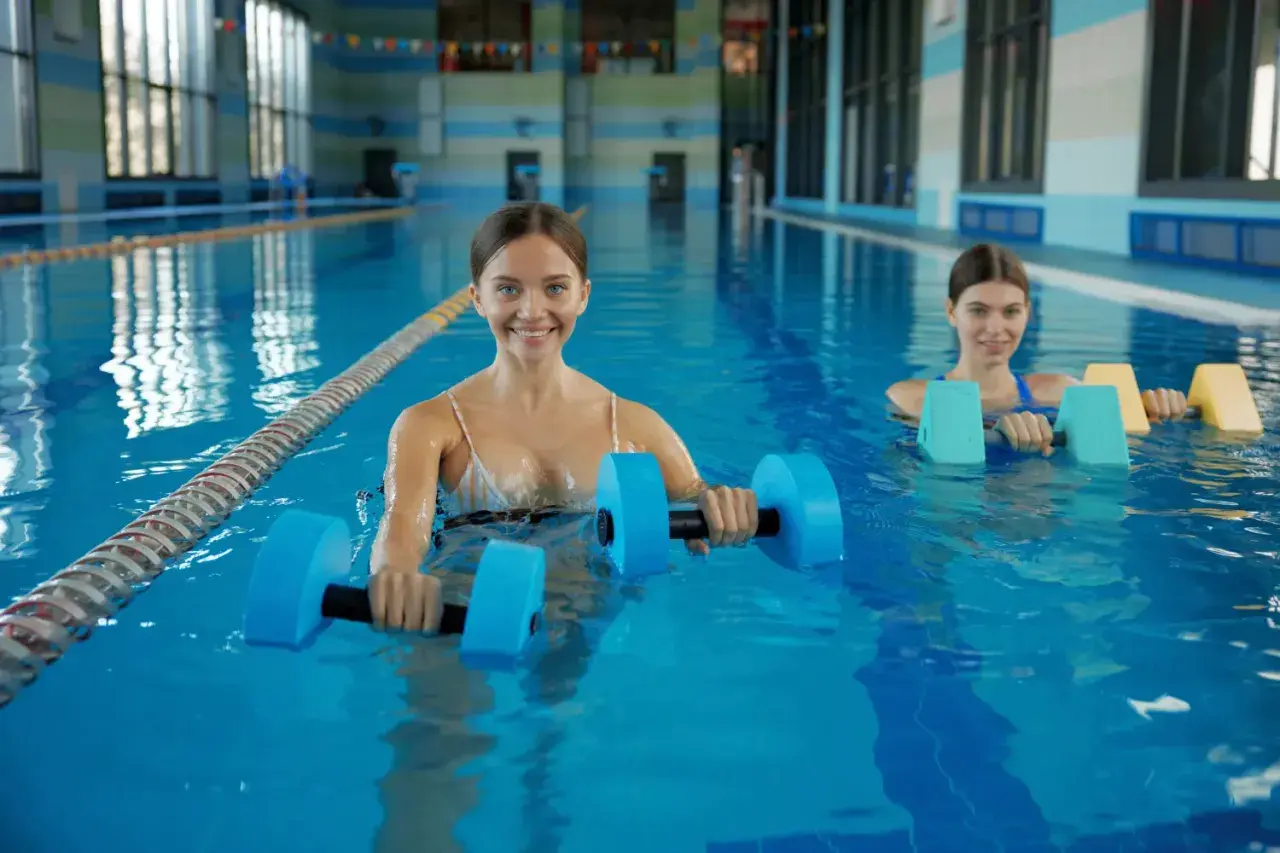
A swim workout should do more than burn energy in the pool; it should improve body position, breathing rhythm, and the confidence to hold technique when fatigue creeps in. In this guide I break down what a useful session is trying to achieve, how to build one step by step, and how to turn pool time into actual swim fitness rather than random metres. I’ll also cover session templates, the kit that genuinely helps, and the dryland work that keeps shoulders ready for the next session.
Key points for building better pool sessions
- A good session has a clear aim: technique, aerobic base, speed, or a blend of all three.
- Start with 5-10 minutes of easy swimming plus mobility so the shoulders and body line are ready for work.
- Use short drills, build sets, and repeat efforts with manageable rest to keep form under fatigue.
- For most adults, two to four swims a week is a realistic base, with strength work at least twice weekly.
- Fins, snorkels, pull buoys, and paddles can help, but only when they solve a specific problem.
What a good pool session is meant to improve
When I plan a session, I ask what I want to improve by the end: cleaner body line, better pacing, or the ability to hold speed without collapsing technically. That sounds simple, but it changes everything. A set of 20 straight 50s with no purpose is just a lot of tired breathing; a session with a clear focus creates adaptation and tells you what to repeat next time.
For general fitness, swimming is especially useful because it lets you build aerobic work without pounding the joints, but the water will also expose flaws quickly. If your head lifts too early, your hips sink. If you rush the catch, you spin your arms and lose distance per stroke. A good training plan accepts those trade-offs and uses the pool to fix them, not hide them.
That is why I organise every session around a warm-up, a skill block, a main set, and a short cool-down.

How I structure a session from warm-up to cool-down
I keep the structure predictable so the variables that matter are obvious. If the warm-up is rushed, the main set feels worse than it should. If the skill block is too long, the session becomes a technique lesson without enough work. The point is to prepare, practise, then apply.
| Phase | Typical length | What it should feel like | Example |
|---|---|---|---|
| Warm-up | 5-10 mins or 200-400m | Easy, controlled, breathing settles | 4 x 50 easy swim |
| Skill block | 5-10 mins or 4-8 x 25m/50m | Focused, clean, not exhausting | Drill-swim by 25m |
| Main set | 12-30 mins | Challenging but repeatable | 8 x 100 moderate with 15s rest |
| Cool-down | 100-200m or 5 mins | Smooth, relaxed, lower effort | Easy backstroke or mixed stroke |
I usually keep the first length deliberately easy even when the main set is hard. That gives me a clearer read on stroke quality and keeps the shoulders from getting dragged into work too fast. Once that structure is in place, the next question is which type of set to plug into the main block.
Three session templates I would use for different goals
The fastest way to make training useful is to match the session to the goal. I do not want the same structure for a beginner returning after a long break, a fitness swimmer trying to build endurance, and a more experienced swimmer who wants sharper speed work.| Goal | Example session | Total volume | Why it works |
|---|---|---|---|
| Beginner or returner | 200 easy + 6 x 50 drill/easy + 4 x 50 steady + 4 x 25 build + 100 easy | 800-1,200m | Builds comfort, breathing, and rhythm without overload |
| Fitness and endurance | 300 easy + 8 x 50 drill/build + 6 x 100 moderate on 15-20s rest + 4 x 50 strong + 200 easy | 1,600-2,200m | Raises aerobic capacity while keeping technique under control |
| Speed and threshold | 400 easy + 8 x 25 build + 8 x 50 fast with full control + 4 x 100 descend + 200 easy | 1,800-2,800m | Teaches pace discipline and holding form when tired |
If a set like this breaks down technically, I shorten the repeat before I shorten the rest. A clean 50 is more valuable than a sloppy 100. Those are practical ranges, not rules, and the right total depends on experience, stroke efficiency, and how often you already train.
The kit that earns its place in the bag
Most swimmers need less equipment than they think. I would rather see one reliable pair of goggles and a sensible plan than a bag full of toys that hide bad habits. The kit earns its place only if it makes the session clearer, safer, or more specific.
| Item | Best use | Watch-out |
|---|---|---|
| Goggles | Clear sight and confidence | Test the fit before hard sessions |
| Pull buoy | Upper-body endurance and balance | Do not let your kick disappear long term |
| Fins | Better body position, ankle range, faster drill work | Use them as a helper, not a crutch |
| Snorkel | Head stillness during drills | It can mask poor breathing habits if overused |
| Paddles | Catch pressure and forearm feel | Only use them when your stroke is already stable |
| Kick board | Dedicated kick sets | Holding it too tightly can stress the shoulders |
For UK pool sessions, a drink bottle and a simple pace clock or waterproof watch are just as useful as the obvious gear. Equipment helps, but stroke details decide whether the set becomes fitness or just fatigue.
Technique details that make the same set work harder
The same set can produce very different results depending on how you swim it. I coach myself to keep a few cues steady: head neutral, hips high, long exhale underwater, and a firm but relaxed catch. If any one of those falls apart, the session becomes harder without becoming better.
- Body line. Keep the head quiet and press the chest slightly into the water so the hips stay near the surface.
- Breathing. Exhale continuously underwater; do not hold your breath and then gasp at the turn.
- Catch. Enter cleanly, set the forearm early, and pull water backward rather than slicing down.
- Turns and push-offs. A strong wall turn is free speed, so streamline tightly and avoid popping up too soon.
- Pacing. On repeat sets, aim for repeatable splits, not a hero first rep followed by survival swimming.
One practical test I like is stroke count. If the count climbs hard while pace drops, the set is showing you where efficiency is leaking. That feedback is more useful than just feeling exhausted. Once technique is stable, the next gains usually come from the work you do out of the water.
Dryland work that supports swimming instead of fighting it
Swimming asks a lot from the shoulders, trunk, hips, and ankles, so a small amount of dryland work goes a long way. UK public-health guidance is clear that adults should combine aerobic work with strength training at least twice a week, and that is exactly how I like to think about supporting pool training.
| Movement | Why it helps swimmers | Simple dose |
|---|---|---|
| Band row or cable row | Balances repeated forward arm action | 2-3 x 10-12 |
| Dead bug | Teaches trunk control for body line | 2-3 x 8-10 each side |
| Split squat | Supports kick and push-offs | 2-3 x 8 each leg |
| Romanian deadlift or hip hinge | Builds posterior-chain strength | 2-3 x 8-10 |
| External rotation with a band | Helps shoulder resilience | 2-3 x 12-15 |
I keep dryland work short and repeatable on purpose. It should support the pool, not turn into a second exhausting sport. If your shoulders feel flat after every session, I would rather reduce the amount of fancy drill work than ignore the strength and mobility piece.
How often to train in a week and how to progress
For most recreational swimmers in the UK, I think in terms of three layers: how often you swim, how hard each session is, and how much non-swim work you can recover from. Two pool sessions a week will maintain comfort and fitness; three sessions usually start to change conditioning; four or more is where pace and endurance can move more quickly, provided recovery is good.| Level | Pool sessions | Strength sessions | Weekly emphasis |
|---|---|---|---|
| Beginner | 2 | 2 | Comfort, breathing, consistency |
| Fitness swimmer | 3 | 2 | Alternate easy, steady, and harder sessions |
| Experienced swimmer | 4-6 | 2-3 | One technique, one aerobic, one speed or threshold, one recovery swim |
When I progress a week, I change one variable at a time. I add a little volume, or a little speed, or a little less rest, but I avoid changing all three at once. That is how you keep improvement measurable instead of chaotic.
The mistakes that waste pool time
I see the same errors over and over, and most of them are easy to fix once you spot them. The issue is not usually a lack of effort. It is a lack of structure.
- Swimming every length at the same pace. That blurs the purpose of the set and makes progress hard to measure.
- Going out too hard on the first repeats. If the early reps are heroic, the last ones become survival work.
- Ignoring rest when technique is already falling apart. Rest is not laziness; it is part of the training effect.
- Using equipment to hide poor form. Fins, paddles, and a pull buoy should improve a skill, not conceal a flaw.
- Skipping cool-down. Five easy minutes can leave the shoulders and breathing pattern much happier.
- Adding volume before tolerance has caught up. More metres are only useful if you can absorb them.
If you avoid those traps, the next step is simple: repeat a sensible structure long enough to let it work. That is where the real change shows up, not in one heroic session, but in the fifth and sixth time you come back to the pool ready to swim well again.
What I would build into the next four weeks
If I were starting from scratch, I would run the same broad session shape for four weeks and change only one variable at a time. Week one is about finding a repeatable pace, week two adds a little volume, week three trims rest or nudges pace, and week four backs off slightly so the body actually absorbs the work.
- Week 1. Hold the same warm-up and finish each main set with one rep in reserve.
- Week 2. Add 100-200m to the main set or one extra repeat, not both.
- Week 3. Keep the volume steady and reduce rest by 5-10 seconds on the easier repeats.
- Week 4. Cut total volume by around 20-30% and re-check how the stroke feels.
The swimmers who improve most reliably are usually the ones who make training boring in the right way: same shape, small progressions, honest technique, and enough recovery to come back willing to work again.