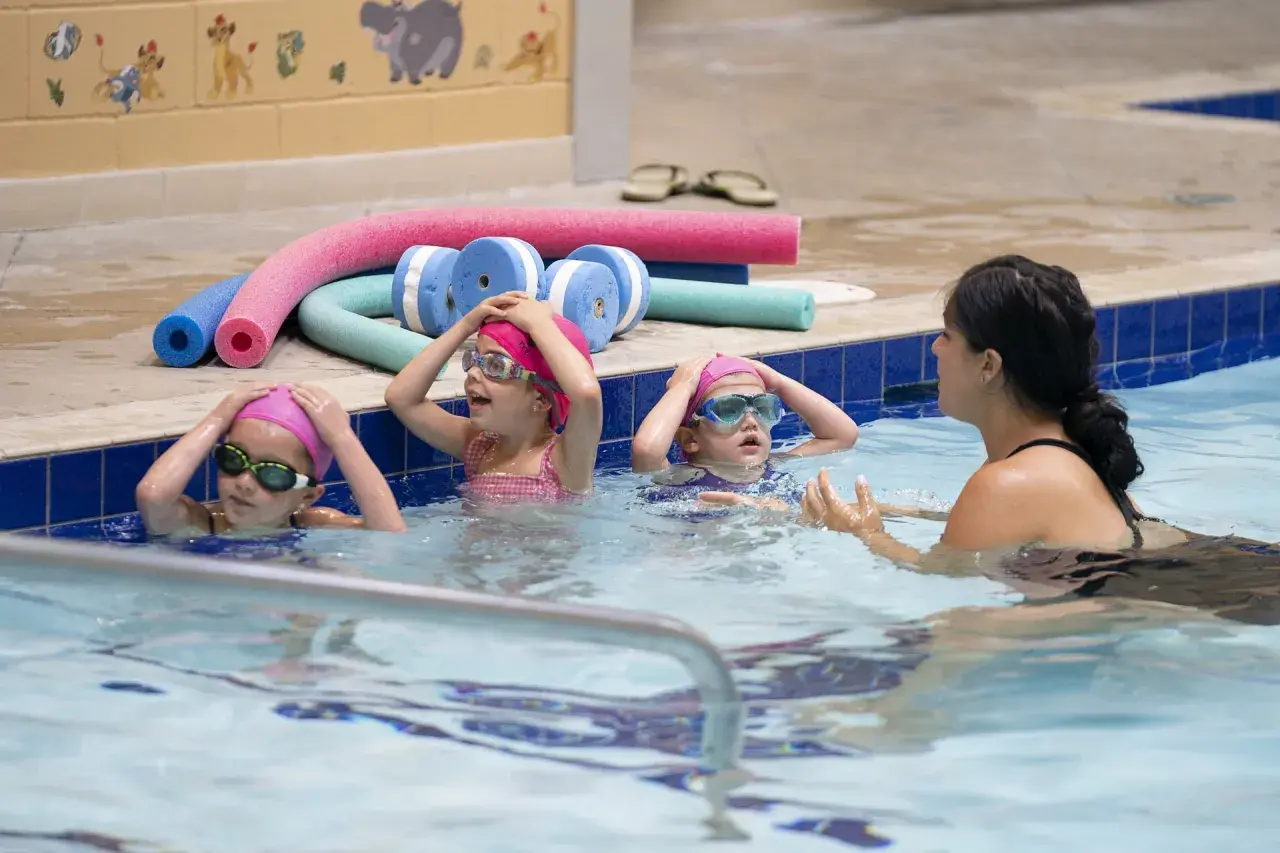
Youth swim lessons work best when the class matches the child’s confidence, age, and attention span, not just their birthday. In this guide I look at what a solid lesson should teach, how UK programmes are usually structured, what to expect from instructors, and how to judge whether a class is worth the money. I also cover the small details that make a big difference: lesson length, group size, water safety, and the right amount of support for nervous swimmers.
The essentials parents should keep in mind
- Good lessons build confidence, safety, and basic water control before chasing perfect strokes.
- In the UK, a strong programme is usually led by a Level 2 qualified swimming teacher and taught in around 30-minute sessions.
- For pre-school children, parent-and-child classes are often the best fit; for older beginners, smaller groups or private tuition can speed up progress.
- Real progress shows up in consistent skills, not one-off good days, and badges should reflect reliable performance.
- A sensible UK budget is usually lower for group lessons and noticeably higher for private coaching.
- The best class is not always the cheapest one; it is the one that gives clear supervision, good feedback, and the right pace.
What a strong lesson should actually build
A useful children’s swimming programme does more than keep kids busy in the water. I want to see a clear progression from comfort in the pool to basic movement, breathing control, floating, gliding, and simple stroke work. Swim England’s Learn to Swim framework is a good benchmark here because it is built around confidence, competence, and safety rather than just ticking off distances.That matters in practice. Early stages should teach children how to enter and exit safely, move in different directions, recover from a float, and understand simple pool rules. Later stages should layer in recognisable stroke work, better body position, and stronger water awareness. The goal is not pretty technique on day one; it is calm, repeatable movement under instruction.
- Safe entry and exit from the water.
- Floating and returning to standing without panic.
- Short travel distances such as 5 metres with control.
- Basic buoyancy, breath control, and body position.
- Pool rules and water-safety habits from the start.
When a lesson is designed well, those skills show up naturally through games and guided practice. Once that outcome is clear, the next question is who teaches it and how the class is organised.
How age and readiness change the starting point
There is no single age that suits every child. Swim England’s pre-school guidance notes that infants can start from birth if health-visiting advice supports it, and many programmes begin around three months. For very young children, the adult-and-child format usually works best because the parent or carer provides reassurance while the teacher keeps the lesson structured.
For school-age beginners, readiness matters more than the date of birth. Some children are happy to jump straight into a group class at four or five; others need a slower start, especially if they dislike splashing, floating, or putting their face in the water. I usually look for these signs of readiness:
- The child can separate from the parent without a major meltdown.
- They can follow short instructions from another adult.
- They are curious about the water rather than frozen by it.
- They can tolerate simple activities like blowing bubbles or getting their face wet.
If a child is nervous, that does not mean lessons should stop. It usually means the format should change. A smaller group, a warmer pool, or a more gradual introduction is often enough to get the process moving again. That leads directly to the instructor and class structure, because those two choices shape the experience more than most parents expect.
How to choose the right instructor and class format
In the UK, I would always start with the instructor. Swim England says children’s lessons should be led by a Level 2 qualified swimming teacher, and it also notes that class sizes vary depending on the provider. For group lessons, teaching from the poolside is widely considered best practice because the teacher can see the whole class, demonstrate clearly, and give better feedback without losing oversight.
That does not mean every lesson must look identical. Some children need a group setting to build confidence and learn socially. Others need more direct correction, especially if they are anxious, have a fast learning curve, or keep repeating the same technical mistake. Here is how I would think about the main options:
| Format | Best for | Typical UK cost | Main trade-off |
|---|---|---|---|
| Group lesson | Most children who like structure and routine | Often around £8-£20 per 30 minutes, depending on the centre | Less individual attention |
| 1:1 lesson | Nervous swimmers, technical catch-up, or fast movers | Commonly around £23-£35 per 30 minutes | Costs more |
| 2:1 lesson | Siblings or two children at a similar level | Usually sits between group and private pricing | Attention is shared |
| Parent-and-child class | Babies and pre-school children | Varies by pool and programme | The adult must stay involved |
I also pay attention to the teaching style. A good instructor does not just repeat instructions; they adjust them. If a child is struggling with buoyancy, the teacher should simplify the task. If the child is ready to move on, the teacher should not hold them back for the sake of the timetable. That flexibility is what separates a decent lesson from a stale one.
Once the format is right, the first session becomes much easier to manage, which is where preparation matters.
How to prepare a child for the first session
Preparation should reduce friction, not add pressure. I would keep the conversation simple: the teacher will help, the pool has rules, and it is fine not to be brilliant on the first day. If a child expects a test, they will tense up. If they expect a game with structure, they are usually more settled.
For the practical side, I would use a short checklist:
- Well-fitting swimwear.
- A towel or robe that is easy to put on quickly.
- Goggles if the pool and provider allow them, but not as a crutch.
- A swim hat if the venue requires one.
- Arriving 10 to 15 minutes early so the child can change without rushing.
- A quick toilet stop before entering the pool area.
If a child has sensory needs, anxiety, or additional support requirements, I would tell the provider in advance. That gives the instructor a chance to place the child sensibly, avoid surprises, and use a steadier introduction if needed. The best classes handle this without drama. With the lesson underway, the next job is spotting whether the child is actually improving.
How to tell whether progress is real
Real progress is usually quieter than parents expect. It shows up when a child needs fewer reminders, recovers faster after a wobble, and can repeat a skill without the teacher standing right beside them. Badges and certificates are useful, but only if they reflect consistent ability rather than a single good minute in the pool.
Swim England’s Stage 1 outcomes are a good example of what early progress should look like: entering the water safely, moving in several directions for 5 metres, floating and returning to standing, pushing and gliding from the wall, knowing two pool rules, and exiting safely. By Stage 3, swimmers are expected to add more control, including submersion to pick up an object and identifying three water-safety messages. That is the sort of progression I trust because it is concrete.
- The child enters the water with less hesitation.
- They can listen to a correction and apply it immediately.
- They stop relying on the wall or the teacher for every movement.
- They can complete the same skill on more than one lesson.
- They stay calm if they lose balance or swallow a little water.
Progress also varies by age and previous exposure. Children who have already done pre-school or adult-and-child sessions often move faster through the earliest stages because the water environment feels familiar. I would still judge the lesson by consistency, not speed alone. That is the point where price starts to matter, because the cheapest class is not always the best investment.
What to budget in the UK before you book
A realistic UK budget depends on the format, the pool, and whether the class is billed weekly, monthly, or by term. For planning purposes, I would expect group children’s lessons to sit somewhere around £8-£20 for a 30-minute class, while private tuition is often in the £23-£35 range per 30 minutes. Premium sites and city-centre venues can sit above that, especially if the pool space is limited or the groups are very small.
That range is not a national tariff. It is a practical planning bracket based on what UK providers commonly charge. The price moves for a few predictable reasons:
- Smaller class sizes usually cost more.
- Private pools and city venues are typically pricier than council leisure centres.
- Monthly direct debit can feel easier to manage than term blocks, but the annual total may still be similar.
- Holiday intensives can be good for a confidence boost, but they work best when followed by regular lessons.
If I were comparing two providers, I would not look at price alone. I would ask what the class includes, how quickly children can move up, and whether the teacher is giving useful feedback rather than just running the clock. That is also where a few final checks can save you from a poor fit.
The checks that separate a decent class from a genuinely useful one
Before I book, I want straight answers on a small set of things. If a provider is vague on these points, I keep looking. The best programmes are usually the ones that are clear, organised, and boringly consistent in the right ways.
- Who teaches the class and what qualification they hold.
- Whether the teacher stays poolside for group lessons or why they do not.
- How many children are in the class at the level my child will join.
- Whether progress is tracked stage by stage and explained to parents.
- How the centre handles missed lessons, stage changes, and waiting lists.
- Whether the pool temperature and changing facilities suit younger children.
- How the provider supports nervous swimmers or children who need extra time.
There is also a broader safety point worth keeping in view. In England, water safety education is due to become part of statutory school guidance from September 2026, which shows how central safe water behaviour has become. If a swim school already treats safety as part of every lesson rather than as an add-on, that is a good sign. In my view, that is the real dividing line: not whether a class looks busy, but whether it builds a child who is calmer, safer, and more capable in the water.
