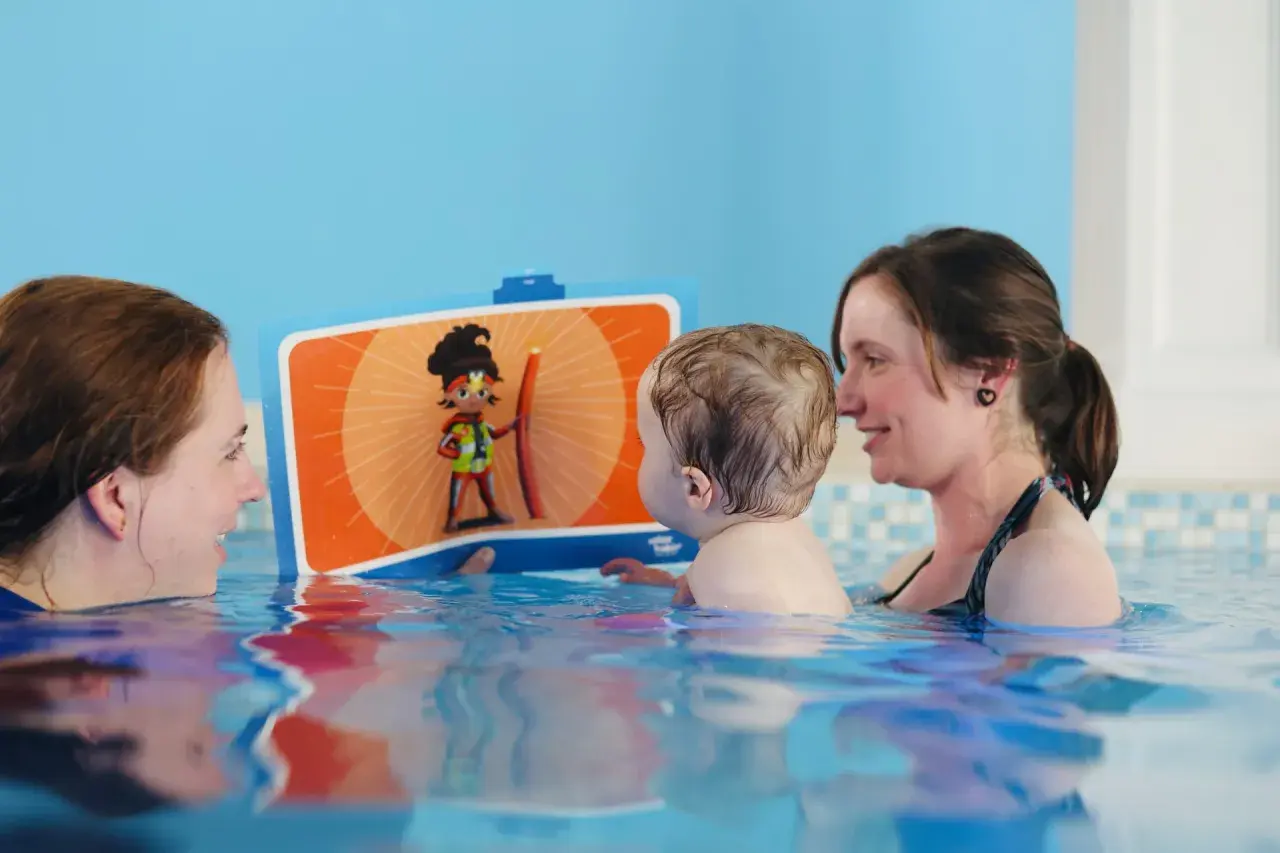
The strongest early swimming programmes do not rush toddlers into formal strokes. They build comfort, trust, and simple water skills in a warm pool, with an instructor who understands how young children learn and how quickly they can become overwhelmed. A toddler swim school can be a very good fit when the goal is confidence first, technique second.
This article explains what a good toddler class should actually deliver, how lessons are usually structured in the UK, what strong instructors do differently, and how to judge cost, safety, and readiness without guessing.
The practical basics before you book a place in the pool
- Most toddler lessons focus on water confidence, safe entry and exit, breath control, floating, kicking, and listening skills rather than full stroke technique.
- Short sessions, usually around 30 minutes, tend to work best because young children learn in bursts.
- Parent-and-child classes suit nervous or very young swimmers, while independent pre-school classes suit toddlers who are ready to separate.
- In the UK, group lessons commonly sit around £12 to £30 per session, while private lessons often start at about £40.
- The best instructors are trained for early years teaching, can explain progress clearly, and keep the lesson calm, structured, and safe.
- Progress is usually steady rather than dramatic, and regular weekly attendance matters more than occasional intensive bursts.
What toddlers actually need from swimming lessons
For this age group, the real job is not to create a tiny competitive swimmer. It is to help a child feel safe in water, follow simple instructions, and begin building the basic movement patterns that later become proper swimming. I always look for confidence, repetition, and gentle skill building before I look for anything that resembles stroke work.
That is why the early stages are usually playful: songs, reaching, kicking, turning back to the wall, and short supported movements through the water. Swim England’s pre-school framework follows that logic closely, keeping the emphasis on confidence first and core aquatic skills through fun and games. That matters because a toddler who enjoys the water is far easier to teach than one who is being dragged through it by force.
Just as important, toddler lessons should create good habits early. Getting in and out safely, waiting for instruction, and learning that water has rules are all part of the lesson. Those habits will matter long after the child outgrows the toddler stage, which is why the next question is not just what they learn, but how the class is put together.

How classes are usually structured
The right format depends on age, temperament, and how confident your child already feels in water. In the UK, most programmes move from parent-supported sessions into more independent pre-school classes once the child is ready. A good class does not force that transition too early.
| Format | Typical fit | What happens in class | Main strength | Main limitation |
|---|---|---|---|---|
| Parent-and-child | Babies and toddlers, especially first-timers or cautious children | An adult joins the child in the water while the teacher leads songs, movement, and simple water skills | Best for reassurance, bonding, and early confidence | Progress can be slower, and the adult must be ready to participate |
| Independent pre-school | Toddlers who can follow instructions without a parent in the water | The child works directly with the teacher, usually in a small group | Helps with independence and teacher-led progress | Not ideal for children who still rely heavily on a parent for confidence |
| Private or semi-private | Children who need extra attention, a faster reset after a difficult start, or targeted support | One teacher works with one child, or a very small pair, on specific goals | Fast feedback and easier adaptation to the child’s pace | Costs more and offers less peer interaction |
Most good group lessons for this age stay short and contained. Thirty minutes is a sensible sweet spot; it is long enough to do real work, but short enough that attention does not collapse halfway through. If a class runs longer, it should still feel highly active and play-led rather than like a scaled-down adult lesson.
Once the structure is right, the biggest difference usually comes from the instructor, which is where many parents make a poor assumption: they pick the pool before they check the teaching.
What a strong instructor looks like
I care less about whether a class sounds enthusiastic on paper and more about whether the instructor can actually teach young children in a way they can absorb. For toddlers, that means knowing child development, communicating clearly with parents, and adjusting the lesson when a child is tired, anxious, or overstimulated. A good teacher is not just a swimmer who likes children; they understand how children learn.
At minimum, I want to see three things: early-years training, real safety competence, and the ability to manage a group without rushing. In practice, that means the teacher should be comfortable explaining the progression, able to keep children moving without long waiting periods, and confident enough to handle safety procedures without breaking the lesson’s rhythm.
- They should be able to explain what each activity is meant to achieve.
- They should know how to adapt a task for a shy or sensory-sensitive child.
- They should keep instructions short and repeat them consistently.
- They should use the pool environment well, not just talk at the edge of it.
- They should be able to describe how the child will move from confidence to independent skills.
If I am choosing between two classes with similar prices, I will usually trust the one whose teacher can clearly explain the lesson plan and why it suits the age group. That kind of clarity is what separates genuine teaching from childcare in swimwear, and it leads directly into the practical question of money and value.
How to judge value without overpaying
The UK market is wide, and the price difference between providers can look dramatic until you break it down properly. On current listings, I would budget roughly £12 to £30 per group lesson, with many schools selling lessons as monthly direct debit packages or half-term blocks. Private lessons usually sit higher, often starting around £40 to £45 or more per session, depending on venue and teacher.| What you pay for | Typical UK range | Best when | Watch out for |
|---|---|---|---|
| Group class | About £12-£30 per lesson | You want regular progress and a lower per-session cost | Large groups, weak progression, or too much waiting around |
| Monthly course | Often around £35-£60 per month for weekly lessons | You want predictable billing and a stable routine | Hidden holiday gaps, missed lessons with no make-up policy |
| Private lesson | About £40-£45+ per session | Your child needs targeted support or a confidence reset | Paying for privacy when a small group would work just as well |
| Trial lesson | Free to around £23 | You want to test the teacher-child fit before committing | Booking a block without seeing how your child reacts first |
Price alone is not a quality marker. A cheaper class that is well run, warm, and small is often better value than an expensive one that spends half the lesson queueing at the wall. I would pay more only if the extra cost clearly buys smaller groups, stronger teaching, or a format that suits my child better.
That value check becomes much easier when you know how to prepare your child for the first few lessons, because the first month shapes the whole experience.
What to bring and how to prepare for the first month
Preparation does not need to be complicated, but it should be deliberate. The aim is to remove friction so your child can focus on the water rather than on a rushed arrival, cold changing room, or a bag full of missing kit. For toddlers, small practical details make a bigger difference than most parents expect.
- Bring a well-fitting swimsuit and, if needed, a swim nappy.
- Pack a large towel, dry clothes, and something warm for after the lesson.
- Arrive early enough to change without hurry.
- Keep snack timing sensible so your child is not either hungry or uncomfortable.
- Use simple language before the lesson, such as what the pool will feel like and who will be there.
- Do not oversell the lesson as a big performance; keep the tone calm and normal.
For the first few sessions, I would expect some hesitation. That is normal. Some children settle after one class; others need several weeks before they stop clinging to a parent at the edge. The important part is consistency. Weekly lessons usually beat irregular bursts because the routine lets children recognise the place, the teacher, and the sequence of the class.
The NHS says babies can go swimming from a very young age, so there is no need to wait for vaccinations before starting. What matters is readiness, comfort, and the quality of the setting, which brings us to the limits of what lessons can do.
Safety rules and common mistakes that slow progress
Swimming lessons are valuable, but they are not magic. They do not replace close supervision, and they do not make a child safe in every setting. Even a confident toddler still needs active adult attention in and around water, especially outside the controlled environment of a lesson.The most common mistake I see is parents confusing water confidence with real ability. A child who enjoys splashing, jumping, or going under briefly is not automatically able to self-rescue. That is why I pay attention to whether a programme treats safety as a separate skill, not just an extra talking point.
- Do not assume lessons make supervision less important.
- Do not push a child into a more advanced class just because they seem happy in the pool.
- Do not rely on flotation devices as a shortcut to skill.
- Do not choose a class that is so crowded the teacher cannot really see each child.
- Do not expect one term to create strong independent swimming.
- Do not treat anxiety as stubbornness; for some toddlers, it is simply a sign that the pace needs to be slower.
What works best is boring in the good sense: clear boundaries, repeatable routines, patient correction, and a teacher who can adapt without losing control of the group. That is also the standard I use when I am checking whether a class deserves a booking.
The booking signals I would trust first
When a class is worth paying for, it usually shows the same few signs very early. The lesson plan is clear, the class size stays manageable, the teacher knows how to speak to both the child and the parent, and the pool environment feels organised rather than improvised. When a toddler swim school is doing its job well, it should look calm, repetitive, and purposeful, not noisy and chaotic.
- The teacher explains the progression in plain English.
- The class size matches the age group and the pool never feels overloaded.
- Parents know whether they are in the water, poolside, or waiting elsewhere.
- The venue is warm enough for toddlers to stay settled.
- The school is transparent about lesson length, billing, and make-up rules.
- There is a sensible route from beginner confidence work into more independent pre-school stages.
If I were booking in the UK today, I would choose the class that offers the clearest progression, the smallest effective group, and the strongest early-years teaching rather than the one with the flashiest promises. That combination gives toddlers the best chance of enjoying the water now and building real swimming ability later.
