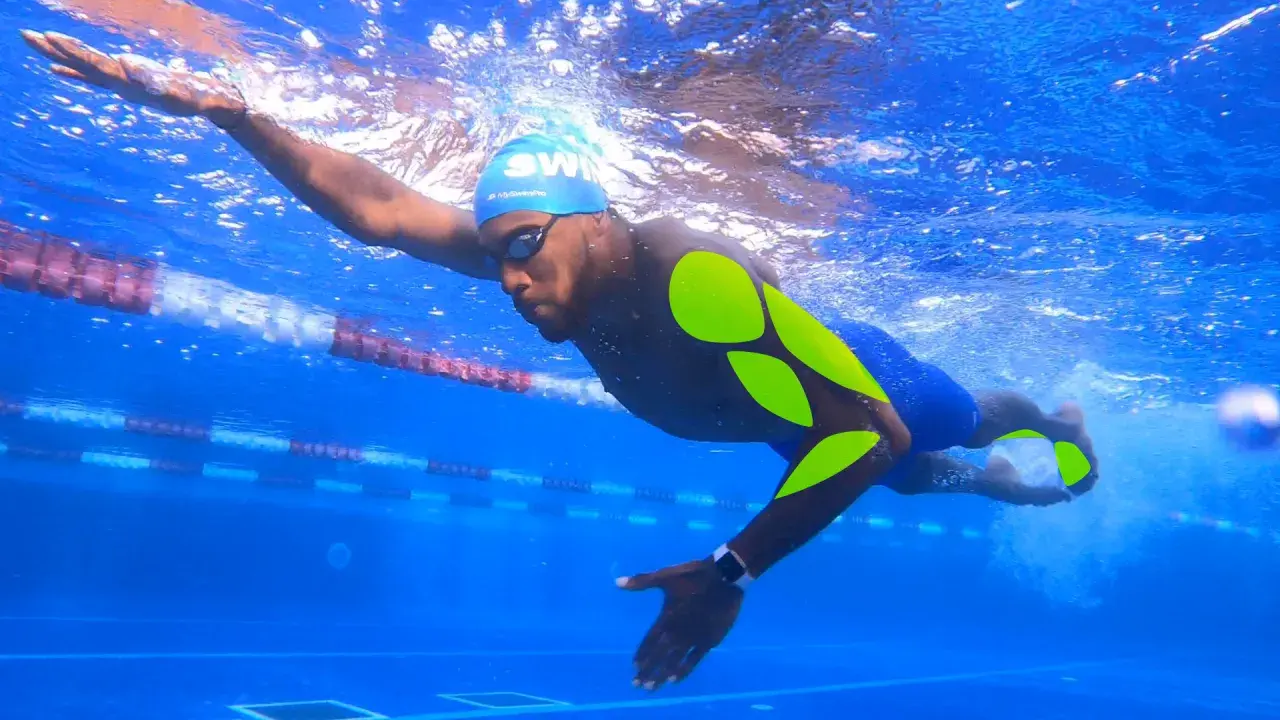
Water pulls are one of the clearest ways to isolate the swimming stroke: you can feel the catch, the bodyline, and the way the forearm and hand move water backwards. Used well, they sharpen freestyle mechanics and build race-relevant strength; used badly, they just reward arm churn and irritate shoulders. I focus here on how to perform the drill, which equipment genuinely helps, and how to turn it into a useful pool session rather than a token warm-up.
What matters before the first set
- The drill should train the catch, body position, and timing, not just arm effort.
- A pull buoy helps you feel alignment, but it should not replace normal swimming or kicking all the time.
- Small paddles can build feel and strength, but only when your stroke stays clean.
- For most swimmers, 300 to 800 metres of pull-focused work in one session is enough.
- Shoulder pain, slipping elbows, and frantic breathing are signs to back off.
What pull work in the water actually trains
When I use pull sets in coaching, I am usually trying to sharpen three things at once: how the hand catches the water, how the body stays aligned, and how the stroke connects to the back and trunk. The catch is the moment the hand and forearm stop slipping and start anchoring against the water; in technical language, swimmers often aim for an early vertical forearm, which simply means getting the forearm into a strong, mostly vertical position as early as possible.- Catch means you are finding pressure on the water early, instead of pushing down and hoping for speed.
- Body position means the hips stay high enough that the stroke is not fighting drag all the way through the lane.
- Rotation means the torso rolls enough to support the pull, but not so much that the stroke falls apart.
- Back engagement matters because the lats, the large muscles down the sides of your back, should do more of the work than the small muscles in the forearm.
That combination is why the drill can be useful for freestyle, triathlon training, and Masters swimmers who want more speed without turning every session into a sprint test. Once you know what it trains, the next step is getting the movement pattern right.
How to do the drill without turning it into arm thrashing
I prefer swimmers to start with the simplest version first: no paddles, a normal pull buoy if needed, and a calm pace that lets you feel pressure on the water rather than hear lots of splash. Think about the stroke in this order: enter cleanly, set the catch, press back, finish by the hip, and recover without throwing the arm over the top.
- Push off in a long line and keep the head steady.
- Let the fingertips enter slightly in front of the shoulder line, not across the centre line.
- Set the forearm quietly so the hand and wrist do not collapse downward.
- Press the water back, keeping the elbow higher than the hand through the strong part of the pull.
- Finish close to the hip and keep the recovery relaxed enough that the next stroke is clean.
If you breathe, keep the breath quick and low so the stroke does not break in half. A front snorkel can help at first because it removes the disruption of breathing and lets you stay focused on feel, but I would not treat it as a permanent crutch. That leads straight into the question of gear, because the wrong aid can hide the very error you are trying to fix.

Which kit helps and which kit just hides errors
In practice, I use three pieces of kit most often: a pull buoy, small paddles, and sometimes a front snorkel. Each changes the training effect in a slightly different way, so the value depends on what you are trying to improve.
| Kit | What it changes | Best use | Main caution |
|---|---|---|---|
| Pull buoy | Lifts the hips and removes the kick from the equation | Bodyline, balance, and upper-body feel | Too much use can hide a weak kick and poor core control |
| Small hand paddles | Increase surface area and give more pressure on the catch | Catch timing and controlled strength work | Big paddles punish sloppy technique and can overload shoulders |
| Front snorkel | Removes breathing disruption | Stroke timing and hand path focus | Easy to over-rely on if you never swim without it |
I prefer small paddles before large ones, because feel matters more than force. If your hand starts slipping, your shoulder feels pinched, or your stroke count rises sharply, the kit is probably too aggressive for the moment. Even with the right gear, the drill only helps when it sits in the right part of the session.
When these sets improve freestyle and when they don't
Pull work is most useful when you need to improve body position, timing, or the feel of the catch. It is also handy on days when the legs are tired from other training, because it lets you keep the session productive without needing a hard kick set. For triathletes, it can be a good way to rehearse a strong, economical stroke; for club swimmers, it can highlight whether the upper body is doing all the work because the legs are not contributing enough.
It is less useful when it becomes a substitute for proper whole-stroke swimming. If you never train your kick, your balance, or your breathing, you can get very comfortable with a version of freestyle that only exists when a buoy is under your hips. I also avoid heavy pull work when a swimmer already has sore shoulders or a history of impingement, because the added load can turn a helpful drill into unnecessary irritation. The fastest way to waste the effort is to repeat the same stroke faults under a bit more resistance.
The mistakes that waste the session
- Pressing down instead of back creates lift for a moment, but it does not create useful forward drive.
- Dropping the elbow early leaves the hand doing all the work and usually makes the stroke feel heavy.
- Crossing the centre line twists the body and often leads to shoulder stress.
- Using oversized paddles too soon gives a false sense of power while the catch stays messy.
- Letting the set become a race makes swimmers shorten the stroke and lose the clean pressure they were trying to build.
- Ignoring pain signals is the one mistake I never treat lightly; discomfort that feels sharp, pinchy, or one-sided is a stop sign, not a coaching challenge.
Once those faults are out of the way, you can use a pull set to get measurable work done without wrecking the quality of the rest of the session. With that in mind, here are simple metre-based sets that fit a normal UK pool session.
Simple pull sets you can use in a UK pool session
In a 25m pool, I usually keep these sets compact enough that technique stays readable. For most swimmers, 300 to 800 metres of pull-focused work in one session is plenty; beyond that, quality tends to drop unless the swimmer is very experienced and the purpose is specifically strength endurance.
| Level | Set | Rest | Main focus |
|---|---|---|---|
| Beginner | 6 x 50m with a pull buoy, smooth pace, no paddles | 20 seconds | Bodyline, calm breathing, and learning to hold water without rushing |
| Intermediate | 8 x 100m, odd reps steady, even reps slightly stronger | 15 seconds | Keeping stroke count stable while fatigue rises |
| Advanced | 12 x 50m as 25m build + 25m strong, small paddles optional | 15 seconds | Higher-pressure catch work and pace control |
If I wanted one simple add-on, I would finish with 4 x 25m normal freestyle, trying to reproduce the same catch and body position without the buoy. That transfer is the real test. If the stroke falls apart as soon as the gear comes off, the set has not taught enough yet, and I would shorten the resistance before I increase it.
The detail that matters more than extra metres
After a good pull block, I want to see a quieter entry, a cleaner forearm angle, and hips that stay high without the swimmer feeling jammed up through the shoulders. The best sign is not that the swimmer feels stronger in the moment; it is that normal freestyle feels easier and more organised on the next swim length. When that happens, the drill has done its job.
That is why I treat pull work as a precision tool, not a substitute for real training. Used with restraint, it sharpens technique, builds specific strength, and exposes weak points quickly; used carelessly, it can flatter bad habits and leave the swimmer wondering why the stroke looks better on the buoy than it does in a race. If you keep the focus on feel, posture, and clean mechanics, the drill earns its place in the programme.