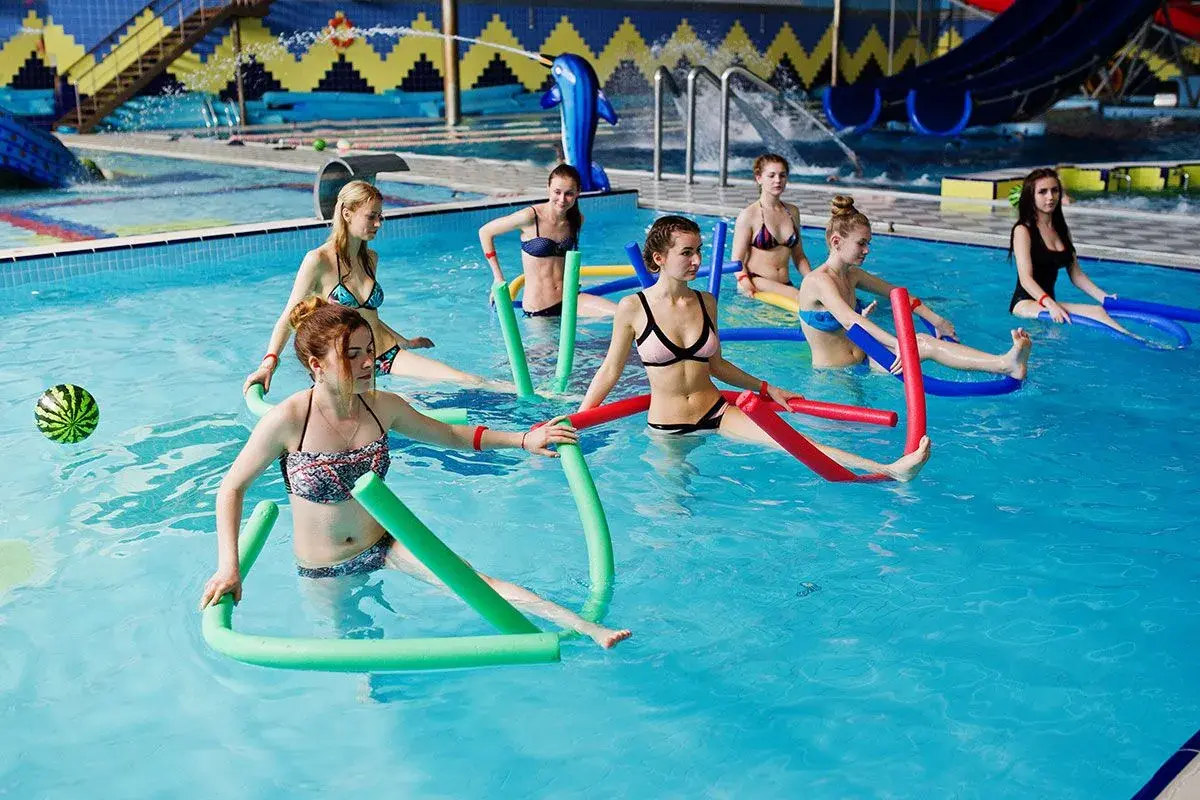
Aqua Zumba blends dance-cardio energy with water resistance, so the calorie question is less about a fixed number and more about how hard you move, how long you stay active, and how much of your body is working against the water. I would treat aqua zumba calorie burn as a practical range: enough to matter for fitness and weight management, but usually shaped more by intensity than by the class name. This article breaks down realistic estimates, what changes the total, how it compares with other pool workouts, and how to make the session count without turning it into a joint-pounding routine.
The burn is real, but the number depends on your size, pace, and class style
- Most adults can expect roughly 120 to 230 calories in 30 minutes, with stronger classes sitting at the higher end.
- A 60-minute session often lands somewhere around 240 to 460 calories, depending on body weight and how continuously you move.
- Arm drive, deeper water, and minimal rest between tracks usually raise the total more than small changes in choreography.
- Aqua Zumba is usually a bit gentler on the joints than land dance cardio, which makes it easier to repeat consistently.
- If you want more accurate numbers, judge the class by effort and breathing, not by the playlist or the pool itself.
How many calories a class usually burns
For most adults, I would plan on a moderate Aqua Zumba class burning about 120 to 230 calories in 30 minutes and roughly 240 to 460 calories in an hour. That estimate sits between standard water aerobics and a more energetic dance-cardio session, which is where the class usually lives in real life: not a casual pool walk, but not always an all-out sprint either.
Harvard Health’s water-aerobics table lists 30-minute burns of 120 calories for a 125-pound person, 144 for a 155-pound person, and 168 for a 185-pound person. Aqua Zumba often overlaps that range, but the dance element can push the upper end a little higher when the instructor keeps the pace moving and the class stays active between tracks.
| Body weight | 30 minutes | 60 minutes | What that usually looks like |
|---|---|---|---|
| 125 lb | 120-165 calories | 240-330 calories | Steady class, moderate effort, limited standing around |
| 155 lb | 145-200 calories | 290-400 calories | Average adult, consistent movement, active arms and legs |
| 185 lb | 170-230 calories | 340-460 calories | Bigger body mass or more vigorous choreography and fewer breaks |
Those are planning numbers, not lab measurements, but they are far more useful than a single inflated claim. Once you understand that range, the next question is obvious: what actually moves you toward the lower end or the upper end?
What changes the burn in the pool
The biggest driver is still intensity. Water creates resistance in every direction, so the more force you put into a move, the more work your muscles do. A class that keeps you shuffling, kicking, reaching, and pulsing with very little downtime will burn more than one that pauses often for instruction.
- Body size matters because moving a larger body requires more energy, even in water.
- Arm action matters because pushing and pulling through water adds meaningful resistance.
- Water depth matters because deeper water usually increases instability and resistance, especially when you stay upright and move fast.
- Tempo matters because faster choreography leaves less recovery time and keeps the heart rate up.
- Equipment can help or hurt depending on how it is used; aqua dumbbells or gloves add drag, but if they slow you down too much, the net burn may not rise as much as you expect.
- Fitness level matters because a fitter person can often sustain a harder pace for longer, which usually increases total calories burned.
I also pay attention to perceived effort. If you can speak in full sentences the whole time, the class is probably moderate. If you are breathing hard and only managing short phrases, you are closer to the vigorous end. That simple test is often more reliable than a smartwatch in a pool, because water can make wrist-based tracking less dependable.
How it compares with other pool and dance workouts
The cleanest comparison is this: Aqua Zumba is usually more demanding than gentle water exercise, but less calorie-dense than the hardest land-based dance classes. That does not make it inferior; it just means the trade-off is different. You are buying joint comfort, enjoyable movement, and consistency, not chasing the absolute highest burn every minute.
| Workout | Typical 30-minute burn | Why people choose it |
|---|---|---|
| Aqua Zumba | About 120-230 calories | Low-impact cardio, water resistance, easier on joints |
| Water aerobics | About 120-168 calories | Gentle conditioning and recovery-friendly movement |
| General lap swimming | About 180-252 calories | Stronger continuous cardio and more direct conditioning |
| Traditional Zumba | About 300-500 calories | Higher-tempo dance cardio with bigger total burn potential |
Zumba says an hour-long land class can reach 600 to 1,000 calories depending on intensity, which is why the pool version usually sits lower in absolute calorie burn even though it still feels hard. I think that comparison matters because it keeps expectations realistic: Aqua Zumba is not the top burner on the floor, but it is often the better workout if your knees, hips, or lower back prefer less impact.
For swimmers, that difference is useful. A pool class like this can give you extra aerobic work without another lap-heavy session, and that is sometimes exactly what a weekly training plan needs.
How I estimate your personal burn without guessing
If you want a number that is closer to your reality, I start with three questions: How much do you weigh? How hard did you actually work? How much of the hour was active movement? Those three answers usually tell you more than any generic calorie calculator.
- Use your body weight as the first filter. Heavier participants generally burn more during the same class because the body has to move more mass through the water.
- Classify the session honestly. A light class with frequent instruction, standing breaks, and relaxed movement belongs at the low end of the range.
- Look at movement density. If the class kept you moving for most of the session, use the higher end of the estimate. If half the class was demonstration or recovery, reduce the number.
- Check your breathing. Moderate effort means you are working, but you can still recover quickly between songs. Vigorous effort means the class keeps your heart rate elevated almost the whole time.
- Do not overtrust a wrist tracker in the pool. Water, splashing, and grip changes can make the reading noisy, so I treat it as a rough trend, not a precise measurement.
A simple shortcut works well for most people: take the 30-minute estimate in the table above, then adjust slightly up if the class was fast, arm-heavy, and continuous, or slightly down if it was instructional and stop-start. It is not perfect, but it is honest, and honesty is what keeps fitness planning useful.
How to get more from each class without overdoing it
One of the reasons I like Aqua Zumba is that it is easy to scale. You can make the same class easier, harder, or more technical without leaving the pool. That means you can use it for weight management, recovery, or plain aerobic conditioning depending on the day.
- Keep your hands active instead of letting them float through the motions. Pushing water is where a lot of the work happens.
- Use a full range of motion, but keep it controlled. Sloppy, rushed movement usually reduces resistance rather than increasing it.
- Choose a class that spends more time moving and less time waiting for the next cue.
- Stay tall through the torso. Good posture helps you use the water instead of fighting your own balance.
- Be careful with extra equipment. Aqua gloves, noodles, or dumbbells can increase effort, but only if they let you keep the rhythm and form.
- If your goal is calorie burn rather than easy recovery, choose the most energetic section of the class and move with intent instead of coasting through the choreography.
I would not chase exhaustion for its own sake. If form breaks down, shoulders tense up, or you start holding your breath, the session stops being efficient. The better goal is a repeatable workout that leaves you worked, not wrecked.
Where it fits in a swim and fitness plan
For a swimmer or anyone building a broader fitness routine, Aqua Zumba works best as a cross-training day. It adds cardio, rhythm, and lower-body work without the shoulder load that comes from more laps or aggressive dry-land conditioning. That makes it especially useful in weeks when you want to stay active but not pile on more impact.
I would use it in three situations. First, as a low-stress cardio option when joints need a break. Second, as a motivation-friendly way to keep moving on days when a normal workout feels flat. Third, as a complement to swim training when you want extra aerobic volume without turning every session into stroke practice. It is not the best choice if your only goal is the highest possible calorie burn, but it is a strong choice if your goal is consistency, adherence, and a workout you can repeat.
Two 45-minute classes at roughly 200 to 300 calories each give you about 400 to 600 calories of weekly exercise from one low-impact format, and that is enough to matter when it is paired with reasonable food choices and a mostly active week. The class does not need to be the hardest workout you do to be useful. If your goal is sustainable cardio that is easier on the joints than repeated land-based dance sessions, Aqua Zumba earns a place in the pool and, for many people, a permanent one.