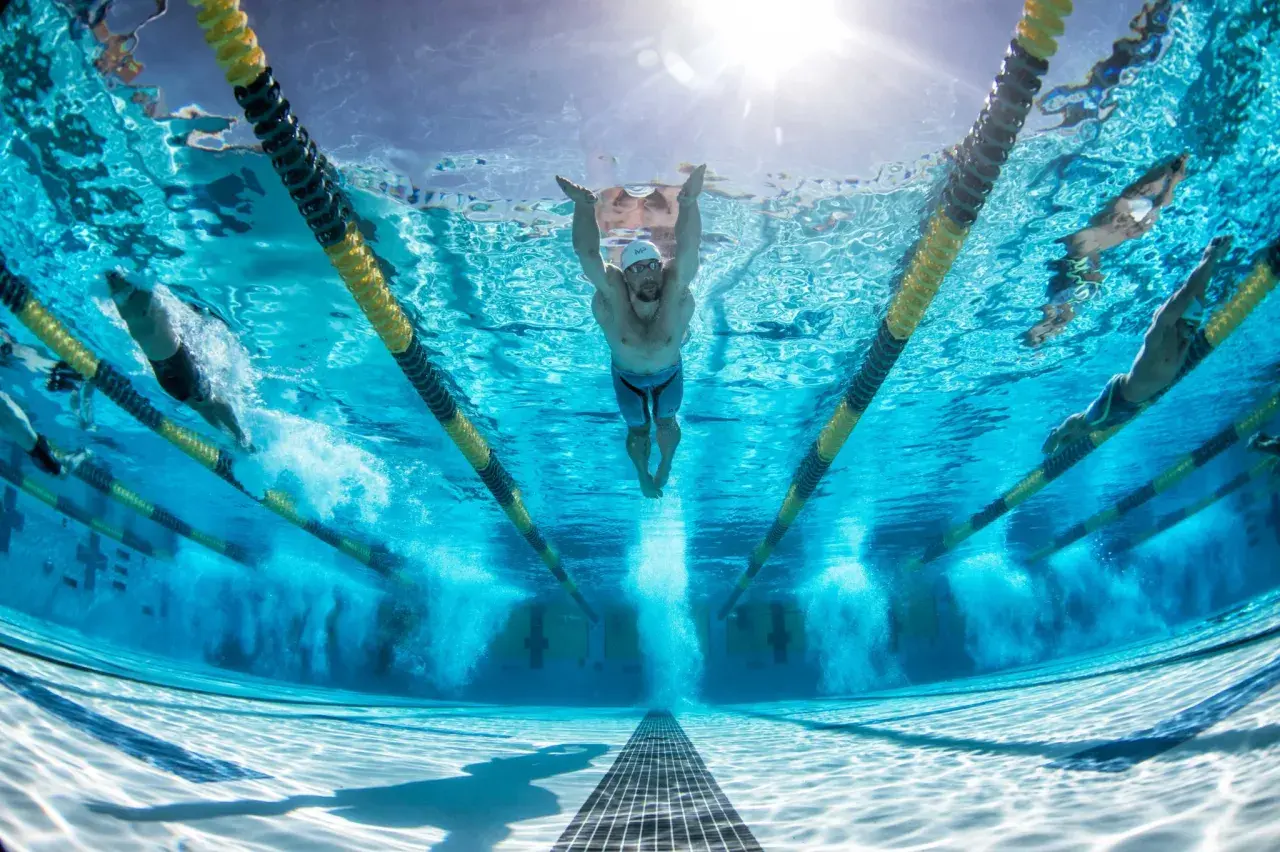
The right stretches for swimmers do more than loosen tight muscles: they help you hold a cleaner line in the water, recover the arms without pinching the shoulders, and stay useful deeper into a training block. Here I focus on the flexibility work that actually supports swimming performance, how to time it around practice, and how to build a routine that is realistic on a busy week.
The most useful mobility work for swimmers targets the joints that drive stroke quality
- Shoulders, thoracic spine, hips, and ankles do most of the work, so they deserve most of the attention.
- Use dynamic movement before practice and save longer static holds for after the pool.
- Do not chase extreme range; usable range with control matters more.
- A 10-minute routine done consistently beats a long session done once a week.
- Persistent pain, pinching, or instability is a strength-or-injury issue, not a stretching problem.
Why swimmers need a targeted flexibility plan
Swimming looks smooth from the outside, but the body is repeating an overhead pattern thousands of times a week. That means the shoulders, chest, lats, upper back, hips, and ankles all influence how much drag you create and how efficiently you can hold position in the water.
I think swimmers often overrate general stretching and underrate joint-specific mobility. A freestyler who cannot rotate through the thoracic spine will often steal movement from the lower back; a dolphin kicker with tight hip flexors will fight body line; a breaststroker with stiff ankles can lose a surprising amount of propulsion. The goal is not to become hyper-flexible everywhere. The goal is to create enough motion in the right places so the stroke stays long, clean, and repeatable.
AAOS notes that swimming is a repetitive overhead sport, which is exactly why shoulder care cannot be an afterthought. That is why the useful work is specific, not generic, and the next step is deciding which stretches earn a place on deck.
The stretches that matter most for swimmers
When I build a swimmer’s routine, I keep coming back to a small group of movements. They cover the most common restrictions without turning dryland into a second workout.
| Stretch | What it helps | How long | Watch out for |
|---|---|---|---|
| Doorway pec stretch | Opens the front of the chest so the arms can recover overhead without the shoulders feeling pulled forward. | 20 to 30 seconds, 2 to 4 rounds | Do not arch the lower back to fake more range. |
| Cross-body shoulder stretch | Targets the back of the shoulder, which is often stiff after heavy freestyle or backstroke volume. | 20 to 30 seconds, 2 to 4 rounds per side | Keep it gentle; the stretch should feel like tension, not a jammed joint. |
| Bench or wall lat stretch | Helps overhead recovery, streamline position, and cleaner entry without compensating through the ribs. | 20 to 30 seconds, 2 to 4 rounds | Keep the ribs down so the movement comes from the upper back, not a big lumbar arch. |
| Open book or thread-the-needle rotation | Improves thoracic rotation, which matters for breathing, body roll, and shoulder mechanics. | 6 to 8 slow reps per side | Do not rush the twist; the point is control, not speed. |
| Kneeling hip flexor stretch | Useful for kick mechanics, dolphin kick rhythm, and reducing the front-of-hip tightness that many swimmers carry. | 20 to 30 seconds, 2 to 4 rounds per side | Keep the glute lightly engaged so the stretch does not disappear into the low back. |
| Wall calf stretch or ankle rocks | Supports better ankle position, which helps streamline, kicking feel, and push-off mechanics. | 20 to 30 seconds or 8 to 10 controlled rocks | Stay upright and avoid bouncing into the end range. |
I am cautious with the sleeper stretch as a default choice. It can help some athletes, but it is easy to overdo on an already irritated shoulder, so I would rather start with the cross-body version and only progress if it feels clean and controlled.
Once you know the right moves, timing them around training makes the difference between feeling loose and actually swimming better.
How to time stretching around practice and meets
Mayo Clinic’s general stretching guidance lines up well with what I use on deck: warm up first, hold static stretches for about 30 seconds, repeat them a few times, and keep everything well short of pain. That simple rule is especially useful for swimmers, because the wrong timing can leave you feeling flat before a hard main set or a race.
| When | Best approach | What to emphasize | Main goal |
|---|---|---|---|
| Before practice | Dynamic mobility and a short warm-up | Arm circles, thoracic rotations, leg swings, ankle rocks | Wake up the tissue and prepare for movement |
| After practice | Static stretching | Chest, lats, hips, calves, and the back of the shoulder | Restore length and calm down tight areas |
| On a dryland or recovery day | Longer mobility session | Controlled rotations, longer holds, and breathing | Improve range without competing with pool intensity |
| Right before a race | Very light movement only | Short dynamic drills, activation, and looseners | Stay sharp without turning the muscles soft |
I usually think of pre-swim work as activation, not stretching. If I have a swimmer hold a long static pec or lat stretch right before a hard set, I expect them to feel a little less explosive for a while, which is not what you want. Save the longer holds for after practice or for a separate mobility block.
The good news is that this makes the routine simpler, not more complicated. If you keep the timing straight, the actual sequence can stay short.

A 10-minute routine you can repeat without thinking
This is the kind of routine I would actually expect a swimmer to keep up with in season. It is short, it covers the biggest problem areas, and it does not require much space.
-
1 minute of cat-cow and thoracic rotations
Start by loosening the upper back. This gives you rotation without asking the lower back to do all the work. -
1 minute of shoulder circles and arm sweeps
Keep the movement smooth and relaxed. The goal is to wake up the shoulder girdle, not fatigue it. -
2 minutes of doorway pec stretching
Stay tall, keep the rib cage controlled, and avoid leaning into the stretch. This is one of the simplest ways to reduce that rounded-front feeling swimmers often carry. -
2 minutes of lat stretching on a bench or wall
This is especially useful after fly or back-heavy sessions, when the lats can feel like they are holding the shoulders down. -
2 minutes of kneeling hip flexor work
Squeeze the back-side glute lightly and keep the torso tall. If you feel the stretch mostly in the low back, reset the position. -
1 minute of ankle rocks or calf stretching on each side
Swimmers often ignore the ankles, but the streamline and push-off can feel better almost immediately when this area stops resisting. -
1 minute of easy breathing and posture reset
Finish by standing tall, exhaling fully, and noticing whether one side feels tighter than the other.
I like this format because it gives you just enough work to matter without becoming another training session. If you repeat it three to five times a week, it will usually beat a “big” mobility routine that never gets done.
Even a short routine works if it is repeatable, which is where common mistakes matter.
Common mistakes that make mobility work less useful
Most swimmers who say they “stretch all the time” are still missing one or two basics. Usually the issue is not effort; it is either bad timing, the wrong stretch, or too much force.
- Stretching cold - If the tissue is not warm, the stretch tends to feel more aggressive and less useful. Even five minutes of light movement changes that.
- Bouncing at the end range - Fast, springy stretching can irritate the muscle instead of helping it relax.
- Forcing pain - A stretch should feel like tension, not a jab in the joint. Pain is a sign to back off.
- Only opening the shoulders - If the thoracic spine, hips, and ankles stay stiff, the shoulders end up compensating.
- Using stretching instead of strength - Better range is useless if the shoulder blade, rotator cuff, or hips cannot control it.
- Doing one long session and then forgetting about it - Mobility adapts to frequency. Short, repeated sessions tend to win.
The same is true for swimmers who are already very loose. More stretching does not automatically create better stroke mechanics, and in some cases it can make the shoulder feel less stable. When that happens, the better answer is usually control work, not more range.
When the problem is not flexibility at all, stretching harder only delays the fix.
When stretching is not the answer
If a swimmer keeps getting the same pain or the same restriction, I stop treating it like a flexibility issue. The real problem may be technique, load management, weakness, or an old injury that never settled properly.
| What you notice | What it may mean | Better next step |
|---|---|---|
| Front-of-shoulder pinch during recovery or entry | Overuse, poor scapular control, or a technique issue | Reduce volume, check mechanics, and add shoulder stability work |
| You are flexible, but you still feel weak in the water | Mobility without strength or control | Prioritize rotator cuff, lower trap, serratus, and row variations |
| One side is always tighter | Breathing pattern, asymmetrical stroke habits, or old tissue changes | Look at stroke mechanics and compare both sides carefully |
| Pain lingers after practice or keeps returning | Not normal training tightness | See a sports physical therapist or physician |
| Stretching makes the joint feel loose or unstable | Too much laxity already | Scale back stretching and shift toward stability and strength |
That is the point where strengthening work becomes part of the answer. Rows, external rotations, serratus-focused drills, glute bridges, and split squats often do more for swimming than another round of aggressive stretching ever will. The body needs the range to be usable, not just available.
That is why the most effective plan is usually small, consistent, and matched to the current training block.
What I would prioritize in a busy swim week
If I had to keep this brutally simple, I would do three things: warm up before the pool, stretch the big problem areas after practice, and run one focused mobility block on a dryland day. That gives you enough exposure to improve without turning flexibility into a chore.
- Before swimming, use 5 to 8 minutes of dynamic movement.
- After hard sessions, spend 5 to 10 minutes on static holds for the chest, lats, hips, and calves.
- Twice a week, add a 10-minute mobility session that includes thoracic rotation and controlled shoulder work.
For most swimmers, that is enough to create better body position, smoother recovery, and less accumulated stiffness over time. If the shoulders feel quieter, the kick feels freer, and the stroke line stays cleaner through the end of practice, the routine is doing its job.