What matters most before you book
- It is a low-impact pool workout that usually lasts about 45 minutes.
- It suits people who want cardio, coordination, and joint-friendly conditioning.
- For swimmers, it works best as cross-training, not a replacement for technique work in the lane.
- In the UK, it is usually offered through leisure centres and swimming pools with advance booking.
- Bring secure swimwear, a towel, water, and check local pool rules before the first class.
What the class really is
This is not a lane session disguised as a dance class. The format is built around rhythmic steps, simple choreography, and repeated movements against water resistance, which makes each movement slower and more taxing than it looks from poolside. I treat it as pool-based cardio with a social feel: less impact than running or jumping on land, but still enough load to raise your heart rate and work the muscles.
That distinction matters. Because the water supports part of your body weight, the class is kinder to knees and ankles than many land workouts, but the resistance is continuous, so poor posture or overreaching can still leave you tired very quickly. If you want a gentler entry point into fitness, that is a feature, not a flaw.
How it compares with aqua aerobics and lane swimming
When people compare this format with aqua aerobics or lane swimming, they are usually really asking one question: which session will move me toward my goal fastest? My answer is simple. Pick the one that matches the adaptation you need, not the one that sounds hardest.
| Format | Best at | Joint impact | My take |
|---|---|---|---|
| Pool dance class | Cardio, coordination, and making exercise feel less repetitive | Low | Best when motivation matters and you want a fuller, livelier workout. |
| Aqua aerobics | Steady conditioning, mobility, and simple full-body movement | Low to very low | Best when you want clearer exercise patterns and a calmer pace. |
| Lane swimming | Stroke efficiency, pacing, endurance, and technique | Moderate, depending on stroke and volume | Best when swim performance is the priority and you need specific carryover. |
If your main goal is stroke efficiency, turns, pacing, or open-water skills, lane swimming still wins. If your goal is to keep moving, burn energy, and protect the joints, the pool dance class often feels easier to stick with. That consistency is where a lot of the benefit comes from.

What a typical session looks like
Most classes are built in three parts, and the usual length is around 45 minutes. I like that duration because it is long enough to create a training effect without turning the pool into a slog.
- Warm-up - easy marching, side steps, arm circles, and light mobility work to raise temperature.
- Main set - music-led combinations, interval-style bursts, and water-resisted arm and leg patterns that keep the heart rate up.
- Cool-down - slower movement, breathing down, and a few minutes of stretching or mobility.
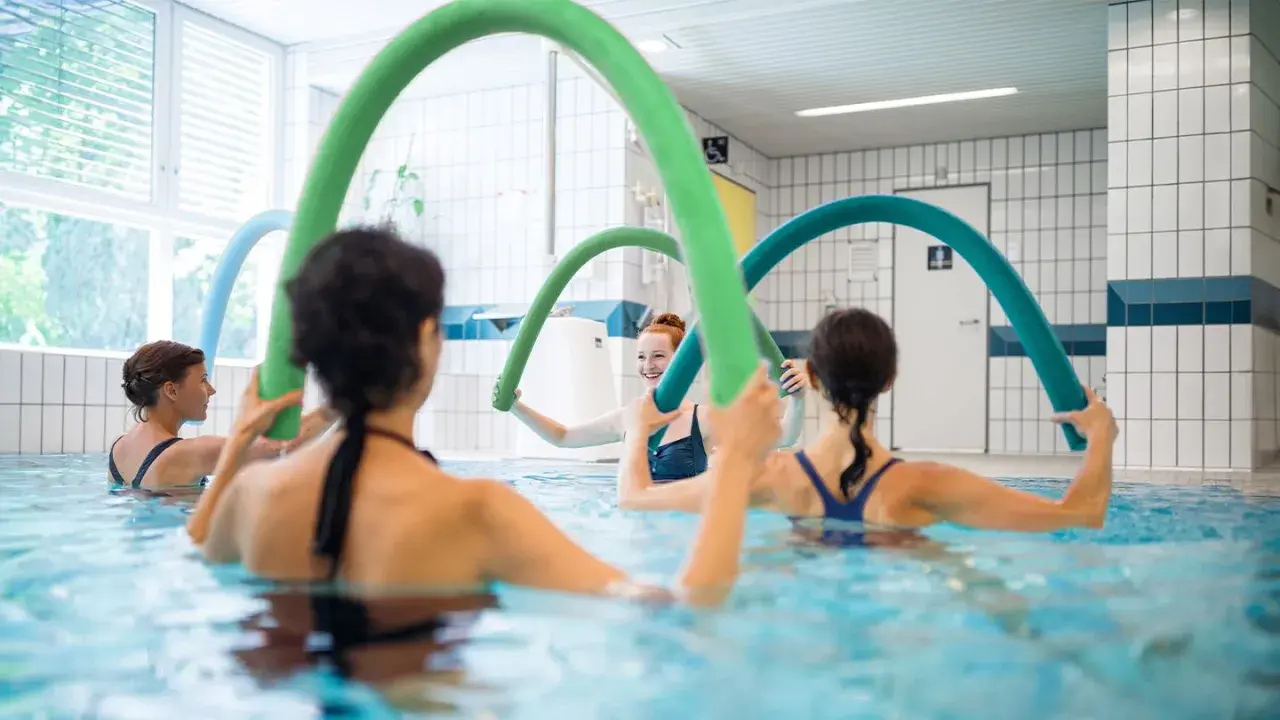
Some instructors add noodles, dumbbells, or other pool-friendly equipment, but the class should still work without gear. You usually do not need to be a strong swimmer because sessions are often held in the shallow end, but you should still be comfortable in water and able to move confidently. The water itself provides most of the load.
Why it helps swimmers and general fitness
For general fitness, the most useful effect is simple: it helps you accumulate meaningful cardio work without the pounding that comes from land impact. Adults are typically advised to get 150 minutes of moderate activity a week, or 75 minutes of vigorous work, and a 45-minute pool class can make that target much easier to hit if you attend regularly. If you can still talk but not sing during the main set, you are in the right general intensity zone for a lot of recreational fitness goals.For swimmers, I think of it as supportive conditioning. The class can improve leg endurance, trunk stability, rhythm, and work capacity, all of which matter in the water, but it will not teach catch mechanics, body position, or breathing timing the way a proper swim set does. That is why I would use it as one piece of the week, not the whole plan.
- Use it on a recovery day when you want movement without impact.
- Use it when your regular swim volume is low and you still want cardio.
- Use it to keep training enjoyable if you are drifting away from exercise.
- Do not expect it to replace stroke drills, interval work, or coached technique.
That balance leads straight to the next question: who should be careful before jumping in?
Who should be careful before joining
Low impact does not mean no caution. If you are coming back after a long break, have a heart condition, joint pain, recent surgery, dizziness, or a shoulder issue that dislikes repeated overhead movement, I would check with a GP or physio before treating the class as routine training. The same applies if you are pregnant or managing a medical condition and are unsure how hard the session will feel on the day.
In practical terms, the main mistake is trying to keep up with choreography that looks easy from outside. Water resistance makes it harder than it appears, and if you push range of motion too aggressively, you can still irritate hips, lower back, or shoulders. A smart first session is conservative: smaller steps, smaller arm circles, and a clear stop if the movement feels awkward.
How to get more from it in a UK pool
If I were picking a class in the UK, I would look for three things first: a timetable that fits my week, a shallow-water setup that feels safe, and an instructor who cues clearly rather than just blasting through moves. The local leisure-centre model is usually the easiest to navigate because you can book a single session, try one class, and decide whether the format deserves a place in your routine.
- Arrive 10 minutes early so you can ask where to stand and how deep the water is.
- Bring a swimsuit that stays put, a towel, a bottle of water, and flip-flops or pool shoes if the venue allows them.
- Start with one class a week, then add a second only if recovery feels easy.
- Keep the first two sessions at a controlled pace instead of chasing the group.
- If you also swim, separate the class from your hardest lane set by at least a day when possible.
The last point matters more than people think. The best pool-based cross-training sessions support the next swim workout; they do not leave you so fatigued that you skip the real training.
How I would use it in a real weekly plan
If my aim were better overall fitness with minimal joint stress, I would use one pool dance session and one or two swim sessions each week. The dance class would handle variety, cardio, and motivation; the lane work would handle technique, pacing, and the specific demands of swimming.
That split is usually more sustainable than trying to make every pool visit do everything. A good rule is straightforward: choose the class when you want to stay active and enjoy movement, choose the swim lane when you need measurable progress in the stroke itself. Used that way, it becomes a useful tool rather than a novelty.
For most recreational swimmers, that is the real value: one enjoyable session that keeps you in motion, supports fitness goals, and makes the rest of the week easier to stick to.