Strong swimming is not built on abdominal burn alone. The best core workouts for swimmers improve bodyline, control rotation, and help you keep force moving forward when the stroke gets hard or the race gets long. In this article, I focus on the exercises that actually carry over to the pool, how to structure them, and where swimmers usually go wrong.
Key points to keep in mind
- Swimmers need core control as much as core strength, especially for body position, breathing rhythm, and stable turns.
- The most useful drills are usually anti-extension, anti-rotation, and anti-lateral-flexion exercises.
- Two short sessions a week is enough for most swimmers if the work is high quality.
- Expect the clearest transfer in sprint work, bodyline, and late-race technique, not in every event equally.
- If your lower back is doing the work, the exercise is too hard or too rushed.
Why trunk control changes what happens in the water
When I talk about the core for swimmers, I am not talking only about the abs at the front of the body. I mean the whole trunk: the muscles that keep the ribs, pelvis, and spine organised while the arms and legs are moving at speed. That is what lets you stay long in streamline, hold a stable catch, and stop the hips from dropping when fatigue sets in.
That matters in every stroke, but in different ways. Freestyle and backstroke need a quiet, stable midsection so rotation stays controlled rather than sloppy. Butterfly and breaststroke ask for more timed power transfer through the torso. Starts and turns depend heavily on body tension, because the better you hold your shape, the less energy leaks away at the wall.Recent swimmer studies suggest that core training can improve short-distance performance, with the strongest results usually showing up in sprint events and in programmes that run for around eight weeks, up to three times a week, with sessions that last roughly 30 to 60 minutes. I would not oversell it, though. Core work helps the stroke you already have; it does not rescue weak technique or replace race-specific swimming.
That is why the next step is not a random ab circuit. It is choosing drills that match the demands of the water.

The exercises I would prioritise first
If I had to build a swimmer’s dryland routine from scratch, I would start with exercises that teach the trunk to resist movement rather than create a lot of unnecessary movement. That is the difference between a strong-looking workout and one that actually improves control in the pool.| Exercise | Why it helps swimmers | How to use it | Common coaching cue |
|---|---|---|---|
| Dead bug | Teaches ribs-down control while opposite limbs move, which carries over to stroke coordination and streamline | 6-10 slow reps per side | Keep the lower back gently connected to the floor |
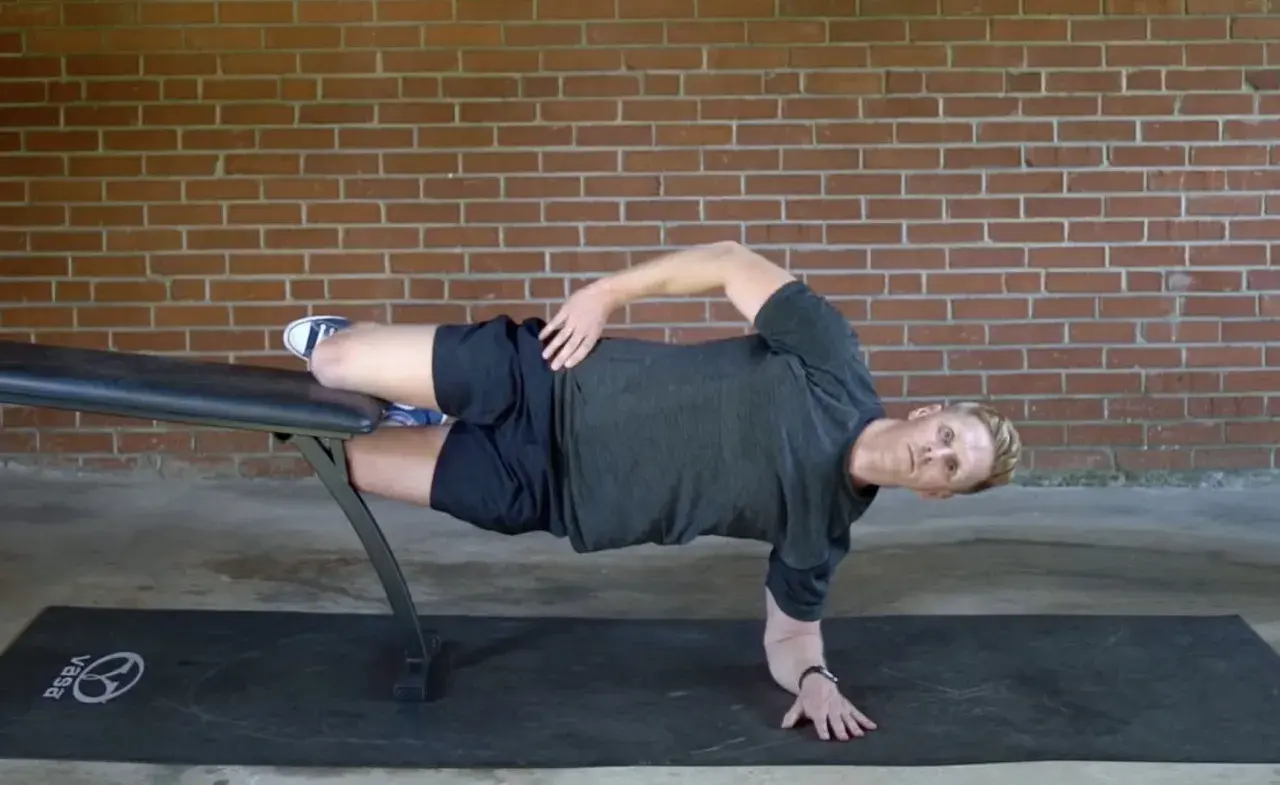
| Side plank | Builds lateral stability so the hips do not sway during freestyle, backstroke, or breathing | 20-40 seconds per side | Stay in one straight line from head to heels |
| Bird dog | Trains trunk stability while one arm and one leg move, which is very close to what swimming asks for | 6-8 controlled reps per side | Move slowly enough that the pelvis stays level |
| Pallof press | Trains anti-rotation control, useful for keeping the torso steady while the stroke cycles | 8-12 reps per side or 20-30 second holds | Do not let the band twist your body |
| Front plank with reach | Builds anti-extension strength, which helps stop the lower back from arching during fatigue | 20-40 seconds or 6-10 reaches | Keep the ribs and pelvis stacked |
| Hollow hold or streamline hold | Reinforces the tight bodyline used in streamlines, dolphin kick, and wall push-offs | 15-30 seconds | Keep the shape compact without over-tensing the neck |
| Rollout or stir-the-pot | Advanced anti-extension work that demands serious trunk control | 6-8 reps or short controlled circles | Only progress here if your plank position is solid |
I rarely make twisting crunches the centrepiece of a swimmer’s routine. Swimmers need rotation, but they need controlled rotation, not endless spinal flexion under fatigue. If you want one simple rule, build around the drills that keep your body shape intact while the limbs are busy.
That leads naturally to the next question: how much of this should you actually do in a week without interfering with pool work?
A practical 20-minute session you can run twice a week
For most swimmers, I would rather see two short, focused sessions than one marathon ab workout. The quality stays higher, recovery is easier, and the work is much more likely to support the pool instead of draining it.
| Block | What to do | Amount | Why it belongs |
|---|---|---|---|
| Warm-up | Breathing reset, cat-camel, glute bridge, shoulder circles | 3-4 minutes | Prepares the trunk without tiring it |
| Main circuit | Dead bug, side plank, bird dog, Pallof press | 2 rounds, 6-10 reps or 20-30 seconds per drill | Gives you the highest return for general swim control |
| Bodyline finisher | Hollow hold or streamline hold | 2-3 short holds | Links dryland work to in-water posture |
| Advanced option | Rollout or stir-the-pot | Only if technique stays clean | Useful for stronger swimmers who have already mastered the basics |
A simple way to progress is to keep the same exercises for four to six weeks and only change one variable at a time. Add a few seconds to the hold, one extra repetition, or a slightly harder leverage position. That is usually better than constantly swapping exercises before the body has adapted.
If you want a practical benchmark, the session should feel challenging but controlled. If your breathing turns ragged, your back arches, or your hips start wobbling, the set has already gone past the useful point.
How to fit core work around swim sessions
Placement matters. The wrong timing can make a good drill feel useless, because a fatigued trunk is not the same thing as a trained trunk. I usually place core work after an easier swim session, after technique work, or on a separate dryland day. I would not put a hard trunk session immediately before your main race-pace set unless the goal is only light activation.
Here is the way I think about it:
| Training situation | Best approach | What to avoid |
|---|---|---|
| In-season swimmer | Two short sessions with simple, repeatable drills | Long circuits that leave the trunk too tired for key pool work |
| Off-season or general prep | Three sessions if recovery is good, with gradual progression | Jumping straight to advanced instability work |
| Taper or meet week | Very light activation, mostly bodyline and movement quality | High-volume ab work that creates soreness |
| Masters swimmer | Low-to-moderate volume, with an emphasis on consistency | Chasing fatigue at the cost of shoulder and back recovery |
For most swimmers, the sweet spot is simple: enough volume to improve control, not so much that it interferes with the next session in the pool. That balance is what separates useful dryland work from fitness theatre.
Once the schedule makes sense, the next step is avoiding the habits that quietly undo the benefit.
Common mistakes that waste the session
I see the same problems again and again, especially when swimmers copy generic gym routines instead of training for water transfer. The most common mistake is chasing a burn instead of movement quality. A set of fast crunches can feel productive, but it does little for bodyline under load.
- Training only flexion - too many sit-ups and crunches, not enough anti-rotation and anti-extension work.
- Going too advanced too soon - unstable or loaded drills are only useful if you can already hold a clean position.
- Letting the lower back take over - once the spine starts arching, the drill has stopped training the right thing.
- Ignoring the hips and glutes - good core work in swimmers often depends on the whole chain, not just the midsection.
- Doing too much volume - more is not automatically better, especially when swim training is already heavy.
- No progression plan - if the exercise never gets harder, adaptation slows down.
My rule is straightforward: if the drill looks cleaner than it feels, keep it. If it feels heroic but falls apart visually, regress it. That mindset usually improves results faster than adding more exercises.
After that, the real test is whether the work actually changes how you move in the water.
How I judge whether the work is transferring to better swimming
The first place I look is not the gym. I look at the pool. A swimmer who is getting value from core training usually shows it in a few specific ways: a tighter streamline off the wall, less wobble during breathing, a cleaner bodyline in free and back, and less collapse late in a set. Those changes are easy to miss if you only watch the stopwatch.
I also like simple checkpoints that are easy to repeat. A short push-off test, a timed streamline hold, or a video clip of a standard repeat can show whether the torso is staying organised when fatigue rises. If you are not seeing any change after six to eight weeks, I would look at three things before blaming core work itself: the exercise choice, the exercise quality, and the amount of swim-specific load already in the week.
That is the part many people skip. They assume the answer is more abdominal work, when the answer is usually better selection and better timing.
The details I keep when time is tight
If I had to strip this topic down to the essentials, I would keep four things. First, prioritise drills that stop unwanted motion. Second, keep the sessions short enough that you can repeat them every week. Third, progress slowly and only when your position stays clean. Fourth, connect the dryland work back to the pool by paying attention to streamline, breathing control, and turn quality.That approach is not flashy, but it is effective. It gives swimmers the kind of trunk control that supports stroke mechanics rather than competing with them, and it does so without stealing recovery from the main training plan. If you build around that idea, core work stops being an optional add-on and becomes a genuine part of swimming performance.