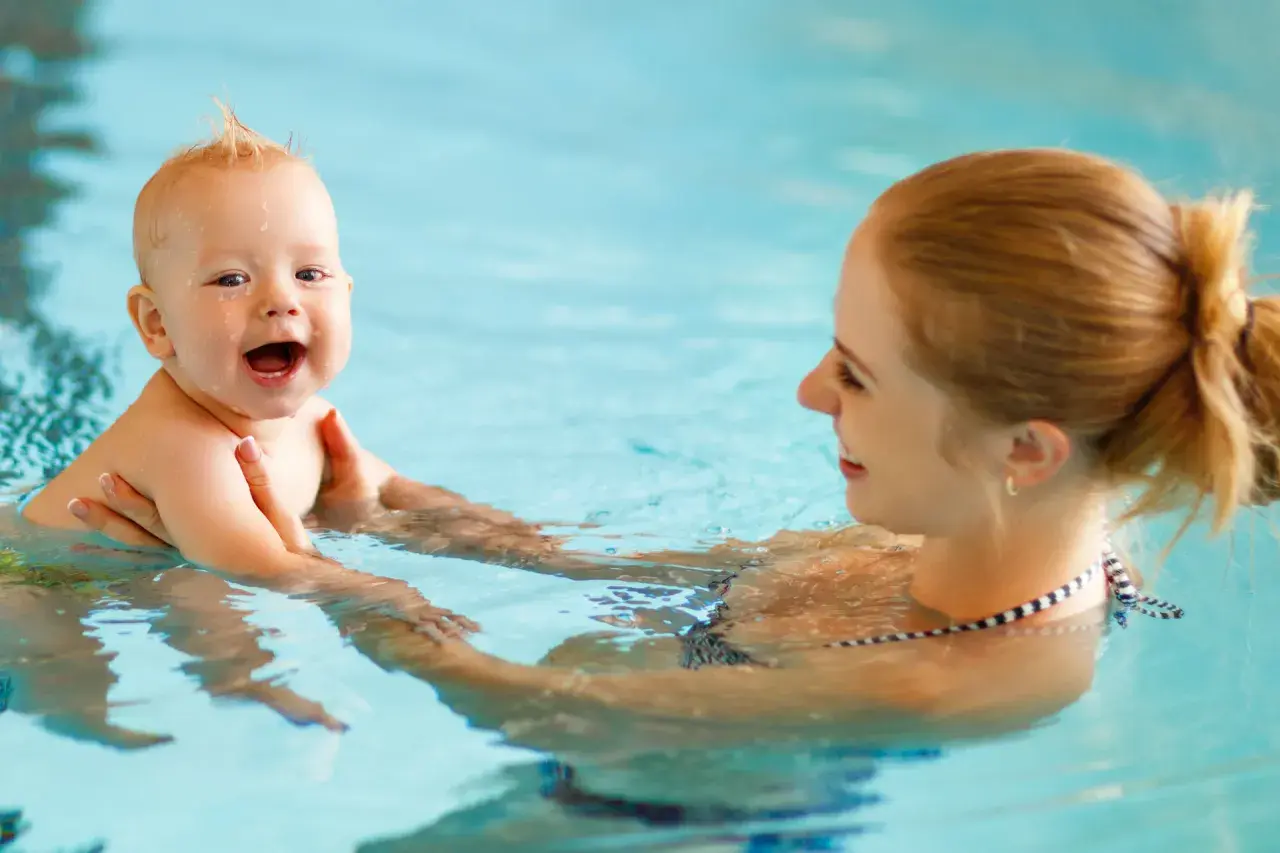
Baby and me swim classes are most useful when they build water comfort, teach parents better handling, and create a calm routine around the pool. In the United States, the best programs do not promise a shortcut to “safe forever” status; they fit into a broader safety plan that still depends on supervision, barriers, and age-appropriate instruction. This guide breaks down what the classes actually teach, when to start, how to judge the instructor, what they cost, and what I would watch for before enrolling.
The main thing to know before enrolling is that readiness and safety matter more than age alone
- For babies under 1, the goal is acclimation and bonding, not independent swimming.
- After the first birthday, many children can begin lessons if their development and temperament fit the program.
- A strong instructor teaches the parent as much as the child.
- Short, warm, consistent classes usually work better than long or intense sessions.
- Swim lessons help, but they do not replace close supervision or home water safety.
- U.S. pricing usually ranges from budget group classes to higher-priced private coaching.

What a good parent-child class actually teaches
In a strong class, the baby learns to feel safe in the water, tolerate gentle movement, and accept simple routines such as entering, exiting, floating with support, and getting used to splashes. The parent learns how to hold the child securely, keep the airway positioned well, and stay calm enough to make the pool feel predictable. I care more about that than flashy tricks.
For the youngest infants, the real goal is comfort and familiarity. That may sound modest, but it matters: a relaxed baby is easier to handle, and a parent who knows how to support the child correctly is already reducing risk.
- Water adjustment through songs, rocking, and short exposures.
- Supported floating on the back or front, always with hands-on control.
- Basic breath control in a gentle, developmentally appropriate way.
- Parent handling skills for entering, turning, and exiting the water.
- Routine building so the child starts to recognize the pool as a normal environment.
If a program markets itself as producing fearless swimmers from infancy, I would be cautious. A better class makes the water less mysterious without pretending it has solved every safety problem. That brings us to timing, which matters more than many parents expect.
When to start and when to wait
For many families, the real question is not whether a baby can be in the water, but whether the class matches the child’s stage. Many parent-supported programs accept infants, but I would separate water play from formal readiness for lessons. For many children, a genuine learn-to-swim path makes more sense after age 1, and it should line up with temperament, motor development, and how comfortable they are in the water.
Here is the rule I use: age matters, but readiness matters more.
| Age range | Best fit | What I would expect | When I would wait |
|---|---|---|---|
| 4 to 11 months | Introductory parent-supported water time | Short sessions, songs, holding practice, splashes, and comfort building | Active illness, recent ear problems, strong distress, or a pool that feels too cold |
| 12 to 24 months | Early instruction if the child is ready | Repetition, floating with support, edge awareness, and simple safety cues | If the child cannot settle after novelty or seems overwhelmed every week |
| 2 to 4 years | More structured learn-to-swim work | Better listening, more independent movement, and stronger safety habits | If emotional readiness is low or directions are still hard to follow |
I would also pause if a child is recovering from sickness, dealing with unresolved ear issues, or clearly exhausted. A class is only helpful when the child can actually participate. If you have doubts, a pediatrician is a sensible place to check before you commit. Once the timing makes sense, the next step is choosing the instructor, and that decision affects everything.
How I would choose the right instructor
Good infant instruction is not just about pool time. It is about the teacher’s ability to read the child, explain the purpose of each drill, and keep the whole room calm when one baby cries and another refuses to let go of a parent’s shoulder. I look for instructors who are patient, specific, and boring in the best possible way.
| Class type | Typical U.S. price | Best for | My take |
|---|---|---|---|
| Group parent-child | About $75 to $200 per month, often around $25 to $35 for a 30-minute session | Most families starting out | Best value if the instructor keeps the group small and organized |
| Semi-private | Usually above group pricing and below private coaching, often about $40 to $90 per lesson | Siblings or families who want more attention | Worth it when the child needs more feedback but not full 1:1 time |
| Private | About $64 to $202 per lesson | Anxious babies, cautious parents, and families who want faster correction | Most expensive, but the cleanest choice when you need customization |
When I screen a program, I want to know four things fast: how many parent-child pairs are in the water, whether the pool is warm enough for infants, whether the teacher has CPR and emergency training, and what success looks like after four weeks. If the answers are vague, I keep looking.
- Small ratios matter more than polished branding.
- Warm, indoor water usually works better for babies than a cooler recreation pool.
- Clear progression should be explained in plain language.
- Calm coaching is a better sign than dramatic claims.
- Emergency readiness should be obvious, not assumed.
That kind of selection process leads naturally to the bigger question: what these classes can actually do for safety, and where their limits are. That line is worth drawing clearly.
What lessons can and cannot do for safety
The most important thing I can say is simple: swim classes help, but they do not make a child “drown proof.” They are one layer of protection, not the whole system. That means supervision still matters in the pool, at the bath, in the yard, and anywhere water can collect.
The American Academy of Pediatrics treats swim lessons as useful protection for many children, especially once they are ready after the first birthday. I agree with the spirit of that guidance, but I would never let the lesson itself become an excuse to relax supervision.
- Never use lessons as a substitute for watchful adult supervision.
- Do not trust floaties or water wings as safety devices.
- Use barriers and closed doors around home water hazards.
- Keep touch supervision in mind for babies in bathtubs and shallow water.
- Teach the whole family basic water safety, not just the child in class.
This is also where I become skeptical of programs that oversell underwater work. Some classes may include brief, carefully supervised submersions as a teaching tool, but that should never be the headline. A good program teaches confidence, control, and parent skill first. Once that is in place, the first month of lessons usually feels much more manageable than new parents expect.
What the first month usually feels like
The first month is mostly about repetition and trust. Babies do not need to “perform” on day one, and parents do not need to memorize some perfect pool routine. What they do need is a consistent experience that gradually lowers stress and makes the water feel familiar.
- Week 1 is usually novelty, songs, and simple holding positions. The child is learning the environment more than the skills.
- Week 2 often adds more repetition, more control around entry and exit, and slightly longer moments of calm in the water.
- Week 3 is where many babies start recognizing the routine and fighting it less. That is a real win.
- Week 4 is when parents often notice smoother transitions, better handling, and less tension during class.
I would not panic if a baby cries during the first few sessions. That is common. What matters is whether the instructor responds intelligently, adjusts the pace, and helps the child settle without turning the class into a battle. If distress keeps building week after week, the fit may be wrong, the timing may be off, or the class may simply be too aggressive for that child.
Most infant classes run about 30 minutes, and that is usually enough. Longer is not automatically better. With babies, I would rather have a short class that ends with gas in the tank than a long one that leaves everyone tired and frustrated.
What it costs in the U.S. and what drives the bill
Pricing varies a lot by city and facility, but the pattern is stable: group lessons are the budget option, semi-private sits in the middle, and private coaching costs the most. If you are comparing programs, I would look at the total monthly cost, not just the headline price per class.
| Cost factor | Typical range or effect | Why it matters |
|---|---|---|
| Group parent-child lessons | $75 to $200 per month, or roughly $25 to $35 per 30-minute class | Usually the best starting point for most families |
| Private lessons | About $64 to $202 per lesson | Useful when you want faster correction or a more customized pace |
| Membership and registration fees | Often $25 to $55 or more | Can change the real price more than families expect |
| Pool type and location | Indoor, heated, urban, and low-ratio programs cost more | Comfort and convenience usually come with a premium |
If a program feels cheap, I would ask what is missing. Is the pool too cold for infants? Are the classes crowded? Are there hidden fees? On the other hand, if the program is expensive, I would ask what you are paying for beyond branding. Sometimes the answer is better ratios and better coaching. Sometimes it is just markup.
One practical rule helps here: pay for clarity, not for noise. If the program explains the schedule, ratio, make-up policy, and progression cleanly, that is usually a better sign than a glossy brochure.
What I would check before paying for the first month
Before I commit, I want the logistics to be as solid as the teaching. Early swim classes work best when the setting is calm, predictable, and safe enough that I can focus on the child instead of the process.
- The parent is expected to be in the water for infant classes.
- The class size is small enough that the instructor can actually coach each family.
- The pool is warm, clean, and clearly maintained for young children.
- There is a real make-up policy if a session is missed.
- The instructor can explain the goal of each drill without drifting into hype.
- No one pressures babies into early submersion just for the sake of appearance.
- The staff can describe CPR, emergency, and supervision procedures plainly.
- You know what to bring, including a swim diaper, towel, spare clothes, and patience.
If a program is calm, consistent, and honest about its limits, it usually gives you the right first wins: a less anxious baby, a more confident parent, and a better routine around water. That is enough to make the next stage of learning easier, and it is exactly what I would want from an early swim class.