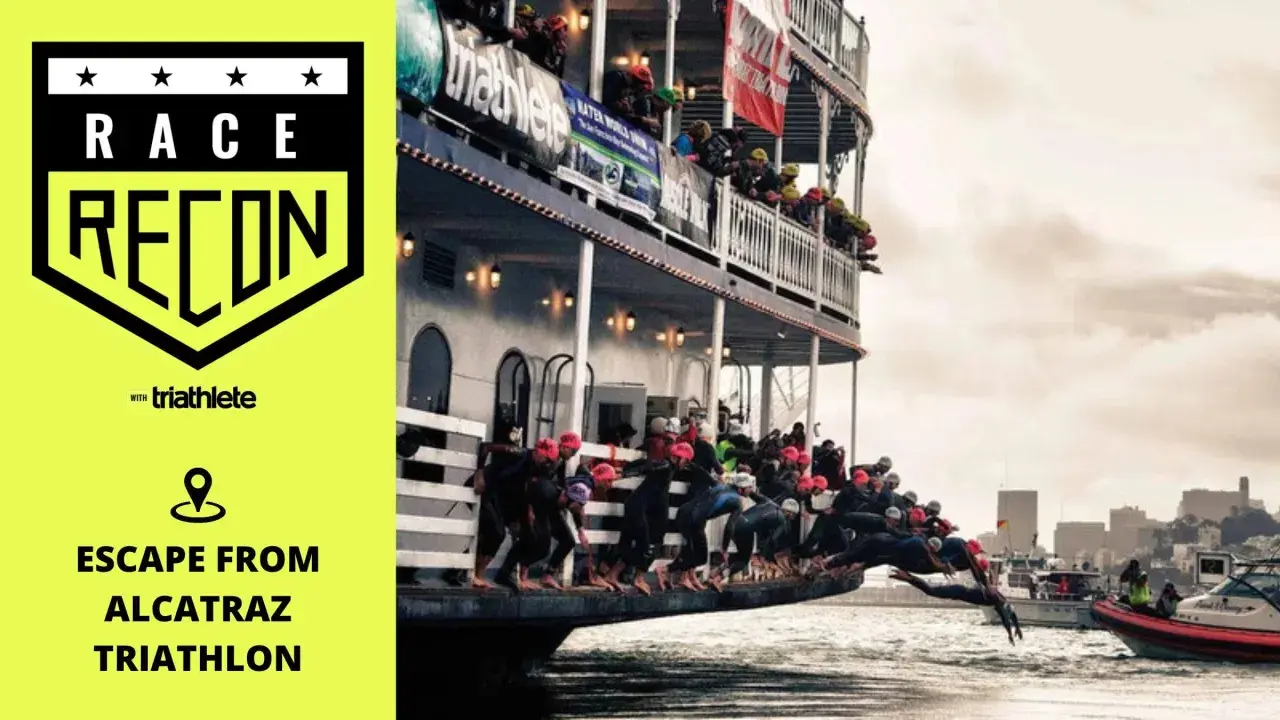
This is a race where the swim is never just a swim. The Escape from Alcatraz Triathlon starts with a boat drop into cold, moving water, then asks athletes to survive a technical bike and a punishing run with the Sand Ladder waiting late in the day. In this article I break down what makes the event different, what the swim really demands, which gear is worth carrying, and how I would prepare to race it without wasting energy early.
Key facts to know before taking on the course
- The 2026 race weekend runs June 6-7, with the race on Sunday, June 7.
- The signature swim is 1.5 miles from near Alcatraz Island to Marina Green.
- The water is cold, around 55°F, and strong currents are part of the challenge.
- Wetsuits and hoods are recommended, and the bike course has no aid stations or bottle exchange.
- The run adds Baker Beach, deep sand, and the Sand Ladder, so leg durability matters as much as swim fitness.
- For most athletes, success comes from open-water control and pacing discipline, not just raw pool speed.
Why this race feels harder than the distance suggests
On paper, the distances are not outrageous. In reality, the course stacks three very different stressors back to back: cold open water, a hilly and technical bike, and a run that punishes tired legs with sand, climb, and stairs. That is why I treat this race as a resilience test first and a fitness test second.
The smartest way to think about it is segment by segment. If you get one segment wrong, the next one becomes more expensive. A slightly overcooked swim leaves you shaky on the bike. A lazy bike effort turns the run into damage control. And if you overestimate how fresh you will feel at Baker Beach, the Sand Ladder becomes a wall instead of a feature.
| Segment | What makes it tough | What matters most |
|---|---|---|
| Swim | Cold water, strong currents, boat start, crowded first minutes | Calm breathing, frequent sighting, efficient body position |
| Bike | Rolling hills, technical corners, no aid stations or bottle exchange | Steady pacing, clean handling, disciplined fueling |
| Run | Sand, climbing, the Sand Ladder, tired legs | Patience, cadence, and leg strength late in the race |
Once you understand that the real challenge is cumulative stress, the swim stops looking like a standalone leg and starts looking like the tone-setter for everything that follows.
What the swim really feels like
The official course begins with a 7:00 a.m. plunge from the San Francisco Belle into water near Alcatraz Island. Participants are off the boat in a matter of minutes, which sounds dramatic because it is. The race asks you to switch from waiting, to jumping, to breathing hard, to swimming efficiently almost immediately. Add 55°F water and strong currents, and the swim becomes a skill problem as much as a fitness problem.
That first minute is where many athletes lose free speed. Cold water can trigger a sharp breathing response, so the goal is not to fight the water but to settle your system. I would rather see an athlete swim the first 200 yards with controlled rhythm than sprint into panic and spend the next ten minutes paying for it.
Cold shock and breathing
Cold shock is the body’s immediate reaction to sudden cold water exposure. In practical terms, it can make breathing feel tight and shallow for a short period. The fix is simple in concept and hard in execution: exhale fully, keep your first strokes compact, and avoid the instinct to explode off the line. If you can keep your breathing organized, the rest of the swim gets easier fast.
Navigation in moving water
Currents change the shape of the swim more than most athletes expect. You are not just swimming a straight line on a calm lake. You are reading water, adjusting angle, and accepting that the shortest visible path may not be the fastest path. I would practice sighting frequently but briefly, because lifting the head too high only wastes energy and drops the hips.
A good rule is to sight just enough to stay honest. If you can see a buoy line or landmark and maintain rhythm, do that. If you are zigzagging, you are donating time to the course. The athletes who do best here are usually the ones who stay calm under uncertainty rather than the ones who try to bully the water.
The exit and warm-up run
After the swim, athletes exit at Marina Green Beach and then move through a half-mile warm-up run to the main transition. That detail matters more than it sounds. It means your race does not reset when you leave the water; you still have to move, balance, and make decisions while cold and wet. I like to think of it as a transition inside a transition.
If you rehearse only pool swimming, this part can feel clumsy. If you rehearse getting out of open water, moving quickly on unstable feet, and finding your gear without panic, you gain free minutes and probably save more energy than you realize. That is the bridge to training, where specificity starts to matter.
How I would train for the swim
For a race like this, I would build around two goals: staying composed in cold water and keeping my stroke efficient when conditions are messy. Pure mileage helps, but it is not the main answer. A swimmer who can handle 1.5 miles in a warm lane pool can still struggle here if they have never practiced open-water starts, navigation, or pressure breathing.
Build open-water control
If I were preparing an age-group athlete, I would want at least one open-water session every week once the build phase starts. The focus should be on starts, contact, pacing, and sighting under fatigue. A useful session might look like 6 x 2 minutes with a hard first 20 seconds, then settling into race rhythm, followed by 4 x 100 easy-to-steady with frequent sighting.The point is not to recreate Alcatraz exactly. The point is to make the race start feel familiar enough that your nervous system does not treat it like a surprise. Familiarity lowers the cost of adrenaline, and that matters on a course where the swim already asks a lot.
Train for cold without wasting energy
Cold-water preparation should be progressive. Short exposures work better than heroic swims in conditions you are not ready for. I like controlled acclimation, such as short chilly swims, cool-water breathing practice, or simply entering cold water deliberately and settling before pushing pace. If you rush the adaptation, you just teach your body to panic faster.
There is also a technique angle here: a slightly higher stroke rate, smoother exhale, and compact kick often feel better in cold water than a long, relaxed open-water stroke that collapses when your breathing gets tight. Efficiency is not about looking elegant. It is about staying functional when the water is unfriendly.
Read Also: IRONMAN Cut-Off Times - Master Race Day Limits & Strategy
Use race-pace work to stay honest
Once or twice a week, I would put race-pace work inside the pool. Examples include 3 x 600 at steady aerobic effort with the last 100 of each rep a little faster, or 8 x 200 where every other repeat includes sighting practice every 6 to 8 strokes. These sessions build the ability to hold form when you are mildly uncomfortable, which is exactly the condition this swim creates.
What I would avoid is endless threshold work with no open-water relevance. Fitness still matters, but the race rewards athletes who can stay accurate under pressure. That is where gear becomes the next useful lever, because the right setup makes good training easier to express.
Gear that earns its place in your bag
I am usually skeptical of gear that promises to fix a course problem by itself. This race is different in one respect: the environment is so specific that a few choices genuinely matter. Wetsuits and hoods are recommended for a reason, and I would not treat them as optional comfort items if I were racing here.
At the same time, I would keep the gear list lean. The goal is not to bring everything. The goal is to bring what helps you stay warm, see clearly, and transition without friction.
| Item | Why it helps | What to look for |
|---|---|---|
| Full or sleeved wetsuit | Helps with warmth and body position in cold water | Good shoulder mobility, a secure neck seal, and no pressure points |
| Thermal hood or extra cap | Reduces heat loss at the head and ears | Snug fit that stays put when you sight and breathe |
| Anti-fog goggles | Visibility matters in chop, glare, and crowded starts | Low-profile fit, tested in open water, with a lens tint that matches conditions |
| Anti-chafe lubricant | Cold water and long exposure can make skin irritation worse | Use it on the neck, underarms, and any wetsuit contact points |
| Backup goggles | A broken strap or leaking lens can wreck the swim before it starts | Keep the spare pair easy to grab in transition |
One detail people overlook is the bike course. Because there are no aid stations or bottle exchange, I would plan hydration and calories before the swim even starts. That sounds like a bike problem, but it is really a race-execution problem, and it pays to solve it early.
Race-day decisions that save energy later
Good race-day execution here is mostly about restraint. The course does not reward early heroics nearly as much as it rewards athletes who stay organized. I would want my swim to be controlled, my transition to be rehearsed, and my bike effort to be honest but not eager.
A simple way to think about the day is this: keep your brain quiet and your routines loud. If you know where your gear is, how your goggles sit, how you want to mount the bike, and what effort feels sustainable on the first climb, you are less likely to burn matches you need later.
- Swim within yourself for the opening stretch. The first minutes should feel controlled, not heroic. If you settle early, you buy a better bike.
- Treat the warm-up run as part of the transition. Get your shoes and body moving efficiently so you do not waste time fumbling while cold.
- Cap the bike effort on the hills. The Presidio and the western sections punish athletes who ride above their limit too early.
- Leave something for the run. The Sand Ladder does not care how strong you felt on the swim.
If you are racing to finish, this is the mindset that keeps the day from unraveling. If you are racing to perform, it matters even more because the fastest athletes are usually the ones who make the fewest emotional decisions.
The mistakes I see most often at this race
The most common failures are not dramatic. They are small errors that compound. That is why this race is such a good filter: it exposes impatience, poor preparation, and sloppy assumptions very quickly.
- Starting the swim too hard. Adrenaline makes people forget they still have a bike and run to complete.
- Training only in pools. Pool fitness helps, but it does not prepare you for cold water, chop, or race-start stress.
- Ignoring sighting practice. In moving water, every extra zigzag costs energy and confidence.
- Choosing untested gear. New goggles, a new wetsuit, or fresh anti-chafe products can create problems you do not need.
- Underestimating the run. The sand and the Sand Ladder arrive when your legs are already tired, which is exactly why they hurt so much.
I would also add one subtle mistake: assuming that a strong swimmer automatically has an advantage here. Strong swimmers do have a leg up, but only if they can stay composed, sight well, and exit the water with enough control to carry that advantage forward.
What this race teaches if you prepare for it properly
The best thing about this event is that it teaches transferable skills. If you train well for it, you become better at open-water starts, better at handling cold, better at pacing, and better at trusting a plan under stress. Those are not just Alcatraz skills. They are triathlon skills that keep paying off long after race day.
If I were building toward this race from scratch, I would focus on three priorities: open-water confidence, hill tolerance, and a swim setup that keeps me warm without restricting movement. That combination does not just help you survive the course; it gives you a realistic shot at racing it well.
For athletes who love swimming, this is one of the rare events where technique, nerves, and environmental awareness all matter as much as conditioning. If you respect the water, rehearse the transitions, and avoid the urge to prove too much too early, the course becomes hard in the right way rather than chaotic in the wrong one.