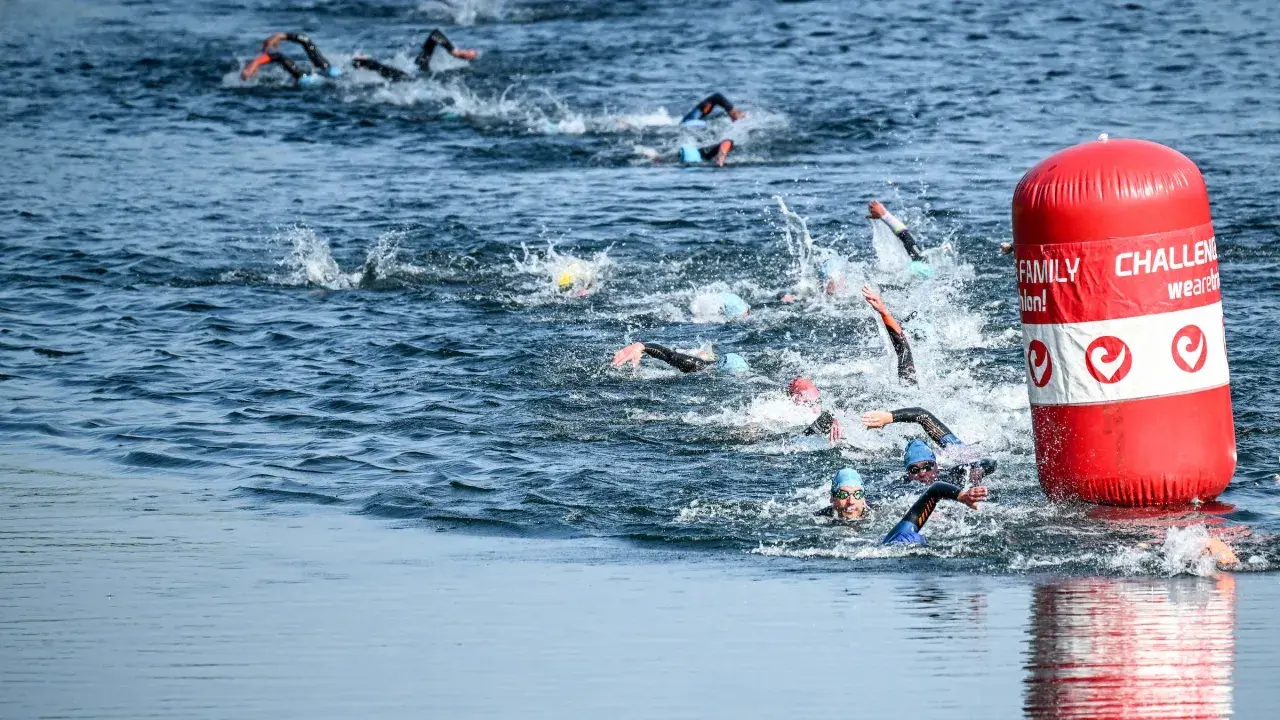
Triathlon swim strokes are less about having a perfect textbook style and more about holding a repeatable freestyle when the water gets crowded, the pace rises, and the line to the buoy is not perfectly straight. In this article, I break down which stroke actually matters in a triathlon, how to make it more efficient, how to breathe and sight without losing speed, and which mistakes cost the most energy on race day. I also cover the open-water details that separate a controlled swim from one that feels chaotic by the first turn.
What matters most before race day
- Freestyle is the race stroke for almost every triathlete because it is the fastest and easiest to sustain.
- A strong triathlon freestyle is built on body position, a clean catch, and a compact kick.
- Sighting should be efficient enough to keep you straight without lifting the head and dropping the hips.
- Breathing to both sides can help you stay balanced, especially in chop, traffic, or bright sunlight.
- Backstroke and breaststroke can be useful as backup tools, but they usually do not belong in the main race plan.
- The best progress comes from race-specific practice, not just adding more pool meters.
Why freestyle is the default race stroke
In a triathlon, any legal stroke is technically allowed, but that does not mean every stroke is worth racing with. Freestyle, or front crawl, is the standard because it gives the best mix of speed, efficiency, and repeatability over open water. I care less about how polished the stroke looks and more about whether it keeps you moving forward with a low energy cost.
The practical reason is simple: freestyle lets you keep a continuous rhythm, keep the body long, and breathe without fully breaking momentum. That matters in a swim where you may have to navigate waves, other athletes, buoys, and a slightly messy start. In most age-group races, the question is not, “Can I swim another stroke?” It is, “Can I hold freestyle calmly enough that I come out of the water ready to bike?”
That is why I treat front crawl as the default and everything else as a fallback, not an equal option. Once that baseline is clear, the real work is making the freestyle efficient enough to survive race stress.
How to build a faster, calmer freestyle
If I had to simplify triathlon swim technique into a few priorities, I would start with body position, then the catch, then the kick. A triathlon swimmer does not need the most dramatic stroke in the pool; they need the stroke that wastes the least energy while still creating enough propulsion to stay on pace.
- Keep the head quiet. Looking forward too often or too high pushes the hips down and adds drag.
- Enter cleanly. Hands crossing the midline or spearing too wide usually adds wobble rather than speed.
- Hold water early. A solid catch gives you a better return than rushing the pull.
- Use a compact kick. The kick should stabilize the body, not become a second job for the legs.
- Set a rhythm you can hold. A stroke that feels fast for 100 meters but falls apart at 800 meters is the wrong stroke for triathlon.
I usually think about the kick differently for different race lengths. In shorter races, a stronger kick can help keep the body high and the pace aggressive. In longer events, a smaller kick is often smarter because it protects the legs for the bike and run. The key is not to eliminate the kick; it is to make it purposeful.
Once the stroke feels stable in the pool, the next challenge is making it work when the water stops behaving like a lane line.

Breathing, sighting, and body position in open water
Open water is where a good pool stroke either holds up or starts leaking time. The biggest mistake I see is a swimmer trying to sight by lifting the entire head. That movement usually drops the hips, increases drag, and disrupts the rhythm just when the athlete needs smoothness most.
My preference is to keep the eyes low, lift just enough to see the course, and return the head to neutral immediately. Breathe out underwater, rotate to breathe instead of reaching forward for air, and keep the stroke compact when conditions get rough. In calmer water, many athletes can sight every 6 to 10 strokes; in traffic, chop, or a poorly marked course, that interval often needs to shrink.
Coaches at Swim Smooth often point out that breathing to both sides can help keep the stroke more symmetrical, and that matches what I see in triathlon. If you can breathe either way, you are less likely to fight waves, sun glare, or the mass of swimmers around you. It is not mandatory, but it is a real advantage when the course turns messy.
USA Triathlon also recommends practicing sighting in the pool by starting with one or two checks per 100 yards and building from there. That is the right approach: start small, keep the movement efficient, then make the habit automatic before race day.
Good open-water technique is not about swimming harder. It is about staying oriented without paying a big price every time you look up. That distinction matters even more when you start comparing which strokes actually deserve space in your race plan.
Which secondary strokes help and which ones usually do not
Most triathletes do not need a full menu of swim strokes on race day. They need one reliable primary stroke and a couple of emergency tools. I like to be blunt about this: a useful backup stroke can save a race, but it should not become a crutch that steals speed from your main swim.
| Stroke | Best use in triathlon | Main limitation | My take |
|---|---|---|---|
| Freestyle | Main race stroke for speed and efficiency | Needs good body position and rhythm under pressure | This is the one to build around. |
| Breaststroke | Short recovery, quick reset, or momentary navigation help | Usually slower and can create more drag | Useful in small doses, not as a race strategy. |
| Backstroke | Occasional reset if you need to breathe, orient, or avoid contact | Slower forward progress and easy to drift off line | Better as a safety valve than a performance stroke. |
| Butterfly | Almost never useful in a triathlon swim | Very costly and hard to sustain | I would not build race prep around it. |
The main lesson is that legality is not the same as usefulness. If a stroke does not help you stay straight, conserve energy, and keep moving efficiently through open water, it belongs far down the priority list. That is why race-specific practice matters more than collecting swim skills in the abstract.
Once you stop asking, “What strokes can I use?” and start asking, “What conditions will I face?” your training becomes much more useful.
How to practice for race conditions instead of pool-only fitness
I would rather see one focused race-specific swim than three unfocused laps of yardage. Pool fitness still matters, but triathlon rewards swimmers who can turn that fitness into straight-line progress under pressure. The pool should be where you build the skill; the open water should be where you prove it.
A simple weekly structure usually works better than a random mix of hard swims:
- One technique session focused on body line, catch quality, and breathing rhythm.
- One threshold or race-pace session with repeats long enough to feel controlled fatigue.
- One open-water session that includes sighting, drafting, starts, and turning around buoys.
- One easy recovery swim to reinforce smooth mechanics without fatigue.
In the pool, I like drills that connect directly to race demands: 25s with sighting, 50s with controlled breathing patterns, and longer repeats where the swimmer has to keep form after the first burst of speed. In open water, the useful skills are less glamorous but far more important: staying calm at the start, finding feet to draft off, sighting without panic, and making turns without wasting momentum.
USA Triathlon’s guidance on building sighting gradually in the pool is a good model here. Start with small doses, make the movement efficient, and increase the difficulty only when the stroke stays clean. That is how race skill gets built instead of just hoped for.
That training approach also makes it easier to adjust the swim intelligently by distance, which is where many athletes make avoidable mistakes.
How I adjust the swim for sprint, Olympic, and long-course races
The basic stroke does not change much across distances, but the emphasis does. A sprint triathlon rewards a little more aggression and a higher tolerance for discomfort. Long-course racing rewards restraint, rhythm, and the ability to come out of the water with the legs intact. The smartest swimmers adapt the same freestyle to the distance instead of trying to invent a different one each time.| Race distance | Stroke emphasis | Kick strategy | Main risk |
|---|---|---|---|
| Sprint | Higher stroke rate, quicker settling into race pace | Can be more active if you can still bike well | Going out too hard and spiking breathing early |
| Olympic | Balanced rhythm with efficient sighting | Compact but supportive | Overreacting to contact and losing form |
| 70.3 and longer | Controlled, economical stroke that you can hold under fatigue | Small, stabilizing, and sustainable | Wasting energy in the first 300 meters |
If there is one rule I trust here, it is this: the longer the race, the more valuable economy becomes. That does not mean swimming timidly. It means keeping the effort organized so the bike and run do not inherit unnecessary fatigue. A controlled swim split is usually worth more than a flashy one.
When those distance decisions are made well, the last gains come from small details that are easy to ignore but hard to replace.
The small race-day details that save the most energy
The final improvements usually come from decisions that look minor on paper. Goggles that stay clear, a wetsuit that fits well, a sensible start position, and a warm-up that lets you find rhythm before the gun all matter more than most athletes admit. I pay attention to these details because they reduce the amount of problem-solving you need to do while your heart rate is already high.
- Choose goggles you trust. If they fog, leak, or pinch, they can ruin your first 200 meters.
- Warm up with purpose. A short, calm swim helps you settle breathing before the start.
- Seed yourself honestly. Starting too far forward usually creates more contact than speed.
- Protect the first minute. Fast starts are normal, but a controlled first minute often beats a chaotic sprint.
- Keep the stroke simple under stress. The more crowded the course, the more valuable a stable freestyle becomes.
For triathlon swim strokes, the win is rarely a flashy technical trick. It is a stable freestyle, calm breathing, and the discipline to keep the stroke simple when the course gets messy. If you build those pieces first, the rest of the swim becomes much easier to manage.
