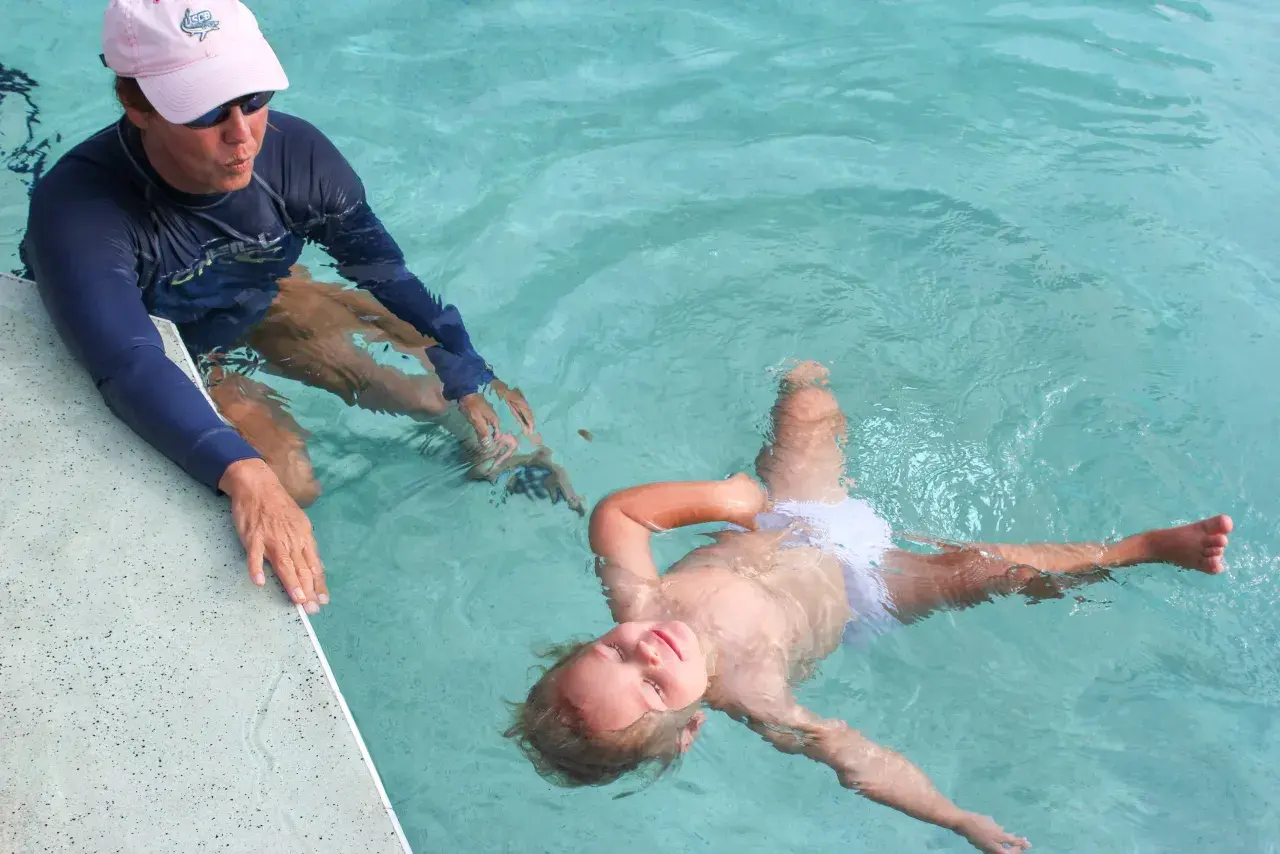
The short answer to what does ISR swim stand for is Infant Swimming Resource, a survival-swimming program for infants and young children. I like to separate it from ordinary swim classes right away, because the goal is different: ISR is built around self-rescue, not just comfort in the water. For parents weighing lesson options in the U.S., that distinction matters more than the acronym itself.
The practical answer in one glance
- ISR stands for Infant Swimming Resource.
- It is a self-rescue survival-swimming program, not a standard group swim class.
- Lessons are usually one-on-one and customized to the child.
- The core skills center on rolling to float, resting to breathe, and linking swimming with floating.
- Official ISR materials describe the program for children from 6 months to 6 years.
- It works best as one layer in a broader water-safety plan that still includes supervision and barriers.
What ISR stands for and why the acronym matters
In swimming, ISR stands for Infant Swimming Resource. The name tells you a lot: this is not a casual label for any early swim class, but a specific survival-swimming system built around what a young child should do in an unexpected water emergency. I see it as a narrow, high-stakes niche within swim instruction, and that is exactly why the acronym gets so much attention.
ISR is also different from generic "survival swim" wording. In the U.S., many families use the term loosely, but ISR refers to a defined method with certified instructors and a consistent teaching philosophy. The program has been around for decades, and the reason it has stayed recognizable is simple: parents are not only buying swimming skills, they are looking for a self-rescue framework.
That distinction becomes clearer once you look at how the lessons are taught and what children are expected to learn first.

How ISR lessons work in practice
ISR lessons are built around one-on-one instruction, which is a major part of why they feel different from a typical group class. The instructor is in the water with one child, and the pace is adjusted to the child’s age, comfort level, and physical readiness. That matters because survival skills are not learned well in a crowded lane with a rotating schedule and a lot of waiting around.
The core idea is simple, even if the training itself is demanding. Very young students learn to roll onto their backs and float so they can breathe and rest. As they get older and stronger, they work toward swimming a short distance, rotating to a back float, and then continuing the sequence until they can reach safety. In other words, the child is being trained to handle the moment before help arrives, not just to move through the water for fun.
That repetition can feel slow to adults who expect quick "swim like a fish" progress, but the slowness is the point. These are protective habits, and protective habits need to hold up under stress. When I evaluate a program like this, I care less about flashy movement and more about whether the child can execute the sequence calmly and consistently.
From there, the next question is whether the program fits your child and your goals.
Who ISR is designed for
Official ISR materials describe lessons for children from 6 months to 6 years old, and that range makes sense when the focus is self-rescue. The younger the child, the more the program leans on body position, floating, and simple response patterns. As children grow, the skills can become more active, but the end goal stays the same: give them a response that buys time in water.
In practical terms, ISR is often a good fit for families who have one or more of these situations:
- A backyard pool or regular access to water at home.
- A child who is too young for conventional stroke-based instruction to solve the safety problem.
- Parents who want a survival layer before, or alongside, standard swim lessons.
- Families who understand that supervision still matters and want a skill-based backup plan.
It is less useful if your only goal is lap-style swimming progression, because that is not what ISR is designed to do first. It is also not a magic shield. A child can still need supervision, barriers, alarms, and adult awareness even after lessons are underway. That reality is not a weakness in the program; it is just the honest limit of what any lesson can deliver.
To see that more clearly, it helps to compare ISR with traditional swim lessons side by side.How ISR compares with traditional swim lessons
Parents often compare ISR with standard swim schools, but they solve different problems. Traditional lessons usually aim at water comfort, stroke development, breath control, and broader swimming progress. ISR focuses first on the immediate survival response. Both can be useful, but they are not interchangeable.| Category | ISR | Traditional swim lessons |
|---|---|---|
| Primary goal | Self-rescue and survival in an emergency | General swimming ability, comfort, and stroke skills |
| Format | Usually one-on-one | Often group-based or mixed-format |
| Age focus | Designed for infants and young children | Broader age range, depending on the school |
| Skill emphasis | Float, breathe, and link swimming with floating | Kicking, arm work, body position, and stroke development |
| Best use case | A family wants an early survival layer | A child is building long-term swim competence |
| Main limitation | Not a substitute for supervision or broader swimming education | May not prioritize self-rescue in the same way |
The table is the cleanest way to think about it: ISR is a specialized safety tool, while traditional lessons are usually the wider swimming foundation. In many families, the right answer is not either-or, but both in the right order.
Once you know the difference, the last step is choosing the right instructor and asking the right questions.What to ask before you enroll
I always tell parents to treat instructor selection as seriously as the program itself. A strong ISR experience depends on the person teaching it, the local schedule, and how well the family understands the expectations before the first lesson starts.
Before you enroll, ask these questions:
- Is the instructor currently certified and active?
- Is instruction one-on-one for every lesson, or are there exceptions?
- What is the full cost of the program, including registration, refreshers, and makeup policies?
- How is progress measured, and what does a child need to demonstrate before moving forward?
- How much parent involvement is expected between sessions?
- What does the instructor recommend for water safety at home, beyond the lessons themselves?
Cost is one area where families should be especially careful. Pricing can vary by market, session length, and instructor, so I would never compare programs by headline price alone. Ask for the total out-of-pocket cost, not just the first payment, and make sure you understand whether refreshers or follow-up sessions are part of the plan.
Availability can be just as important. In some U.S. communities, ISR openings are limited, which means families need to plan ahead instead of waiting until the first warm weekend or vacation trip. If the schedule is tight, that is not automatically a red flag, but it is a signal to act early and confirm what the timeline looks like.
What matters most is whether the instructor can explain the method in plain English and match the program to your child instead of forcing your child to match the program.
Why the label matters less than the safety system behind it
When I strip away the acronym, the value of ISR is straightforward: it gives very young children a practiced response for a water emergency. That is useful, but it is still only one layer of protection. ISR water-safety guidance also emphasizes adult supervision, CPR readiness, pool fences, and alarms, because no swim lesson can replace the basics of preventing a child from reaching water alone in the first place.
The best way to think about ISR is this: it is a targeted survival skill, not a full substitute for being safe around water. If a family uses it well, it can add real confidence and real capability. If a family treats it like a replacement for supervision, they are asking too much of it.
So the practical answer is simple. In swimming, ISR means Infant Swimming Resource, and that usually points to survival-focused, one-on-one lessons for infants and young children. If that is the kind of protection you want to add to your child’s water routine, the next move is not to memorize the acronym, but to find a qualified instructor and ask the right questions.