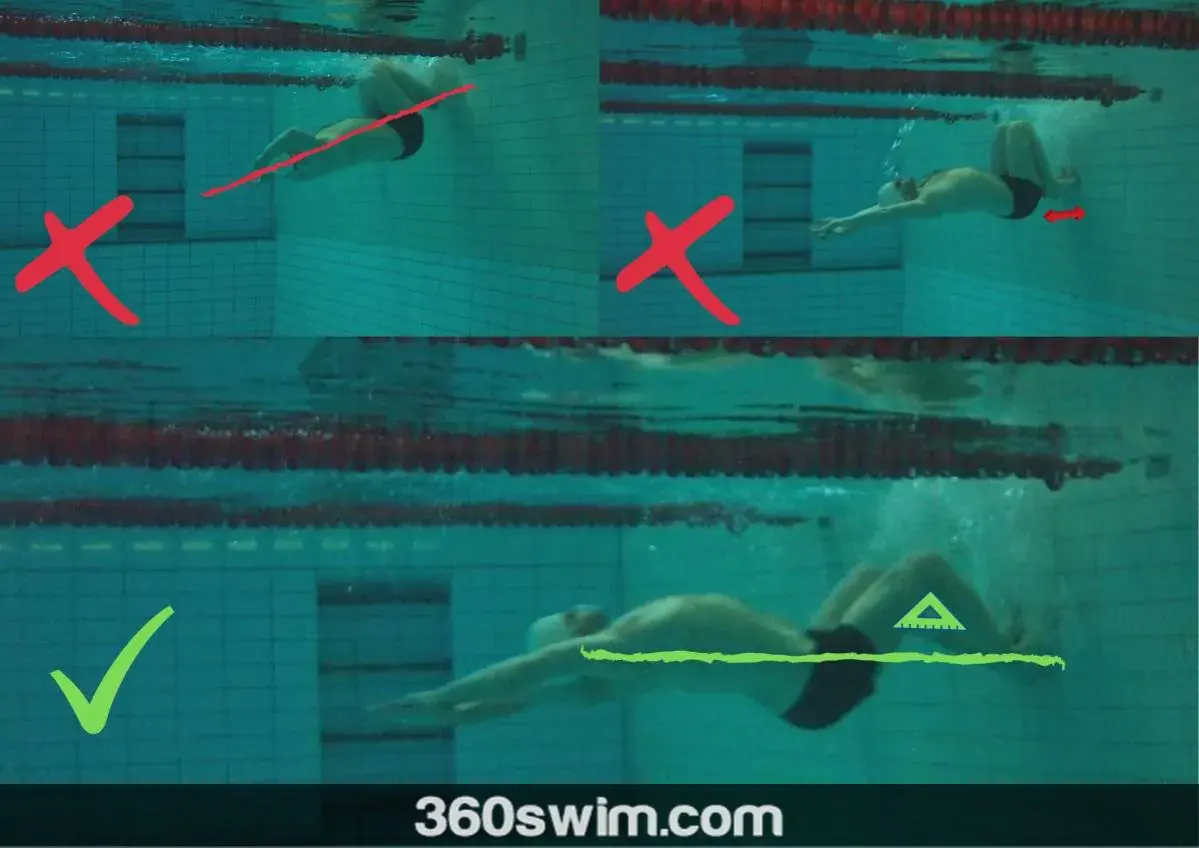
The fastest gains come from a compact turn, a clean push, and a calm breakout
- Train the turn in pieces first, then connect the pieces at swim speed.
- Keep the approach controlled, but not slow, because lost momentum is hard to recover.
- Use tight-body drills to stop hand sweeping and sideways rotation.
- Check push-off depth and streamline, because a good turn can still leak speed on exit.
- Short, frequent reps usually beat long technique sessions done tired.
What a good flip turn has to do well
A useful way to think about the turn is that it has five jobs. First, it has to preserve speed into the wall. Second, it has to make the rotation tight enough to stay compact. Third, it has to land the feet in a position that can actually push. Fourth, it has to send the body off the wall in a straight line. Fifth, it has to return you to stroke rhythm without wasting the speed you just created.
That is why a turn is never just a somersault. A swimmer can flip beautifully and still lose time if the head pops up, the hands sweep wide, or the push-off goes shallow. I like to remind athletes that the turn is a sequence, not a stunt. When one part is off, the rest of the turn has to work harder to rescue it.
- Approach - keep enough momentum to make the turn easy to start.
- Tuck - bring the knees in tight so the body rotates as a small shape.
- Wall contact - land the feet where they can push straight, not drift.
- Streamline - lock the body line so the wall speed is not wasted.
- Breakout - return to swimming without a rushed, messy first stroke.
Once those pieces are clear, the drills make much more sense, because each one solves a specific part of the sequence instead of trying to fix everything at once.
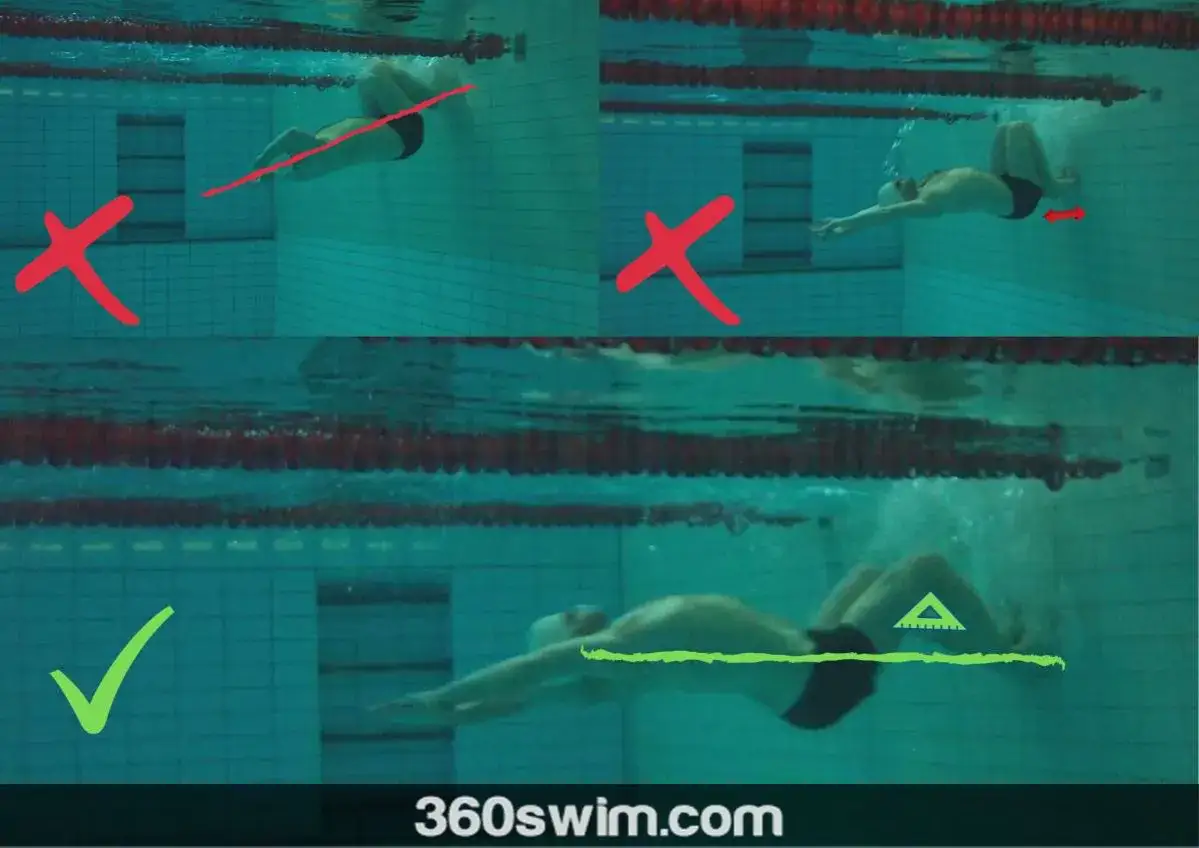
A drill ladder that builds real turn speed
I like to start with drills that remove the wall from the problem, then gradually add motion, alignment, and timing. That approach keeps the swimmer focused on one job at a time. It also makes it easier to notice which part of the turn is actually weak.
| Drill | What it trains | How many reps | My cue |
|---|---|---|---|
| Stationary flips | Comfort with the compact tuck | 3-5 clean reps | Make the ball smaller |
| Jump flips | Body control while moving quickly | 3-5 reps | Jump high, tuck fast |
| Two kickboards | Hands staying tight instead of sweeping wide | 4-6 reps | Hands stay near the shoulders |
| Closed fists or tennis balls | Driving the turn from the knees and core, not the hands | 4-6 reps | Let the knees create the flip |
| Bottom jumps | Straight-line push-off and alignment | 5-8 reps | Land where you took off |
| Turn and glide | How much speed survives the wall | 4-6 reps | See how far you slide |
For the bottom-jump work, I like deep water that is roughly 2-3 feet deeper than the swimmer's height. That lets you test whether the body line is truly straight instead of bouncing off the bottom in a way that hides the problem. If the swimmer cannot land in the same spot repeatedly, the line is not clean yet.
Once the basics hold up, I add a mid-pool flip every 3-5 strokes. That keeps the swimmer honest, because there is no wall close enough to fake the movement or wait too long. It is a simple way to test whether the tuck and recovery stay compact under real swim momentum.
When this ladder starts working, the next question is timing: how do you get to the wall without hesitating or looking up too early?
How to time the approach without staring at the wall
The cleanest turns usually start before the swimmer feels crowded. If you wait until the wall feels urgent, the setup is often already late. I tell swimmers to use the markings in the pool, not their eyes, to judge distance. The T on the bottom and the flags above the lane are more reliable than a late glance forward.
A good practical cue is to begin the turn setup around an arm's length from the wall, then keep the head quiet through the last stroke. That does not mean every swimmer will use the exact same stroke count. It means the setup should be repeatable. During warm-up, count your last few strokes from the flags so you know where the wall is without checking it visually.
- Keep the eyes down and let the T do the measuring.
- Take the last breath early, then stay committed to the wall.
- Keep the final stroke strong instead of softening into the turn.
- After the push-off, wait 2-3 strokes before breathing again if the set allows it.
That last point matters more than many swimmers expect. If you breathe right into the wall and then again immediately after the push, the turn never really gets to carry speed forward. A calmer breath pattern often makes the whole sequence feel smoother, and smoother usually means faster. Even so, technique can still leak speed in a few predictable ways, which is what I would fix next.
The mistakes that cost the most speed
Most turn problems look small from the surface and huge once you slow the movement down. I see the same errors over and over, especially in swimmers who are trying hard but have not yet built enough repetition.
- Slowing down into the wall. Momentum is the easiest speed to keep, so do not give it away by easing up early.
- Sweeping the hands wide. It feels powerful, but it makes the return to streamline slower and messier.
- Lifting the head. That drops the hips and makes rotation harder, which is why the body feels longer and less nimble.
- Turning sideways. A straight somersault is usually cleaner than a sideways roll, especially when you need a strong push-off.
- Landing the feet too shallow. If the push sends you almost into the surface, the breakout has to fix the line instead of using it.
- Breathing at the wall and immediately after the turn. That breaks the rhythm and steals the recovery you just earned.
These errors are common because each one feels minor while you are doing it, but together they can turn a good swimmer into a slow wall swimmer. The fix is usually not more effort. It is a better drill choice and a cleaner target inside a normal workout, which is where I would place the work next.
How to fit turn work into a normal workout
I would rather see six clean turns inside a real set than twenty sloppy turns done while exhausted. In practice, the best approach is short, frequent, and specific. That is especially true in short-course yards pools, where turns make up a bigger share of the race rhythm and poor wall work shows up quickly.
| Workout block | Time | Example | Purpose |
|---|---|---|---|
| Warm-up add-on | 5 minutes | 4 stationary flips + 4 jump flips | Build comfort before harder swimming |
| Main-set insert | 8-12 minutes | 4 x 25 swim with a turn every 3-5 strokes | Keep momentum honest under swim speed |
| Race-specific work | 6-10 minutes | 4 x 50 with a turn-and-glide check on every wall | See how much speed survives the push-off |
| Recovery check | 5 minutes | 4 bottom jumps or quarter-turn jumps | Reinforce line and body control without fatigue |
If a swimmer is nervous around the wall, I start with the warm-up block and keep the reps simple. If the turn is already decent, I move the work into the main set so it happens while the body is a little tired and the mechanics have to stay honest. That transition matters, because the best turns are the ones you can repeat when the set gets uncomfortable.
What I watch for when the turn starts to hold up under speed
When the turn is improving, it feels less like a separate trick and more like part of the stroke cycle. I look for four signs: the feet land in roughly the same place every time, the body stays compact through the tuck, the push-off goes straight instead of drifting, and the swimmer does not have to scramble for the first breath after the breakout.
- The wall distance feels familiar on every repeat.
- The tuck stays small instead of turning into a loose curl.
- The streamline carries farther off the wall.
- The first strokes after the push look calm, not rushed.
If those pieces are there, speed usually follows. A quick video from the deck or underwater is often the cleanest feedback you can get, because it shows whether the body line really stays tight or only feels tight from inside the lane. The most useful turn work is the kind that solves one problem at a time, then gets folded back into normal swim sets so the skill becomes repeatable instead of special.