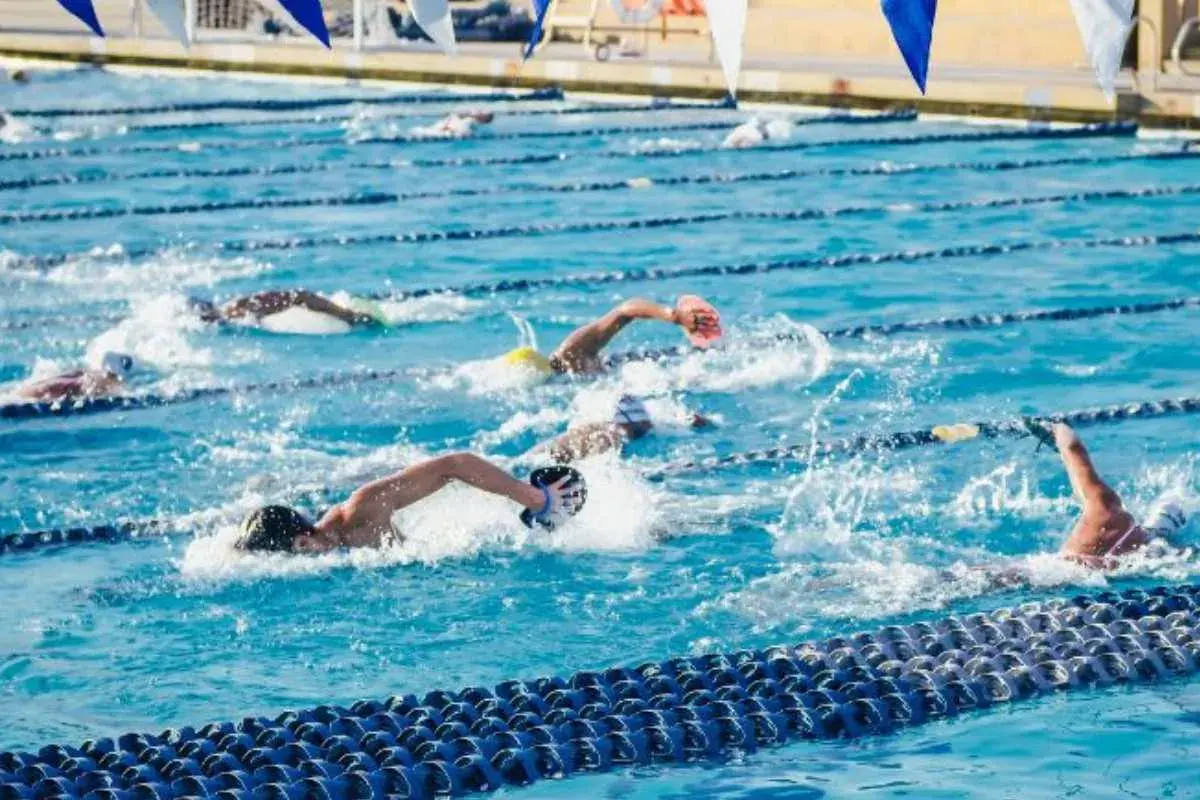
A strong pool interval session is less about surviving a brutal set and more about holding speed, form, and breathing control when fatigue starts to bite. This article breaks down how to build that kind of workout, how to pace it, which mistakes waste energy, and how to choose the right structure for your current fitness level.
The fastest way to make pool intervals actually work for you
- Keep the fast efforts short enough to stay sharp. In the water, quality drops quickly when you chase fatigue instead of speed.
- Warm-up and cool-down are not optional. They protect your shoulders, improve performance, and make recovery easier.
- For most recreational swimmers, 20 to 30 minutes of hard work is plenty. Longer is not automatically better when the goal is intensity.
- One or two high-intensity sessions per week is usually enough. The limiting factor is often recovery, not motivation.
- Technique still matters at high effort. If your stroke falls apart, the set stops training speed and starts training survival.
- You do not need fancy gear. Goggles, a cap, and a lane are enough; fins or a snorkel are helpful, but optional.
What a pool interval session is really training
When I program a hard swim session, I am not just chasing calories or soreness. I want the body to produce force quickly, recover fast enough to repeat that effort, and keep the stroke clean under pressure. That is why a high-intensity pool session can be useful for sprinters, triathletes, fitness swimmers, and anyone who wants more work from limited pool time.
USMS coaches usually build workouts around a warm-up, a main set, and a cool-down, and that structure matters more than the label on the session. A steady endurance swim, a sprint set, and an interval workout can all feel hard, but they do not train the same thing. One is about holding pace, one is about raw speed, and one is about repeated hard efforts with recovery built in.
| Format | Best for | Typical feel | Main limitation |
|---|---|---|---|
| Pool HIIT | Fitness, fat loss support, race-pace conditioning, time-efficient training | Short bursts, full focus, breathing gets heavy fast | Recovery demands are higher |
| Steady endurance swim | Aerobic base, technique endurance, longer race preparation | Controlled, rhythmic, sustainable | Less speed-specific |
| Sprint-only set | Pure speed and power | Very intense, low volume, long rest | Not much aerobic load |
ACSM has also pointed to aquatic HIIT as a promising lower-impact option, which is one reason it makes sense for swimmers who want intensity without the pounding of land-based intervals. That brings us to the part most people skip: how to structure the session so the effort is productive instead of random.
How to build the session so the fast parts stay fast
The biggest mistake I see is starting with pace instead of structure. A good interval session needs enough warm-up to raise temperature and loosen the shoulders, enough recovery to preserve speed, and a clear exit point so you do not turn quality work into junk volume. For most swimmers, that means a total workout that looks compact on paper and demanding in the lane.
| Part of the session | What it should do | Practical target |
|---|---|---|
| Warm-up | Prepare breathing, shoulders, and body position | 5 to 10 minutes of easy swimming plus a few build efforts |
| Main set | Create the high-intensity stimulus | Short repeats, usually 15 to 60 seconds of work |
| Recovery | Let speed stay high on the next repeat | Enough rest to regain control of stroke and breathing |
| Cool-down | Reduce stiffness and improve recovery | 5 to 10 minutes of easy swimming |
For the fast parts, I like to think in terms of effort first and distance second. On a 1-to-10 effort scale, the hard reps should usually land around 8 to 10, but that does not mean every repeat should be a total death sprint. If your first 25 is a blur and the rest are a collapse, the workout is too aggressive.
A useful rule of thumb is this: the rest should be long enough that the next fast rep still looks like the same swimmer. Sometimes that means a near 1:1 work-to-rest ratio, and sometimes it means much more recovery, especially if the set is built around power or race-pace swimming. In the pool, honest recovery usually beats macho pacing.
The warm-up can be simple: easy freestyle, a little kick, then a few 25s that build to about 90 percent. The cool-down should be truly easy, not a second workout disguised as recovery. With that framework in place, the session can finally do what it is supposed to do.
Three workouts you can swim in a 25-yard pool
These sets are written for a standard U.S. yard pool. If you train in meters, keep the structure and effort the same, then convert the distances as needed. I chose three levels because the right workout is the one you can repeat well, not the one that looks toughest on the page.
Beginner session for learning control
- 200 easy freestyle
- 4 x 50 as 25 drill, 25 swim on :20 rest
- 4 x 25 build to strong effort on :30 rest
- 6 x 25 fast on :35 to :45 rest
- 4 x 50 easy swim or kick on :20 rest
- 100 easy cool-down
This version is short enough to stay manageable, but it still teaches the main lesson: speed is only useful if you can repeat it with control. I like this set for newer swimmers because the work is clear and the rest is generous enough to keep the form from falling apart.
Intermediate session for fitness and pace
- 300 easy swim
- 4 x 50 drill and swim by 25 on :15 rest
- 4 x 25 build to fast on :20 rest
- 2 rounds of:
- 4 x 50 hard on 1:10
- 2 x 25 easy on :30
- 1 x 100 strong but controlled on 2:00
- 200 easy cool-down
This is the kind of set I would give to a swimmer who wants a real conditioning hit without turning the whole hour into survival mode. The 100s keep the aerobic engine involved, while the 50s and 25s keep the speed sharp.
Advanced session for race-speed tolerance
- 400 easy mixed swim, kick, and pull
- 4 x 25 build with perfect turns on :25 rest
- 3 rounds of:
- 4 x 25 all-out on :35 rest
- 2 x 50 fast on 1:05
- 1 x 100 strong on 1:50
- 4 x 50 easy recovery swim
- 200 relaxed cool-down
This one is demanding, so I would only use it when technique is stable and recovery between sessions is good. The value here is not just intensity; it is learning how to keep the stroke together when the body wants to rush every wall and every breath.
What matters in all three versions is the pattern, not the exact yardage. Fast work, enough recovery, and a clear cool-down will usually produce a better result than blindly adding more distance. Once that makes sense, the next question is which tools actually help in the lane.
The gear that helps without turning the pool into a lab
You do not need much equipment for a hard swim session, and that is part of the appeal. The basics are enough for most people, but a few pieces of gear can make the workout more comfortable, more precise, or easier on the body.
| Gear | Why it helps | When I would use it |
|---|---|---|
| Goggles | Clear vision and less irritation | Always |
| Swim cap | Reduces drag slightly and keeps hair out of the way | Always useful, especially in longer sessions |
| Short fins | Support body position and add ankle speed | Kick-heavy sets, beginner intervals, or technique work |
| Pull buoy | Lets you isolate upper-body work and maintain alignment | Pull sets or shoulder-endurance work |
| Front snorkel | Removes breathing disruption so you can focus on stroke mechanics | Drills, form-focused repetitions, and some recovery sets |
| Kickboard | Gives structure to kick intervals | When kick endurance or leg speed is part of the goal |
I would not let equipment turn the workout into a crutch. Fins can make a weak kick feel better, but they can also hide poor body position if you rely on them too often. A snorkel is excellent for keeping the head still, but it should support technique work, not replace awareness. The best equipment setup is the one that makes the swimmer better, not just the session easier.
That balance matters even more when you start chasing intensity, because the next few mistakes can quietly ruin the entire session.
The mistakes that make the set feel harder than it needs to
A lot of bad pool interval training comes from enthusiasm, not laziness. The swimmer tries hard, sweats mentally, and still leaves the pool without much to show for it. That usually happens because one or more of these problems got in the way.
- Skipping the warm-up. Cold shoulders and rigid breathing are a bad combination when the main set is supposed to be fast.
- Going too hard on the first repeat. If rep one is a panic sprint, rep five becomes a survival lap.
- Resting too little. In the pool, poor recovery often turns quality work into sloppy endurance.
- Letting stroke mechanics collapse. If the catch disappears and the kick turns into a scramble, you are no longer training useful speed.
- Doing the same hard set every time. The body adapts quickly, so repeating one recipe forever stalls progress.
- Ignoring turns and push-offs. In short pool repeats, walls are part of the workout, not just transitions.
- Turning HIIT into a daily habit. Hard swimming is stressful enough that most people need recovery days between sessions.
USMS coaches often separate hard sessions for a reason: you need time for the body to absorb the work. In practice, that means the smartest swimmers do not ask, “How hard can I go today?” They ask, “Can I do this again well later in the week?” That leads directly to how I would place the session inside a real training schedule.
How I would fit it into a week of training
For most recreational swimmers, one to two hard interval sessions per week is enough. If you are newer to the pool, start with one. If you already swim regularly and recover well, two sessions can work, but they should not sit back to back. I usually like at least 24 to 48 hours between high-intensity swims.A simple week might look like this:
- One hard interval session for speed and conditioning
- One easier technical swim with drills and longer repeats
- One steady aerobic swim or recovery swim
- Optional dryland work for shoulders, core, and hips
If your goal is general fitness, keep the hard session short and the rest of the week easy enough to recover. If your goal is racing, the fast work should match the stroke and distance you care about most. If your goal is fat loss or time-efficient conditioning, the session still needs quality, because sloppy intensity does not give you the same training return.
The simplest way to think about it is this: use the pool to create high-quality stress, then give your body enough room to adapt. That is the real advantage of pool intervals, and it is why a well-built session feels hard without feeling random.
