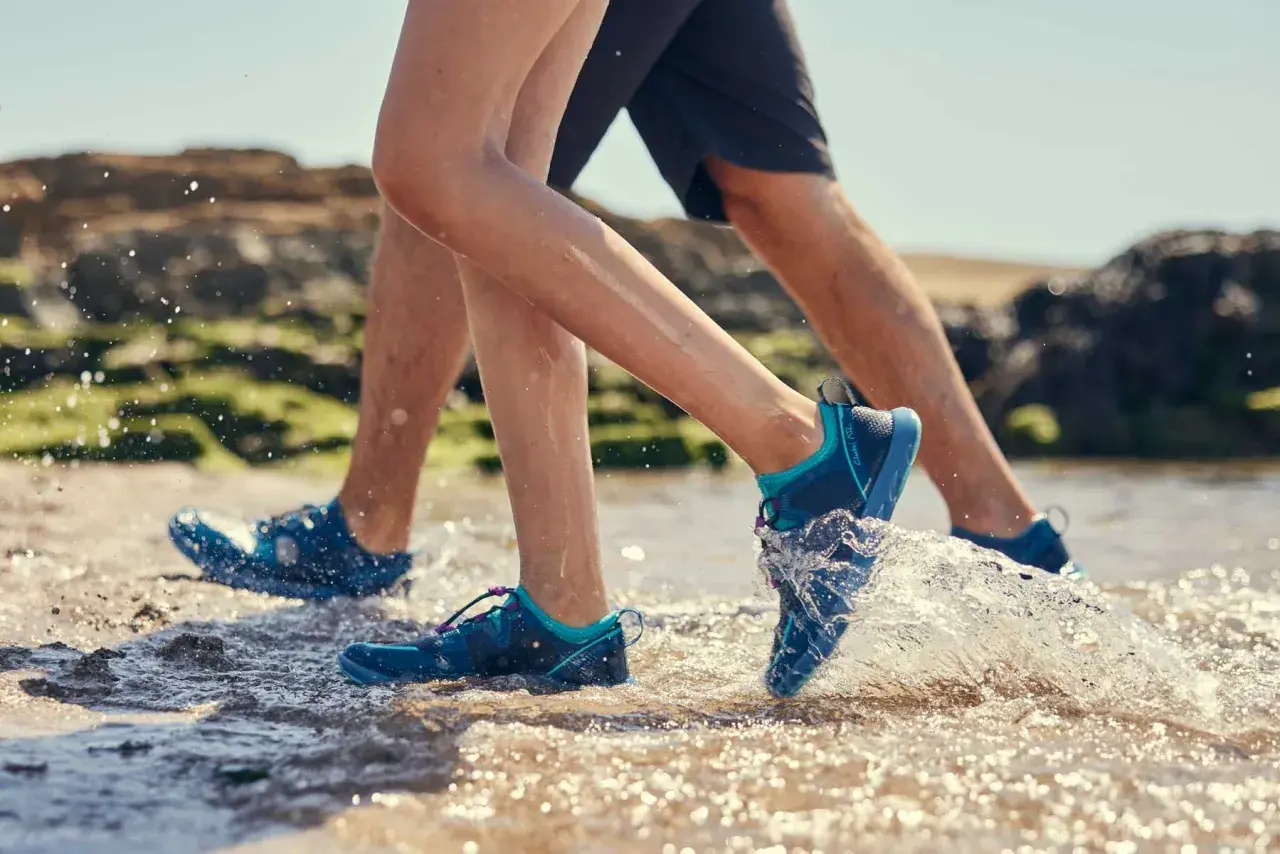
Pool running works best when the footwear matches the job: light, quick-draining, and secure enough to keep your stride honest. The right aqua jog shoes can make the difference between a productive session and a sloppy workout that leaves your feet slipping around. In this guide, I cover what they actually do, which features matter, how they compare with barefoot training, and how to choose a pair for swim conditioning or cross-training.
The best pair is the one that drains fast, stays secure, and fits the depth of your workout
- Pool-running footwear is mainly about grip, drainage, foot protection, and a stable fit.
- For deep-water running, your posture and flotation belt matter more than thick cushioning.
- For shallow-water jogging and pool-deck transitions, traction and toe protection become more important.
- Regular running shoes are the wrong tool in water because they absorb weight and dry slowly.
- In the US market, I usually see useful pairs range from about $20 to $140, depending on how specialized they are.
What these shoes are actually for
I treat pool-running footwear as a tool for stability, not as a substitute for land running shoes. In practice, it helps with three things: keeping your footing on wet surfaces, protecting your feet from rough pool decks or debris, and giving you a more controlled feel when you jog in chest-deep or shallow water. That is why the best models look closer to light aquatic trainers than to bulky sneakers.
The other thing worth understanding is that aqua jogging is not one single activity. Deep-water running, shallow-water jogging, pool walking, and rehab drills all ask for slightly different footwear. In deep water, the belt and your body position drive the workout; in shallower water, the shoe has to do more work because your feet actually interact with the pool floor. Once that distinction is clear, choosing the right model gets much easier.That leads directly to the next question: which features actually matter, and which ones are just marketing noise?

The features that separate a good pair from a gimmick
When I evaluate pool-running shoes, I look for four things first: drainage, grip, fit, and a material that does not turn heavy the moment it gets wet. If one of those is missing, the shoe usually feels awkward within the first ten minutes.
| Feature | What I look for | Why it matters |
|---|---|---|
| Drainage | Mesh uppers, ports in the midsole, or an open design that sheds water fast | Fast drainage keeps the shoe lighter and reduces the soggy, dragging feeling that ruins cadence |
| Outsole grip | Non-marking rubber with a pattern that bites on wet tile and pool deck surfaces | Good traction matters every time you turn, push off, or step out of the pool |
| Secure fit | Snug heel hold, stable midfoot wrap, and a toe box that does not collapse when wet | A shoe that shifts around will create blisters and throw off your stride |
| Upper material | Quick-dry mesh, synthetic knit, or a lightweight open weave | These materials dry faster and keep the shoe from feeling waterlogged between sessions |
| Toe protection | Enough coverage to shield the front of the foot without making the shoe stiff | Useful on rough decks, crowded lanes, and outdoor pool environments |
| Flexibility | A sole that bends with your foot instead of fighting it | Pool running needs a natural stride; a rigid shoe can make the movement feel clumsy |
I also pay attention to one small detail that many buyers miss: a shoe can have great drainage and still feel bad if the heel slips. If the back of the shoe lifts every time you push off, the fit is wrong no matter how good the materials look on paper. A good pair should feel locked in without squeezing the top of the foot.
Once those basics are clear, the real decision becomes whether you need a pool-specific shoe at all or whether a lighter setup would serve you better.
How pool shoes compare with barefoot running and regular trainers
I see this decision come down to comfort, control, and the kind of pool session you plan to do. The table below is the simplest way to think about it.
| Option | Best for | Main advantage | Main drawback |
|---|---|---|---|
| Barefoot | Deep-water running, technique work, and sessions where you want the clearest foot feel | Maximum feedback from the water and no added bulk | Less protection on decks and less help with traction |
| Light pool-running shoe | Most aqua jogging sessions, rehab work, and mixed pool-deck use | Better grip, more protection, and still light enough to move naturally | Not as minimalist as barefoot work |
| Hybrid water trainer | People who move between pool, shoreline, and light land use | More versatile outside the pool | Usually heavier and less precise in the water |
| Regular running shoe | Almost never in the pool | Familiar fit on land | Soaks up water, gets heavy, and dries poorly |
If I am being blunt, ordinary road shoes are the wrong choice for water training. They trap water, feel sluggish, and can make every movement more awkward than it needs to be. Barefoot can work well for experienced swimmers in safe, controlled pool settings, but most people get better day-to-day value from a light aquatic shoe that gives a little structure without turning the workout into a slog.
The useful rule is simple: the more your session depends on foot protection and deck traction, the more a shoe helps. The more your session depends on pure water feel, the more minimalist you can go. That balance is what I use when I decide what to wear for a particular workout.
How to use them in a real aqua jogging session
Good footwear still needs good technique. I see people blame the shoe when the real issue is posture, pace, or pool depth. A decent setup should support the workout, not hide bad mechanics.
- Start with the fit on dry land. The shoe should feel snug through the heel and midfoot, with enough toe room that your forefoot does not cramp when the material gets wet.
- Match the shoe to the water depth. In deep water, the shoe is secondary to your belt and body position. In shallower water, you need better grip and a firmer hold because your foot actually loads against the pool floor.
- Keep the stride compact. I prefer a tall posture, quick turnover, and a controlled knee drive rather than a long, exaggerated running motion. That keeps the workout efficient and reduces sloppy foot drag.
- Use the shoe as a safety tool, not a crutch. If the sole is slippery, the fit is loose, or the shoe feels heavy once soaked, the model is wrong for your session.
- Rinse and dry it immediately after training. Chlorine, salt, and standing moisture shorten the life of the materials and can leave the shoe smelling worse than it should.
One detail I want to stress: shoes do not replace a flotation belt in deep water. They can improve comfort and foot security, but the belt is what helps you stay aligned and work with a running motion instead of sinking into a messy, inefficient posture. That distinction matters more than most beginners realize.
Once you understand how to wear them correctly, the next question is who actually benefits most from them and who can skip them without losing much.
Who benefits most and who should probably skip them
In my experience, pool-running footwear is most useful for people who need repeatable, low-impact cardio with some protection underfoot. That includes runners managing shin, knee, Achilles, or stress-related issues, triathletes who want to preserve fitness during a cutback, and swimmers who use aqua jogging as a cross-training tool when land mileage is too costly.
- Best fit for injured runners: You get a controlled cardio session without the impact spike of land running.
- Best fit for triathletes: You can keep the running pattern alive while reducing cumulative stress.
- Best fit for older adults or rehab settings: Grip and protection make pool movement feel safer and more predictable.
- Best fit for mixed pool use: If you walk, warm up, and jog in the same session, a light aquatic shoe earns its place quickly.
There are also cases where I would skip them. If your session is a pure deep-water drill and you already have excellent balance, barefoot work may be cleaner and more honest. If your pool has strict rules about footwear, follow the facility’s policy first. And if the shoe feels like it is adding more drag than control, it is probably too bulky for the job you want it to do.
That trade-off is why the best choice is rarely the most aggressive or the most expensive pair. It is usually the one that disappears on your foot and lets the workout do the talking.
The simplest buying rule I use for pool-running gear
If I had to choose one practical setup, I would start with a lightweight pair that drains quickly, grips wet surfaces well, and locks the heel down without squeezing the forefoot. That gives you the broadest useful range for aqua jogging, pool walking, and recovery sessions without overcomplicating the purchase.
- Choose quick-dry construction before you chase extra cushioning.
- Prioritize wet traction over road-style outsole thickness.
- Make sure the shoe stays stable when soaked, not just when dry.
- Budget separately if you also need a flotation belt for deep-water sessions.
For most swimmers and cross-training athletes, that is the most efficient way to buy. It keeps the focus where it belongs: on steady, low-impact work that supports fitness, recovery, and better movement in the water.