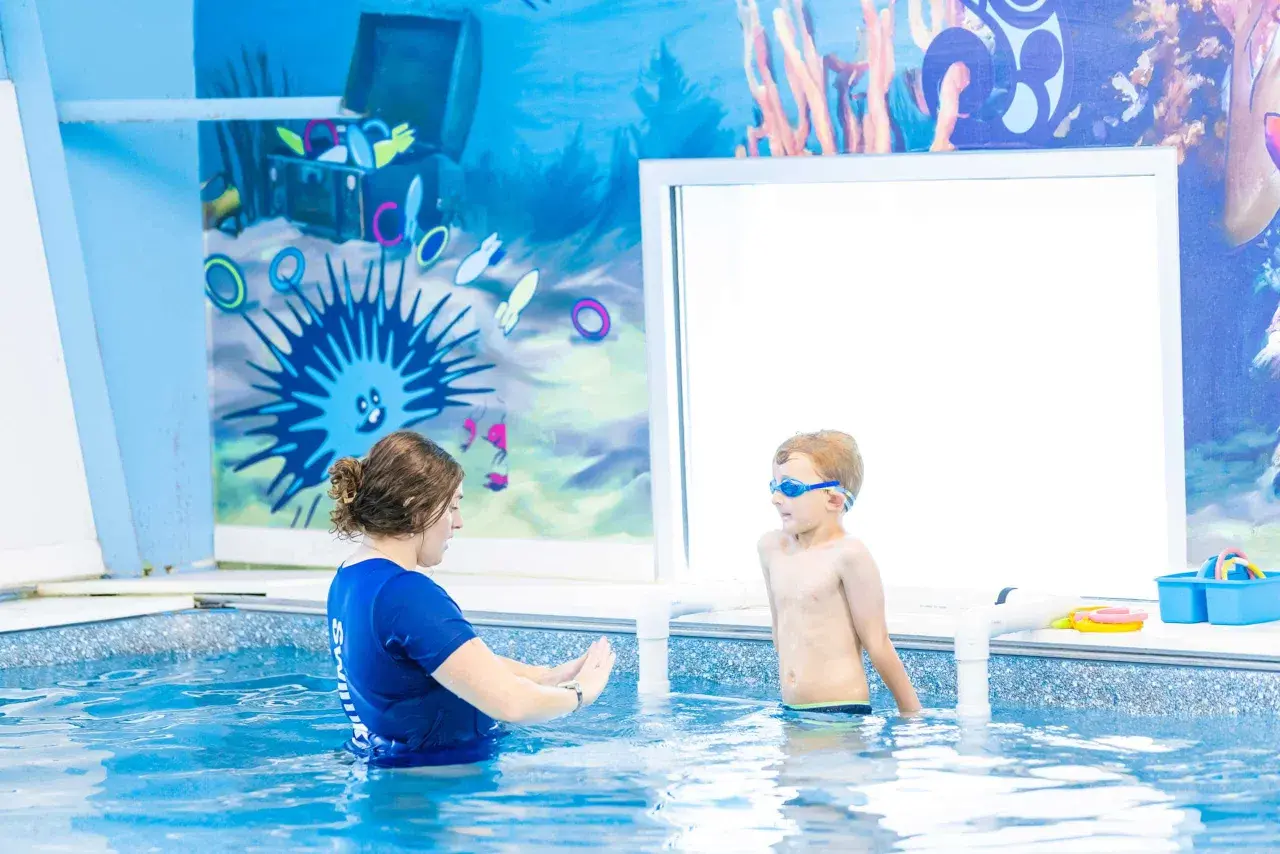
What matters most at six months is a warm, calm, parent-led class
- Most healthy six-month-olds can start baby swim classes, and the NHS says there is no need to wait until vaccinations are complete.
- A good session is usually short, weekly, and parent-led, with the adult in the water for support.
- Look for a qualified baby or preschool instructor, small groups, and a pool that feels genuinely warm.
- At this age, progress means water comfort, supported movement, and confidence, not independent swimming.
- If your baby is cold, upset, or unwell, it is better to skip or shorten the session than push through.
- UK prices vary a lot, so compare lesson length, group size, pool quality, and cancellation rules before you commit.
Is six months the right age to begin
In most cases, yes. A healthy six-month-old is usually old enough to benefit from gentle water exposure, and the NHS says you can take your baby swimming from a very young age, with no need to wait until they have finished vaccinations. By six months, many babies have better head control, stronger neck muscles, and a slightly more predictable routine, which makes a class easier for everyone involved.
That said, I would still treat the baby, not the calendar, as the deciding factor. If your child was born prematurely, has a respiratory issue, is dealing with reflux or recurring ear infections, or is having a rough week with sleep or illness, I would pause and ask a health visitor or GP for advice. The point of early swimming is to build a positive association with water, not to force an age milestone.
At this stage, I also think it helps to lower expectations in a useful way. Six months is early for formal skill work, but it is a good age for familiarity, handling, and calm repetition. That is exactly why the quality of the session matters so much.

What a good baby swim class should feel like
A well-run infant class should look almost deceptively simple. It should be short, predictable, and repetitive, because young babies learn through rhythm more than instruction. In many UK programmes, a 30-minute adult-and-child session is the sweet spot: long enough to settle in, short enough not to overload a six-month-old, and structured enough to build a routine.
I look for classes that use songs, gentle play, supported holds, bubbles, and small changes of position. Those activities are not just cute filler. They help babies get used to the sensation of water around the face, body, and ears, while also helping parents learn safe handling. The adult should stay involved in the water, because at this age the class is really about guided experience, not separation.
- Supported front and back holds so the baby feels secure.
- Short moments of face-water exposure, never forced.
- Simple cues and songs that repeat each week.
- Brief practice entering and exiting the pool safely.
- Enough pauses to rest, cuddle, and warm the baby back up.
What I would not want to see is a class that chases performance, pushes submersion too quickly, or treats every baby as if they should tolerate the same pace. A six-month-old should leave the water feeling regulated, not overwhelmed. That becomes much easier when the instructor and pool are chosen well.
How to choose the right instructor and pool
This is the part many parents underestimate. A baby swimming lesson is only as good as the person leading it and the room the lesson happens in. I would rather see a modest, well-run class in a good pool than a shiny programme in the wrong environment.
Swimming.org says baby swimming lessons should be run by a qualified teacher, and that is the standard I would use when screening options. You are looking for someone who understands infant development, can read baby cues quickly, and knows how to keep the session playful without losing control of safety. The best teachers are calm, confident, and patient. They explain what is happening and why, instead of just marching everyone through a routine.RLSS UK advises checking pool conditions carefully, and I agree with that approach. Aim for at least 30C water, and 32C or above if the baby is under 12 weeks or weighs under 12 pounds. A six-month-old can still chill quickly, especially if the session involves getting in and out of the water several times. Warmth matters more than people think.
| What to check | Good sign | Why it matters |
|---|---|---|
| Instructor training | Baby and preschool experience, clear teaching style, calm handling | Infant lessons need pacing and cue reading, not adult coaching skills |
| Group size | Small enough for the teacher to notice every child | Babies tire and vary quickly, so supervision must stay close |
| Adult participation | Parent or carer stays in the water | A six-month-old needs familiar support to feel secure |
| Pool temperature | Comfortably warm, not merely tolerable | Cold water ends a baby session fast |
| Facility layout | Safe entry, non-slip areas, clean changing space, lifeguard presence | The pool experience begins before the lesson starts |
I also prefer programmes that let you observe, ask questions, or try one session before buying a long block. The right class should feel reassuring within minutes, not after several weeks of hoping it improves.
What to bring and how to prepare for the first few sessions
Preparation does not need to be elaborate, but it does need to be practical. I always think in terms of keeping the baby warm, calm, and easy to change afterwards. That means packing less than most first-time parents expect, and focusing on the things that actually change the experience.
- A swim nappy, and any extra waterproof layer the pool requires.
- Two towels if possible, one for the baby and one for you.
- Warm clothes for after the lesson, especially in colder months.
- A small feed earlier rather than a very full stomach right before the pool.
- Spare nappies, wipes, and a plastic bag for wet items.
- Arriving 10 to 15 minutes early so you are not rushed before the first entry.
I would not bother with goggles, toys, or a bag full of extras for a six-month-old. Those items do not improve the lesson in any meaningful way. What helps more is a relaxed parent, a baby who is not over-tired, and enough time to settle before getting into the water. If the class starts with a stressful sprint through the changing rooms, the lesson is already on the back foot.
There is also a small but useful rule I use around feeding and timing: avoid turning the lesson into a test of stomach tolerance. A baby who is freshly fed, hot, and then bounced in the water may simply be uncomfortable. That is easy to prevent with a little planning.
What progress should look like over the first three months
At six months, progress is usually about confidence first and movement second. I would not measure success by whether the baby can do anything independently. I would measure it by how the baby responds to water, handling, and the routine of the class.
| Timeframe | What you may notice | What it means |
|---|---|---|
| First 1 to 2 sessions | Watching, clinging, splashing, or being unsure | Normal adjustment, not failure |
| Weeks 3 to 6 | Better relaxation, more kicking, more tolerance for gentle holds | The baby is recognising the pattern of the lesson |
| Weeks 7 to 12 | More curiosity, more facial relaxation, easier transitions in and out of the pool | Water familiarity is improving |
What I would not expect is independent swimming, a perfect floating position, or consistent submersion work. Some weeks will look better than others, and teething, tiredness, and growth spurts can temporarily change how a baby reacts. That is normal. The useful question is whether the child is gradually becoming more comfortable, not whether every session looks polished.
If the teacher understands infant pacing, the progress can be subtle but meaningful: less crying on entry, better body relaxation, and a baby who seems interested rather than wary. Those are the signs I trust.
How I would budget for a UK class without overpaying
Prices in the UK vary a lot by region, pool quality, and whether you choose a council programme or a specialist baby school. From current public pricing patterns, I would budget roughly £24 to £50 per month for a weekly 30-minute group class, with private or highly specialised tuition sitting higher. That range is not a promise, but it is a realistic working bracket for most families comparing options.
When I compare programmes, I look at more than the headline fee. A cheaper class can become expensive if the pool is too cold, the group is too large, or the timetable is awkward enough that you miss sessions. On the other hand, a more expensive specialist provider can be worth it if the teacher is excellent, the pool stays warm, and the class structure suits a sensitive baby.
- Check whether payment is monthly, termly, or per block.
- Ask what happens if you miss a class because the baby is unwell.
- Compare class length, group size, and pool temperature before comparing price alone.
- Look for a trial lesson if you are unsure about the format.
If I had to reduce the whole decision to one rule, it would be this: choose the class that keeps your baby calm enough to come back next week. For a six-month-old, consistency is worth more than intensity, and a well-matched instructor is usually the difference between a pleasant routine and a weekly struggle.
