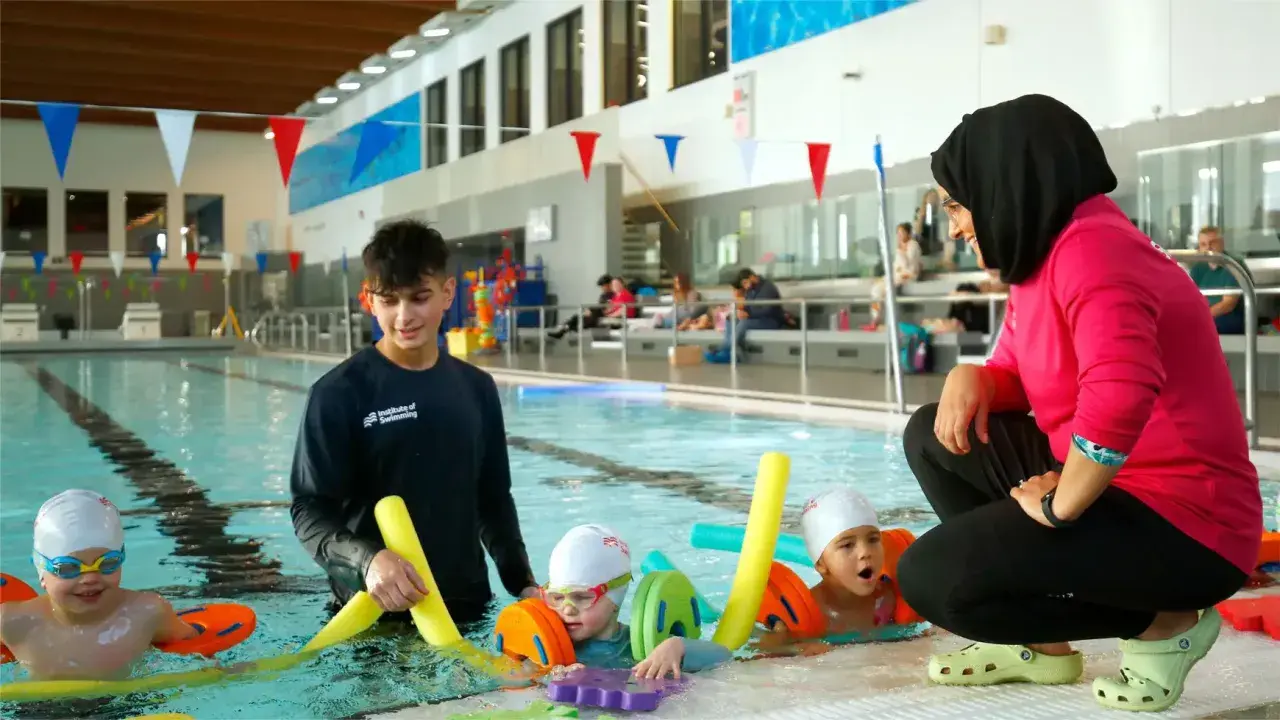
Swimming teaching sits at the intersection of coaching, safety, and customer service, which is why the best swim instructor jobs are usually the ones that reward calm communication as much as poolside confidence. In the UK, the real questions are not just what the role is called, but which qualification route gets you hired, what employers expect from you, and whether the hours and pay actually fit your life. This guide breaks that down in a practical way, with current 2026 hiring patterns in mind.
What matters most before you apply
- Swimming teacher and swim instructor are often used interchangeably in UK job ads, even when the duties are similar.
- Most roles are not Monday-to-Friday office hours; evenings, weekends, and school-holiday blocks are common.
- A recognised Level 2 teaching route is usually the fastest path to paid teaching, while Level 1 assistant roles are useful for building poolside experience.
- Child-focused roles often involve enhanced DBS checks and safeguarding expectations.
- Pay is frequently hourly or session-based, so the real value of a role depends on rota quality, cancellations, and whether travel time is paid.
What the role actually looks like in the UK
I would not treat swim teaching as a simple “stand on deck and shout instructions” job. In practice, you are planning lessons, managing mixed abilities, keeping swimmers safe, and adjusting the session in real time when a child is nervous, an adult is stuck on breathing, or a group moves faster than expected. The strongest teachers are usually the ones who can make progress feel steady without making the class feel rushed.
Typical duties include preparing lesson plans, demonstrating strokes, correcting technique, tracking progress, and keeping the session organised from entry to exit. The work also comes with a lot of human variety: toddlers, adults learning later in life, competitive swimmers who need stroke refinement, and beginners who need confidence before anything else. That is why many employers look for more than swimming ability alone.
The hours are equally important. The role is often variable, with shifts that land in the evenings, at weekends, and during bank holidays when families are available for lessons. If you want a routine that feels stable, that matters. If you want flexibility, the same pattern can be a benefit. Either way, the job fits people who are comfortable working around pool timetables rather than a fixed office day. Once that is clear, the next question is where these roles are actually found.

Where the jobs are most common
I see the strongest demand in a handful of settings, and each one suits a different kind of teacher. Some people want steady group lessons and a predictable poolside routine. Others want more variety, better hourly rates, or a niche such as baby classes or private tuition. The setting matters because it changes your pace, your income shape, and how much teaching freedom you get.
| Setting | What it usually looks like | Best for | Main trade-off |
|---|---|---|---|
| Leisure centres and public pools | Regular learn-to-swim classes, mixed ages, fixed lesson blocks | People who want stable demand and supervised poolside experience | Rotas often include evenings and weekends |
| Private swim schools | Smaller teams, structured lesson pathways, frequent parent contact | Teachers who like progression and a more focused teaching culture | Expect stronger performance standards and fewer “easy” shifts |
| Schools and clubs | After-school or term-based teaching, often tied to a wider sports programme | Teachers who want routine and organised group work | Work can slow during holidays unless the programme runs year-round |
| Baby and toddler classes | Parent-facing sessions with lots of reassurance, play, and water confidence | Patient communicators who enjoy early-stage development | Success depends heavily on confidence-building and clear parent communication |
| Private lessons and freelance work | One-to-one or small-group sessions arranged directly with clients | Teachers who want flexibility and control over pricing | You handle marketing, admin, and cancellations yourself |
If I were choosing a first role, I would usually start with a leisure centre or swim school because the supervision and lesson structure help you build good habits quickly. If I already had experience and wanted better earning power per session, I would look harder at private lessons or specialist teaching. Different settings reward different strengths, which is why qualification choice matters so much.
Qualifications and checks employers expect
The cleanest route into the profession is a recognised teaching qualification, but the right path depends on how quickly you want to move from assistant work to independent teaching. In the UK, there are still two practical entry patterns: a Level 1 assistant route that helps you build poolside experience, and a Level 2 route that qualifies you to teach independently. One 2026 wrinkle is worth noting: newer streamlined Level 2 courses are becoming the more practical option, while older Level 2 pathways are being phased out later in the year.
| Route | What it usually allows | Typical time commitment | Typical cost | My take |
|---|---|---|---|---|
| Level 1 assistant | Supporting a qualified teacher and learning poolside routines | About 4 days, or roughly 30 hours in total | About £375 to £395 | Good if you want supervised experience before carrying your own class |
| Level 2 teaching route | Independent teaching of lessons for children and adults | About 50 to 62 hours, depending on provider and pathway | About £680 to £695, though prices vary by centre | The strongest route if you want paid teaching as soon as possible |
| Baby and toddler specialism | Teaching very young swimmers and working closely with parents | Usually an extra course or later progression | Varies widely | Useful if you want a niche with strong parent contact |
For child-facing teaching work, I would also expect safeguarding checks. Many employers will ask for an enhanced DBS check, and some roles need the barred-list element too depending on how the work is structured and how often you teach children. That is not box-ticking; it is part of the job, because you are often working in an environment where children are present in repeated, supervised sessions. On top of that, employers commonly value first aid, rescue awareness, and clear communication more than a flashy CV. Once the paperwork is sorted, the real challenge is showing you can handle a lesson, not just pass a course.
How to stand out when you apply
When I look at swim teaching applications, I am far more interested in proof than enthusiasm. Plenty of candidates love swimming; fewer can explain how they would manage a group with mixed confidence levels, or how they would keep a lesson moving when one child needs extra reassurance. The strongest applications make the employer’s job easy: they show availability, safeguarding awareness, relevant experience, and a sensible understanding of the pool environment.
Here is what I would put front and centre on a CV or application:
- Any teaching, coaching, mentoring, or youth-work experience, even if it is not in swimming.
- Customer-facing work where calm communication mattered.
- Evidence that you can manage groups, time, and routines without chaos.
- Any lifeguarding, first aid, or safeguarding training you already have.
- Clear availability for evenings, weekends, or school-holiday periods.
- Any experience working with nervous learners or swimmers with additional needs.
In interviews, I would expect practical questions rather than abstract ones. You may be asked how you would handle a child who refuses to put their face in the water, how you would adapt a lesson for different abilities, or what you would do if you spotted a safety issue mid-session. The best answers are specific, measured, and realistic. If you can describe how you would keep the session safe while still helping each swimmer move forward, you already sound more employable than someone who only talks in slogans. Once you can get interviews, the next question is whether the money and schedule fit your reality.
What pay and hours look like in practice
The money side depends heavily on whether you are salaried, hourly, or self-employed. A sensible UK benchmark for a full-time career path is roughly £19,000 to £34,000 a year, but many teachers do not work a classic full-time pattern. The average hourly rate for a fully qualified teacher in England sits around £16.50, while current listings often advertise roughly £18 to £22 per hour for mainstream roles, with London and specialist work sometimes higher.
| Working model | What it often pays | What to watch |
|---|---|---|
| Part-time employed role | Lower annual total, but steadier rota and holiday structure | Good if you want reliability more than top-end hourly pay |
| Hourly or casual role | Commonly stronger hourly pay, especially for evening and weekend sessions | Cancelled classes, unpaid gaps, and travel can eat into the real rate |
| Self-employed or private tuition | Potentially the highest per-session income | You carry marketing, admin, and quiet periods yourself |
The hidden issue is paid contact time versus total time. A class that pays well on paper can be weaker in reality if you spend extra time opening up, setting up kit, doing records, and travelling between pools. I would also pay attention to school-holiday demand, because many teachers earn a large share of their income during those blocks. If you enjoy the work but want a better ceiling, the next step is usually progression into coordination or specialist teaching.
The fastest sensible route into poolside work
If I were starting now, I would not try to optimise for the highest headline rate on day one. I would aim for a route that gets me supervised teaching hours quickly, a clean safeguarding record, and a reference from a place that runs lessons well. That usually means choosing a realistic entry path rather than waiting until everything feels perfect.
- Decide whether you want an assistant role first or a direct Level 2 teaching route.
- Check local leisure centres, swim schools, and clubs for the kind of rota they actually offer.
- Ask what DBS and safeguarding checks they need before you spend money on training.
- Build a CV around teaching, communication, and reliability, not just personal swimming ability.
- Apply for part-time or casual roles first if you need poolside hours and confidence fast.
- Keep one eye on progression into babies and toddlers, learn-to-swim coordination, or more specialist teaching later on.
That is the practical shape of the market in 2026: a role that can start part-time, grow into a reliable income stream, and lead into better niches if you keep developing. The teachers who move fastest are usually the ones who treat early jobs as experience-building rather than status-building, because in this field, strong lessons and steady judgment open more doors than a polished pitch ever will.