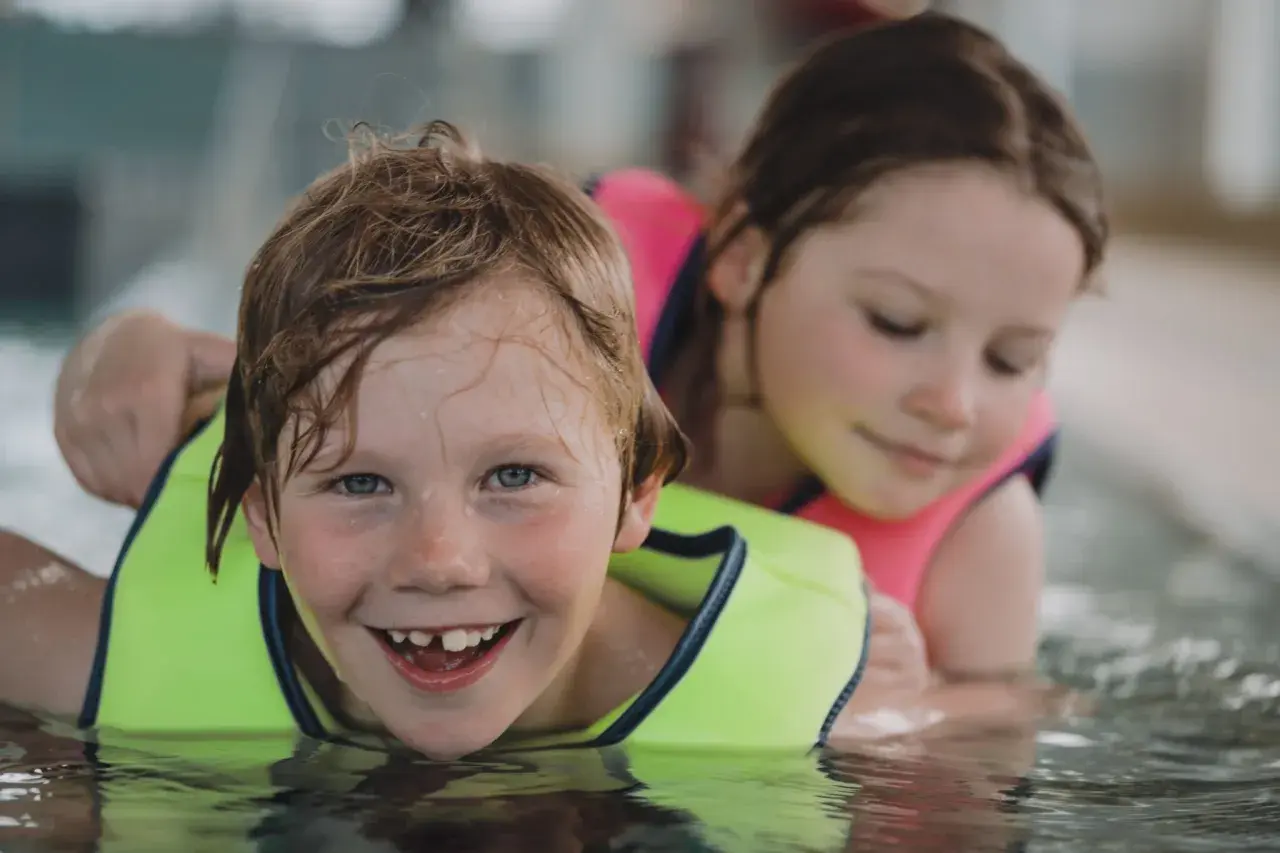
At age three, swimming should feel structured, calm, and playful. The best lessons build water comfort, simple safety habits, and enough body control for a child to move with purpose, without turning the pool into a pressure test. I focus on what actually helps parents make a good decision: readiness, lesson structure, instructor quality, and the mistakes that slow progress.
What matters most when you choose swim lessons for a three-year-old
- The goal at this age is usually water comfort, basic safety habits, and simple movement, not perfect stroke mechanics.
- The American Academy of Pediatrics says lessons can begin after the first birthday when a child is developmentally ready.
- A good preschool class uses warm water, short instructions, repetition, and an instructor who never rushes fear or submersion.
- Formal lessons can reduce drowning risk, but they never replace close, constant supervision around water.
- For many families, the best format is a small preschool group; anxious children often do better with a parent-assisted or private class.
What three-year-olds really need from swim lessons
Three-year-olds are usually not learning full stroke mechanics yet. They are learning how to enter and exit safely, blow bubbles, hold a brief float with support, kick with intention, and recover to the wall or an adult if they get uncomfortable. That is exactly where the value sits.
The CDC still treats drowning prevention seriously because drowning is the leading cause of death for U.S. children ages 1 to 4, and formal lessons are one layer of protection; they are not a substitute for supervision or pool barriers. The most realistic goal at this age is simple: make the water familiar, teach repeatable safety habits, and leave enough confidence for the next lesson. Once that goal is clear, the next step is checking whether your child is actually ready for class.How I judge readiness before the first class
I judge readiness by behavior, not birthday. The American Academy of Pediatrics says lessons can start after the first birthday when a child is developmentally ready, and that same logic matters at age three. If your child can follow a simple direction, tolerate water on the face, separate from you for a short stretch, and recover after a small frustration, there is a good chance a preschool class will work.
- Can follow a one- or two-step instruction without constant repetition
- Allows water on the face, even if only for a moment
- Can wait for a turn or stand in line briefly
- Recovers after being startled instead of staying upset for the entire class
- Shows curiosity about the water rather than immediate panic
- Can listen to a teacher without needing one-on-one attention every second
If a child cries briefly but settles, that can still be normal readiness. If the child stays distressed for the whole lesson, I treat that as a sign to slow down, not as a reason to quit forever. A parent-assisted class or a few weeks of gentle water play can bridge the gap. That readiness question leads directly to what a good preschool lesson should actually look like.
What a preschool lesson should look like in practice
The best preschool classes are repetitive on purpose. A good session usually starts with a greeting, a quick safety reminder, and easy entries into the water, then moves into bubbles, kicking, supported floats, and short recoveries to the wall. I like seeing instructors keep the same rhythm from week to week, because young children learn faster when the routine is familiar.
For children age 3 and younger, I prefer lessons in water heated to 87 to 94 degrees Fahrenheit. That detail sounds small until you watch a tired preschooler start shivering, lose focus, and stop enjoying the lesson. Warm water is not about luxury; it is about keeping a child regulated enough to learn.- Safe entry and exit from the pool
- Blowing bubbles and putting the face in the water briefly
- Supported back floats and body balance
- Simple kicking with a board, noodle, or adult support
- Turning to the wall or edge for security
- Short submersions only when the child is calm and ready
- Using clear safety words such as “wall,” “back,” and “rest”
In practice, this often looks more like guided play than formal drilling, and that is a strength, not a weakness. If a session feels chaotic or too technical, it is usually the wrong fit. That brings us to the most important choice after readiness: the format and the person teaching it.
How to choose the right instructor and format
The best choice depends on your child’s temperament, not just your schedule. Some three-year-olds thrive in a small group because they copy other children; others do better with private attention because they get overwhelmed when the class is busy. I usually think in terms of three options.
| Format | Best for | Strengths | Tradeoffs | My take |
|---|---|---|---|---|
| Parent-assisted class | Children who cling to a caregiver, are new to structured group settings, or need a softer start | Comfort, trust, and an easier emotional transition | Slower technical progress and less independence | Best when the main barrier is anxiety, not ability |
| Small-group preschool class | Most ready three-year-olds | Social learning, routine, and good value | Less individual attention than private lessons | Often the best default if the group stays small and focused |
| Private lesson | Children who are fearful, easily overstimulated, or need targeted support | Personalized pacing and very direct feedback | More expensive and sometimes more pressure for shy children | Useful when a child needs a custom pace or keeps stalling in group settings |
After format, I look hard at the instructor. A strong preschool teacher uses short cues, keeps transitions tight, and adjusts the task instead of repeating the same instruction louder. I want to see child water-safety training, CPR and first-aid awareness, and the confidence to slow the class down if one child is overwhelmed. Programs built for preschoolers usually separate them from older beginners for a reason: the cueing, attention span, and emotional pace are completely different.
That evaluation saves time because the wrong instructor can make a ready child look unready.
Common mistakes that slow progress
Most slowdowns come from predictable mistakes. The biggest one is asking a three-year-old to perform like an older beginner before the child is calm in the water. The second is choosing the cheapest class without checking the pool temperature, class size, or the instructor’s experience with preschoolers.
- Forcing face submersion before the child is comfortable
- Using arm floaties or novelty flotation as if they were safety tools
- Skipping lessons after one rough class instead of giving the child time to settle
- Judging success by bravado instead of repeatable skills
- Assuming lessons replace pool fencing, close supervision, and active adult attention
I always push parents to separate learning from safety. A child can be making real progress and still need constant supervision in or around water. That distinction matters, because lessons help, but they do not create invulnerability. Once you avoid those mistakes, the last step is making the whole routine easier to sustain.
The small decisions that make the biggest difference
If I were setting up preschool swim lessons from scratch, I would keep the plan simple: pick a warm pool, start with a child who is rested and fed, choose a teacher who knows preschool behavior, and stay consistent long enough for repetition to work. I would also practice at home with quick bath-time habits like blowing bubbles, pouring a little water over the shoulders, and using the same safety words the instructor uses. Small carryover matters more than parents usually expect.
- Schedule lessons after nap time or a snack, not when your child is already depleted
- Ask how the program handles fear, tears, and missed classes before you enroll
- Keep home practice short, positive, and low pressure
- Ask for a progress update every few lessons so you know what is changing
- Stay with the same program long enough to see repetition work
- Reassess after a few sessions if the class is too cold, too busy, or too fast
The result you want is not a child who looks advanced after one month. It is a child who is calmer in water, understands basic rules, accepts instruction, and can build from one lesson to the next without fear. That is the real payoff of well-run preschool instruction, and it is what I would look for before I enroll a three-year-old.
