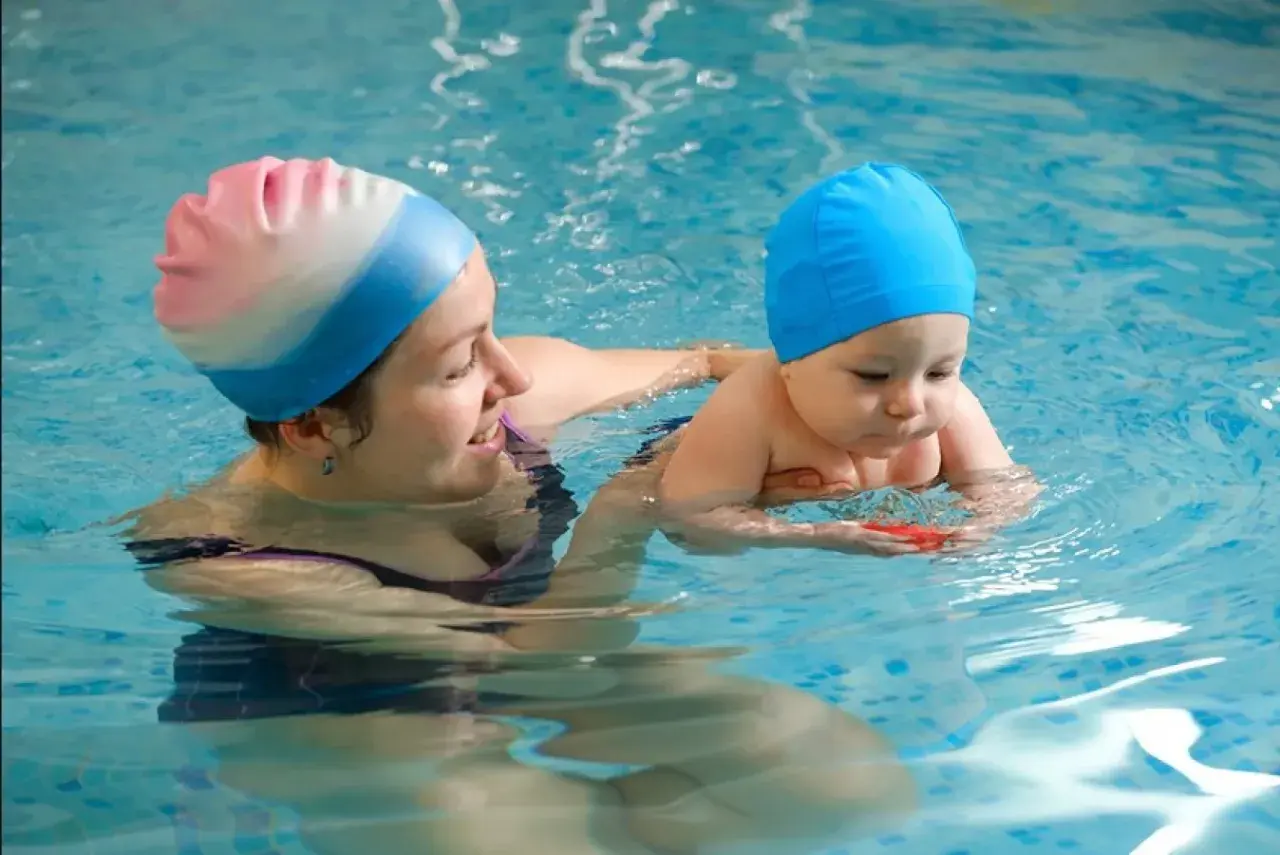
The safest start is the one that matches the baby, the pool and your expectations
- In the UK, babies can go swimming very early; the NHS says there is no need to wait for vaccinations.
- For structured parent-and-baby lessons, 3 to 6 months is a practical starting band for many families.
- Birth to 3 months is usually about water familiarity and bonding, not formal skill building.
- A 30-minute lesson is usually enough at this age; longer is rarely better.
- The best instructor is the one who keeps the class warm, calm and adaptable.
The practical answer for UK families
My practical rule is simple: start with water exposure as early as you feel comfortable, then move into structured lessons when the class suits your baby’s development and temperament. In the UK, the NHS says you can take a baby swimming at any time before or after vaccinations, so there is no medical rule that forces you to wait for a certain injection schedule. Swim England also makes an important distinction that I think parents should keep in mind: water confidence is not the same as water competence. That difference matters. A baby can enjoy the water, relax in your arms, and learn the rhythm of the pool long before they can do anything that resembles independent swimming. For most families, the most useful starting point is between 3 and 6 months, because the baby is usually a little more settled, a little stronger through the neck and trunk, and a bit easier to handle in a 30-minute class. If you want to start earlier than that, I would keep the first sessions very gentle and treat them as familiarisation rather than “swim training”. That distinction will make the next step much easier to judge.
How to tell your baby is ready
Age is only part of the decision. Readiness is really about whether the pool experience will feel calm, safe and manageable for both of you. I look for a few simple signs before I recommend a first class:
- Your baby has reasonably steady head control when upright.
- They settle after feeds and do not seem constantly overstimulated by new places.
- You can keep them warm easily before and after the session.
- They are well, with no fever or active illness.
- You feel confident enough to focus on holding, moving and responding to them.
What the first lessons are really for
Baby swim lessons are not supposed to produce a tiny stroke machine. The first phase is about comfort, handling, trust and very early water habits. In a good class, I expect to see a parent in the water, a qualified instructor guiding the session, and a pace that is built around the baby’s tolerance rather than the teacher’s agenda.
Typical early goals include:
- getting used to being held in water
- feeling water on the face, shoulders and ears
- learning safe entries and exits
- simple floating and balance work
- gentle kicking, splashing and breath play
- building a predictable routine
That is why I tell parents not to judge a first block of lessons by whether the baby is “swimming” yet. The real win is that the child learns the pool is normal, warm and safe, which is what makes later skill learning smoother. Once you understand that purpose, the age bands become much easier to read.
A simple age-by-age guide
| Age band | What it usually suits | What I would expect | When I would wait |
|---|---|---|---|
| Birth to 3 months | Gentle water familiarity, bonding and short, calm exposure | Very simple holds, lots of reassurance and a lot of parent-led support | If the pool is cool, the baby gets stressed easily, or the family wants a more structured class straight away |
| 3 to 6 months | The most balanced starting point for many families | More tolerance for a routine, better handling comfort and a class that can start to feel purposeful | If the baby is still unsettled by new environments or cannot stay comfortable for a short session |
| 6 to 12 months | Babies with stronger head control, more alertness and a clearer response to songs and games | More interaction, more movement and usually easier participation from the parent | If you were hoping for a tiny child to suddenly self-propel; that is not what this stage is about |
If I had to choose one general band for most UK families, I would still pick 3 to 6 months. It is early enough to build familiarity without rushing the baby, and late enough that many parents feel more relaxed in the water. That said, starting earlier is fine if the environment is warm and calm, and starting later is completely normal if that feels more realistic. The class quality matters at least as much as the start date, which brings me to the part parents often underweight: the instructor and the pool itself.
How I would choose an instructor and pool
A great baby class is not just a timetable slot. It should feel organised, warm and responsive, with an instructor who can read the baby as well as the parent. I would look for a parent-and-baby format where the adult stays in the water, because that keeps handling simple and lets the baby use you as the safe base.
- A teacher who explains holds clearly and demonstrates them without rushing.
- A warmer teaching pool rather than a cold main pool.
- Lessons that stay around 30 minutes, which is usually long enough at this age.
- A small, calm class where noise and crowding are kept under control.
- Clear hygiene rules, including swim nappies and sensible policies for illness.
- Enough flexibility for you to pause, soothe or leave early if needed.
I would also pay attention to the teacher’s tone. If the instructor talks as if every baby should progress at the same pace, I am already sceptical. Good baby teaching is patient, repetitive and low-pressure. It gives you small wins, not unrealistic promises. If the class feels like a performance, it is probably the wrong class. That leads into the final decision that matters most: what you want the first lesson to do for your family.
What I would prioritise before the first lesson
Before booking, I would decide whether the goal is water familiarity, bonding, or a gentle route into later swimming skills. Those are related, but they are not identical. If your main goal is bonding, you can start very early and keep the sessions playful. If your goal is a smoother transition into toddler lessons, I would aim for a warm pool, a consistent weekly slot and an instructor who builds confidence without pushing submersions or advanced moves too quickly.
- Pick a time of day when your baby is usually rested.
- Pack a swim nappy, a towel and dry clothes, then keep the day otherwise simple.
- Expect the first few classes to be about comfort, not visible skill.
- Leave room to pause for a week if your baby is unwell or overtired.
- Choose consistency over chasing the earliest possible start date.
If I had to leave parents with one practical thought, it would be this: start when the pool, the teacher and the baby all make sense together. That approach is calmer, safer and usually more effective than trying to begin as early as possible for its own sake.