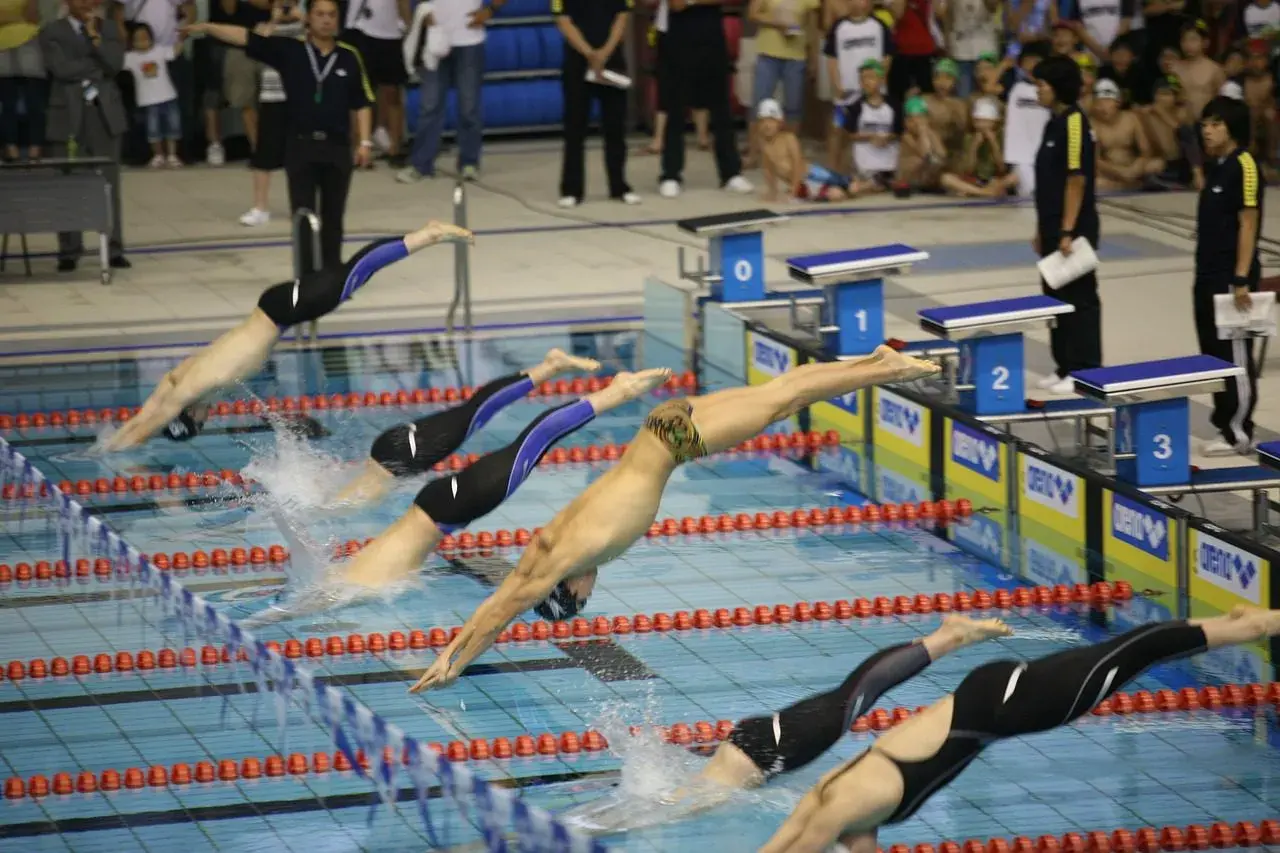
The best sessions mix pace control, race-specific work and enough recovery to keep quality high
- Middle-distance racing rewards swimmers who can keep form while speed and fatigue rise together.
- A useful week usually combines threshold work, race-pace repeats, technical work and one lower-stress recovery day.
- Broken swims and short repeats at race pace teach control better than endless hard swimming.
- Turns, underwater work, breathing discipline and stroke rate often decide the last 50 metres.
- Dryland and nutrition matter, but only if they support the quality of the pool sessions.
What middle-distance racing really asks from you
I think of the 200 and 400 as close relatives with different pain points. The 200 is usually about changing gear without losing shape; the 400 is about controlling effort early enough to survive the final third. Both demand a strong aerobic base, but neither responds well to slow, unstructured volume on its own.
Lactate tolerance matters here, but only as part of a bigger picture: you need the ability to keep producing speed when the burn rises, while still holding line, rhythm and turns. That is why the best work for these events usually sits between threshold training and true sprinting.
| Event | Main demand | Best training emphasis | Common mistake |
|---|---|---|---|
| 200 m | High speed endurance and sharp turns | Race-pace 25s and 50s, broken swims, controlled lactate work | Going out too hard and dying late |
| 400 m | Aerobic power with pace discipline | Threshold 100s and 200s, even-split work, negative splits | Swimming the first 100 like a sprint |
| 200 IM / 400 IM | Speed plus repeatable transitions | Stroke-specific pace, turns, and controlled race rehearsals | Letting one weak stroke destroy the whole rhythm |
Once you know which side of the event you lean toward, the weekly structure becomes much easier to build.
How I would build a week around the event demands
For most swimmers I coach in this kind of event, I want a week built around two quality pool days, one threshold day, one skills day and one lower-stress recovery day. More hard work is not automatically better; if the fast work stops being fast, the week is too crowded. In practical terms, a focused session often sits inside a 3,000 to 5,500 metre practice for club swimmers, with senior squads stretching higher when the volume is earned rather than forced.
| Day type | Example focus | Sample set idea | Why it helps |
|---|---|---|---|
| Threshold day | Strong repeat pace with short rest | 12 x 100 free with 10-15 seconds rest | Builds the engine for the 400 and the back half of the 200 |
| Race-pace day | Exact event speed | 16 x 50 at 200 pace with enough rest to stay honest | Teaches rhythm and speed at competition pace |
| Skills day | Turns, breakouts and stroke control | 25s off the wall, short build swims, stroke-count checks | Keeps mechanics clean under light load |
| Recovery day | Easy aerobic swimming | 20 x 50 relaxed with perfect turns | Lets adaptation happen without losing feel |
If you train five days a week, I would usually compress this into two hard days, one controlled day, one technique day and one easy day. The week works because each session has a job, and the next thing to get right is the actual set design.

The pool sets that sharpen pace without wrecking recovery
Threshold work for the 400
Threshold is the kind of hard that still looks controlled. I want the swimmer finishing the set tired but technically honest, not hanging on through the final repeat by pure stubbornness.
- 12 x 100 free on a repeatable send-off, holding the fastest average you can repeat without drift.
- 4 x 400 broken as 4 x 100 with 5 seconds between each piece, aiming for even pace and identical stroke count.
Use threshold work when you want to build the engine, not when you want to feel heroic. If the first two reps are already a fight, the interval is too tight or the pace is too aggressive.
Broken swims for race rhythm
Broken swims are one of the cleanest ways to rehearse race pace without the set turning into chaos. The small rest teaches you to re-commit quickly instead of settling into survival mode.
- Broken 200: 50 + 10 seconds + 50 + 10 seconds + 100 at target pace.
- Broken 400: 100 + 5 seconds + 100 + 5 seconds + 100 + 5 seconds + 100, or 4 x 100 with short rest depending on level.
- 6 x 50 at 200 pace on a generous interval, with the last two held on the same rhythm rather than overreaching.
The value here is not just speed. It is learning what goal pace actually feels like when you are already under strain.
Read Also: Fun Swim Drills - Improve Technique & Make Every Lap Count
Speed endurance for the final 50 metres
This is the work that stops a swimmer from tightening up when the arms start to burn.
- 8 x 75 as 50 fast, 25 hold, with enough rest to keep the quality sharp.
- 10 x 50 from a push at race pace, with the last 10 metres sprinted but not flailed.
- 4 x 100 negative split, where the second half is faster but still clean.
If you only ever swim race pace from a fresh start, you do not really know whether you can race under fatigue. That is the difference between a good training time and a useful racing habit.
Those sets only pay off if the details stay intact, which brings me to turns and stroke control.
Technique details that decide races in the last 50 metres
Technique in middle-distance swimming is not about looking neat. It is about not giving away free speed every time you breathe, turn or break out. The swimmers who usually improve fastest are the ones who treat the wall, the first underwater phase and the last 25 metres as part of the race rather than as transitions. In a 25m pool, a 200 has 7 turns and a 400 has 15, so even a tiny wall gain repeats itself quickly.
| Detail | What I look for | Why it matters |
|---|---|---|
| Start and breakout | Clean line, one strong underwater phase, controlled first stroke | Free speed in a race that can be decided by tenths |
| Turns | Tight approach, fast feet, no pause off the wall | Every turn compounds over the whole race |
| Breathing pattern | Planned breaths, not panic breaths | Prevents early rhythm loss |
| Stroke rate | Quick enough to hold momentum, not so frantic that form collapses | Keeps speed usable late |
| Finish | Last 5 to 10 metres committed, head down, no glide into the wall | Avoids losing momentum at the finish |
Distance per stroke is the amount of water you cover with each stroke. I want enough length to stay efficient, but never at the cost of tempo or bodyline. If the stroke gets longer while the pace gets slower, that is not efficiency; that is hesitation dressed up as patience.
Once the in-water details are stable, the next bottleneck is usually what happens away from the pool.
Dryland, mobility and recovery that support the water work
Mid-distance training needs strength and power, but I would keep dryland simple enough that it actually helps the pool. Two to three short sessions a week is usually plenty for most competitive swimmers, and the last 7-10 days before a major meet are not the time for heavy new work. A straightforward block of 3 sets of 8-10 reps is enough for most exercises if the movement quality stays high.
- Lower-body strength: split squats, deadlift patterns or trap-bar work if you are coached well.
- Upper-body pulling: rows and pull-ups to support stroke control.
- Pressing and shoulder stability: push-ups, landmine presses and external rotation work.
- Core and hip control: anti-rotation work, planks, dead bugs and single-leg balance.
- Mobility: thoracic extension, ankles, hips and lats for a better bodyline.
Aquatics GB frames recovery as refuelling, rebuilding and rehydrating, and that order makes sense after a demanding session. I would keep it practical: get fluid in first, then a carb-focused meal or snack, then some protein. A banana and yoghurt, a sandwich with lean protein, or rice with eggs all work better than waiting until you are ravenous. For hard morning sessions, a light carb snack 60 to 90 minutes beforehand is usually enough; after training, I like to see food in the system within about an hour.
The goal is not to turn nutrition into another rulebook. It is to arrive at the next pool session with more energy than you had leaving the last one.
The mistakes that waste fitness in middle-distance work
I see the same errors over and over, and they usually cost more time than a lack of fitness ever does. The athlete is fit enough, but the training has been pointed in the wrong direction.
- Turning threshold into a sprint. If every rep is all-out, you are training collapse, not control.
- Chasing volume over pace. Better 2,000 metres of quality than 4,000 metres of blur on a bad day.
- Ignoring turns and underwaters. You can lose more time here than in the first 25 metres of a rep.
- Swimming race-pace sets too tired. The set becomes junk and the pace clock stops teaching you anything.
- Building the taper badly. Reducing volume too late leaves you flat; reducing intensity too much leaves you dull.
If I see one pattern repeatedly, it is swimmers who are fit but never actually fresh enough to express that fitness. That is why I finish with a short checklist before any new race block.
What I would prioritise before the next race block
- One threshold set per week that stays technically clean.
- One race-pace session with broken swims or controlled 50s.
- One session that isolates turns, breakouts and breathing.
- One dryland block and one true recovery swim so the good sessions stay good.
If the next meet is close, I would cut volume before I cut quality. Keep the pace touches, shorten the filler and leave the pool feeling like the next race is possible rather than rehearsed to death. When mid distance swim workouts are planned this way, they stop feeling like random hard sessions and start building a race shape you can trust.