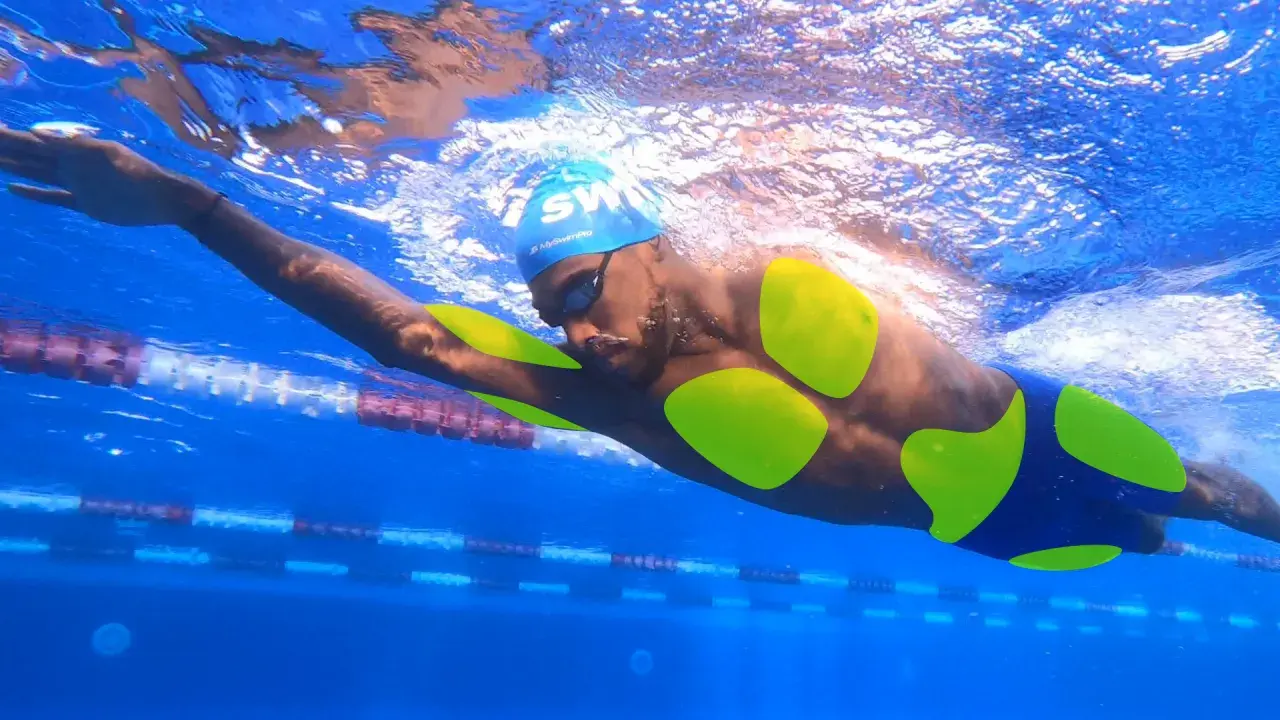
A competitive swimmer’s physique is built for one job: moving efficiently through water while producing enough power to hold speed across repeated efforts. The shape people call a swimmers body is really the result of stroke mechanics, training volume, event demands, recovery, and nutrition working together. In this article, I break down what that physique usually looks like, why it develops, how it differs by event, and what training choices matter most if you want results that actually carry over to the pool.
The swimmer build is lean, powerful, and highly event-specific
- Competitive swimmers usually develop broad shoulders, a strong back, a stable core, and powerful hips rather than a single “ideal” shape.
- Sprinters often carry more visible muscle and power; distance swimmers usually look lighter and more streamlined.
- Stroke choice matters: freestyle, backstroke, butterfly, and breaststroke all reward slightly different physical strengths.
- Training can change muscle mass, body fat, posture, mobility, and work capacity, but it cannot rewrite bone structure or limb length.
- Strength work, pool volume, fuel intake, and recovery habits shape the final result more than any gimmick ever will.
What a swimmer’s physique really looks like
The first mistake people make is assuming there is one universal swimmer look. There is not. In practice, competitive swimmers tend to look lean rather than bulky, with noticeable upper-back and shoulder development, a strong trunk, and legs that are built for steady propulsion instead of raw ground force. I think of it as a body that is optimized for drag reduction and repeatable power, not for looking like a bodybuilder or a runner.That usually means a few visible traits: capped shoulders, a relatively narrow waist, solid lats, and hips and glutes that can keep the body high in the water. Flexible ankles also matter more than most people realize, because a loose ankle helps the feet act more like fins. None of that is cosmetic by accident. It is the physical footprint of thousands of strokes, turns, kicks, and starts.
The important part is that a swimmer’s physique is not just “muscular.” It is muscular in the places that help hold position in the water, accelerate into each stroke, and keep technique together under fatigue. That leads directly to the question of why swimmers adapt this way in the first place.
Why competitive swimmers develop that shape
Water resistance is constant. Every stroke asks the body to create force while staying as streamlined as possible, and that combination pushes swimmers toward a very specific adaptation pattern. The shoulders, lats, chest, triceps, core, glutes, and upper back get repeated work, often at a volume that most land-based athletes never see. Over time, the body responds by becoming stronger, more efficient, and often leaner.
Recent research on competitive swimmers keeps pointing in the same direction: performance tends to be associated with lean mass, muscle power, shoulder strength, and aerobic capacity. That does not mean bigger is automatically better. It means the body learns to support the work the event demands. A swimmer who can repeat strong strokes with good body position will usually look different from someone whose training is mostly general fitness.
There is also a practical reason swimmers often appear more upper-body dominant. Swimming loads the shoulder complex constantly, while the legs contribute more to balance, rhythm, and propulsion than to obvious mass gain. The result is a frame that often looks long, capped, and athletic, especially when body fat is low enough to reveal the underlying muscle structure. From there, the next variable is event type, because not every swimmer is built the same way.

How stroke and race distance change the build
When people talk about swimmers’ physiques, they usually compare athletes who train for different jobs. That comparison matters, because stroke and race distance change the kind of strength, stamina, and body composition that are most useful. I find it helps to think in terms of patterns rather than stereotypes.
| Event or stroke | Common physical tendencies | Why it helps | Training emphasis |
|---|---|---|---|
| Freestyle sprint | More visible muscle, especially in the shoulders, lats, and hips | Explosive starts, turns, and high stroke power matter more over short races | Power, speed endurance, and race-specific strength |
| Freestyle distance | Leaner appearance, high efficiency, excellent body line | Energy conservation and stroke economy matter more over long races | Aerobic base, pacing, and technical consistency |
| Butterfly | Strong core, shoulders, and upper back; often very powerful through the trunk | The stroke demands coordinated whole-body force and rhythm | Core control, timing, and shoulder durability |
| Backstroke | Well-developed posterior chain, strong shoulder stability, long body line | Body position and rotational efficiency are critical | Backside strength, rotation control, and kick endurance |
| Breaststroke | Strong hips, glutes, adductors, and lower-body drive | The whip kick and timing place unusual demands on the legs | Leg power, timing, and mobility around hips and ankles |
The table is useful because it cuts through the myth that one body type wins every race. A sprint freestyler may look thick and explosive, while a distance swimmer may look almost fragile on land but incredibly efficient in water. Both can be elite. The real question is not which physique looks best; it is which physique matches the event.
That event-specific difference is also a good reminder that training can shape a lot, but not everything. Next I want to separate the parts of the build you can actually influence from the parts that are mostly fixed.
What training can change, and what it cannot
I like to be direct about this because it saves swimmers from chasing the wrong goal. Training can absolutely change muscle size, body fat, posture, stroke power, shoulder stability, core endurance, and how much force you can repeat over the course of a session or season. Those are the levers that matter most for a swimmer’s physique.
Training cannot do much about height, bone structure, limb length, shoulder width, or foot size. Those traits affect how a swimmer moves through water, but they are not something a workout will rewrite. Even joint mobility has a ceiling; some athletes naturally have looser ankles, hips, or shoulders than others, and that can be an advantage if it is managed well.
The practical lesson is simple: build the body you can use, not the one you wish you had. A shorter swimmer can still become exceptionally fast with a clean line, a strong catch, and great turns. A taller swimmer still has to earn efficiency, timing, and conditioning. If you focus only on appearance, you will miss the traits that actually lower drag and produce speed.
That also explains why bad training choices can backfire. If the gym work makes you stiff, overfatigued, or heavy in the wrong places, you may look more muscular but swim worse. The next section is about the habits that do transfer well into the pool.
The training habits that build a swimmer-friendly physique
The best swimmer builds usually come from a mix of pool work and smart dryland training. In my experience, the mistake most athletes make is either doing too little strength work or doing too much lifting that does not resemble the demands of swimming. The sweet spot is usually enough resistance training to improve power, posture, and resilience without draining the quality of the main swim sessions.Keep strength work simple and specific
For many competitive swimmers, 2 to 4 strength sessions per week is enough to make a difference. The focus should be on pulls, rows, pull-ups or assisted pull-ups, presses, squats, hinges, single-leg work, and anti-rotation core drills. Those patterns support stroke power and body control without turning the athlete into a fatigued weight-room project.
Lower-rep strength and controlled power work usually transfer better than endless bodybuilding volume. Swimmers need force production, but they also need freshness in the shoulders and back. If the gym program leaves you too sore to hold technique, it is too expensive.
Protect the shoulder complex
Shoulder prep is not optional in a sport built around overhead repetition. Scapular control, rotator cuff work, and thoracic mobility help the arm recover cleanly over the water instead of grinding through each stroke. I would rather see a swimmer spend 10 focused minutes on shoulder health before a session than chase a flashy exercise that adds little to performance.
Build the core for transfer, not for show
A swimmer’s core is not just about visible abs. It is the bridge between the upper and lower body, and it has to resist unwanted movement while the arms and legs do their jobs. Anti-extension, anti-rotation, and side-chain stability work are especially useful because they help keep the body line long and the hips from dropping.
Read Also: Fun Swim Drills - Improve Technique & Make Every Lap Count
Match the work to the event
Sprinters need more power and high-intensity repeatability. Distance swimmers need a bigger aerobic base and the ability to hold mechanics while tired. Breaststrokers usually benefit from extra lower-body and hip work, while butterfly and backstroke athletes often need more trunk and shoulder endurance. The point is not to copy another event group’s program. The point is to make the body you have work better for your races.
Once the training is in place, the next limiter is usually not the set or the drill. It is fuel and recovery, which are far more important than most swimmers admit.
Nutrition and recovery matter more than most people think
Swimmers often train hard enough to create a strong appetite, but not always hard enough to eat in a structured way. That is where physique and performance can drift apart. If you underfuel, the body tends to lose muscle, recover poorly, and flatten out in the water. If you overdo it without enough training stimulus, the result can be extra body fat without better performance. The balance matters.
For hard-training athletes, a common protein target is roughly 1.6 to 2.2 grams per kilogram of body weight per day, which is about 0.7 to 1.0 grams per pound. Spreading that across the day usually works better than loading it into one meal. Carbohydrates matter too, because swimming can be metabolically expensive, especially when sessions include repeats, race pace, or double workouts. If the goal is performance plus a lean look, carbs should support training instead of competing with it.
Recovery is the piece people skip when they want a better physique quickly. Seven to nine hours of sleep is a realistic target for most athletes, and it makes a visible difference in recovery, appetite control, and training quality. Hydration matters as well, especially for swimmers who underestimate sweat loss because they are in the water. A strong-looking swimmer is usually a well-recovered swimmer.
If body composition is the goal, the cut has to be modest. Aggressive weight loss usually compromises power, mood, and session quality. A slow, controlled change is much more compatible with serious training, and it is easier to maintain once the season gets hard. That brings the discussion to the most useful question of all: what should you actually aim for if you want to swim better?
What I would prioritize if the goal is a stronger swimmer’s frame
If I were coaching an athlete who wanted the benefits of a swimmer’s build without chasing a fake ideal, I would start with three things: better body position, stronger pull and kick mechanics, and enough recovery to repeat good sessions week after week. That combination does more for the look and the performance than trying to force rapid muscle gain or extreme leanness.
The right target is a body that stays high in the water, keeps the shoulders healthy, and produces power without excess drag. For age-group swimmers, that usually means learning technique and building general strength before obsessing over size. For masters swimmers, it often means protecting joints, keeping mobility, and staying consistent. For recreational swimmers, it usually means getting fitter without treating the pool like a punishment.
There is one final point I think matters: the best physique in swimming is the one that lets you train again tomorrow. If the body looks strong but breaks down under volume, it is not a winning adaptation. If it looks modest on land but moves cleanly, holds pace, and recovers well, that is the version worth building. That is the standard I would use every time.