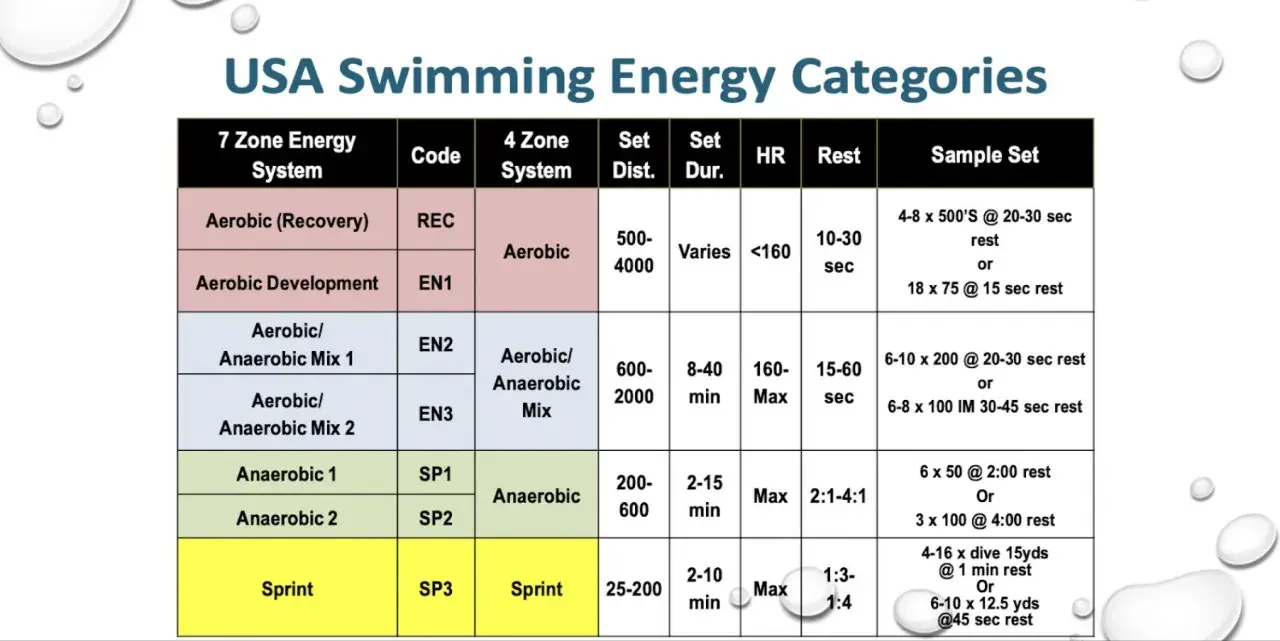
Key points for building speed without turning the set into a grind
- Keep the warm-up honest: 300-500m of easy swimming, mobility, and drills is enough to switch the body on.
- Use short, race-like efforts for the main work, usually 15-25m, 25m, or 50m with full recovery.
- In a 25m pool, turns and underwater work matter almost as much as the swim itself.
- Most swimmers do better with one or two speed-focused sessions a week than with repeated all-out sets on tired legs.
- When stroke quality falls apart, the set is finished, even if the send-off still looks generous.
What sprint swim workouts should actually do
I think of sprint work as a skill session under pressure. You are training the nervous system to fire quickly, the body line to stay tight, and the stroke to remain efficient when the water feels fast. That is very different from simply doing a hard swim and hoping fatigue will somehow create speed.
The useful distinction is between pure speed, race-pace work, and speed endurance. Pure speed is the shortest and freshest work: very short bursts with enough recovery that every rep still feels sharp. Race-pace work is a little longer and teaches you to repeat the speed you would actually use in competition. Speed endurance sits between the two, and it has value, but it should not replace the fast, fresh repeats that make sprinting faster in the first place.That is why I rarely judge a session by how exhausted it feels at the end. I judge it by whether the swimmer stayed quick, clean, and repeatable. Once that difference is clear, the workout design becomes much easier.
How to build the session so speed stays high
I usually build a speed session in four blocks. That keeps the work specific and stops the main set from drifting into slow, breathless mileage.
| Block | Typical volume | What it should feel like | Why it matters |
|---|---|---|---|
| Warm-up | 300-500m | Easy aerobic swimming, a little drilling, light kicking or pulling | Raises body temperature and gets the stroke moving without fatigue |
| Priming | 150-400m | Short 25-50m repetitions at race pace or slightly faster | Prepares the nervous system and rehearses turns, breakouts, and rhythm |
| Speed set | 25-100m repeats | Maximal intent with full recovery, usually 60-90 seconds or more | Lets every rep stay fast enough to train true speed |
| Cool-down | 200-400m | Easy swimming and relaxed breathing | Brings the body back down without adding more strain |
For many masters and club swimmers, that produces a useful 45- to 60-minute session rather than a long aerobic slog. I prefer that because quality drops fast when the pool work gets too long. If you only have enough energy for 20 minutes of real speed, I would rather keep the set short and clean than stretch it into sloppy survival work. With the structure in place, the next step is choosing the right session for your level.
Three pool sessions you can rotate through
These are not magic sets. They are practical templates that keep the fast work honest and give you a clear target for each session. Use metres rather than yards in the UK, and adjust the rest slightly if your pool traffic, lane space, or fitness level demands it.
| Session | Main set | Best for | Approx length |
|---|---|---|---|
| Crisp 25s | 4 x 50 drill/build, then 8 x 25 fast from a push on generous rest, then 4 x 50 easy | Reintroducing speed after a break, or keeping technique sharp early in the week | About 1,200-1,400m |
| Race-pace 50s | 4 x 25 breakout practice, then 6 x 50 at target pace with enough rest to hold form, then 4 x 25 all-out | 100m and 200m swimmers who need repeatable pace rather than one-off bursts | About 1,400-1,700m |
| Power focus | Short start or push-off work, 4 rounds of 25m max effort plus a long easy swim, then short fast fin work if available | Advanced swimmers who already own good body line and can keep mechanics intact under pressure | About 1,600-1,900m |
The key is not the exact order of the repeats. The key is whether you can keep the last rep close to the first one. If the times fall off badly, or the stroke starts to unravel, the session has already told you what you needed to know. The technical details decide whether those metres are genuinely fast or just loudly effortful.
Why turns, breakouts, and stroke rate matter so much
In a 25m pool, the sprint is never just the swim. The turn, push-off, underwater line, and breakout can decide a lot of the race before the first full stroke even settles. That is one reason UK pool training should respect the walls instead of treating them as a quick pause.
- Streamline matters because a tight line off the wall buys free speed for several metres.
- Breakout timing matters because the first stroke should connect smoothly to the underwater kick instead of fighting it.
- Stroke rate matters because sprinting is about moving the arms quickly without losing water feel; stroke rate means strokes per minute.
- Breathing pattern matters because panic breathing disrupts rhythm, but breath-holding for the sake of it is not the answer either.
- Kick action matters because fast legs stabilise the body and keep the catch from slipping.
- Turn speed matters because a slow flip or open turn can erase a great breakout in a single second.
If you want a simple gear choice, short fins are usually the most useful. They help you keep the body line long while still feeling speed through the feet. Paddles and drag tools can help later, but I would only lean on them when the stroke already holds together at pace. Speed only improves when the body can absorb it, which is why recovery matters so much.
How often to train speed and how to recover properly
For most recreational swimmers and masters athletes, one or two true speed sessions a week is enough. Competitive swimmers can handle more, but only if the rest of the week is organised around easy swimming, technical work, and sensible recovery. I would rather see two high-quality sessions than three mediocre ones that leave the swimmer stale.
As a rule of thumb, leave at least 24 to 48 hours between hard sprint sessions. If you are also lifting, keep the gym work supportive rather than exhausting. Strength training helps, but it has to complement the pool plan, not compete with it. The best dryland work for sprint swimmers usually targets core control, shoulders, hips, and the ability to produce force quickly.Recovery is not glamorous, but it decides whether the next session is actually fast. Carbohydrates matter because hard sprint work still burns through fuel quickly, and protein helps repair the tissue that takes the load. I also like to see swimmers hydrate early, not only after they are already flat. A short loosen-up swim, some mobility, and decent sleep often do more for speed than another pointless hard set.
If a taper is coming, reduce the total metres and keep a few short, sharp efforts in the mix. You want to arrive fresh enough that the speed still feels available, not buried under accumulated fatigue. Even good recovery cannot rescue poor session design, though, and that is where swimmers waste the most time.
The mistakes that quietly kill speed
- Making every set too long. Once the main work becomes a conditioning block, it stops teaching true speed.
- Resting too little. If you cannot hold form, the rep is no longer fast enough to matter.
- Swimming 100s as if they were sprints. They can have a place, but they are not a substitute for short, explosive work.
- Ignoring the walls. In a short-course pool, sloppy turns and lazy breakouts are expensive.
- Chasing equipment before skill. Fins, chutes, and paddles are useful, but only when the stroke line is already stable.
- Not watching times or stroke count. If you never measure quality, you will not notice when the session has drifted.
I also think swimmers underestimate the value of stopping while the rep quality is still good. A session that ends with fast, repeatable strokes is usually more valuable than one that limps to the finish line. A simple checklist keeps the next pool session honest.
What I would keep on the poolside card
- Warm up for 300-500m before asking the body to move fast.
- Use 150-400m of priming work to switch on race rhythm.
- Keep the fastest work short, usually 25m to 50m, with real recovery.
- Protect the turn, breakout, and body line, especially in a 25m pool.
- Stop adding speed when the stroke begins to look like survival swimming.
The cleanest speed sessions are rarely the longest ones. They are the ones where every rep is sharp enough to teach something, and every choice in the set supports that goal. Keep the work short, rest properly, and let the stopwatch reward the quality rather than the suffering.