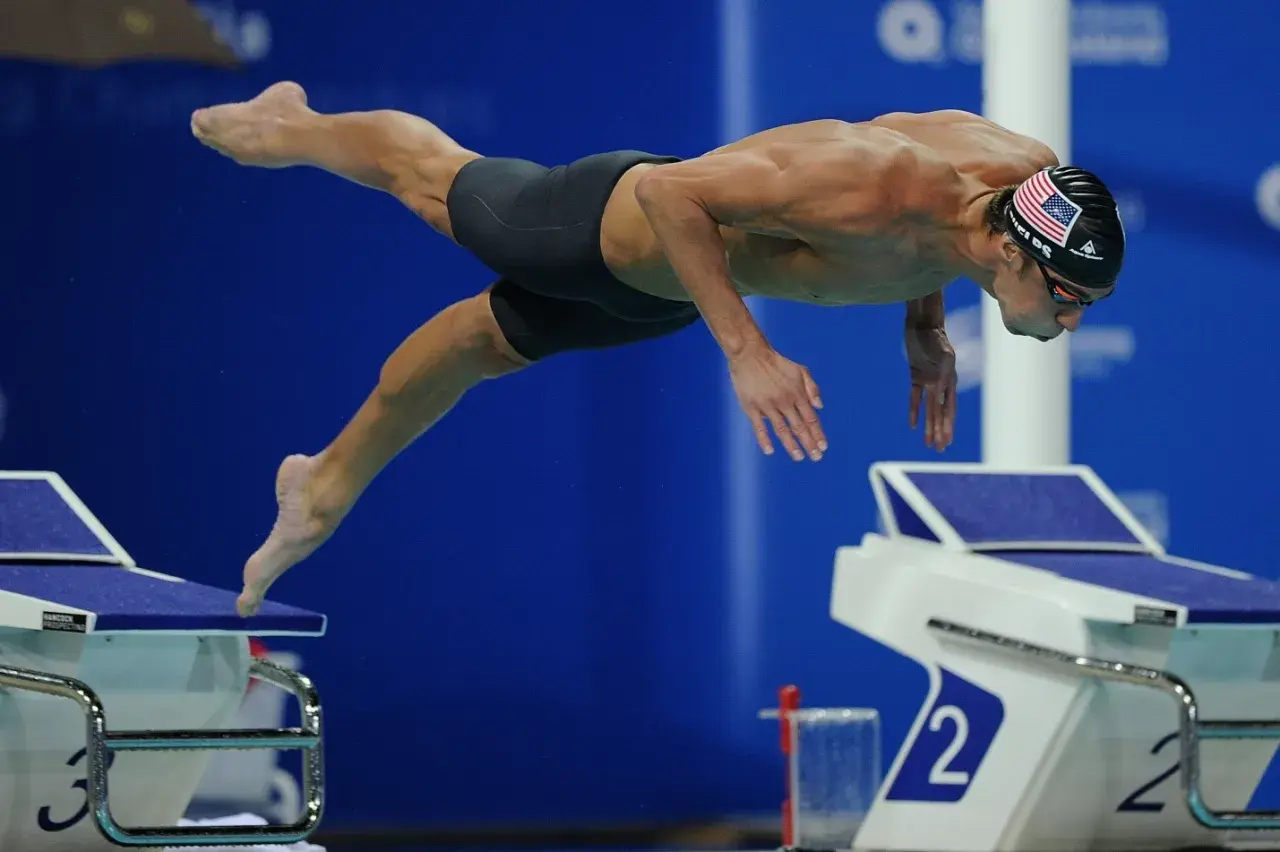
Key points to know about Phelps’ resting heart rate
- The figure most often reported for Phelps is around 38 bpm at rest, with some older coverage placing it in the low 30s.
- A low resting heart rate is usually a sign of strong aerobic adaptation, not a magic performance number on its own.
- Swimming can produce a slightly lower heart-rate response than land-based exercise because of water pressure, body position, and cooling.
- For training, I would track your own baseline trend, not try to copy an elite outlier.
- If a low heart rate comes with dizziness, fainting, chest pain, or unusual fatigue, it deserves medical attention.
What his resting heart rate really means
The number most often attached to Phelps is a resting heart rate of about 38 beats per minute. Some older articles describe it as being in the low 30s, so I treat the figure as an approximate range rather than a lab-certified constant. That matters, because resting heart rate shifts with sleep, stress, hydration, illness, medication, and even the time of day you measure it.
For context, the American Heart Association puts most adults in the 60 to 100 bpm range, while the British Heart Foundation notes that very fit athletes can sit below 60 without that automatically being a problem. That is why Phelps’ number stands out: it sits well below the norm, but it also fits the pattern you see in highly trained endurance athletes.
| Group | Typical resting heart rate | What it usually suggests |
|---|---|---|
| Most adults | 60-100 bpm | Normal general range, though individual baseline matters |
| Very fit recreational athletes | 40-60 bpm | Often a sign of good cardiovascular conditioning |
| Elite endurance athletes | 30-45 bpm | High stroke volume and strong aerobic adaptation |
| Michael Phelps | Commonly reported around 38 bpm | Elite-level efficiency, but still only one piece of the performance picture |
The key point is simple: a low number does not make someone a better swimmer by itself. It usually reflects a heart that can move more blood per beat, which is useful, but it still has to be paired with technique, power, pacing, and recovery. That leads straight into why swimmers often show unusual heart-rate profiles in the first place.
Why swimmers often show lower numbers
Swimming changes the heart-rate response in ways that land-based athletes do not always expect. In the pool, the body is horizontal, water pressure helps blood return to the chest more efficiently, and cooling reduces some of the strain you would feel in hot, upright exercise. The result is a lower heart-rate response at a given effort for many swimmers.
I think the easiest way to understand this is through stroke volume, which is the amount of blood the heart pumps with each beat. When stroke volume improves, the heart does not need to beat as often to deliver the same amount of oxygen. That is one reason elite swimmers can look so calm on a watch while still producing very hard efforts.
- Cardiovascular adaptation - years of aerobic training make the heart more efficient.
- Hydrostatic pressure - water supports blood return and changes how the circulatory system behaves.
- Body position - being horizontal changes the workload compared with running or cycling.
- Cooling effect - water usually reduces heat strain, which can keep heart rate lower.
- Sport specificity - swimmers often build a mix of aerobic base and repeated sprint ability, not just one energy system.
That is why a swimmer’s heart rate in the pool should never be read in isolation. The same effort can look different in water than it does on land, and that difference becomes very visible when you compare elite swimmers with runners or cyclists.

How to use heart rate data in swim training
The real value of Phelps’ numbers is not imitation. It is perspective. If you swim regularly, heart rate is best used as a feedback tool that tells you how your body is coping with load, recovery, and fatigue.
Here is how I would use it in practice:
- Track your morning baseline - check your resting pulse under the same conditions each day, ideally before caffeine and before you get out of bed.
- Watch trends, not single readings - one odd day means little; a sustained jump from your normal baseline is more useful.
- Use swim-specific zones - a running max heart rate does not map perfectly to the pool.
- Pair heart rate with pace - in swimming, pace, stroke count, and feel often tell you more than the watch alone.
- Respect recovery weeks - if your resting rate creeps up and your legs feel flat, the problem may be accumulated fatigue rather than poor fitness.
A useful technical term here is critical swim speed, or CSS, which is the fastest pace you can hold repeatedly without blowing up. I like CSS because it anchors training to swimming performance, while heart rate tells you how costly that pace is for your body. Together, they give you a much clearer picture than either metric alone.
In other words, Phelps’ low resting rate is a reminder that elite swimming is built on both engine and efficiency. Next, the practical question is how to measure your own numbers without fooling yourself.
How to measure it without fooling yourself
Resting heart rate is only useful if the measurement is clean. The easiest way is to take it first thing in the morning, at the same time each day, after a few minutes of stillness. A full 60-second count is more reliable than a rushed 15-second estimate, especially if you are trying to spot small changes over time.
- Measure before you stand up, talk, drink, or check your phone.
- Use the same position each time, ideally lying down or seated in a consistent posture.
- Repeat it over several mornings and average the results.
- For pool sessions, remember that wrist sensors can drift when you are moving, gripping the wall, or pushing off.
- If you want more precision during training, verify your wearable against a manual pulse check once in a while.
Swimming adds another layer of complexity. A heart-rate reading taken in the pool can be lower than the same effort on land, and devices may lag when your hand is underwater or when motion is irregular. That is why I would not make major training decisions from a single lap-by-lap number. The pattern across the session matters more.
If you are using heart rate to judge a hard set, combine it with pace, breathing rhythm, and how quickly you recover between repeats. Those three clues usually tell a truer story than the watch on its own, especially in technical work or mixed sprint sessions.
When a low heart rate is normal and when it needs a GP check
A low resting heart rate can be perfectly normal in a trained swimmer. It becomes more interesting when it appears without training context or when it comes with symptoms. Bradycardia simply means a heart rate below 60 bpm, but low numbers are not automatically a problem in fit people.
What changes the picture is how you feel. The British Heart Foundation points out that a slow heart rate can be normal for very fit people, but symptoms should not be ignored. If you have repeated dizziness, fainting, chest pain, unusual tiredness, breathlessness, palpitations, or a sudden drop in performance, that is worth discussing with a GP.
- Normal in context - you train regularly, feel well, and recover normally.
- Worth checking - your rate is low and you also feel weak, light-headed, or unusually tired.
- More urgent - low heart rate is paired with fainting, chest pain, or shortness of breath.
- Medication matters - beta blockers and some other drugs can lower heart rate.
- Recent illness matters - infection, dehydration, and poor recovery can distort your baseline.
The useful distinction is not “low equals good” or “low equals bad”. It is whether the number matches your training status and whether your body is behaving the way it should. That is the same logic I would use when reading Phelps’ profile: impressive, yes, but still part of a bigger performance and health picture.
The real lesson for swimmers in 2026
The smartest takeaway from Phelps is not to obsess over a specific bpm. It is to build the kind of training environment that improves efficiency over time: enough aerobic work to raise stroke volume, enough speed to stay sharp, and enough recovery to let adaptation actually happen.
- Compare yourself with your own baseline, not with a once-in-a-generation Olympian.
- Use heart rate as a recovery and load signal, not as the only measure of fitness.
- Keep pace, stroke quality, and session feel in the conversation.
- Remember that swimming heart rates are often lower than land-based numbers for good physiological reasons.
For me, that is the useful way to read Michael Phelps’ heart rate: as evidence that consistent, high-quality work can reshape the cardiovascular system, but never as a shortcut or a trophy metric. If your goal is to swim better, the target is not a famous number; it is a stronger, calmer, more repeatable body in the water.
