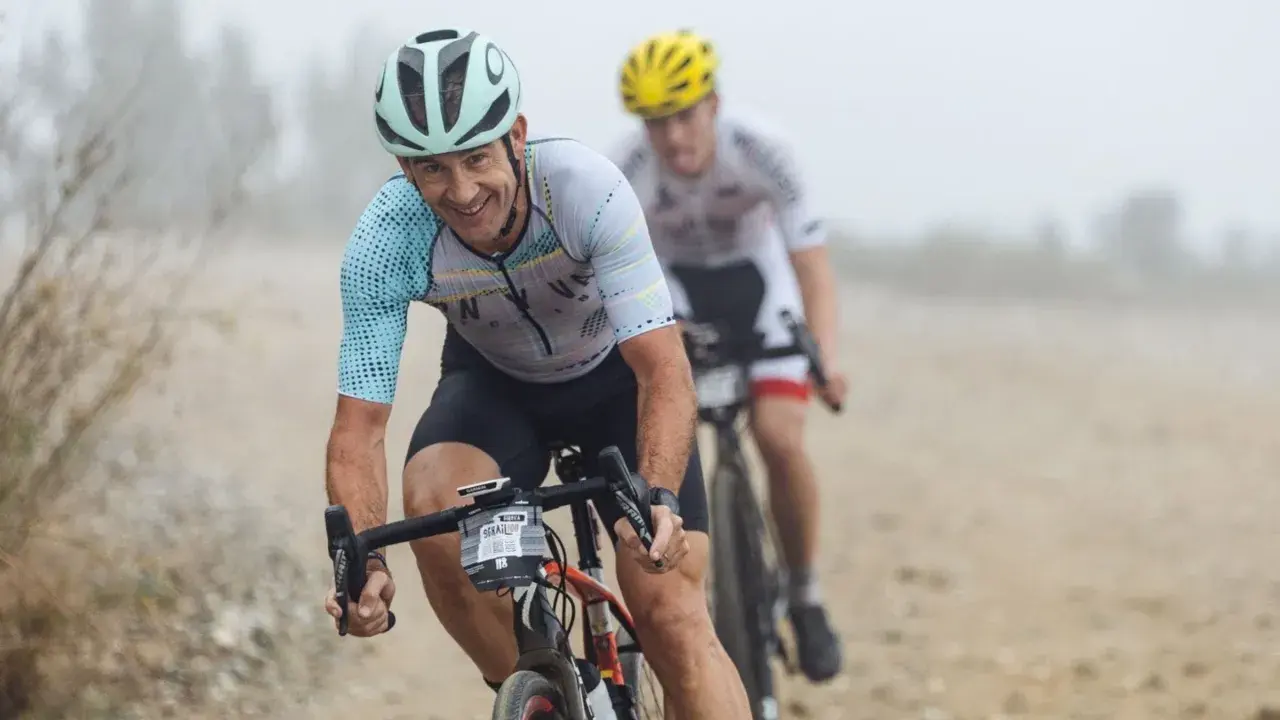
A gravel triathlon sits between road triathlon and off-road racing: you still swim, ride, and run, but the middle leg forces you to handle loose surfaces, changing traction, and a bike setup that is more forgiving than pure aero. I’ll break down what the format really demands, how to choose the right equipment, and how to train so the roughest part of the course does not become the most expensive one. If you want a race that feels familiar but asks sharper decisions, this is the right place to start.
The race stays familiar, but the bike leg changes everything
- The swim and run are usually straightforward; the bike leg is where the race changes character.
- Most athletes do best on a gravel bike with tires in the 35-45 mm range, then fine-tune pressure for the course.
- Handling skills matter almost as much as fitness once the surface gets loose or washboarded.
- Training should include at least one weekly brick and one ride that mimics the actual surface.
- Flat prevention, pacing, and clean cornering are often worth more time than an extra aero upgrade.
What changes when the bike leg moves onto gravel
The simplest way to think about this format is that it is still triathlon, but the bike leg stops rewarding pure road speed and starts rewarding control. On pavement, you can usually settle into a rhythm quickly; on gravel, you are constantly choosing lines, managing vibration, and deciding how much pressure to trust in the tires.
In the U.S., USA Triathlon now runs a Cross & Gravel Series, which tells me the format has moved well past novelty. That matters because it means more events, clearer rules, and a deeper field of athletes who actually know how to race on rough surfaces. Distances still vary, but most events stay closer to sprint or Olympic style than to long-course endurance racing.
That difference changes everything downstream. If the course is loose, you need more stability. If it is firm and fast, you can lean back toward speed. Once that is clear, the next question is whether this kind of course suits the way you ride under pressure.
Why athletes like this format
I like gravel-based multisport because it rewards a more complete athlete. You cannot hide behind a perfectly aero position if the road is broken, and you cannot rely on brute power alone if the surface keeps asking for balance. For many racers, that is the appeal: the event feels tactical instead of mechanical.
It also creates a different kind of fairness. Strong runners and strong cyclists both get tested, but the rider who handles pressure, braking, and cornering well often gains time that never shows up in a power file. In practice, the race feels a little more adventurous and a little less polished than a standard road triathlon, which is exactly why it stays memorable.
The trade-off is obvious: if you ignore handling, the course will punish you. That is why gear choice matters so much, and why I would not treat equipment as a side note.

How to choose the right bike and tires
For most athletes, a gravel bike is the best default choice. It gives you enough stability for rough corners, enough clearance for wider tires, and enough efficiency to keep the bike leg fast when the course is only moderately technical. A mountain bike becomes the smarter option when the route is rocky, deeply loose, or packed with hard braking and sharp turns. A road bike only makes sense on very firm, very smooth gravel, and even then it is a compromise.
| Option | Best for | Strengths | Limits |
|---|---|---|---|
| Gravel bike | Mixed courses with firm to moderately loose surfaces | Balanced speed, control, and tire clearance | Less forgiving than a mountain bike on very rough ground |
| Mountain bike | Technical or rocky courses with poor traction | Stability, comfort, and flat resistance | Heavier and usually slower on fast, rolling courses |
| Road bike | Rare, fast hardpack routes with minimal loose material | Fast on smooth terrain | Higher puncture risk and less control |
My practical starting point is this: choose wider tires than you would on road tri, and do not overinflate them. Many athletes land somewhere around 35-45 mm on a gravel bike, then move wider if the surface is loose or chattery. If you run tubeless, you can usually afford a little more comfort and a little less pressure; that matters because traction and puncture resistance are often worth more than a tiny wattage gain.
Also pay attention to gearing. If the course has short climbs, soft turns, or washboarded sections, a lower climbing gear is better than a tall setup that forces you to grind. Once the bike is stable, the real work starts in training.
How to train for the swim, bike, and run
I would not reinvent the swim just because the bike leg is different. The swim still needs to be efficient, calm, and repeatable. What changes is the goal: you want to arrive at the bike with enough control left in the system to handle rougher terrain without spiking your effort in the first five minutes.
Swim
Two sessions a week is enough for many age-group athletes, provided one session focuses on technique and one on sustained pace. In open water, practice sighting every 6 to 10 strokes if buoys are hard to see, and rehearse a controlled start so your heart rate does not jump before the race has really begun. If wetsuits are legal on your course, test yours in training; the fit and shoulder feel can change how fresh you are for the bike.
Bike
This is where specific preparation pays off. I like one ride that looks like the race surface, one ride that builds endurance, and one short handling block every week or two. That handling block can include cornering, braking before turns, standing up on loose climbs, and riding a little slower than usual without losing balance. If you only train on pavement, the first rough descent will expose it immediately.
Read Also: 10-Week Sprint Triathlon Plan - Finish Strong, Not Just Survive
Run
The run is usually not the technical problem, but it becomes harder when the bike leg has beaten up your legs. Brick sessions help here because they teach you to run straight after vibration, braking, and uneven cadence. Even a 15- to 20-minute run off the bike can show you whether your pacing is realistic.
A simple weekly pattern works well for many athletes: two swims, two to three rides, two runs, and one brick. That is enough to prepare most short- to middle-distance events without overloading the body. Once the training rhythm is in place, race-day decisions become much easier to trust.
Race-day decisions that save time on rougher courses
The biggest mistake I see on off-road courses is not bad fitness. It is impatience. Athletes come out of the swim fired up, hit the bike too hard, and then spend the rest of the ride paying for it in braking, overcorrection, and sloppy line choice.
I would ride the first 10 minutes more conservatively than feels natural. Let the heart rate settle, let the tires tell you what they can grip, and only then start pushing. On loose corners, brake earlier, stay light on the bars, and keep your eyes farther ahead than you would on pavement. The bike usually goes where your vision goes.
- Corner before the apex, not on top of it.
- Stay seated on loose climbs when traction is poor.
- Use smooth pressure on the pedals instead of stomping.
- Fuel early enough that you are not trying to digest hard efforts at the same time.
- Carry a setup you can trust more than one you only hope will be fast.
The mistakes I see most often
Most of the damage on rough courses comes from a handful of predictable errors. They are easy to avoid once you know what to watch for, but they show up again and again because athletes prepare for the race they want, not the race they actually have.
- Running too much tire pressure, which makes the bike skitter and increases fatigue.
- Choosing tires that are too narrow for the surface.
- Using road gearing that forces a grind on climbs.
- Ignoring flat repair because the course does not look that rough.
- Practicing only steady-state power and skipping handling work.
- Trying to make up time in the first half of the bike leg and fading badly later.
The pattern is consistent: athletes lose more time to control issues than to pure fitness gaps. If you fix the setup and the pacing, the course suddenly feels much more manageable.
The cleanest way to line up for your first off-road multisport start
If this is your first attempt, I would keep the plan deliberately simple. Pick a shorter course, choose the most stable tire setup you can justify, and test your pressure, shoes, and fueling before race week. One or two training rides on similar terrain will teach you more than a week of guessing.
- Start with a sprint distance or the shortest course available.
- Ride the surface beforehand if the event allows course recon.
- Test tire pressure on the exact terrain you expect to race.
- Practice one mount, one dismount, and one clean transition with grit in the shoes.
- Keep the first race focused on control, not heroics.
For your first gravel triathlon, the goal is not to prove that you can survive anything; it is to learn how the surface changes your swimming, riding, and running decisions so the next start feels controlled from the first stroke to the final step.
