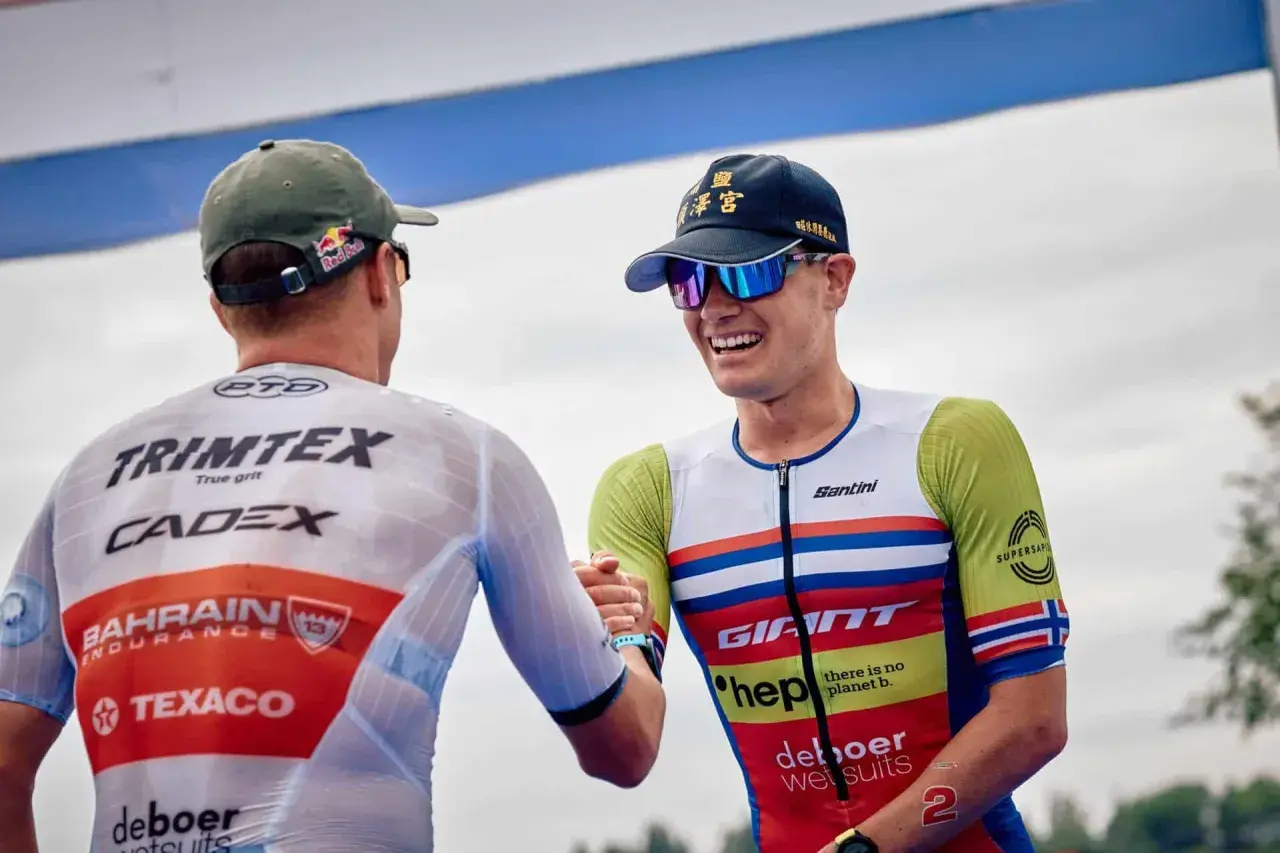
Gustav Iden is one of the clearest examples of how elite triathlon is won by balance, not by a single spectacular split. I read his career as a lesson in front-pack swimming, controlled bike pressure, and a marathon that still works after hours of fatigue. This article breaks down who he is, what his results say in 2026, and what swimmers and triathletes can actually learn from the way he races.
The main things to know about his race profile
- He is a proven championship-level triathlete with titles across both middle and long distance racing.
- World Triathlon traces his rise from Bergen, through junior success, to World Cup and championship-level consistency.
- His best-known win is the 2022 world title, built on a 2:36:15 marathon and a controlled all-round race.
- In 2025 and early 2026 he remained highly relevant, with results that kept him inside the top tier.
- The biggest lesson for age-group athletes is not to copy his volume, but to copy his efficiency.
The core facts that shape his profile
World Triathlon's profile traces his path from Bergen, where he won Norwegian triathlon and duathlon titles in 2014, to a junior top-10 in Chicago and a first World Cup gold in Karlovy Vary in 2017. That matters because it shows a progression built on repeated proof, not a one-off peak. When I look at athletes like this, I care less about the medal count than the shape of the climb: steady, then sharper, then world-class.
For readers, that is the first useful clue about Iden. He is not just a strong runner or a good swimmer; he is a complete triathlete who learned how to make every leg support the next one. That balance becomes clearer when you look at the results from his last two seasons.
What his recent results say about his form
IRONMAN's athlete profile shows an uneven but still serious start to 2026: 8th in Texas in 7:30:48 and 12th at Oceanside in 3:46:16. More telling to me are the 2025 results that sit just behind them, because they show the level he is still capable of reaching when the day comes together: 2nd at the World Championship, 4th in Frankfurt, and a podium at Oceanside.
| Race | Result | What I read into it |
|---|---|---|
| 2025 World Championship | 2nd, 47:14 swim / 4:30:17 bike / 2:32:16 run | Still good enough to contend on the biggest stage. |
| 2025 Frankfurt | 4th, 49:33 swim / 4:00:20 bike / 2:38:54 run | Competitive across all three legs, even without a win. |
| 2026 Texas | 8th, 50:09 swim / 3:55:46 bike / 2:40:11 run | Solid current form, not peak form. |
| 2026 Oceanside | 12th, 24:03 swim / 2:04:28 bike / 1:12:59 run | A reminder that one race never defines the whole season. |
The pattern is more important than any single result. He is still living close to the front of the sport, which is why the swim and run details matter so much.

The swim is his platform, not his whole identity
The swim is not his whole identity, but it is his platform. In his 2022 world title, he came out with the lead group, which meant the rest of the race started on his terms. For long-course triathlon, that is the real swim advantage: you do not need to dominate the leg, but you do need to exit with enough freedom to race the bike properly.- Practise starts so you can settle into rhythm quickly instead of fighting the pack.
- Use sighting drills and buoy turns to reduce wasted metres in open water.
- Train drafting awareness so you can sit on feet without drifting off pace.
- Keep some short, hard pool efforts in the programme to rehearse pace changes under stress.
What I take from that is simple: better open-water swimming is often about fewer errors, not more heroics. Once the swim is tidy, the next race is usually decided by how much speed you can preserve for the marathon.
Why his marathon changed the conversation
The headline statistic from Kona is still the 2:36:15 marathon. That is the number that changed the conversation around him, because it showed that a controlled bike and disciplined fuelling can unlock a run that looks almost unreal for a long-course race. I would not copy that pace blindly; I would copy the principle behind it, which is that the final 10 to 15 kilometres are usually won by restraint earlier in the day.
For anyone building toward long-course racing, the useful tools are boring but effective: a brick session to rehearse the transition, race-pace intervals that teach you not to panic, and a fuelling plan you can execute when breathing gets messy. A brick session is simply a bike-then-run workout, and it is the closest thing to a rehearsal triathlon athletes have.
- Use bike segments that stay hard but controlled, because hero pacing is where marathon splits fall apart.
- Rehearse your run cadence after cycling so the transition does not shock your legs.
- Practise fuelling early in the ride, not after you start feeling flat.
The lesson here is not to chase a spectacular final split; it is to keep the first two legs honest enough that the run remains a race, not a survival exercise.
What UK age-group athletes can borrow without copying pro volume
For UK age-group athletes, the smartest move is to copy the structure, not the total load. I would rather see two purposeful swims per week, one bike session with genuine threshold work, one brick run, and one open-water session whenever the weather allows than a vague promise to train more. In colder British conditions, a well-fitting wetsuit and goggles that do not leak are often worth more than another flashy accessory.
| Pro habit | What it means | How to adapt it in the UK |
|---|---|---|
| Front-pack swim positioning | Start the bike with options, not damage control. | Build one technical swim and one open-water swim into most weeks. |
| Sustained bike pressure | Stay strong without burning the run. | Use one threshold session and one longer endurance ride each week. |
| Fast off the bike | Turn good pacing into a usable marathon. | Add a short brick run after your hardest ride. |
| Precision with equipment | Remove friction where it matters most. | Prioritise wetsuit fit, seal of the goggles, and race-day fuelling. |
The catch is simple: if you copy the volume without the recovery, you get tired, not faster. His style rewards discipline, but it also rewards honesty about what your week can actually absorb.
What his 2026 season says about racing at the top level
What his 2026 season already tells me is that elite triathlon has become deep enough that even proven champions must keep rebuilding form. A mixed spring does not erase championship quality, and a podium history does not guarantee the next one. That is a useful reminder for age-group athletes too: judge progress in blocks, not by one race or one bad morning.
If you are studying him for performance reasons, the real takeaways are efficiency, composure, and patience. Those three things travel well from pro racing to pool sessions, open-water swims, and Ironman preparation in the UK.
For me, that is why this athlete still matters: he is not just a former winner, he is still a live example of how the best long-course racers build speed that lasts beyond the first hour. If you want to improve your own triathlon performance, start by making the swim cleaner, the bike calmer, and the run less dependent on rescue efforts at the end.