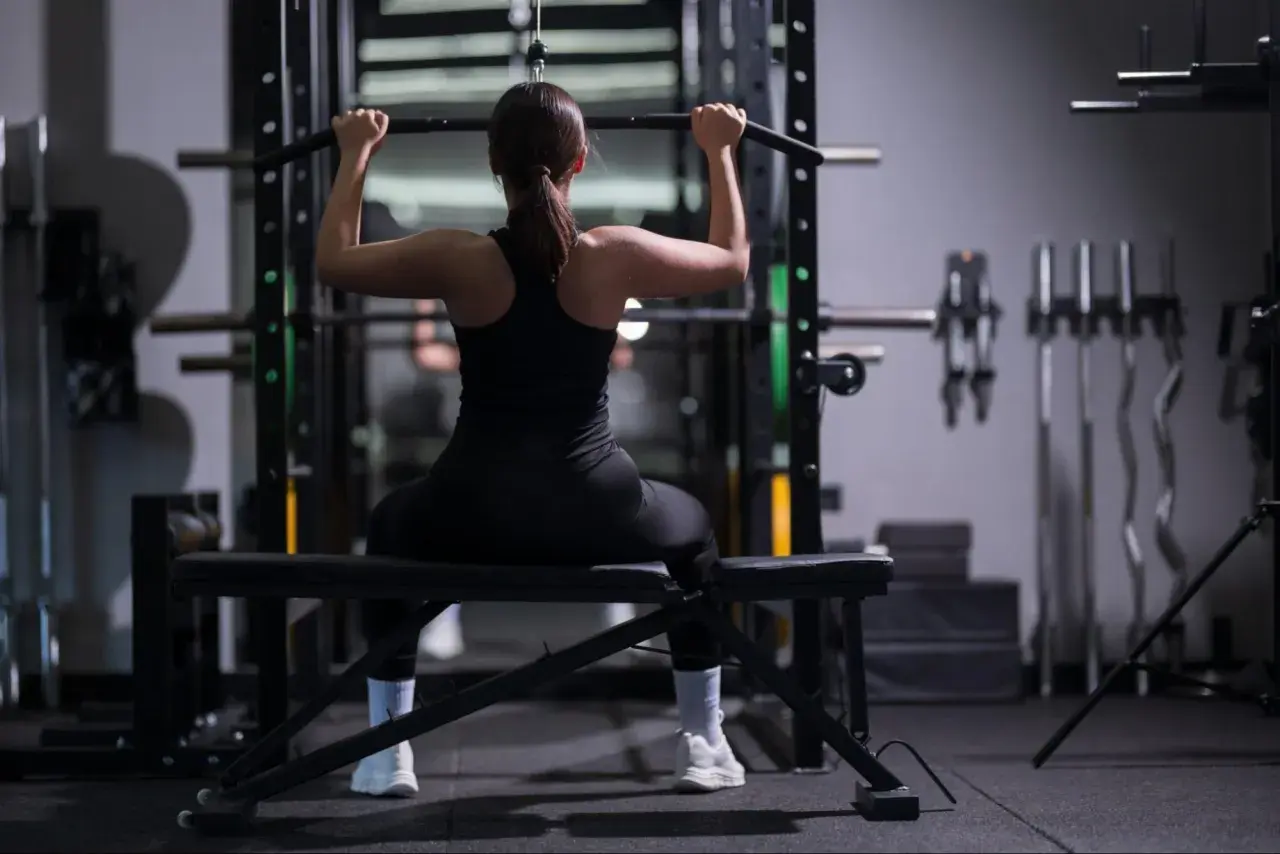
Triathlon rewards athletes who can keep producing force when fatigue is already high. If your swimming posture sags, your bike position collapses, or your run form turns into survival mode, endurance alone will not fix it. This guide to weight training for triathalon athletes focuses on the lifts, weekly structure, and timing choices that build strength without stealing freshness from swim, bike, and run.
What matters most before you touch the barbell
- Strength work helps triathletes hold form longer, especially on the run and during the late stages of a race.
- The best return usually comes from split squats, hinges, rows, presses, calf work, and trunk stability.
- Two focused sessions a week is a solid baseline; in peak race blocks, one maintenance session may be enough.
- Keep most sets controlled and stop before failure so lifting supports, rather than replaces, endurance training.
- Stack hard gym work away from key run sessions and long bricks when fatigue management matters most.
Why strength work belongs in triathlon
Strength training is not there to compete with endurance work. It is there to make every stride, pedal stroke, and pull slightly more efficient. Research on trained endurance athletes suggests that lifting can improve economy, power, and time-trial performance, which is exactly why I treat it as performance support, not an optional add-on. Here, economy simply means holding the same pace at a lower energy cost.British Triathlon's coaching material points toward single-leg, double-leg, posterior-chain, and upper-body pulling work for a reason. By double-leg work, I mean the usual bilateral lifts like squats and deadlifts. By posterior-chain work, I mean the muscles on the back of the body, especially the glutes, hamstrings, and lower back. Those patterns map cleanly to triathlon demands: one leg at a time on the run, a strong hip hinge for posture and drive, and enough upper-back strength to stay stable in the swim and on the bike.
- Run durability - stronger hips and calves help you keep shape when cadence drops late in the race.
- Bike stability - a better trunk and posterior chain help you hold position without excessive wobble.
- Swim posture - pulling strength and shoulder control support a cleaner catch and a less collapsed torso.
That is the real value: not becoming a powerlifter, but removing the weak links that cap your endurance. Once that is clear, the next step is choosing the right exercises.

The exercises that give the best carryover
I would rather see a triathlete do six useful movements well than chase a long list of random gym exercises. The goal is to train the patterns that transfer best to racing, with enough load to matter and enough control to keep recovery under control.
| Movement pattern | Best options | Why it helps | Simple prescription |
|---|---|---|---|
| Single-leg squat | Split squat, rear-foot elevated split squat, step-up | Builds leg symmetry, pelvic control, and run stability | 3-4 sets of 5-8 reps each leg |
| Hip hinge | Romanian deadlift, trap-bar deadlift, single-leg RDL | Trains glutes, hamstrings, and back strength for posture and power | 3-5 sets of 3-6 reps on the main lift |
| Horizontal or vertical pull | Chest-supported row, pull-up, lat pulldown | Supports swim posture and upper-back endurance | 3-4 sets of 6-10 reps |
| Press | Push-up, dumbbell bench press, landmine press | Improves shoulder resilience without needing huge volume | 2-4 sets of 6-10 reps |
| Calf and ankle work | Standing calf raise, seated calf raise, quick ankle hops | Helps running stiffness and lower-leg durability | 3 sets of 8-15 reps |
| Trunk stability | Pallof press, side plank, dead bug, carries | Creates force transfer between upper and lower body | 2-4 short sets with clean positions |
By trunk work, I mean anti-rotation and anti-extension drills: exercises that teach your torso to resist unwanted movement rather than collapse under load. The biggest mistake I see is treating the gym like a place for novelty. If a movement does not improve one of these patterns, I usually leave it out. The next question is how to fit those lifts into a triathlon season without turning every week into a fatigue contest.
How to programme lifting through the season
The right dose changes with the training phase. In the off-season or early base block, I am comfortable with two to three full-body sessions per week, a little more volume, and moderate loads that let you practice good technique. Once bike and run volume rise, I trim the plan and keep only the work that still pays its way.
A practical baseline for most age-group athletes is two sessions a week. USA Triathlon also suggests at least twice-weekly strength training, and that matches what I see in real life: enough frequency to progress, not so much that recovery gets hijacked. That matters a lot for UK age-group athletes, where winter daylight, pool slots, and work schedules often make training weeks uneven.
| Phase | Goal | Typical dose | What I would avoid |
|---|---|---|---|
| Base | Build general strength and movement quality | 2-3 sessions, 3-5 sets of 5-8 reps on main lifts | Training to failure or chasing soreness |
| Build | Keep strength rising while endurance volume grows | 2 sessions, heavier main lifts with fewer accessory sets | Long circuits that turn lifting into cardio |
| Peak and race season | Maintain strength with minimum effective volume | 1-2 short sessions, reduce total sets by about one-third to one-half | Hard lower-body work within 24-48 hours of key run sessions or races |
I also like to stack stress on the same day when needed. If a Tuesday already holds a hard swim or bike interval session, I would rather place the gym work there and keep the following day genuinely easier. That pattern protects recovery days and makes weekly planning less messy, which matters a lot for athletes juggling work, family, and limited pool time.
That schedule only works if the gym session itself stays disciplined, which leads straight into the question most triathletes worry about most: size, weight gain, and interference.
Why strength work does not have to make you bulky or slow
Triathletes often overestimate how easily they will add unwanted muscle and underestimate how much fatigue can hurt their endurance work. In practice, bulk comes from a combination of training volume, progressive overload, and eating enough to support growth over time. A few sensible lifting sessions do not automatically turn a runner or swimmer into a heavier athlete.
What usually causes problems is not extra muscle mass but poor programming. Endless accessory work, high-rep circuits, and constant sets to failure can leave the legs flat for key sessions. I would rather see a triathlete use heavier, cleaner compound lifts, a moderate amount of accessory work, and a nutrition plan that matches training load instead of accidentally drifting into a surplus.- If leanness matters, keep the lifting volume moderate and the exercise selection tight.
- If you are very run-focused, prioritise single-leg work, calves, and trunk stability before you chase extra pressing volume.
- If you are coming back from a break, start lighter than you think you need and build slowly for 3-4 weeks.
The point is simple: strength training should improve your power-to-weight ratio, meaning how much force you can produce for each kilogram you carry, and your durability, not compete with your race profile. Once you accept that, the session itself becomes easier to design.
A session template you can repeat
For most athletes, a clean 45- to 60-minute full-body session is enough. I prefer a structure that starts with a brief warm-up, moves into one main lift, then adds a small amount of single-leg, pulling, pressing, and trunk work. The whole point is to leave the gym feeling activated, not smashed.
Warm-up
Use 5-10 minutes of easy movement, then include ankle mobility, hip openers, glute activation, and a few ramp-up sets for your first lift. If your ankles or hips are stiff, fix that before loading the bar.
Main lift
Choose one big movement such as a front squat, trap-bar deadlift, or Romanian deadlift. Work in the 3-6 rep range for 3-5 sets, and stop with 1-3 reps in reserve. I would rather see crisp reps than ugly grinders.
Support work
Add one single-leg exercise, one pull, one press, and one trunk movement. A simple example is split squats, chest-supported rows, push-ups, and side planks. Keep rest periods sensible: about 2-3 minutes for the main lift and 60-90 seconds for accessories.
Read Also: First Triathlon Guide - Swim, Bike, Run Made Simple
Example session
- Trap-bar deadlift - 4 x 4
- Rear-foot elevated split squat - 3 x 6 each leg
- Chest-supported row - 3 x 8
- Landmine press - 3 x 8
- Single-leg calf raise - 3 x 12 each side
- Side plank - 2 x 30-45 seconds each side
If you only have 30 minutes, keep the main lift, one single-leg move, and one pull. That is usually better than trying to cram in everything and turning the session into a rushed compromise. The next section is where most of the real-world mistakes show up.
The mistakes that derail progress
- Going to failure too often - triathlon already creates a lot of fatigue, so grinding every set usually costs more than it gives back.
- Using too many exercises - more variety is not the same as more progress.
- Ignoring unilateral work - if one leg is weaker or less stable, the run eventually exposes it.
- Putting hard leg lifting before key endurance sessions - this is a scheduling error, not a toughness badge.
- Replacing strength with random circuits - sweat is not the same as adaptation.
- Changing the plan every week - the body needs repetition long enough to adapt.
I usually tell athletes to think in months, not workouts. A solid plan done consistently will beat a clever plan that never survives a busy week. That matters even more when the calendar is crowded with races, travel, and unpredictable recovery.
What I would do with limited time and a race calendar
If I had to simplify the whole approach for a busy triathlete, I would use this rule set. In base training, lift twice a week. In build blocks, keep one heavier session and one shorter support session. In the final race-specific weeks, preserve strength with the smallest dose that still keeps the body feeling switched on.
- Priority 1 - single-leg squat pattern
- Priority 2 - hip hinge
- Priority 3 - pull for posture and swim support
- Priority 4 - trunk stability and calf work
If gym access is unreliable, I would keep a small home kit: two dumbbells, a resistance band, and a pull-up bar or cable row option. That is enough to keep the important patterns alive between club sessions and races.
That order covers the greatest number of triathlon problems with the fewest moving parts. If you keep the sessions simple, recover from them properly, and protect the key swim-bike-run workouts around them, lifting becomes a genuine performance tool rather than a separate sport competing for your energy.