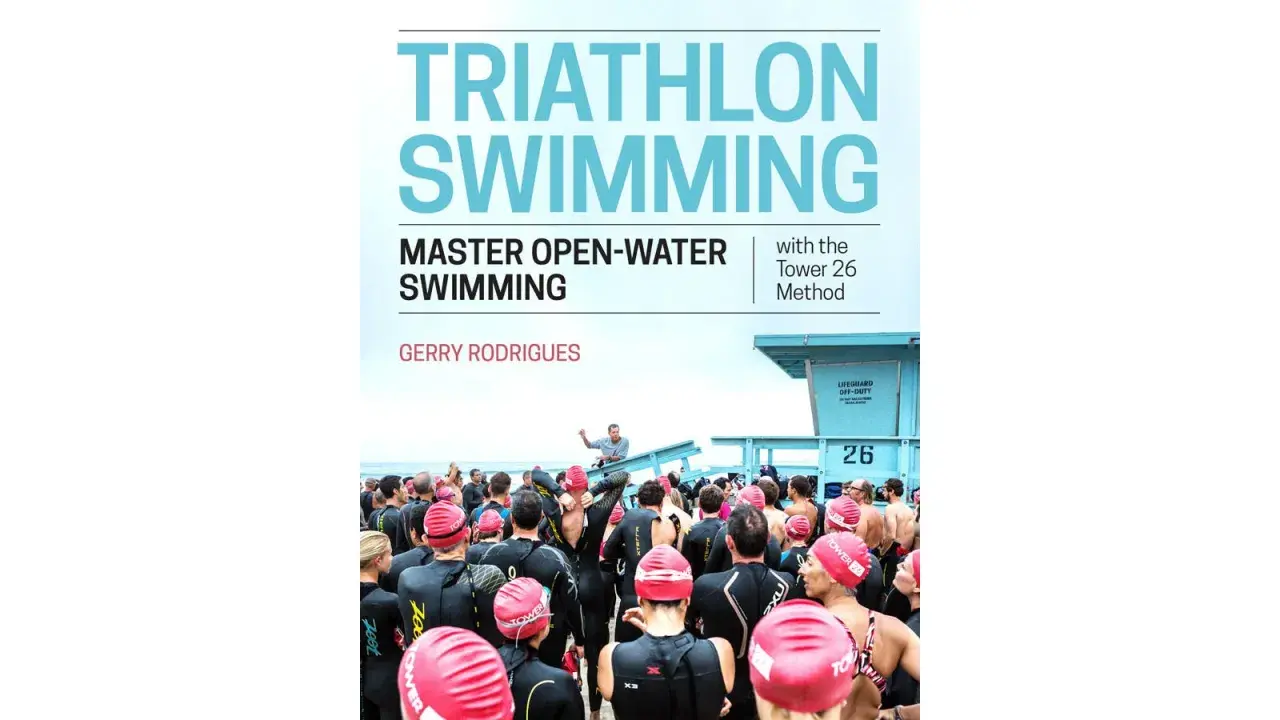
The right triathlon books can save months of trial and error because they turn a huge sport into a sequence of decisions you can actually use. The best ones help with planning, stroke efficiency, pacing, nutrition, and race-day confidence, but they are not interchangeable. If your swim is holding you back, if you are lining up for a first sprint, or if you want a cleaner season structure, the best read is the one that matches the problem in front of you.
The smartest way to read for triathlon is to match the book to your biggest limiter
- Start with one broad guide first, then add swim, pacing, or mindset titles only when they solve a real problem.
- Beginners need clarity on training, gear, transitions, and race day more than dense physiology.
- Intermediate athletes usually benefit most from training structure, intensity balance, and distance-specific plans.
- Swim-focused books matter because technique, breathing, and open-water confidence are hard to fix by guesswork.
- Two or three well-used books beat a shelf full of titles you never apply in training.
What a good triathlon book should solve first
When I look at this topic, I see four jobs a book can do. It can teach you how to train, fix a weak swim, sharpen race execution, or keep you mentally engaged long enough to stay consistent. That is why the search behind this topic is usually comparative and practical, not just literary.
| Reader goal | Best kind of book | What it should answer |
|---|---|---|
| First finish | Beginner-friendly guide | How to train, what to buy, how to get through transitions, and what race week should look like |
| Better swim | Technique-focused swim book | Why you lose speed in the water, how to breathe, how to sight, and how to build better mechanics |
| Stronger season | Training manual or plan book | How hard to train, when to recover, and how to structure blocks instead of improvising every week |
| More motivation | Memoir or race narrative | Why the sport matters, how elite athletes think, and how to stay committed when training gets dull |
That split matters because the best title for a first-time athlete is not the same as the best title for someone building a half-Ironman block. Once the job is clear, the shortlist gets much smaller, and that is where the useful buying decisions start.

Which titles deserve a place on your shortlist
If I were building a practical reading list in the United States, I would start with the books below. I am mixing straight training manuals, swim-specific titles, and one or two narrative books on purpose, because triathlon rewards both structure and perspective.
| Book | Best for | Why I recommend it | Where it falls short |
|---|---|---|---|
| Your First Triathlon by Joe Friel | First sprint or Olympic race | Friendly, practical, and built to reduce early overwhelm | It is not the book I would hand to an experienced self-coached athlete |
| The Triathlete's Training Bible by Joe Friel | All-around reference | A deep manual for season planning, weekly structure, and race preparation | It can feel dense if you want quick, plug-and-play plans |
| Your Best Triathlon by Joe Friel | Experienced triathletes | Advanced season guidance for athletes who already understand the basics | It makes more sense after you have a few races in your legs |
| 80/20 Triathlon by Matt Fitzgerald | Athletes who want a simple intensity rule | Clear advice on balancing easy work and harder work without overcomplicating training | It works best if you are disciplined enough to keep easy days truly easy |
| Triathlete Magazine's Essential Week-by-Week Training Guide | People who want ready-made schedules | Weekly plans and workout goals make execution easier than theory-heavy books do | It gives you structure, but not as much coaching philosophy |
| Swim Speed Secrets for Swimmers and Triathletes by Sheila Taormina | Swimmers who need more speed | Very focused help on freestyle mechanics and the underwater pull | It is narrow by design and does not replace a full race-planning manual |
| Swim Smooth: The Complete Coaching System for Swimmers and Triathletes | Technique-first athletes | Useful stroke analysis, drills, and open-water guidance | It is strongest when you are willing to test ideas in the pool, not just read them |
| A Life Without Limits by Chrissie Wellington | Motivation and mindset | A champion-level story that is still grounded and useful, not just glossy | It inspires, but it will not build your training plan for you |
If I were buying only two, I would pair one broad training manual with one swim-focused title. If I were buying three, I would add a book on intensity balance or weekly planning, because that is where many age-group athletes either gain control or drift into random training.
How I would choose by experience level
The right choice changes with experience, and I think that is where a lot of people waste money. They buy the most famous title instead of the one that matches their current season. A book that is perfect for a veteran Ironman athlete can be awkward for someone training for a first sprint.
First-time racer
If you are new, start with Your First Triathlon or another beginner-friendly guide that covers training, transitions, gear, and race week without assuming prior knowledge. For a first sprint, an 8-12 week build is often enough if you already have some base fitness. For an Olympic race, many athletes are better served by a 12-16 week focus.
In this stage, I would not obsess over advanced physiology. I would care more about consistency, confidence in open water, and having a simple plan that fits real life. That is usually the fastest route to a good first experience.
Self-coached age-grouper
If you already have a few races behind you, the best books become more strategic. This is where The Triathlete's Training Bible and 80/20 Triathlon make sense together: one gives you a broader framework, and the other gives you a clear rule for intensity distribution. The main win here is not inspiration. It is better decision-making week after week.
For a half-distance race, many athletes are looking at a 16-20 week build, depending on the size of the base they already have. The exact length matters less than whether the plan is coherent, recoverable, and specific enough to support the race you actually want to do.
Read Also: Ironman Training - How Long Do You Really Need?
Long-course athlete
If you are preparing for 70.3 or Ironman racing, I would shift toward books that speak to pacing, durability, nutrition, and recovery. Your Best Triathlon fits that kind of athlete better than a beginner guide does, because it expects you to think seasonally and to manage more than one limiter at once.
For full-distance racing, a 20-24 week or longer block is common, but only if your base already supports it. The book should help you make that block smarter, not simply bigger. More volume is not automatically better if the recovery side is weak.
That is the point where the next question becomes less about reading and more about the swim leg, because that is where many triathletes lose the most time before the race has even settled.
Why swim-specific books matter more than most triathletes expect
The swim is the most technical part of triathlon for many age-group athletes, and it is the leg where small fixes often pay the biggest dividends. Better body position, a cleaner catch, calmer breathing, and smarter sighting can change how fresh you feel when you hit the bike. A good swim book gives you a mental model before you step onto the pool deck.
- Use Swim Speed Secrets when you need more power and a clearer understanding of freestyle propulsion.
- Use Swim Smooth when you want stroke analysis, drills, and open-water context in one place.
- Use a front-crawl guide for triathlon and open water when confidence, breathing, and race-day calm are the main problems.
I like swim books for triathletes because they do not just tell you to "swim more." They help you swim with less drag. Drag is the resistance your body creates in the water, and reducing it often matters more than trying to force your way through every session. That is especially valuable for athletes who are strong on the bike and run but still feel noisy, rushed, or inefficient in the water.
That matters because a calm swim sets up the rest of the race instead of draining it, which is exactly why the next section is about the limits of books themselves.
Where books help and where they stop helping
Books are strong at structure and weak at diagnosis. They can tell you what a good week looks like, but they cannot see your shoulder angle, your recovery state, or the way a work trip can wreck your sleep and training load. That is why I treat books as tools, not authorities.
- They help with structure by showing you how to build blocks instead of stringing random workouts together.
- They help with terminology by explaining pacing, periodization, threshold, and other concepts that make training less vague.
- They help with nutrition planning by giving you a framework to test in training before race day.
- They help with mindset by showing how experienced athletes handle doubt, discomfort, and race pressure.
- They stop at body-specific feedback because no book can correct your stroke mechanics or monitor your injury history in real time.
If a plan tells you to ignore pain, push through bad mechanics, or copy volume that clearly does not fit your life, I would adjust it immediately. The book is there to improve your training, not to override common sense. Once you accept that limit, reading becomes more useful, not less, because you stop expecting it to do a coach's job.
That leads naturally to the most practical part of all: the small shelf I would actually build if I had to start from zero.
The shelf I would build for one honest triathlon season
If I were starting fresh in the U.S. today, I would keep the library small and intentional. I would build it around three jobs: one book to organize training, one to improve swimming, and one to keep the whole process human. That is enough for most athletes to make real progress without getting buried in theory.
- One general training manual - choose The Triathlete's Training Bible if you want the deepest reference, or Your First Triathlon if you need a calmer entry point.
- One swim book - choose Swim Smooth if stroke diagnosis and open-water skills are your priority, or Swim Speed Secrets if pure mechanics is where you want help first.
- One structure book - choose 80/20 Triathlon or Triathlete Magazine's Essential Week-by-Week Training Guide if you want more ready-made direction.
- One narrative book - choose A Life Without Limits or Iron War if you want a reminder that triathlon is as much psychological as physical.
The best reading habit is simple: take one idea, test it for two weeks, and keep what actually improves your next swim, ride, or run. That is how a shelf becomes performance, and that is the real value of reading well in this sport.